 English
 Français
 Türkçe
 Español
 Русский

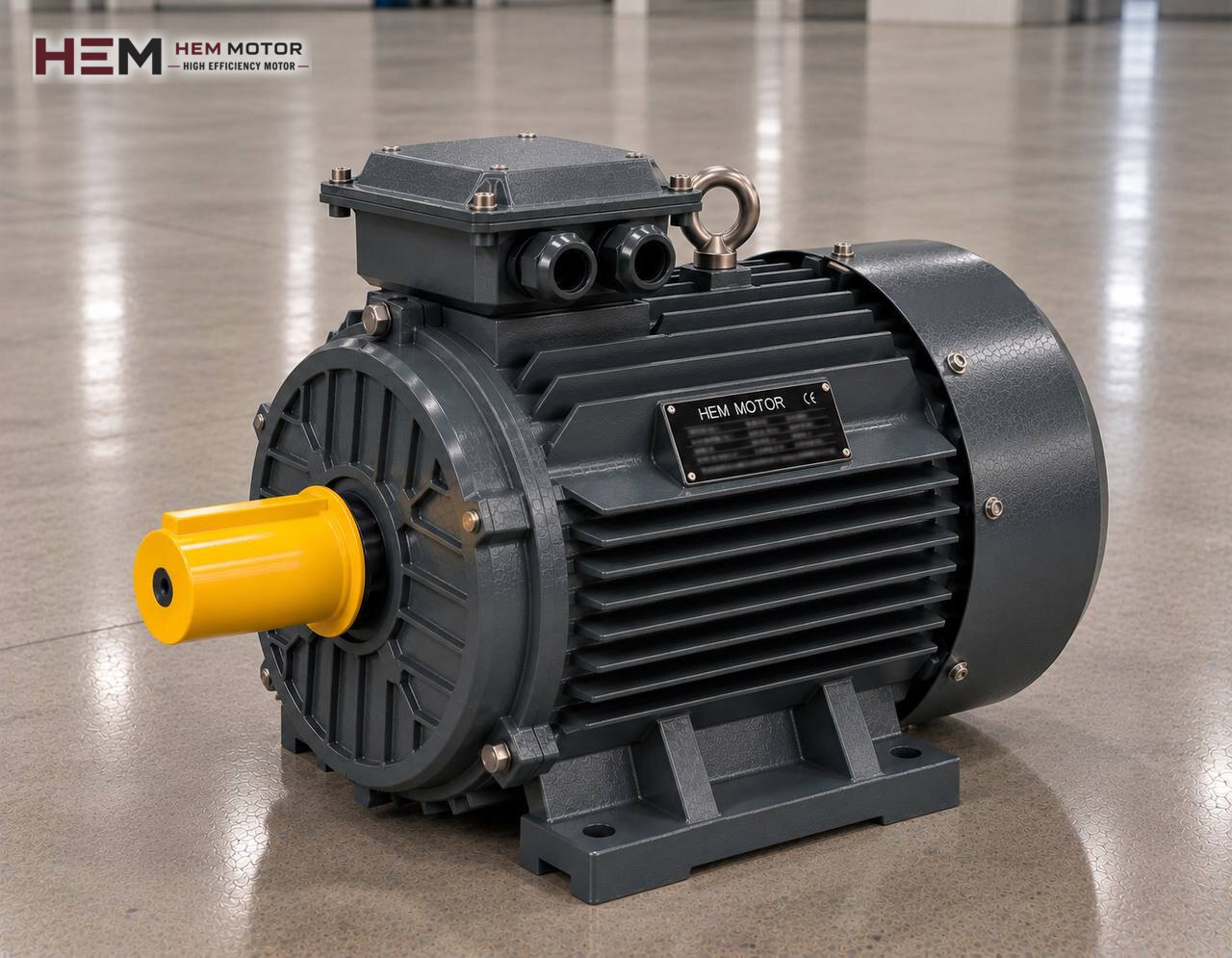
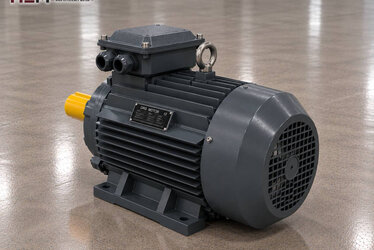
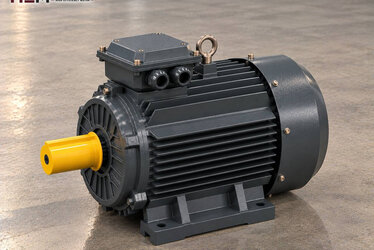
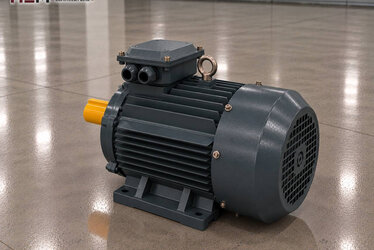
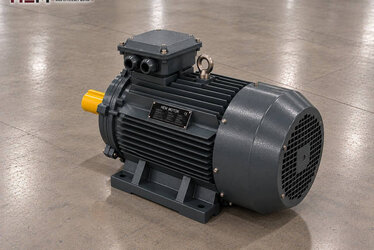
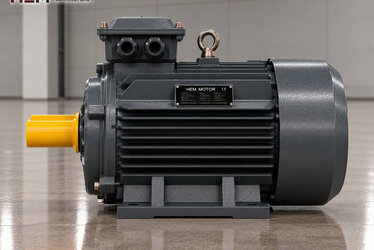
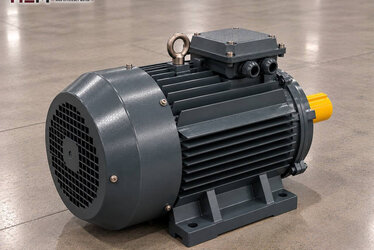
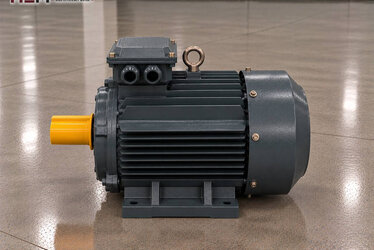
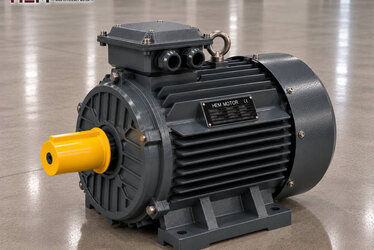
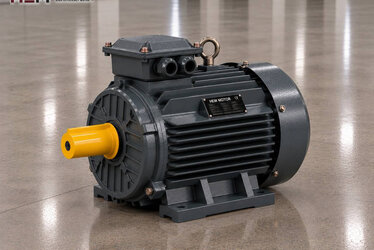
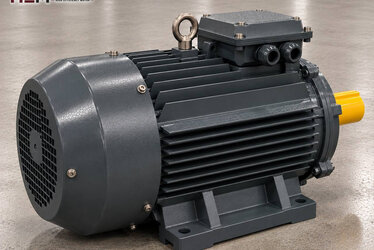
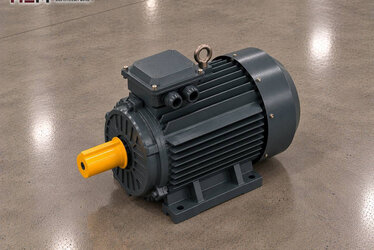
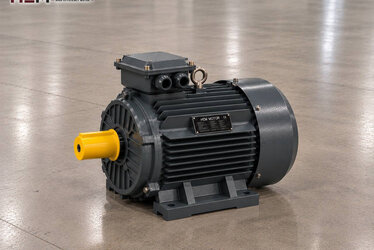
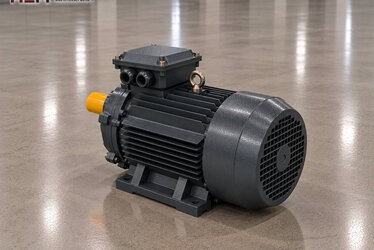
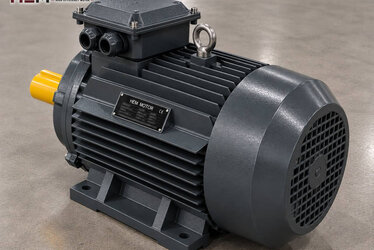
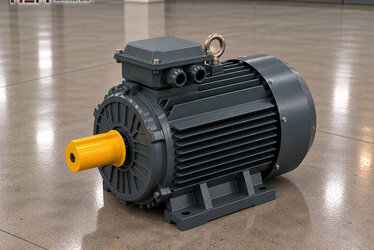
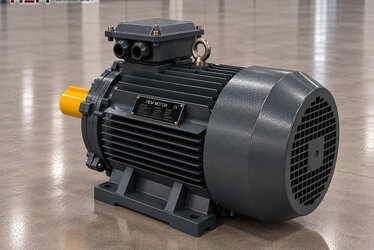
A bowl kneading dough in the back room of a bakery, a roasting drum turning in a nut workshop and a washing line in a juice plant do not expect the same thing from their motor. One turns a heavy, sticky mass slowly, another runs all day without a break, a third stops and restarts every minute. On this page we group food machines by the load the motor actually sees and give examples from HEM Motor's real models on sale for each of them.

Mixing, cutting, cracking and washing: four different motor loads
- Mixing (kneaders, planetary mixers): the highest load comes at start-up; the mass in a full bowl is still at rest and the motor has to set it moving.
- Cutting (slicers, dicers): the load is light, but blade speed must be held and the machine stops and starts often.
- Cracking (nut cracker rollers): the load comes in shocks; when a hard kernel enters the rollers, torque rises for a moment.
- Washing (brush and bubble washers): the motor is lightly loaded but runs continuously; the real problem is the water, steam and humidity around it.
A motor of the same power can run comfortably in one of these groups and overheat in another. Identify the group first, then the power and speed.
Dough kneading machines: bowl and spiral arm
In a spiral kneader the bowl turns on its own axis while the spiral arm pulls the dough towards the bowl wall and folds it. On some machines both motions are split from one motor by belts; others have a separate motor for the bowl and the arm. As the dough stiffens, the resistance on the arm grows, so the load increases towards the end of kneading.
Most kneaders work at two speeds: flour and water are combined at low speed, and the dough is developed at high speed. These two speeds are usually obtained with a special pole-changing motor or with an inverter. HEM Motor's 2026 catalogue does not include two-speed motors; the speed requirement can be met by driving a single-speed three-phase motor from a frequency inverter. Our three-phase series are suitable for inverter drive. If the motor will carry full load at low speed for long periods, a separate cooling fan may be needed; if the cable between inverter and motor is long, a dv/dt or sine filter is considered. Tell us about these conditions in your order. If your machine strictly requires a pole-changing motor, state this special requirement clearly in the order as well. For details see the question on inverter use.
For the arm drive of a medium-sized kneader, the 5.5 kW 1500 rpm cast iron 132S-4 (rated 1,460 rpm, 36 Nm) can be considered as an example; the final model is chosen according to the machine load, the required speed, the mounting and the operating environment.
Planetary mixers and slicing machines
Planetary mixer: starting with a full bowl
In a planetary mixer the beater turns on its own axis and also travels around inside the bowl. The motor usually delivers this motion through a gear reducer or a belt and pulley. The hardest moment is starting the machine from standstill with a bowl full of cream or cake batter, so starting torque and reduction ratio are taken into account as well as rated power. For geared drives the reducer motors page helps. On this type of machine a 4-pole model such as the 2.2 kW 1500 rpm aluminium 100L1-4 is in a commonly seen range.
Slicing: light load, frequent start-stop
On bread, meat or vegetable slicers, blade speed determines cut quality. The load is light, but the operator switches the machine on and off dozens of times a day; at each start the motor draws a short high current and the winding heats up. On such machines a PTC sensor in the winding is a good precaution; PTC/PT100 winding sensors and anti-condensation heaters are order options. For small slicers the 0.75 kW 1500 rpm aluminium 80M2-4 can be considered.
Nut cracking and roasting lines
On walnut, hazelnut or almond crackers the gap between two rollers is adjusted and the shell cracks as the product passes through. Because shell hardness varies from kernel to kernel, the load is not constant; the motor needs enough torque margin to absorb these fluctuations. On machines that need a low roller speed, a 6-pole motor can reduce the need for a gearbox; for example the 4 kW 1000 rpm cast iron 132M1-6 delivers 39.5 Nm at a rated 968 rpm.
A roasting machine has two motor jobs: turning the drum slowly and continuously, and running the fan that circulates hot air at high speed. Heat is the deciding factor here. The motor should be placed away from the furnace or burner, on the cool side of the machine body; if its cooling fan draws in hot air, winding temperature rises. For the fan drive the industrial fan motors page is also useful.
Fruit presses and vegetable and fruit washing lines
On belt-type or screw (auger) fruit presses the motor turns a slowly rotating screw through a reducer; resistance grows as the pulp is compressed, and high torque is needed at low speed. On a hydraulic press, by contrast, the electric motor drives the hydraulic pump and the pressing force is produced by the hydraulic system. Motor selection is based on pump flow, working pressure and cycle time; see the hydraulic pump motors page for this.
Brush and bubble washing machines have separate motors for the conveyor carrying the product, the blower that pushes air into the water and the pump that circulates the water. Details are on the conveyor belt motors and pump motors pages. All of these motors should sit outside the washing zone or in a place protected from splashing water.
Motor matching table for food machines
| Machine | Motor's task | Value that drives the choice | Example HEM model |
|---|---|---|---|
| Spiral dough kneader | Turning arm and bowl | Torque at the end of kneading, need for two speeds | 5.5 kW 1500 rpm 132S-4 (cast iron) |
| Planetary mixer | Beater via reducer or belt | Starting torque with a full bowl | 2.2 kW 1500 rpm 100L1-4 (aluminium) |
| Slicing machine | Holding blade speed | Starts per hour | 0.75 kW 1500 rpm 80M2-4 (aluminium) |
| Nut cracker roller | Turning the rollers | Shock load, roller speed | 4 kW 1000 rpm 132M1-6 (cast iron) |
| Roasting drum | Turning the drum slowly | Distance from the heat source | 1.1 kW 1000 rpm 90L-6 |
| Bubble washer | Supplying air with a blower | Continuous duty, protection from humidity | 2.2 kW 3000 rpm 90L-2 |
These rows are guidance only, not a final selection; the model is determined by weighing the machine's real load, the required speed, the mounting and the ambient conditions together. The nameplate of the motor currently on the machine is always the first place to look.
Hygiene, water and wet areas: the limit of a standard motor
All HEM Motor models on sale are IP55 protected, with class F insulation, for 50 Hz. IP55 means protection against dust and low-pressure water splashing from any direction. A standard IP55 motor is not designed for direct food contact, hygienic design requirements, or washing with pressurised water or foaming chemicals. In these conditions a protective measure by the machine builder (enclosure, splash guard, moving the motor out of the washing area) or a special stainless/washdown motor is required; state this requirement in your order and we will discuss it.
For the frame, see the question aluminium or cast iron. Depending on frame size, B3, B5, B14, B34, B35 and vertical V1, V3, V5, V6, V15 options are available; flange and shaft dimensions are confirmed with the order. For flour, feed or packaging machines our flour mill, feed machinery and packaging machinery pages have been prepared separately.
What to send us with your order
To find the right motor we only need: machine type (kneader, mixer, press, washer, etc.), power (kW), speed (rpm), operating voltage (e.g. 400 V), mounting type (foot, flange, vertical) and quantity. Add whether an inverter will be used or whether the motor will stand in a humid area. If you have the old motor, send a photo of its nameplate and we will determine the equivalent together.
Models on sale are delivered from stock and shipped from our warehouse in Turkey; the current price is on the product page. All models are in the buy electric motors section; our phone and e-mail details are on the contact page.
Frequently Asked Questions
Can a single-speed motor be used on a two-speed dough kneader?
Yes, a single-speed three-phase motor driven from a frequency inverter can run at two different speeds. If the machine strictly requires a pole-changing motor, this special requirement must be stated in the order.
Can I clean the motor on a washing machine with a hose?
A standard IP55 motor is not designed to be washed with pressurised water. Keep the motor outside the washing area or shield it; if a washdown motor is needed, state it in your order.
Where should I place the motor on a roasting machine?
At a cool, ventilated point away from the burner and the hot-air duct. If the cooling fan draws in hot air, winding temperature rises.
Does frequent switching on and off harm the motor on a slicer?
Every start heats the winding. If the machine starts many times per hour, ask for the PTC winding sensor option and state the number of starts in your order.
How is motor power chosen for a hydraulic fruit press?
On a hydraulic press the motor turns the pump; power is determined by pump flow, working pressure and cycle time. The nameplate of the existing motor is the best reference.