English
 Français
 Türkçe
 Español
 Русский
 العربية

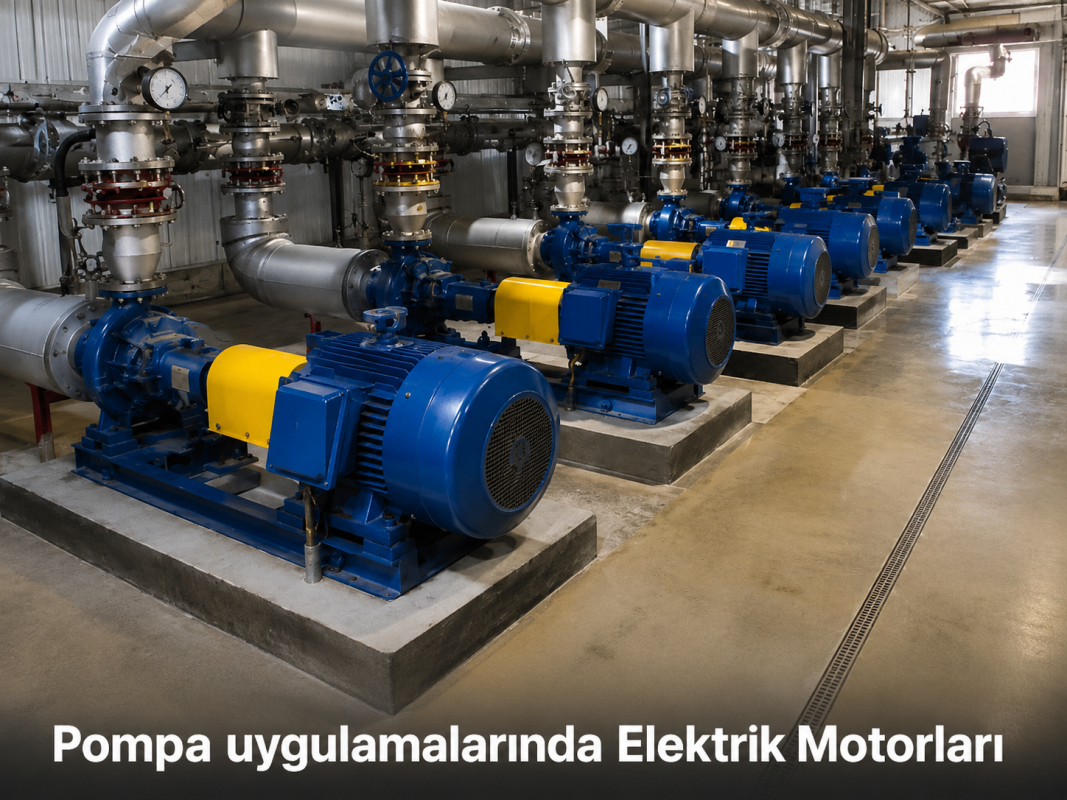
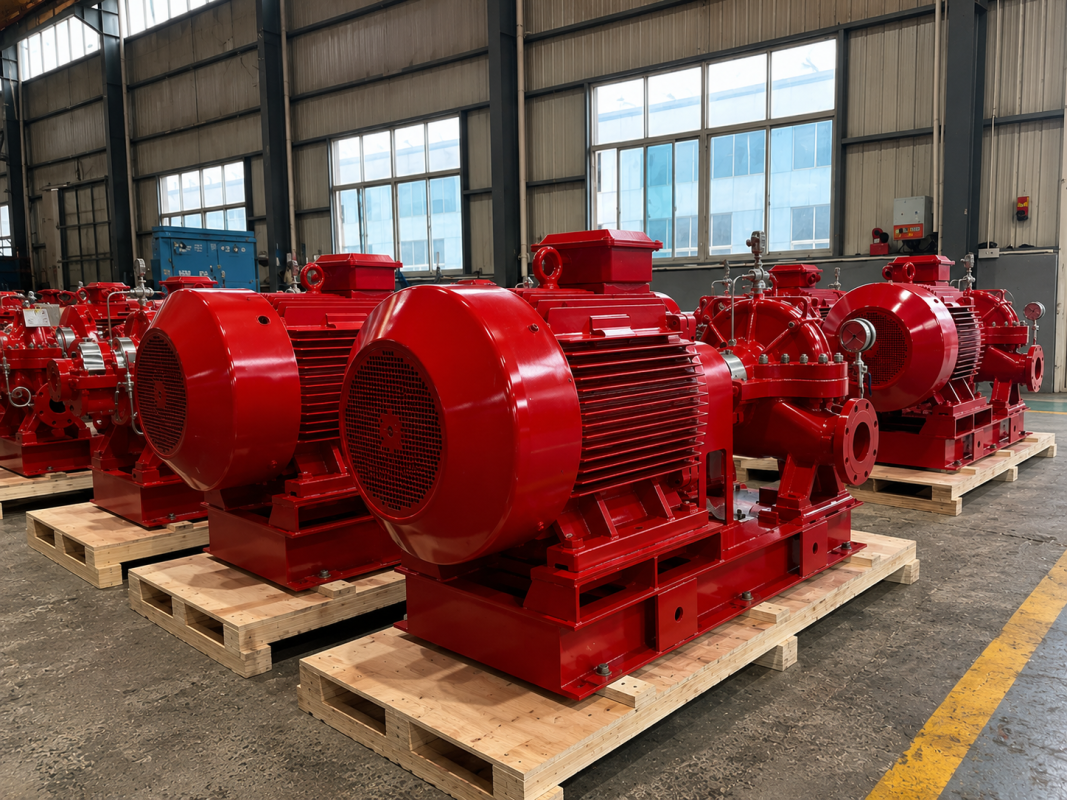
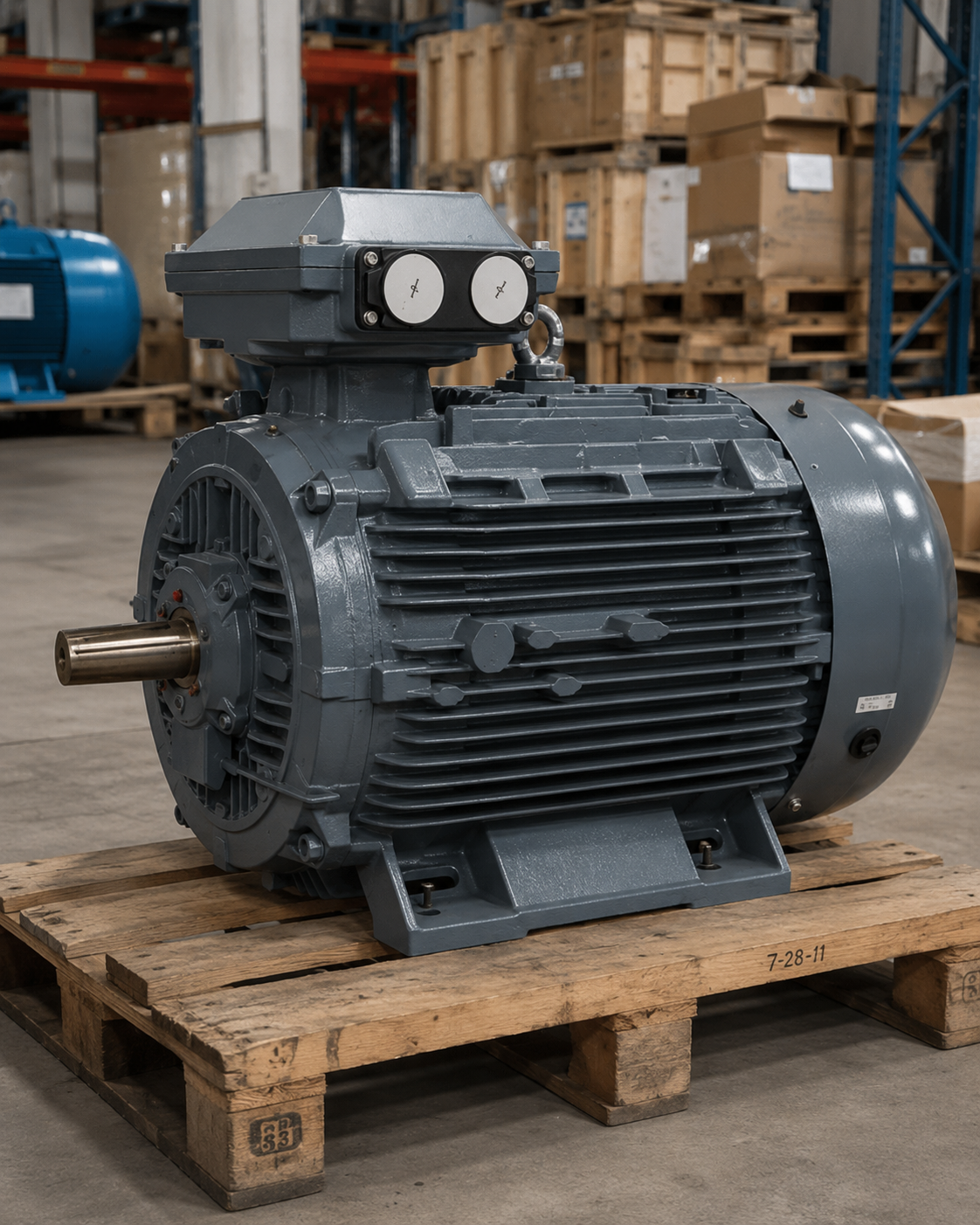
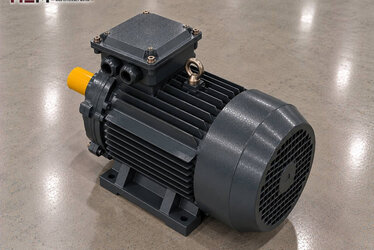
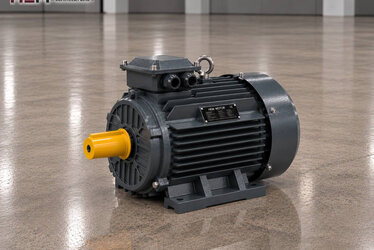
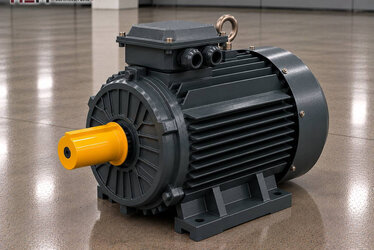
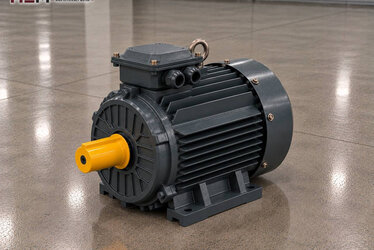
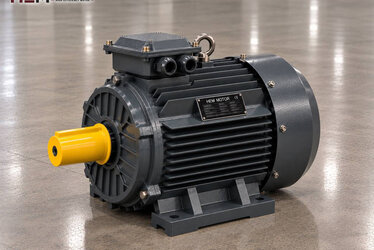
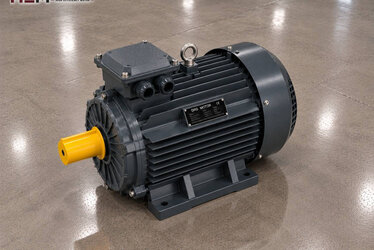
A pump moves water or any other liquid only as well as the shaft that turns it. This page is not about the pump itself but about the three-phase electric motor that drives it: what information it is selected from, where and how it is connected depending on the pump type, and which questions should be settled before ordering.
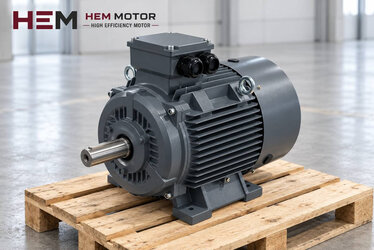
The motors HEM Motor supplies for pump drives are surface-mounted, IP55-protected, class F insulated, 50 Hz asynchronous motors; the power range is 0.25–355 kW with 2, 4 and 6 pole options. Aluminium frames are available in the small ratings and cast iron frames from 0.55 kW up to 355 kW.

Start with the pump nameplate and curve
The first document for motor selection is the pump's own nameplate and the performance curve published by its manufacturer. The nameplate usually states flow (m³/h), head (m), speed (rpm) and the recommended motor power. The curve shows that these values are not a single point: as flow rises, head falls, and on most centrifugal pumps shaft power increases.
That is why looking only at the "design point" is not enough. With the valve fully open, with an empty pipeline, or when one of several parallel pumps drops out, the pump can slide towards the right-hand end of its curve. The motor must also cover the highest shaft power the system can actually demand.
From flow and head to shaft power
If no pump manufacturer data is available, the approximate power can be found with this relation: P [kW] ≈ Q [m³/h] × H [m] / (367 × η). Here η is the pump efficiency and the formula is written for water; for liquids of a different density the result changes in the same proportion.
Example: assuming 36 m³/h flow, 50 m head and a pump efficiency of 0.72, the shaft power comes out at about 6.8 kW. The next standard step is 7.5 kW; on the 2-pole side this could correspond to the 132S2-2 cast iron motor with a rated speed of 2,930 rpm. This is only an example; the final choice depends on the pump curve, the required speed, the mounting and the operating conditions.
Speed, mounting and connection arrangement
A pump impeller is designed for a particular speed. On a 50 Hz supply a 2-pole motor runs at about 2,900 rpm, a 4-pole at about 1,450–1,490 rpm and a 6-pole at about 970–990 rpm rated speed. The speed should not differ from the one on the pump nameplate: flow changes in direct proportion to speed, head with its square and power roughly with its cube. Connecting a pump calculated for 1,450 rpm to a 2-pole motor overloads both motor and pump.
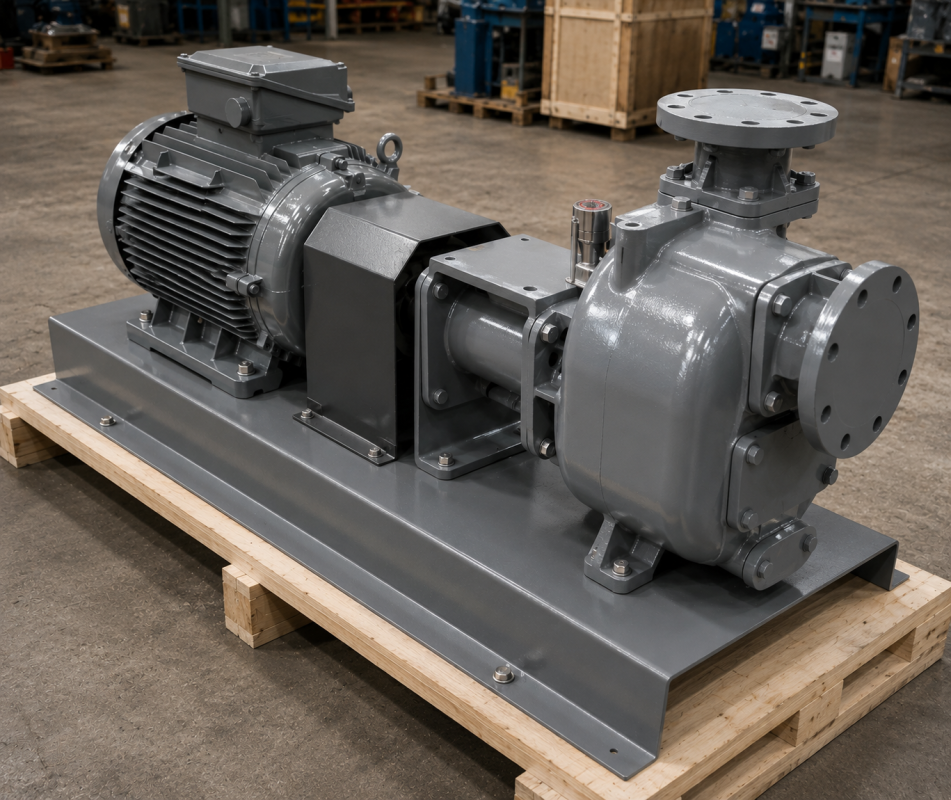
The connection arrangement is the second decision. In a coupled set the foot-mounted motor and the pump are aligned on a common baseplate; in a close-coupled set the pump casing sits directly on the motor flange, so the flange and shaft dimensions must match the pump. Our motors are offered in B3, B5, B14, B34, B35 and vertical V1/V3/V5/V6/V15 positions depending on frame; flange and shaft dimensions are confirmed with the order. For flanged types see the B5/B14 flange-mounted motors page, and for the details of vertical mounting the V1/V5 vertical mounting article.
Environment, starting and speed control
Pump rooms are often damp, sometimes hot and cramped. IP55 protection is designed against water splashes and dust; a motor being submerged or washed with pressurised water is outside the scope of this protection. Where condensation is constant, an anti-condensation heater, and where the plant wants to monitor winding temperature, a PTC/PT100 sensor can be requested as order options.
The starting method depends on the pump and the supply: direct-on-line starting is common at small ratings; at larger ratings star-delta, a soft starter or a frequency inverter is preferred. In systems that need speed control our three-phase series can be used with an inverter; if the motor will run at low speed with full torque for long periods a separate fan, and if the cable between drive and motor is long a dv/dt or sine filter should be considered. State these conditions with the order; details are on the inverter-compatible motors page.
A roadmap by pump type
Although the common steps are the same for every pump, where and how the motor is connected changes with the pump type. The table below is a short signpost; the details are on the related page.
| Pump type | Typical motor mounting | Critical point in selection | Related page |
|---|---|---|---|
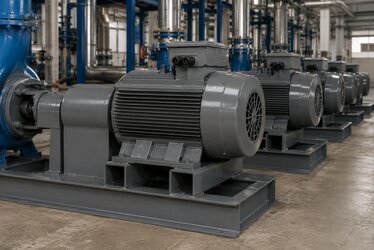
| Centrifugal (end suction) | Foot-mounted motor + coupling or close-coupled flange | Highest power point on the curve, speed | Centrifugal pump motor |
| Inline | Vertical on top of the pump, flanged | Flange fit, vertical position | Inline pump motor |
| Split case | Horizontal, common baseplate + coupling | High power, direction of rotation, starting | Split case pump motor |
| Treatment pump, mixer, blower | Horizontal or vertical, may use a gearbox | Humidity, corrosion, continuous duty | Treatment plant motors |
| Surface-driven deep well | Vertical at the wellhead | Axial load, vertical mounting | Deep well pump motor |
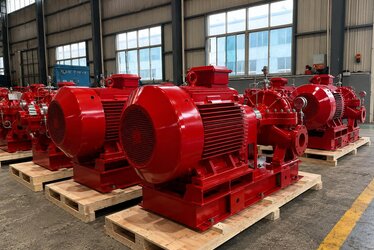
| Fire pump | Horizontal, coupled | Project and regulatory requirements | Fire pump motors |
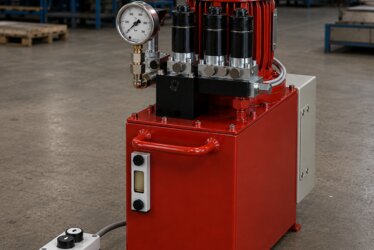
| Hydraulic pump | Flange + bell housing and coupling | Flow × pressure relationship | Hydraulic pump motors |
The table shows general tendencies; the final selection is made with the pump manufacturer's data and the site conditions.
Most water transfer and process circuits use a centrifugal pump electric motor; here the duty point and coupling alignment are decisive. On pumps installed straight into the pipeline the motor stands vertically on top of the pump; this layout is covered on the inline pump motors page. For the double-suction pumps used on high-flow lines such as municipal mains and cooling water, the split case pump motors page deals with starting at high power.
In wastewater plants mixer and aeration drives are added to the pumps; humidity and corrosion are discussed on the treatment plant pump and mixer motors page. Surface-driven systems with the motor at the wellhead are gathered on the deep well pump motor page, and applications where the system designer's and local regulations' requirements come first on the fire pump electric motors page. For gear, vane or piston pumps feeding presses and machine tools, go to the hydraulic pump electric motors page.
Building booster sets, multistage high-pressure pumps and agricultural irrigation pumps are assessed with the same steps: first the pump nameplate and curve, then speed, mounting and starting. On multistage pumps head rises with the number of stages, so motor power rises accordingly.
What information should you send for a quote?
For a quick and accurate quote, send the following: the type and brand of the pump or machine, the required motor power (kW), speed (rpm), supply voltage, mounting type (B3, B35, V1 etc.), starting method and quantity. If you are replacing an existing motor, a photo of its nameplate answers most questions on its own; you can share it via the send-your-nameplate page.
Example models include the 5.5 kW 132S-4 (1,460 rpm) for small 4-pole pumps, the 22 kW 180L-4 (1,470 rpm) at medium power and the 110 kW 315S-4 (1,488 rpm, SF 1.15) on high-flow lines. All power and speed options are listed in the electric motor shop; the current price is on the product page. For project questions, reach us through the contact page.
Frequently Asked Questions
Should the motor power equal the kW on the pump nameplate?
The nameplate power is usually the motor power recommended by the pump manufacturer and is a good starting point. If the pump may operate at the right-hand end of its curve, the shaft power at that point should also be checked and, if necessary, the next power step chosen.
Can a 2-pole motor be fitted to the same pump instead of a 4-pole one?
It should not be. When speed doubles, the power drawn by the pump rises roughly eightfold; the impeller, seal and motor are overloaded. The motor speed must be in the same class as the speed the pump was designed for.
Can a frequency inverter be used instead of throttling flow with a valve?
Yes, our three-phase series are suitable for speed control with an inverter. If the pump will run at low speed for long periods, cooling is assessed, and if the cable is long, the need for a filter; state this with the order.
Are submersible pump motors that run under water covered by this page?
No. This page covers standard surface-mounted motors; submersible motors running under water are not included in HEM Motor's 2026 catalogue.
Which model should I buy to replace my old pump motor?
The power, speed, voltage, frame (IEC) size and mounting type on the nameplate are enough to choose an equivalent. Send a photo of the nameplate and we will determine the suitable model together.