English
 Français
 Türkçe
 Español
 Русский

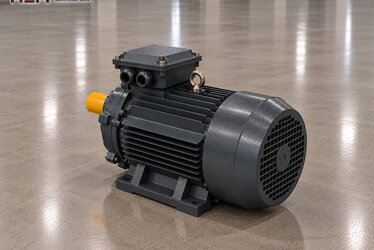
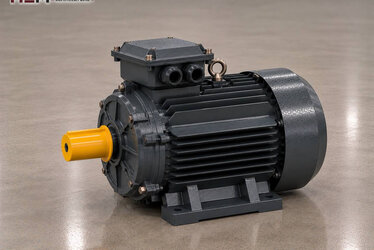
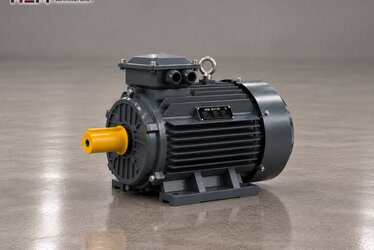
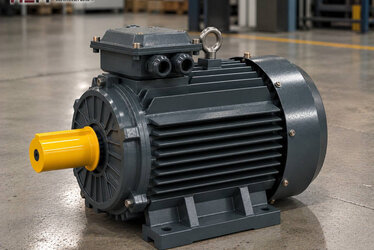
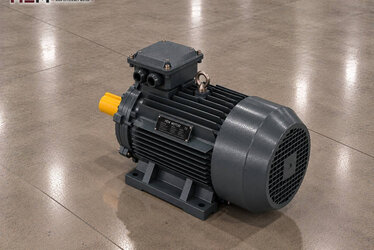
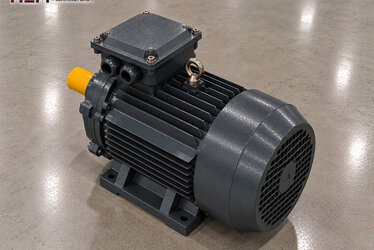
On a farm or in an agricultural plant the electric motor usually works in places nobody looks at: at the head of the bucket elevator that lifts harvested grain to the top of the silo, at the end of the feed line running the length of a poultry house, on the drum of the scraper that cleans the barn floor, in the vacuum pump of the milking parlour. During the busy season most of these motors run for days without stopping, and in winter they stand idle for long periods. This page looks at the three-phase and single-phase motors that drive farm machinery in terms of the machine's load, starting and operating environment; the machines themselves are not included in HEM Motor's 2026 catalogue, what we supply are the standard asynchronous motors that drive them.

Not in the field but in the plant: the farm machines a motor drives
Tractor-drawn implements take their power from the PTO shaft; the electric motor comes in on stationary machines. These fall into three groups. The first is the post-harvest grain chain: intake pit, elevator, pre-cleaner, seed cleaner, dryer and silo augers. The second is livestock housing: poultry feeding lines, barn manure scrapers, milking systems and milk cooling tanks. The third is water and feed preparation; for irrigation pumps the pump electric motors page gives details, and for feed grinding and mixing see the feed machinery electric motors page.
The load is different in each group. An elevator carries full buckets upwards, so it struggles at start-up; a drying fan presents an inertial but smooth load; a scraper or feed chain turns very slowly and takes its torque from a gearbox. If the motor is chosen without seeing this difference, the result is either an oversized motor or one that is too weak to start the machine.
The grain chain: elevator, seed cleaner and dryer
The agricultural elevator motor is covered on a separate sub-page, which explains starting a loaded bucket belt and the devices that stop it running back. The grain seed cleaner motor page deals with the small motors that drive the oscillating screens and the aspiration fan. The grain dryer motor page focuses on the hot-air fan and the drive of the discharge mechanism inside the dryer.
These three machines usually run one after another on the same line and are fed from the same control panel. The start sequence matters: if the machine at the end of the line is started first and the feeding machine last, grain does not pile up at any point. If grain accumulates in the elevator boot, the next start happens with full buckets and the motor current stays high for a long time.
Livestock housing: poultry house, barn and milking
The poultry house feeding system motor sub-page covers the auger and chain systems that carry feed to the silo and to the pan lines inside the house. These lines run for short periods several times a day; the number of starts is high and the load varies with line length and feed moisture.
The barn manure scraper system motor page deals with the geared, very slow drive that pulls the scraper blade across the floor by rope or chain. The milking machine motor page covers the continuous running of the vacuum pump on the milking line, and the milk cooling tank agitator motor page covers the intermittent, low-speed running of the agitator on top of the tank.
A barn or milking parlour is a different environment for a motor than the dust of the field. Humid, ammonia-laden air and washing water can reach the frame and the terminal box. Every motor we sell has an IP55 frame and class F winding insulation; however, at a point that is washed directly with pressurised water a standard IP55 motor is not designed for this use. In such a location a protective measure by the machine builder, such as a shield, or a special motor is required; state this in your order. A motor surface in direct contact with milk or feed is not part of the design either; the motor always stays outside the driven part.
Speed, gearbox and supply: what decides the choice
Fans and vacuum pumps use the motor speed directly or through a belt; in these jobs four-pole and two-pole motors are the most common. On slow machines such as scrapers, feed chains and tank agitators, the motor is connected to the input of a gearbox, and output speed and torque come from the gearbox. In that case the connection and flange information on the electric motors for reducers page is useful.
The rural grid also affects the choice. In small farms without a three-phase supply, the single-phase electric motors from 0.18 to 5.5 kW can be a solution for a feed line, a small elevator or a tank agitator. On a farm at the end of a long line, if the voltage arrives low the motor current rises and the winding heats up accordingly; cable cross-section and line length should be assessed together with motor power.
On machines with variable demand, such as a drying fan, a drive can be used to adjust the speed. Our three-phase series is suitable for operation with a frequency converter; if the fan is to run at very low speed for long periods, a separate cooling fan, and if the cable from the drive to the motor is long, a dv/dt or sine filter should be considered. It is enough to write these two conditions in the order.
Seasonal running, standstill and maintenance
Perhaps the most typical problem of farm motors is long standstill. In a dryer or elevator motor that stands for months between harvests, the winding can absorb moisture and the bearing grease can dry out. Measuring the winding insulation resistance before the season, cleaning straw, bran and dust from the fan cover and cooling fins, and checking belt tension reduce surprises at the first start.
For motors standing in damp, cold stores, an anti-condensation heater, and for monitoring overheating a PTC or PT100 winding sensor, can be added as order options. Depending on the frame, B3, B5, B14, B34, B35 and vertical V1/V3/V5/V6/V15 mountings can be chosen; we confirm with you at order stage the flange and shaft dimensions that must fit the gearbox or the machine.
Sample motor table by farm machine
| Farm machine | Motor's job | Value to check | Sample motor (HEM) |
|---|---|---|---|
| Agricultural elevator | Lifting full buckets | Loaded start, pulley ratio | 4 kW 1500 rpm 112M-4 |
| Grain drying fan | Pushing hot air through the grain bed | Fan speed, inertial start | 11 kW 1500 rpm 160M-4 |
| Poultry feeding line | Turning the auger or chain in short runs | Number of starts, supply type | 2.2 kW 1500 rpm 100L1-4 |
| Barn manure scraper | Very slow pulling via gearbox | Gearbox input, humid environment | 3 kW 1000 rpm 132S-6 |
| Grain seed cleaner | Screen oscillation and aspiration | Vibration, dust cleaning | 1.5 kW 1500 rpm 90L-4 |
The models in the table are examples only; the final choice is made by looking at the machine's load, the required speed, the mounting and the operating conditions. The nameplate of the motor you already have is the most reliable starting point.
Information needed for a motor request
When asking for a motor for a farm machine, write the machine type and make, the required motor power and speed, the voltage on site (380–400 V three-phase or 220 V single-phase), the mounting, the transmission and the quantity. If you are looking for a replacement for a failed motor, sending a photo of the nameplate speeds things up.
You can view models and current prices in our shop, and for small ratings look at the aluminium frame models. WhatsApp and phone details are on the contact page.
Frequently Asked Questions
Is it a problem to start a motor directly after it has stood for months after harvest?
First the winding insulation resistance should be measured, the fan cover and fins cleaned, and the shaft turned by hand to check that the bearing runs freely. In motors standing in a damp store, an anti-condensation heater reduces this risk.
Can an elevator or feed line be run on a farm without three-phase power?
For small machines the 0.18–5.5 kW single-phase series can be used. For higher ratings, solutions such as a three-phase connection or supply through a drive should be assessed together with the electrical designer.
What information should I state in particular for a motor used in a barn?
Write whether the motor will be exposed to washing water, ammonia-laden humidity or direct water spray. At a point with pressure washing a standard IP55 motor is not enough; the need for a protective measure or a special motor is clarified in the order.
Can a drying fan motor be slowed down with an inverter?
Yes, our three-phase series is suitable for drive operation. Fan power changes roughly with the cube of speed, but the real value depends on the system; if there is long running at very low speed, the need for a separate fan should be stated in the order.