 English
 Türkçe
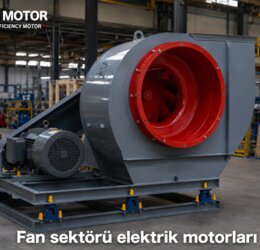
Industrial Fan Motors
Industrial Fan Motors (IE4 Super Premium Efficiency) Industrial fan systems are critical equipment that must deliver continuous, high performance in factories, mining sites, cement... More Details

As HEM Motor Company we have been manufacturing IE3, IE4 and IE5 efficiency-class three-phase asynchronous (AC) electric motors since 1979, and we sell them in Turkey directly from our strong local stock. 0.55–355 kW power range, cast iron body, B3 foot-mounted and other types; durable, energy-efficient solutions for pump, fan, conveyor and crusher applications — with the assurance of the manufacturer.
Browse all the electric motors we manufacture by efficiency class and application, and easily pick the right model for your job.
As the manufacturer, we offer a wide product range: from standard and high-efficiency electric motors to the IE4-IE5 series, single-phase and three-phase asynchronous motors, as well as motors for crushing plants, smoke extraction and vibration applications — all sold directly from strong stock with the assurance of the manufacturer
Industrial Fan Motors (IE4 Super Premium Efficiency) Industrial fan systems are critical equipment that must deliver continuous, high performance in factories, mining sites, cement... More Details
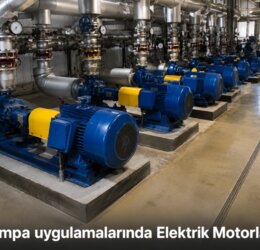
Pump Motors (IE4 Super Premium Efficiency) Pump systems are among the most critical systems of all, required to run reliably and without interruption in water supply, fire protecti... More Details
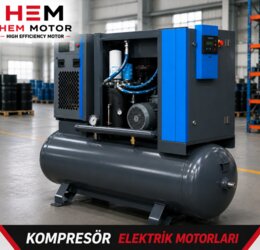
Compressor Motors (IE4 Super Premium Efficiency) Compressor systems are among the most critical items of equipment in industry, supplying the compressed air that keeps production r... More Details
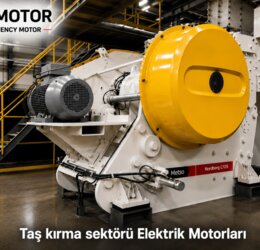
IE4 Electric Motors for Stone Crushing and Screening Plants Stone crushing and screening plants are one of the toughest application areas in industry, with severe operating conditi... More Details
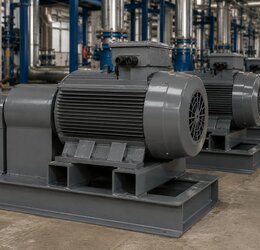
Deep Well Pump Motors (IE4 Super Premium Efficiency) Deep well pump systems are critical installations that demand high pressure and continuous operation in groundwater extraction,... More Details
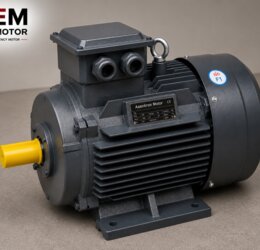
General Purpose Industrial Electric Motors (IE4 Super Premium Efficiency) General purpose industrial electric motors are the basic power source used in virtually every area of indu... More Details
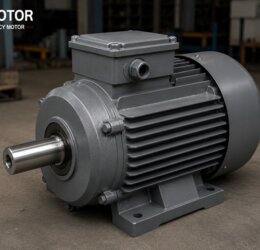
Standard Electric Motors (IE4 Super Premium Efficiency) Standard electric motors are the fundamental power units of industry, valued for their reliability and their exceptionally b... More Details
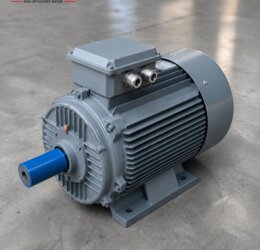
AC Electric Motors (IE4 Super Premium Efficiency) AC electric motors are the most widely used motor type in industry. With their reliability, durability and broad application range... More Details
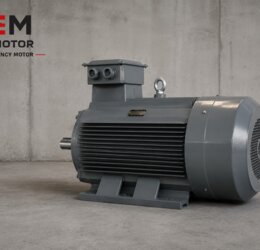
Asynchronous (Induction) Electric Motors (IE3 Premium Efficiency) Asynchronous electric motors are the most widely used motor type in industry, prized for their durability, low mai... More Details
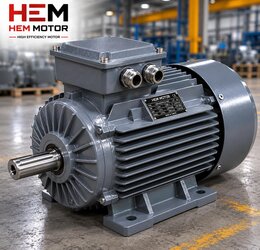
IE4 High Efficiency Electric Motors (Super Premium Efficiency) Rising energy costs and sustainability targets have made high efficiency a must for electric motors in today's indust... More Details
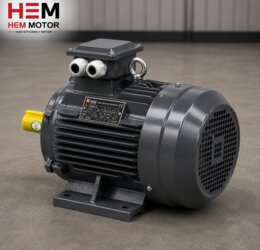
Three-Phase Electric Motors (IE4 Super Premium Efficiency) Three-phase electric motors are among the most widely used motor types in industry, distinguished by their high efficienc... More Details
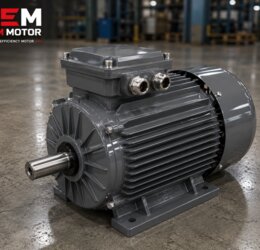
Cast Iron Housing Electric Motors (IE3 & IE4) In industrial applications, motor durability is every bit as critical as performance. In motors running under heavy-duty conditions in... More Details
Find the right motor faster — filter our range by efficiency class, motor type or field of use.

Our complete three-phase asynchronous motor range in a single document: power, speed, current, efficiency and torque tables, plus frame dimensions for B3 / B5 / B35 mounting types.
Find clear answers to common questions and past inquiries, Clear answers to common curiosities.
In industry: pumps, fans, compressors and conveyors; in construction: crushing-screening plants and concrete batching plants; in agriculture: irrigation and feed machinery; plus food, textile, plastics and recycling lines. In short, behind every rotating machine there is an electric motor.
Power is chosen from the driven machine's shaft demand and starting load; speed from the rpm the machine needs. Common asynchronous speeds are 3000, 1500 and 1000 rpm (2-4-6 pole). An exaggerated safety margin wastes energy, while borderline sizing causes overheating. Tell us your application and we will pin down the right power-speed combination together.
AC motors run on alternating current, DC motors on direct current. Within the AC family, synchronous motors rotate exactly at line frequency and serve special applications, while asynchronous (induction) motors rotate with a small slip and are the industrial standard thanks to their simple, rugged construction. Our production focuses on three-phase asynchronous motors, which have the widest field of use.
As the manufacturer we supply bearings, fans, fan covers, terminal boxes and windings from our own stock. Most parts ship the same day from our warehouse in Turkey. Send us the serial number on the motor nameplate and we will identify and dispatch the correct part quickly.
The main causes of overheating are undersized motors, blocked ventilation, supply imbalance and overload. Select the correct power for the duty, keep the fan cover and cooling fins clean, and use thermal overload or PTC protection. On applications with frequent starts, a variable frequency drive also keeps winding temperature under control.
Three-phase motors run on 380 V industrial supply, deliver balanced torque at higher powers and are the industry standard. Single-phase motors run on 220 V domestic supply and usually serve small pumps, compressors and workshop equipment up to about 2.2 kW. If your facility has a three-phase line, a three-phase motor of the same power will run more efficiently and last longer.
Evaluate in order: required power (kW) and speed, mounting arrangement (foot/flange), efficiency class, protection class (IP) and the operating environment. Special conditions such as frequent starts, high inertia or drive operation affect the choice. When in doubt, share your application details and we, as the manufacturer, will recommend the right model.
Yes. The IE3 and IE4 motors we manufacture do the same work with less electricity than older generations. In a 24/7 plant the yearly saving per motor can cover a large part of its price. Send us the nameplate data of your current motors and we will prepare a concrete savings calculation.
As the IE level defined in IEC 60034-30 rises, more of the energy a motor draws is converted into useful work. IE4 (super premium) and IE5 (ultra premium) motors cut losses noticeably compared with IE2-IE3 models. On motors running long hours daily, even a few percent of extra efficiency turns into substantial yearly savings, so the price difference typically pays for itself quickly.
An asynchronous (induction) motor has no brushes or commutator on its rotor; this simple construction means few failures, easy maintenance and low cost. It can run direct-on-line or with a drive and withstands harsh environments. That is why it is the most widely used industrial motor type and the core of our production programme.