English
 Français
 Türkçe
 Español
 Русский
 العربية

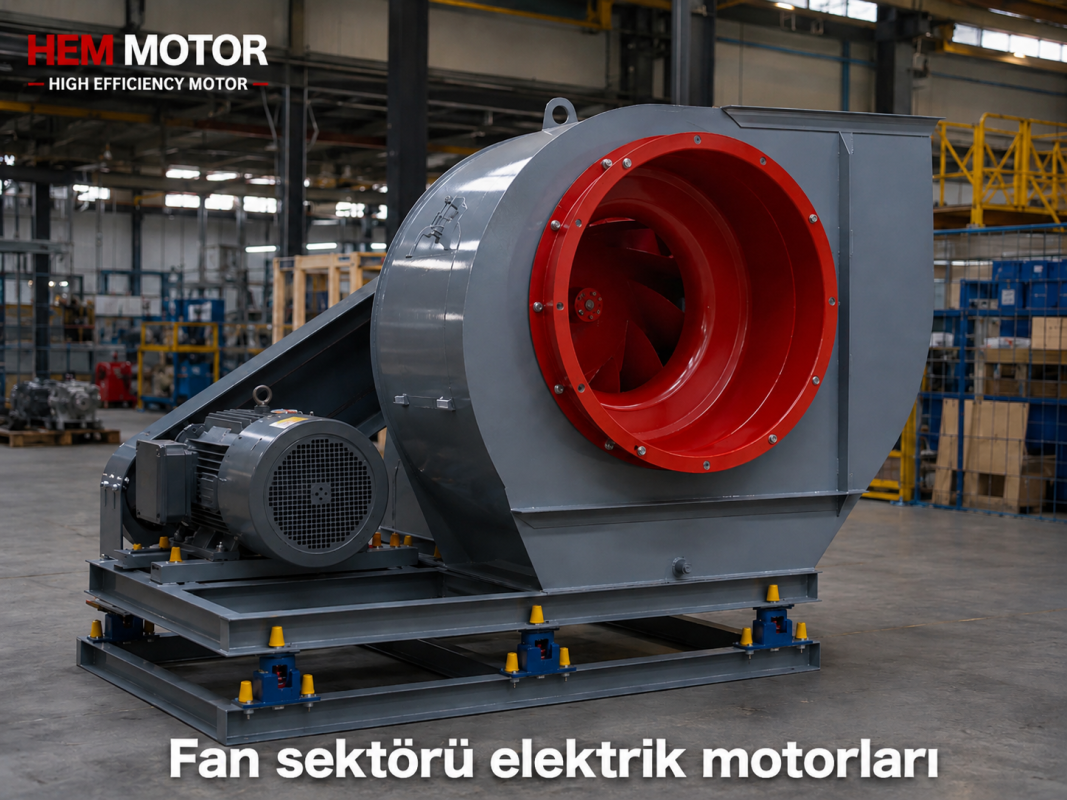
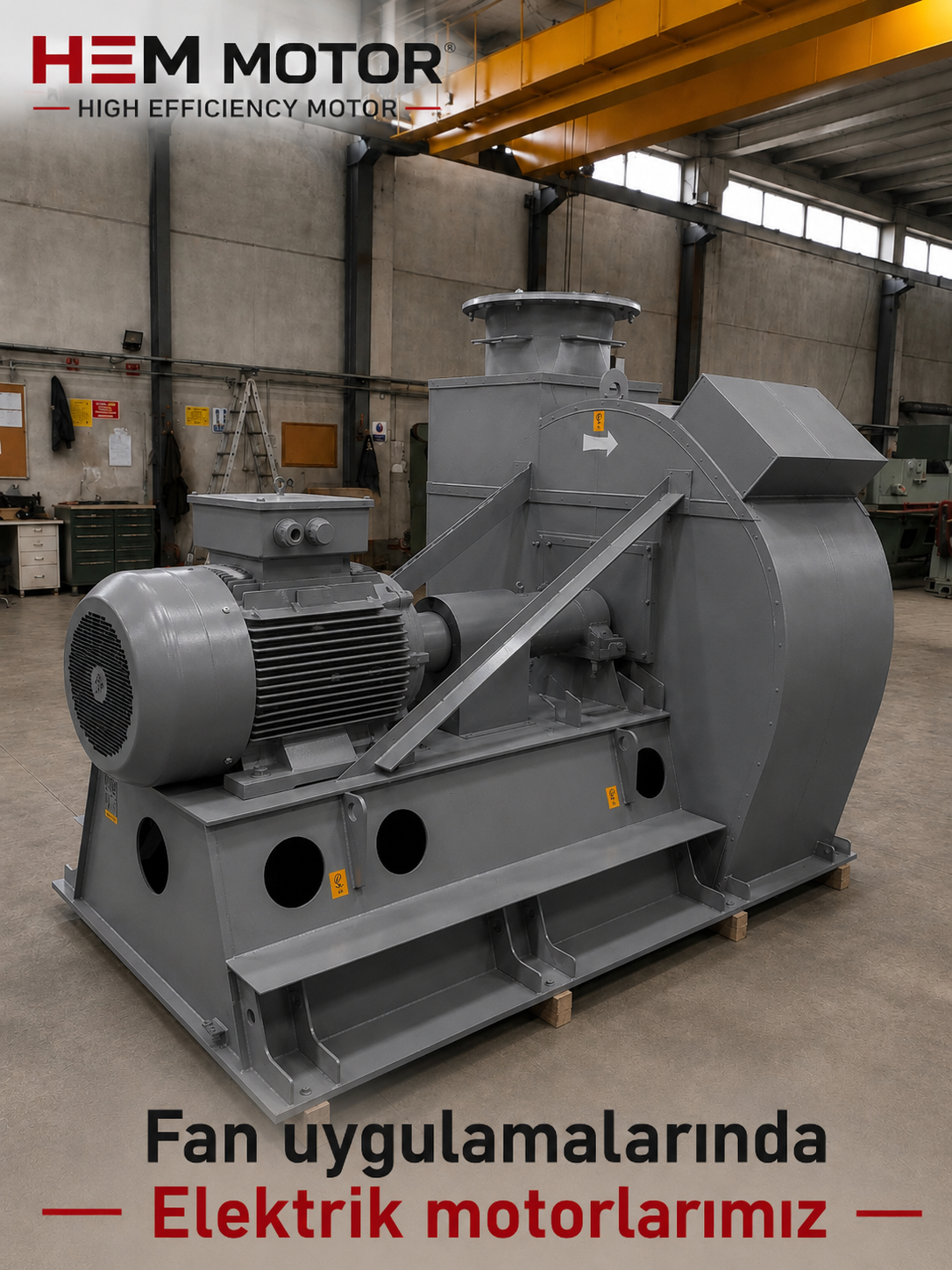
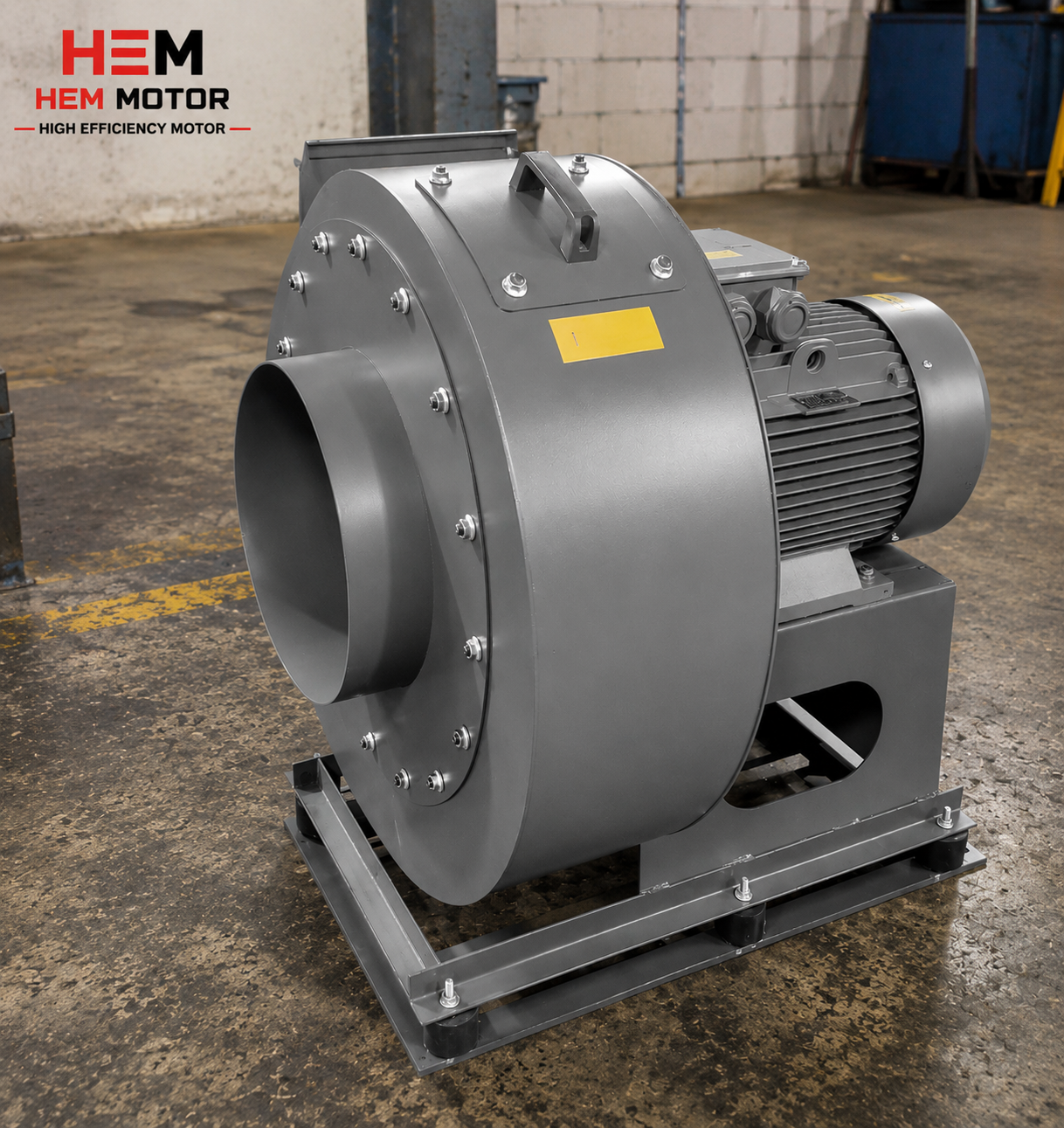
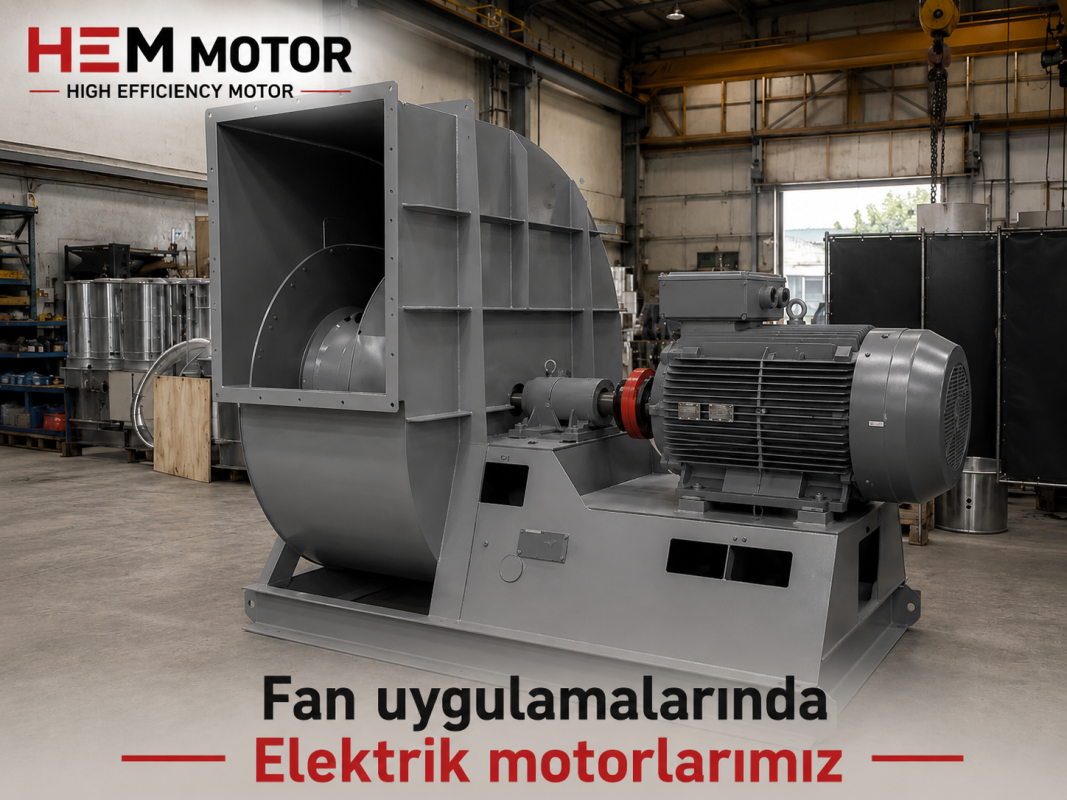
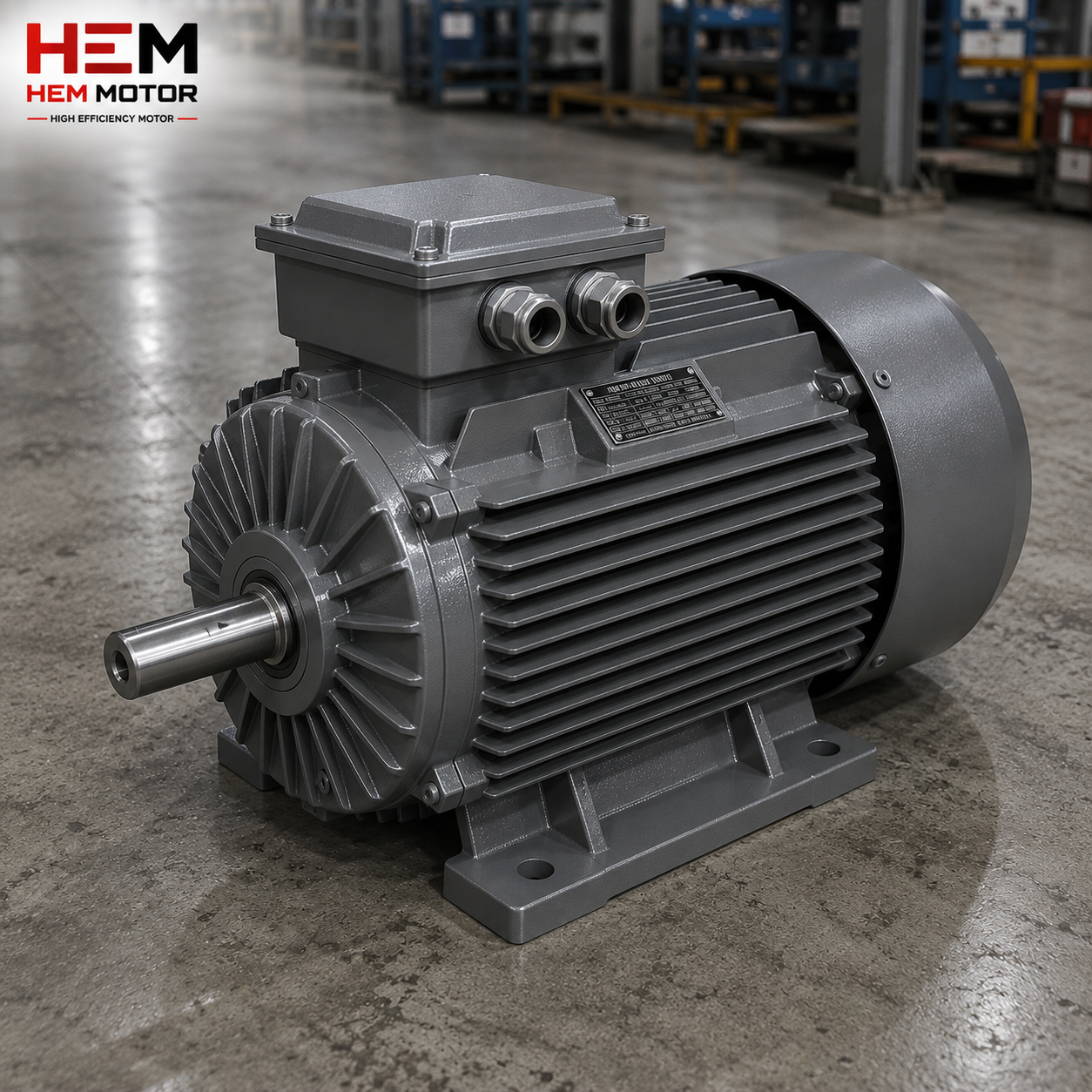
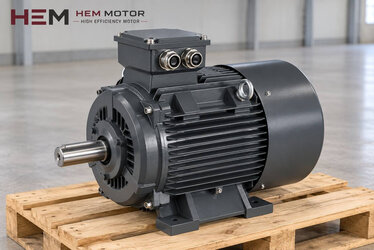
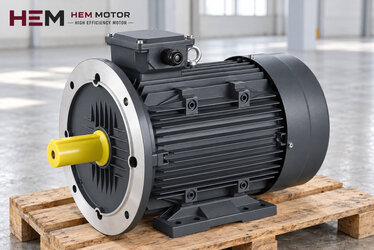
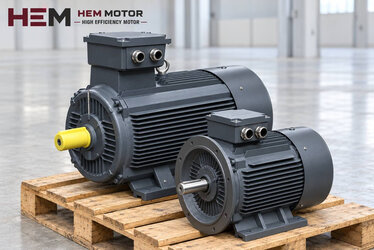
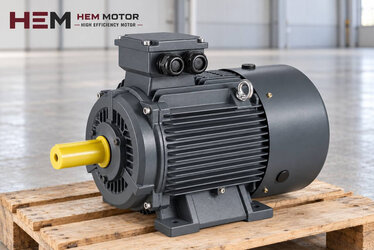
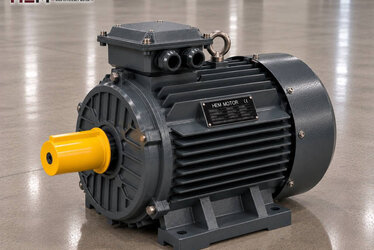
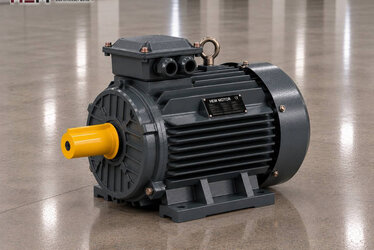
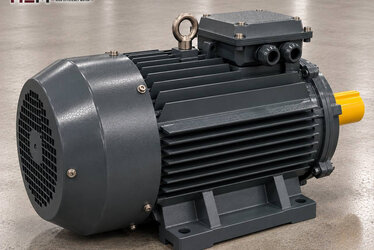
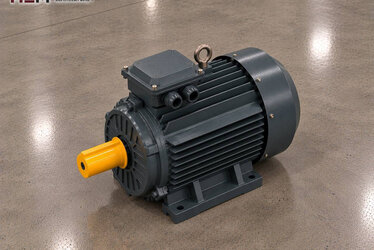
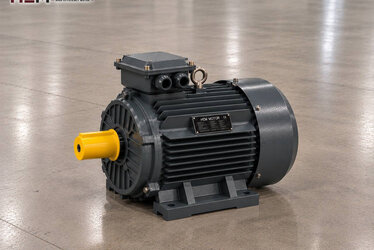
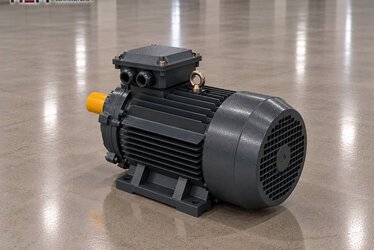
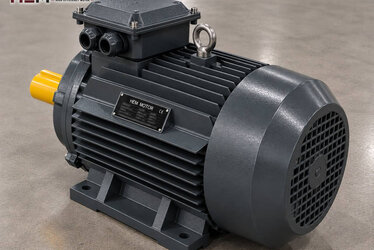
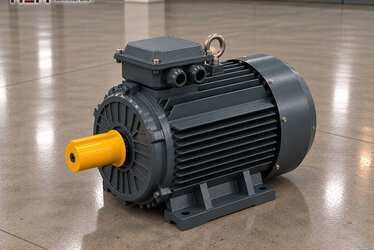
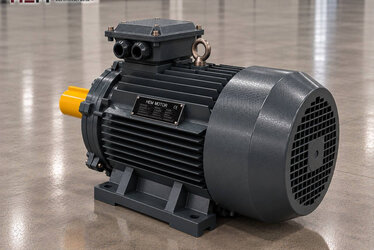
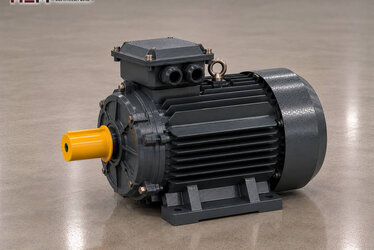
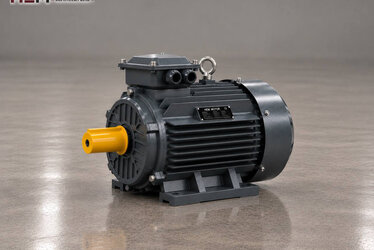
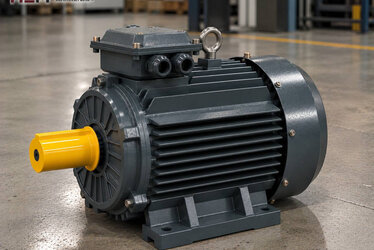
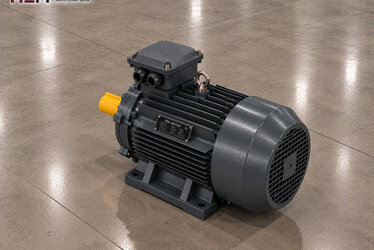
How much air a fan moves is decided by its impeller; turning that impeller at the right speed, all day long, is the electric motor's job. This page does not cover the fan casing, blades or scroll, but the three-phase asynchronous motor that drives them: how to get from fan data to motor power, why speed and the drive arrangement matter, and which details come first for each fan type.
The motors we use for fans and extractors are IP55, insulation class F and 50 Hz. The three-phase range covers 0.25 kW to 355 kW with 2, 4 and 6 poles; aluminium frames are available up to 11 kW and cast iron frames from 0.55 kW upwards.

From airflow and pressure to motor power
A fan is selected from two inputs: airflow (m³/h or m³/s) and the total pressure the fan has to overcome (Pa). Ducts, filters, dampers and bends create that pressure. The fan maker's catalogue usually gives the shaft power needed for these two values directly; that is the first place to look when choosing the motor.
Without manufacturer data a rough estimate is possible: P [kW] ≈ Q [m³/s] × Δp [Pa] / (1000 × η), where η is the fan's total efficiency. A fan moving 5 m³ of air per second against 1,200 Pa with an assumed efficiency of 0.70 needs about 8.6 kW; the next standard power step is 11 kW. For a slow belt-driven fan this could mean an 11 kW 160L-6 cast iron motor running at 970 rpm. The calculation only gives an idea; the final decision depends on the fan curve, the required speed, the drive arrangement and site conditions. How the absorbed power changes when a damper stays fully open or a filter is removed should also be read from the curve.
Speed, number of poles and impeller diameter
An impeller is designed for a certain tip speed; the larger its diameter, the slower it is turned. On a 50 Hz supply our 2-pole models run at 2,730–2,980 rpm nominal, 4-pole models at 1,340–1,490 rpm and 6-pole models at 855–990 rpm. If the impeller sits directly on the shaft, motor speed is fan speed, so the number of poles follows the speed the fan maker specifies.
According to the fan laws, airflow changes in direct proportion to speed, pressure with the square of speed and power roughly with the cube. The relationship deviates depending on system resistance, but it is enough to show how quickly a small increase in speed raises the motor load.
Impeller on the shaft or on a pulley?
In a direct-drive arrangement the impeller hub sits on the motor shaft. The weight of the impeller and the thrust created while pushing air load the bearings axially. In axial and roof fans the motor often runs vertically. Besides foot-mounted (B3), flange-mounted (B5, B14) and foot-and-flange (B34, B35) versions, vertical V1, V3, V5, V6 and V15 positions are supplied depending on frame size; flange size, shaft end and whether the shaft points up or down are confirmed when ordering. The list of positions is in the mounting arrangements question.
In a belt-and-pulley arrangement the motor is usually foot-mounted and belt tension puts a side (radial) load on the shaft end. The load grows with pulley size and the number of belts; seating the pulley close to the frame relieves the drive-end bearing. Because the pulley ratio sets the fan speed independently of the number of poles, this arrangement is common on large scroll-type fans.
Hot air, dust and humid surroundings
The motor is cooled by its own shaft-mounted fan and its ratings refer to a given ambient temperature. If the motor will sit inside the airstream or in a hot roof space, tell us the actual temperature there. On dust collection lines, dust building up on the cooling fins weakens cooling.
IP55 protects against dust and water splashes; on roof fans directly exposed to rain a canopy over the motor should be considered. Where day and night temperatures differ widely an anti-condensation heater, and for monitoring winding temperature a PTC or PT100 sensor, can be added at the order stage.
Starting a heavy impeller and adjusting airflow
The inertia of a large impeller delays the motor in reaching full speed, and the motor draws high current throughout that time. Thermal protection should be set so that it lets the start finish but trips on a genuine overload. Sharing the impeller's moment of inertia, obtained from the fan maker, at the quotation stage makes the check easier.
Small fans usually manage with direct-on-line starting; larger ones use star-delta, a soft starter or a drive. Where airflow changes during the day, speed can be lowered instead of throttling with a damper: our three-phase motors can be run from a frequency inverter. If the fan will turn at low speed and high load for long periods, the shaft fan may not cool enough and a separate fan is added; if the drive is far away, a dv/dt or sine filter comes into play depending on cable length. Mention these points when asking for a quote; details are on the inverter-compatible motors page.
A roadmap by fan type
The steps above apply to every fan; the drive arrangement and the point that needs attention vary with the fan type.
| Fan type | Typical motor connection | Critical point in selection | Related page |
|---|---|---|---|
| Axial fan | Impeller directly on the shaft, horizontal or vertical | Axial load, vertical position, speed | Axial fan motor |
| Centrifugal (radial) fan | Direct drive or belt and pulley | Impeller inertia, pulley ratio, radial load | Centrifugal fan motor |
| Burner fan | Flange-mounted on the burner housing | Flange and shaft fit, frequent switching on | Burner fan motor |
| Jet fan (car park, tunnel) | Inside the fan casing, horizontal | Suspended mounting, certification requirement | Jet fan motor |
| Process and kiln fan | Mostly belt-driven, outside the airstream | Hot gas, dust, continuous duty | Process and kiln fan motor |
The table summarises general tendencies; the actual selection is made from the fan's own data and the site.
In wall and roof extractors, cooling towers and greenhouses the impeller usually sits on the motor shaft; vertical position and axial load are covered on the axial fan electric motor page. For scroll-type, high-pressure fans, belt and direct drive are compared on the centrifugal fan electric motor page.
In boiler and furnace burners the motor supplying combustion air is small but switches on often; the motor side is explained on the burner fan electric motor page, while fuel line safety belongs to the burner manufacturer. Thrust fans in enclosed car parks and tunnels are covered on the jet fan motor page, and fans on drying, dust collection and kiln lines on the process and kiln fan motor page.
The ventilation electric motors page starts from a building's air change needs and the HVAC sector electric motors page from air handling units and climate equipment; this page starts from the fan itself.
What to share when requesting a quote
It is enough to tell us the type of fan or machine, the required power (kW) and speed (rpm), the supply voltage, the mounting type and shaft direction, whether the impeller is driven directly or by belt, the starting method, the ambient temperature and the quantity. If an old motor is being replaced, a photo of its nameplate answers most of this list; you can send the nameplate photo here.
A few models from fan applications: for small extractors the 1.5 kW 90L-4 (aluminium, 1,445 rpm), for large centrifugal fans the 37 kW 225S-4 (cast iron, 1,485 rpm), and for heavy process fans the 75 kW 280S-4 (1,486 rpm, SF 1.15). Other powers and speeds, with prices, are in our motor shop; for project-specific questions write to us.
Frequently Asked Questions
Is there a difference between a fan motor and an extractor motor?
From the motor's point of view there usually is none; both turn an impeller. The difference lies in the direction of air and in mounting: an extractor draws air out of a space, and its motor often sits on a wall or roof, sometimes vertically. Power, speed and mounting position decide the choice.
How should I choose motor speed for a belt-driven fan?
Since fan speed is set by the pulley ratio, the number of poles is less constrained. Pulley diameters, belt tension and the side load on the shaft end should be checked together, taking the motor speed recommended by the fan maker as the basis.
Why does the thermal protection trip while the fan is starting?
Heavy impellers hold the motor at starting current for a long time. The thermal setting and starting method should be reviewed for this start; if the problem persists, impeller inertia and motor power should be reassessed.
Can airflow be adjusted with an inverter instead of a damper?
Yes; our three-phase motors can be used with a drive. When asking for a quote, state how long the fan will run at low speed and the cable length between drive and motor.
Can these motors be used for smoke extraction fans?
Applications requiring fire and smoke extraction need a motor certified for that duty; a standard IP55/F motor is not designed for such a class. In such a project, state the requirement clearly from the outset.