English
 Français
 Türkçe
 Español
 Русский
 العربية

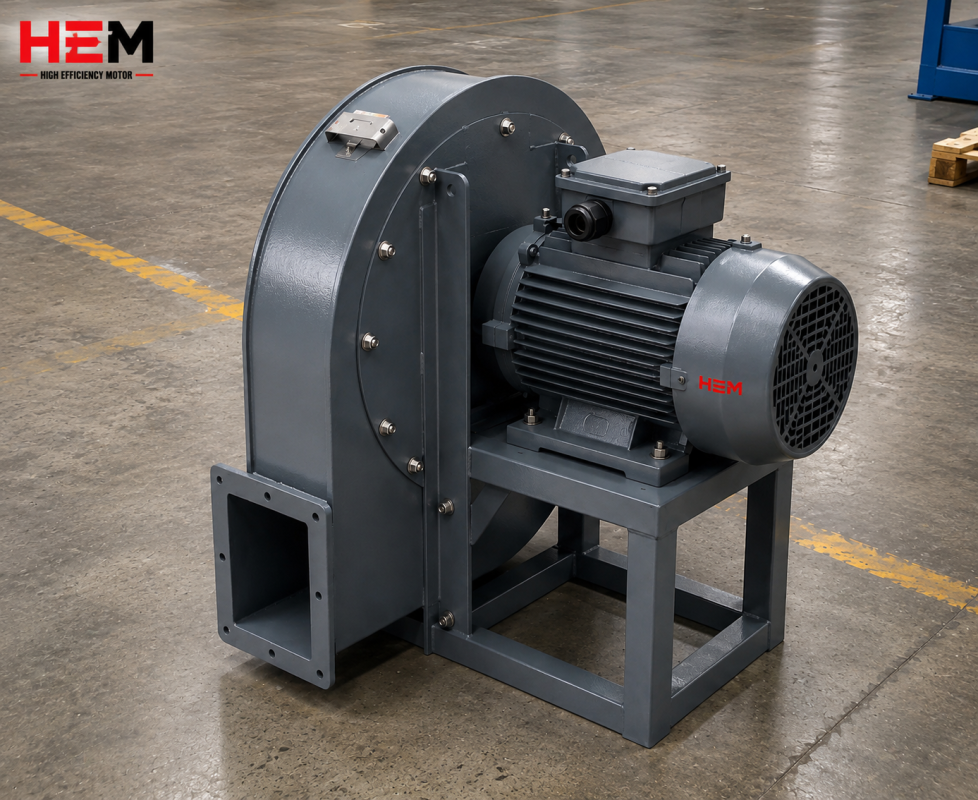
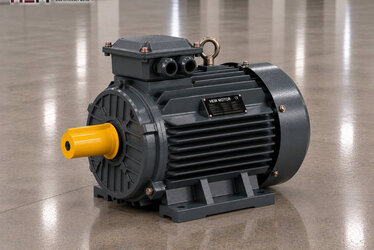
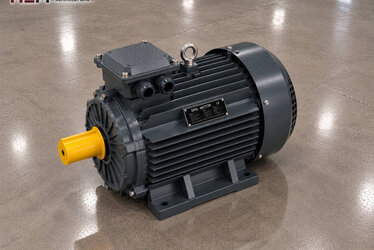
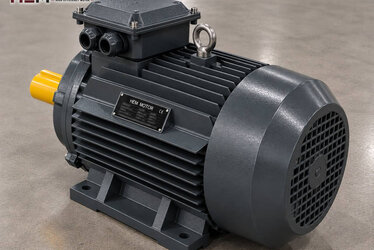
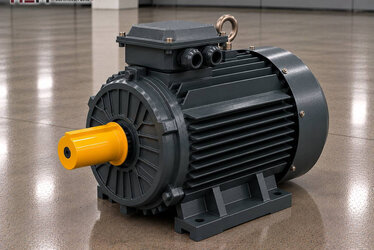
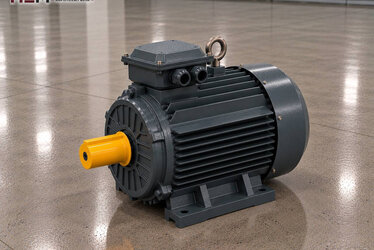
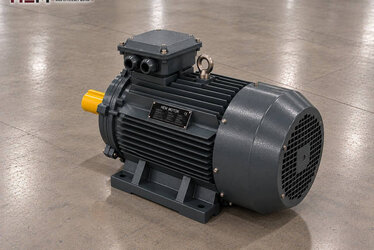
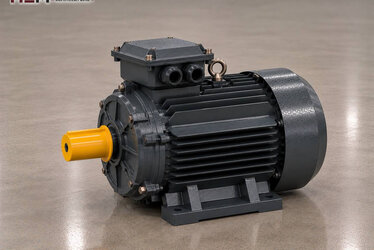
Ventilation means renewing the air in a building or plant, removing contaminated air and, where needed, supplying air to a process. The roof extractor on a factory, the jet fan under a car park ceiling, the dust extraction line in a workshop, the wall fan in a greenhouse and the blower feeding air into a treatment basin all serve the same purpose; in each of them a three-phase asynchronous motor turns the impeller or rotor. This page gives an overview of the motor side of ventilation machines: how each machine loads the motor, how speed is chosen, where the motor is placed and what an order requires.

Machines on a Ventilation Line and the Motor's Role
Roof and wall extractors remove hot, humid or odorous air from production areas. Most are axial; the motor carries the impeller directly on its shaft and runs at constant speed all day.
Duct fans and air handling units move fresh air against the resistance of filters, heaters and ductwork. Because more pressure is needed, centrifugal impellers and belt-and-pulley drives are common here.
Car park and tunnel fans push exhaust gas towards the extraction point. Details of these fans are on our jet fan motor page; where a certified set is required for smoke extraction in a fire scenario, the motor must be the design approved by the fan manufacturer.
Dust extraction and aspiration lines draw dust or chips from machine tools to a filter. As the filter loads, resistance changes and the motor current changes with it.
Blowers deliver a smaller volume of air at pressures a fan cannot reach: for treatment basins, pneumatic conveying or process air. A separate sub-page is being prepared for these machines: the Air Blower Motor page covers the motors of roots and side channel blowers in detail; here we only touch on the general framework.
Greenhouse and livestock house fans, and mine and tunnel heading ventilation belong to the same family; in these machines, working in dusty, humid or outdoor conditions, the ambient conditions matter more for the motor.
The Cost of Moving Air: What Does Motor Power Depend On?
A fan's shaft power is proportional to the product of the air volume it moves and the pressure loss it faces, and grows as fan efficiency falls. Roughly: P [kW] ≈ airflow [m³/s] × pressure difference [Pa] ÷ (1000 × fan efficiency). This is only a first estimate; the fan manufacturer's curve gives the exact value.
The fan laws say: when speed rises, airflow grows in the same proportion, pressure with the square and shaft power roughly with the cube. In practice, a small increase in speed raises motor power noticeably. The result depends on the system and is approximate; still, it is reason enough to check motor power before changing a pulley.
The blower side is different. In a positive-displacement roots machine, torque rises with pressure; throttling the outlet does not relieve the motor, it loads it.
Choosing Speed: 2, 4 or 6 Poles
On a 50 Hz supply a two-pole motor runs in the 3000 rpm class, a four-pole in the 1500 rpm class and a six-pole in the 1000 rpm class; the rated speed on the nameplate is slightly lower because of slip under load. For example, our 90L-4 model runs at 1,445 rpm and our 160M-6 at 970 rpm.
Large-diameter impellers need low speed for tip speed and noise, so 4 and 6 poles are the most common choice in ventilation. Two poles come to the fore in small-diameter high-pressure fans and side channel blowers. In a direct-drive fan the number of poles fixes the fan speed exactly; with a belt drive, intermediate speeds are obtained through the pulley ratio.
Is the Motor Inside or Outside the Airstream?
In axial extractors the motor usually sits in the centre of the casing, inside the air being moved. If that air is clean and cool, it helps cooling; if it carries vapour, oil particles or dust, the motor faces them too. A standard IP55 motor suits ordinary humidity and dust. Hot gas, corrosive vapour or an explosive atmosphere, however, are outside this motor's design limits; additional measures by the fan manufacturer or a special motor are required, and the condition must be stated in the order.
In belt-driven centrifugal fans the motor is outside the airstream and sits on slide rails. The point to watch here is the side load that belt tension places on the shaft; the motor pulley should not be chosen too small.
Depending on frame size, foot-mounted (B3), flange-mounted (B5, B14), foot-and-flange (B34, B35) and vertical (V1, V3, V5, V6, V15) arrangements are possible; the flange and shaft diameter are finalised at the order stage. For vertical-shaft roof fans, our vertical mounting V1/V5 article is a useful guide. An anti-condensation heater for outdoor fans and a PTC/PT100 winding sensor for fans that start and stop often are order options.
Starting and Speed Control
Fan load is light at low speed; on the other hand, the inertia of large impellers lengthens start-up. If the trip class of the overload relay is not chosen for this time, the motor may be switched off before it reaches speed. A soft starter or a star-delta connection reduces the current surge.
In ventilation it is common to lower speed with a frequency inverter rather than throttle airflow with a damper. The three-phase motors in our ranges can be driven by an inverter. If the fan is held at very low speed for long periods while full torque is also required, an independent cooling fan may need to be added; if the cable between inverter and motor is long, a dv/dt or sine filter is considered. Stating these two conditions in your order is enough. Details: inverter-compatible electric motors.
Motor Pre-Selection by Ventilation Machine
| Machine | Motor situation | Value to check | Example HEM model |
|---|---|---|---|
| Wall / roof extractor | In the airstream, direct drive | Impeller diameter, number of poles, ambient air | 1.5 kW 90L-4 (1,445 rpm) |
| Large-diameter low-speed fan | Long start-up, continuous load | Inertia, overload trip class | 7.5 kW 160M-6 (970 rpm) |
| Belt-driven centrifugal fan / AHU | Outside the airstream, on slide rails | Pulley ratio, shaft load | 11 kW 160M-4 (1,465 rpm) |
| Dust extraction / aspiration line | Load varying with filter condition | Current with clean and loaded filter | 30 kW 200L-4 (1,475 rpm) |
| Roots / side channel blower | Torque rising with pressure | Working pressure, relief valve | 3 kW 100L-2 (2,895 rpm) |
These rows give only a first idea; the right motor is determined by the machine's actual load, required speed, mounting and operating conditions together. If you are replacing a motor, start from the values on the old motor's nameplate.
Send Us the Following for an Order
To prepare a quotation we need: the machine type (extractor, duct fan, dust extraction, blower, etc.), the power in kW and speed in rpm required, supply voltage, mounting arrangement, whether the motor sits in the airflow, and the quantity. Photographing the existing motor's nameplate is the fastest route; see our send your motor nameplate article.
Prices are on the buy electric motors page; for WhatsApp and phone, see our contact page. Detailed motor selection by fan type is covered on fan and extractor motors, and building climate control on HVAC sector electric motors.
Frequently Asked Questions
Does reducing the speed of a ventilation fan strain the motor?
Generally no, because fan load falls quickly with speed. If the inverter will run the fan very slowly for long periods, the cooling fan on the motor shaft also slows down; whether an external fan is needed is then assessed with the order.
Can an extractor motor run inside the air it moves?
Yes, if the air is at normal temperature and clean or slightly humid. If hot gas, corrosive vapour or an explosive atmosphere is involved, a standard motor is not suitable; state this in your order.
Is there a difference between a blower motor and a fan motor?
The motor itself is the same standard three-phase motor; the difference comes from the machine. In a roots blower torque rises with pressure, whereas in a fan power changes roughly with the cube of speed. Details are given on the Air Blower Motor sub-page.
Can a standard motor be fitted to a smoke extraction fan?
Smoke extraction fans that must run during a fire require a certified fan-motor set. In this duty the motor must be the design approved by the fan manufacturer; our standard motor is considered only for normal ventilation duty.