English
 Français
 Türkçe
 Español
 Русский
 العربية

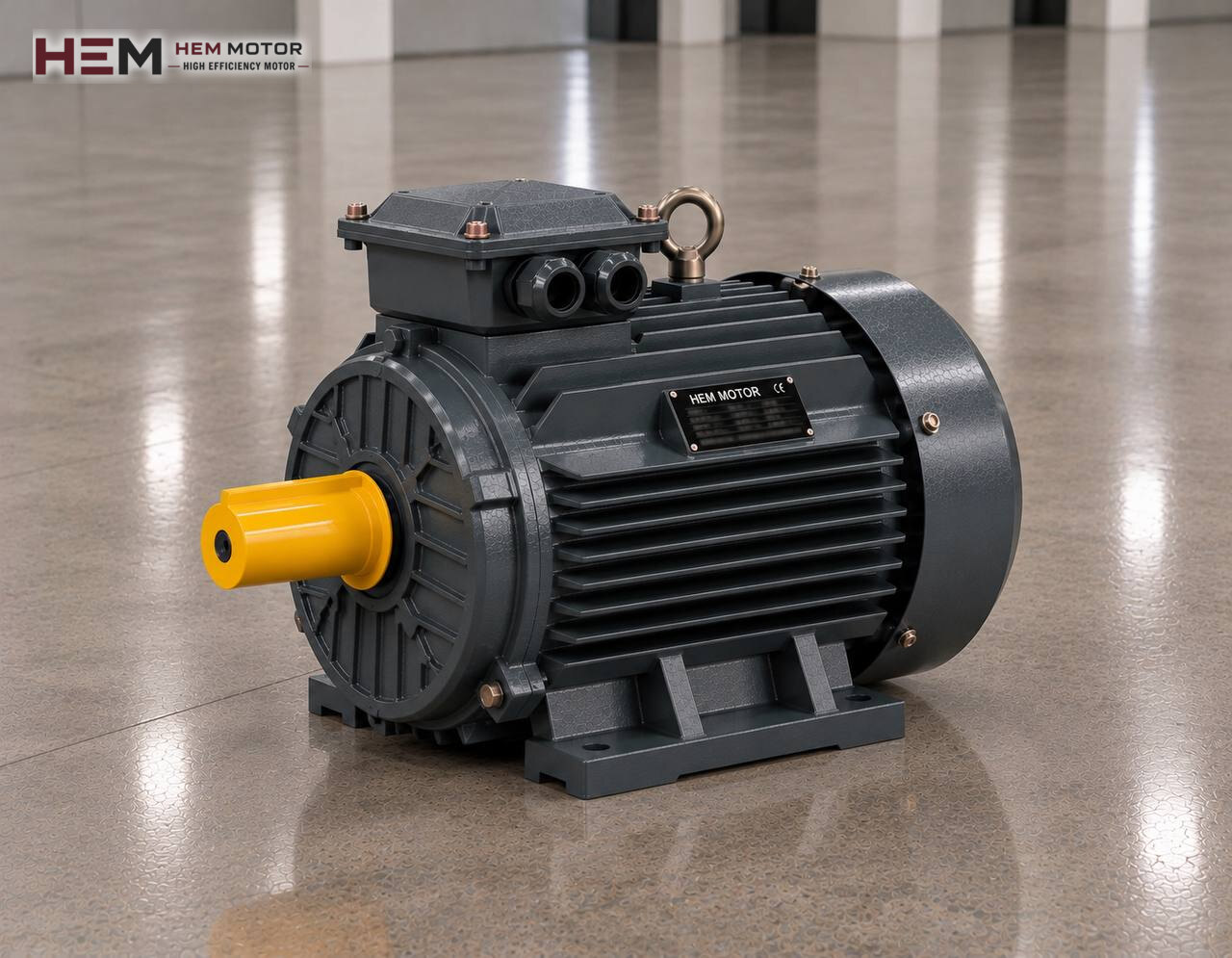
In commercial kitchens the hood above ranges, fryers, grills and ovens collects the grease vapour, smoke and heat rising during cooking. The fan that draws this air through the ducts and discharges it at roof or façade level often works metres away from the hood, as a cabinet (box) fan or a duct fan. In hotels, hospitals, canteens and catering production facilities this fan runs all day. The general overview of motors used in ventilation is on the ventilation electric motors page; here only the motor turning the kitchen exhaust fan is covered.

The Real Job of the Motor in Kitchen Exhaust: Turning the Fan Impeller
In a hood system the work done by the motor is turning the impeller of the exhaust fan. In cabinet-type kitchen fans this impeller is usually a forward-curved or backward-curved centrifugal wheel, and it overcomes the resistance built up by the hood filters, duct bends and roof outlet. Sometimes the motor turns the impeller shaft by belt inside the cabinet; sometimes the impeller is fitted directly on the motor shaft.
The tasks the motor does not take on should also be clear. Grease filters, the hood suppression system, fire dampers, duct cleaning and fresh air supply are matters for the kitchen ventilation designer and the fan manufacturer. The small built-in motors of domestic cooker hoods are also outside the scope of this page; the subject is industrial-scale fans running with a separate IEC-frame motor.
Greasy and Hot Air: Keeping the Motor Out of the Airflow
What separates kitchen exhaust from other ventilation work is the content of the air carried. Grease particles escaping the filter condense on cold surfaces and stick to the cooling fins and fan cover of the motor. The grease layer impairs cooling and also forms a flammable deposit. That is why the common choice in kitchen fans is a belt-driven layout in which the motor sits outside the airflow, in a side compartment of the cabinet or on a base moved outside the cabinet.
There are also designs in which the impeller is fitted directly on the motor shaft and the motor stays inside the exhaust air. If the motor of such a fan is to be replaced, this must be stated separately in the order, and the air temperature and grease load should be shared together with the fan manufacturer's data. Whether the motor position can be changed depends on the fan design and the manufacturer's decision.
Technical Information Needed for a Hood Fan Motor
Before a quotation is prepared, the fan type must be known: a cabinet fan, a duct fan or a roof exhaust? Then come the connection of the impeller to the motor (belt and pulley or direct drive), the motor position and the nameplate values of the existing motor. The power, speed, voltage, current and IEC frame size written on the plate are the most reliable starting point for a replacement.
The working pattern of the kitchen matters too. A fan running non-stop from breakfast to evening service and a fan switched on only for lunch service are not assessed in the same way. Information such as whether the fan is controlled by a speed controller or a stepped switch, and what the fan must do in a fire alarm, is obtained from the kitchen project.
The Link Between Exhaust Flow, Pulley Ratio and Motor Power
The power of a hood fan is calculated from the exhaust flow determined by the hood size and cooking appliances and from the resistance of the duct system; this calculation belongs to the kitchen ventilation project and the fan manufacturer. When selecting the motor, rather than redoing the calculation, the power and speed written on the fan plate or on the existing motor's nameplate are taken as the basis. Giving a single value such as "this many kW is enough for a hood fan" would be misleading.
In belt-driven cabinet fans the impeller speed differs from the motor speed and is set by the ratio of the pulley diameters. If the pulley is changed to increase flow after the kitchen is enlarged, the fan turns faster and its power rises roughly with the cube of speed; the old motor may then be insufficient. Measuring the motor current after a pulley change is a simple but effective check. In belt-driven layouts 4-pole motors of the 1500 rpm class are common; in direct-drive fans the motor speed must equal the impeller speed.
| Kitchen exhaust layout | Motor position relative to airflow | Load and maintenance point | Example HEM model |
|---|---|---|---|
| Small canteen, belt-driven cabinet fan | In the side compartment of the cabinet, outside the flow | Belt tension, pulley alignment | 0.75 kW, 1,420 rpm, 80M2-4 |
| Hotel or hospital kitchen, belt-driven cabinet fan | Outside the cabinet, on a base | Long running hours, belt wear | 1.5 kW, 1,445 rpm, 90L-4 |
| Catering production, several hoods on one fan | Outside the flow, on a separate motor stand | High duct resistance, grease build-up | 3 kW, 1,450 rpm, 100L2-4 |
These models are only examples; the final selection is made according to the power and speed given by the fan manufacturer, the pulley layout, the motor position and the conditions of the exhaust air.
Checking the Motor Stand, Pulley Side and Frame Dimensions
In belt-driven kitchen fans the motor is usually a foot-mounted (B3) frame fixed to a slide-rail stand that allows belt tensioning. The first piece of information to check in a replacement is the IEC frame size; then foot hole spacing, shaft height, shaft diameter and length, key size and the shaft end carrying the pulley are compared. If the pulley is to be taken off the old motor and fitted to the new one, the shaft diameter and keyway must be the same. The electrical values, i.e. voltage, connection and current, are also checked side by side. The frame size table can be used for dimensions.
Direct-drive cabinet fans may use flange (B5, B14) or foot-and-flange (B34, B35) motors. Which mounting arrangement is offered for which frame is summarised on the mounting arrangements page; flange and shaft dimensions are confirmed with the order.
Effect of Heat, Humidity and Cleaning in the Kitchen Environment
Even when the motor is outside the airflow, kitchen fan rooms can be hot. The catalogue values apply to an ambient temperature of −15 to +40 degrees and altitudes up to 1000 metres; if the fan room exceeds these limits or the motor stays inside the exhaust air, this must be written in the order. Our motors come with IP55 protection and class F insulation. IP55 covers dust and splashing water; it is not suitable for washing the motor with pressurised water or grease-dissolving chemicals. During duct and fan cleaning the motor should be covered and cleaning water must not be directed at the terminal box.
In humid fan rooms that warm up during the day and cool at night, an anti-condensation heater and a PTC sensor for monitoring winding temperature are order options. Periodically cleaning the grease layer that builds up on the motor frame is the simplest way to preserve the motor's own cooling.
Speed Adjustment by Service Hours and Long Running Time
Kitchen exhaust can run at full flow during service hours and at reduced flow during preparation. When a frequency inverter is used for speed adjustment, our three-phase ranges are suitable for this use; details are on the inverter-compatible electric motors page. Since fan load falls at low speed, external cooling is rarely needed; if the cable between motor and drive is long, a dv/dt or sine filter is considered. These conditions should be stated in the order.
Hood fans generally do not start frequently, but continuous operation reaching 14–16 hours a day puts bearing and belt maintenance in the foreground. A change in bearing noise or belt slip points more to the drive arrangement than to the motor. If the fan is required to keep running in a fire scenario, this is a design matter requiring separately certified equipment and is not met by a standard motor.
Information to Provide in a Replacement Request
To replace the motor of a hood fan you can send your request via WhatsApp. A nameplate photo of the existing motor together with power, speed, voltage, mounting type and quantity provides a sufficient basis for a quotation. Phone and WhatsApp numbers are on the contact page.
- Fan type (cabinet, duct, roof), the fan's machine plate and the kitchen area it serves
- A readable photo of the motor nameplate and the IEC frame size
- Belt-driven or direct drive; if belt-driven, pulley diameter and shaft diameter
- Whether the motor stands inside or outside the exhaust air
- Daily running time and whether a speed controller is used
- Supply voltage, mounting type (foot, flange) and required quantity
Product Groups to Review for a Kitchen Exhaust Fan
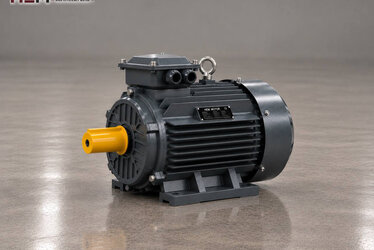
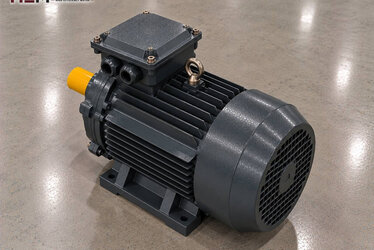
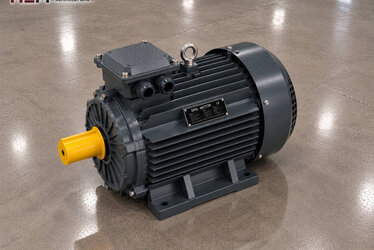
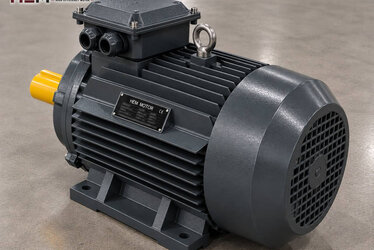
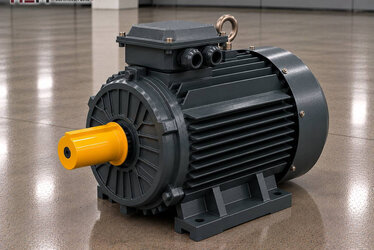
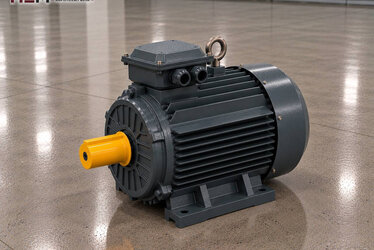
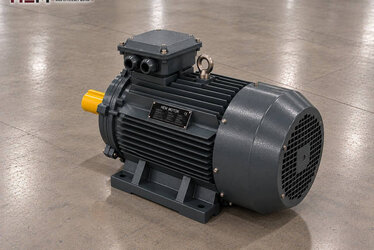
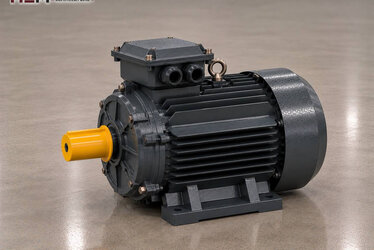
All models are in our electric motor store. For the small and medium powers common in kitchen fans, aluminium frame motors, and for larger central exhaust fans, cast iron frame motors can be reviewed. As examples, the 0.75 kW 80M2-4, 1.5 kW 90L-4 and 3 kW 100L2-4 models can be considered. These are examples; their suitability for the fan is verified separately.
Frequently Asked Questions
Why is grease build-up on a hood fan motor a problem?
The grease layer covers the cooling fins and fan cover of the motor, making heat dissipation harder, and also forms a flammable deposit. Keeping the motor outside the airflow and cleaning the frame regularly reduce this risk.
We enlarged the kitchen; is changing the fan pulley enough?
When the pulley changes, the impeller turns faster and the fan's power demand rises quickly with speed. Motor current should be measured after the change; if the nameplate current is exceeded, a more powerful motor should be assessed together with the fan manufacturer.
Do you also supply motors for domestic cooker hoods?
This page covers fans in commercial kitchens that run with a separate IEC-frame motor. The small built-in motors of domestic appliances are not included in HEM Motor's 2026 catalogue.
What should I do if the motor sits inside the exhaust air?
State this clearly in the order and share the exhaust air temperature. Whether the motor can be moved out of the flow depends on the fan design and is the fan manufacturer's decision.
Can I slow down the kitchen fan motor with an inverter?
Yes, our three-phase ranges can be used with a frequency inverter. Whether sufficient exhaust is maintained at low speed should be checked against the kitchen ventilation project.