English
 Français
 Türkçe
 Español
 Русский
 العربية

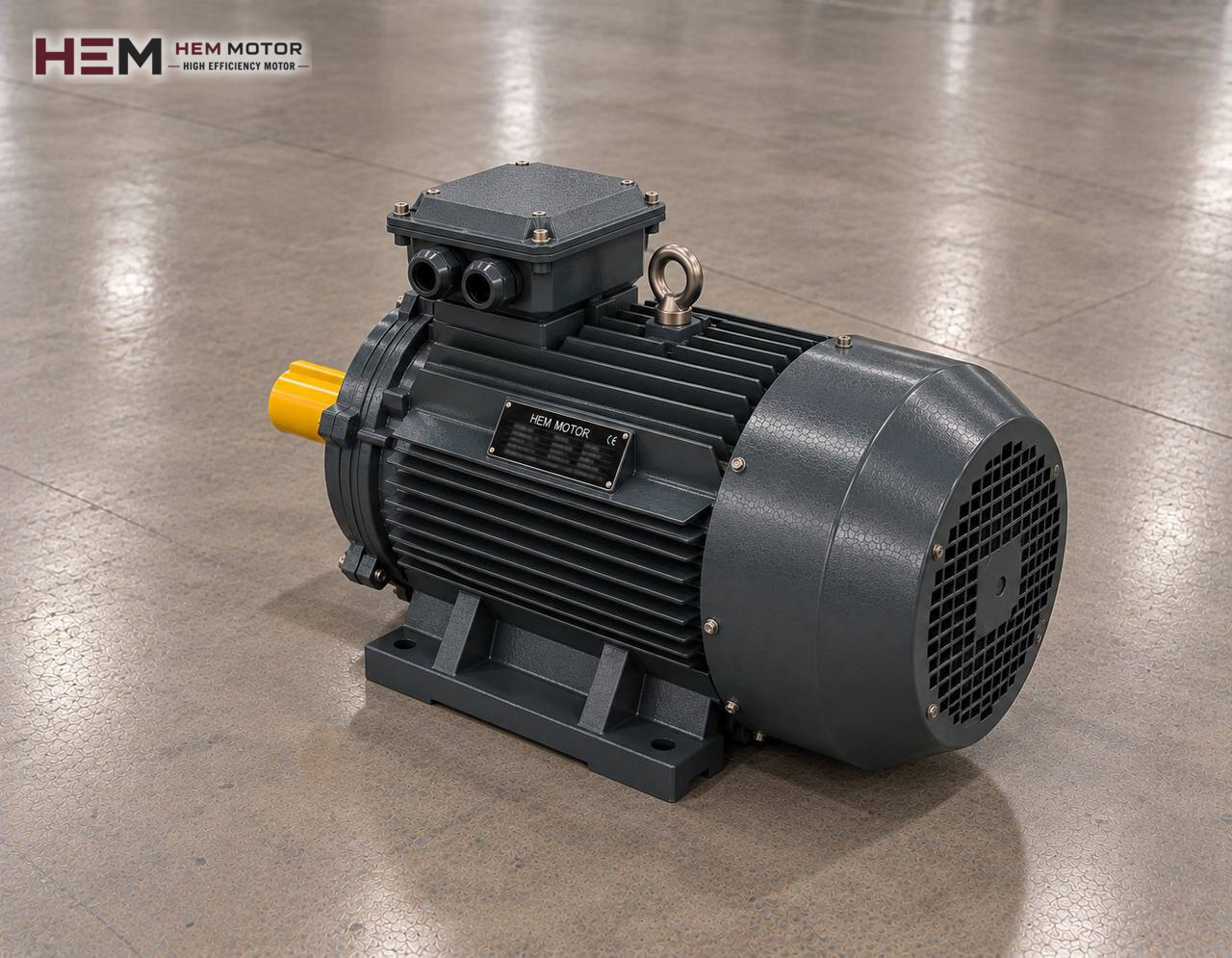
In production halls, ventilation fans run throughout the shift: they remove oil mist from machining, heat given off by furnaces and presses, and dust from filling and packing, and bring in outside air in its place. This page focuses on choosing the three-phase motor that drives these fans, from axial fans in the factory wall to centrifugal fans on central extraction lines; other motor topics in ventilation are collected on the ventilation electric motors page.

The Part the Motor Turns in Factory Fans
Three fan layouts are common in factories. On axial fans placed in wall and roof openings, the impeller is usually on the motor shaft. On centrifugal fans in central extraction and fresh air lines, the motor sits on a base beside the scroll housing and turns the wheel either directly through a coupling or via belt and pulley. On in-duct fans, the motor sometimes sits in the airflow and sometimes outside the duct.
The motor's job is limited to turning that wheel or impeller at the required speed. How much air is drawn from which zone, duct diameters, dampers, filters and hoods belong to the ventilation design. The fan wheel, bearing block and housing belong to the fan manufacturer; motor selection does not replace them.
What Needs to Be Clear Before Choosing a Factory Fan Motor
In factories a single fan failure is rarely alone; there are similar fans on the same line, and the maintenance team usually wants to standardise on one motor. Before starting the selection, these questions should be answered:
Is the fan axial or centrifugal, and is the motor connected directly or by belt? What airflow, pressure and wheel speed are written on the fan plate? What does the nameplate of the removed motor say for power, speed, voltage, connection and frame number? How many hours a day and days a week does the fan run? From what environment does it draw air: clean hall air, dusty or oil-mist-laden air, or the hot area around a furnace?
That last question matters. If the extracted air contains flammable solvent vapour or explosive dust, the job leaves the scope of a standard motor; such zones require an explosion-protected (Ex) motor, and these motors are not in HEM Motor's 2026 catalogue. Special cases for painting and welding areas are covered on separate pages.
Reading Wheel Power and Speed from the Fan Plate
What determines a fan motor's power is the power the fan demands at the shaft at its operating point. Fan manufacturers give this value in their selection software and on their plates. If there is no plate, or the fan has been changed later, the most solid source is the nameplate of the removed motor; but it should be kept in mind that that motor may have been wrongly selected over the years. Fitting an identical copy of a motor that constantly overheats or trips its thermal relay may not solve the problem.
On belt-driven centrifugal fans, wheel speed is set by the ratio of the pulley diameters. This lets the same fan run at different speeds in different factories; but every speed increase noticeably raises the motor load. If the pulley has been changed, the motor power must be reassessed as well. On direct-drive fans the wheel speed equals the motor speed, so the choice between synchronous speed groups such as 3000, 1500 and 1000 rpm is made according to the fan design.
| Fan application in the factory | Typical connection | What should not be overlooked | Example HEM model |
|---|---|---|---|
| Production hall wall or roof exhaust fan | Impeller on the motor shaft | Mounting orientation (horizontal/vertical), outdoor conditions | 2.2 kW 1000 rpm cast iron (112M) |
| Central extraction line centrifugal fan | Belt and pulley, motor on a slide rail | Pulley ratio, belt tension, bearing load | 7.5 kW 1500 rpm cast iron (132M) |
| Fresh air supply fan | Direct via coupling or belt-driven | Load that changes as the filter clogs | 4 kW 1500 rpm cast iron (112M) |
| Hot air removal around furnaces or presses | Motor outside the airflow | Ambient temperature where the motor sits | Selected according to power and speed in the fan data sheet |
These models are for guidance, not a final selection; they must be confirmed against the fan plate, the existing motor nameplate and the connection dimensions.
Slide Rail, Base and Flange: Dimensions Compared at the Connection
The first check in a replacement is the IEC frame number; the same frame number shows that basic dimensions such as shaft height, foot hole spacing and shaft diameter lie within the same standard framework. Detailed dimensions are in the frame size table.
On belt-driven fans the motor is fixed by its feet to a tensioning rail; the foot holes must line up with the slots in the rail and the pulley must align with the belt line. On direct-drive centrifugal fans, the gap between the two coupling halves and the shaft centre height must match precisely; otherwise the bearings fail early. On roof fans the motor may run vertically, with the shaft pointing down or up; this must be stated in the order. The B3, B5, B14, B34, B35 and vertical mounting arrangements offered by HEM are summarised on the mounting options page.
The electrical side is compared too: mains voltage, star or delta connection, whether star-delta starting is used, and rated current. The terminal connection of a new motor fitted to a fan started in star-delta must suit that method.
Hall Air, Dust and Heat: How the Factory Environment Affects Motor Choice
Factory fan motors work in very different conditions. The motor of a roof exhaust fan is exposed to sun and rain; the motor of a fan in a foundry or heat treatment hall is near hot air; the cooling fins of a fan motor in a marble, wood or textile workshop can fill with dust.
HEM motors have IP55 protection and class F insulation. Catalogue values are given for the condition where the ambient temperature at the motor is between minus 15 and plus 40 degrees and the site does not exceed 1000 metres. If this value is exceeded near a furnace or drying section, moving the motor out of the airflow should be discussed with the fan manufacturer, and the situation should be written clearly in the order. A PTC or PT100 sensor to monitor winding temperature, and an anti-condensation heater against moisture build-up during long stoppages, are order options.
On fans drawing oil-mist-laden air, an oily dust layer forms on the motor surface; regular cleaning preserves the motor's ability to shed heat. For the choice of frame material, see the aluminium and cast iron comparison.
Shift Length, Starting Method and Inverter Use
Factory fans are usually switched on at the start of a shift and off at the end; in three-shift plants they may turn for weeks without stopping. This continuous operation corresponds to duty type S1 for the motor. The really demanding moment is starting: a large-diameter centrifugal fan with a heavy wheel may take seconds to reach full speed. During this time the motor draws high current; for fans with high wheel inertia, the run-up time and starting method (direct, star-delta, soft starter or inverter) should be stated in the request.
In plants where air demand changes during the shift, fan speed is adjusted by a frequency inverter. Our three-phase ranges are suitable for speed control by inverter. Because fan load drops quickly at low speed, a self-cooled motor is enough in most cases; however, if the motor will stay at full load at very low frequency for long periods, an external fan is considered, and if the cable between drive and motor is long, a dv/dt or sine filter. On belt-driven fans, raising speed by inverter increases the motor load as much as changing the pulley does; if operation above rated frequency is planned, this should be discussed separately.
What to Send Us to Renew a Factory Fan Motor
To let us identify the equivalent motor quickly, it is enough to send the information via WhatsApp. How to take the nameplate photo is explained on the send the motor nameplate page.
- A legible photo of the motor nameplate: power, speed, voltage, current, connection and frame
- The fan machine's plate or data sheet: fan type, airflow, pressure and wheel speed
- Connection: direct, by coupling or by belt and pulley; pulley diameters if known
- Mounting type and position (horizontal, vertical shaft down/up) and a photo of the motor base
- Daily running hours, starting method and whether an inverter is used
- Environment of the motor: outdoor air, hot zone, dusty or oil-mist-laden hall
- Quantity required and any request for spare motors
If several fans are renewed at once, photograph each fan's nameplate separately; the motors of fans that look the same from outside may have different powers. You can send the information to the WhatsApp line on the contact page.
Motor Groups in the Shop for Factory Fans
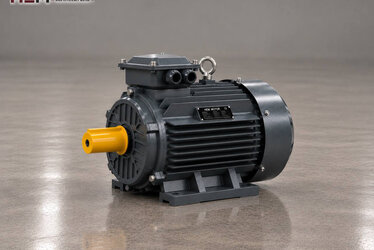
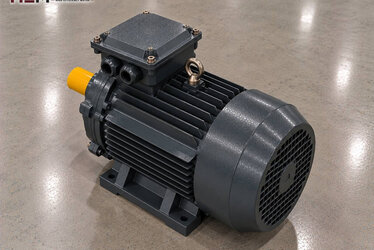
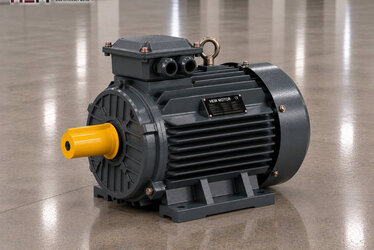
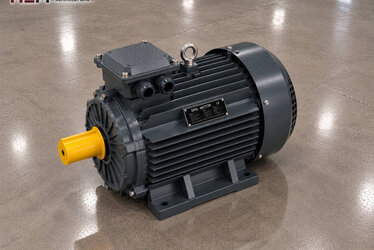
All models are listed in the electric motor shop. For fans mounted on slide rails and carrying belt loads, cast iron frame motors are usually examined; for low-power wall fans, aluminium frame motors can also be an option. Example product pages: 7.5 kW 1500 rpm cast iron motor, 4 kW 1500 rpm cast iron motor and 2.2 kW 1000 rpm cast iron motor. These are examples; their suitability for your fan is confirmed separately by power, speed and connection dimensions.
Frequently Asked Questions
My centrifugal fan motor keeps tripping its thermal relay; is fitting a motor one size up the solution?
The cause must be found first: the pulley may have been changed to raise speed, the damper may have been left fully open, or the belt may be over-tight. Increasing power hides these problems; the solution should be decided after the fan's operating point has been checked.
The motor on my roof fan runs vertically; can a standard motor be used?
HEM offers vertical mounting arrangements depending on the frame. Whether the shaft points down or up and the flange type should be stated in the order; this information matters because vertical operation affects the bearing arrangement.
Will running factory fans on an inverter affect motor life?
With a properly installed drive, fan applications are generally not demanding for the motor. Long cables, long operation at very low speed and running above rated frequency should be assessed separately.
Does the information on this page also apply to extraction fans in welding or painting areas?
Partly. In these areas, flammable vapour or fume properties change motor selection; refer to the relevant dedicated pages and the fan manufacturer's assessment.
Can we standardise fans of different brands in the same hall on a single motor type?
This is possible for fans whose power, speed, frame and mounting dimensions match, and it makes keeping spares easier. The nameplate and connection dimensions should be compared separately for each fan.