 English
 Français
 Türkçe
 Español
 Русский

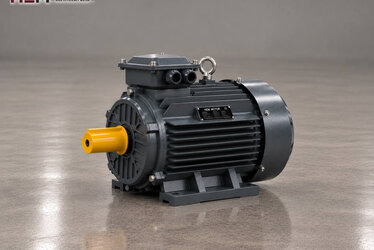
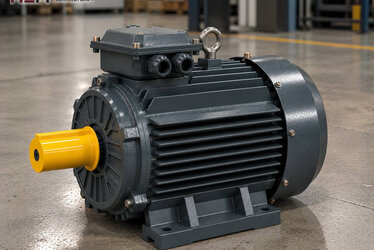
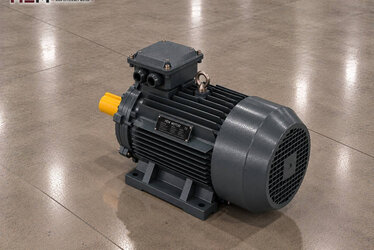
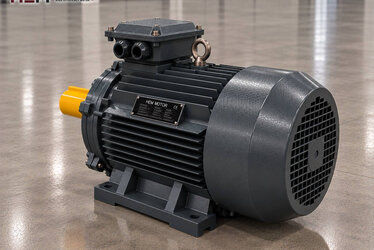
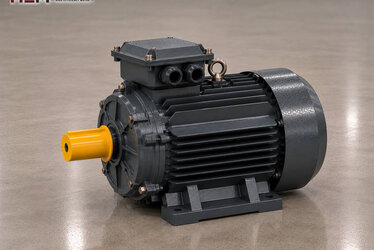
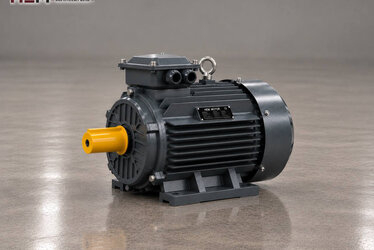
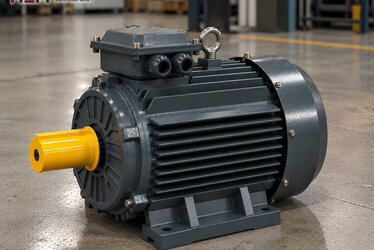
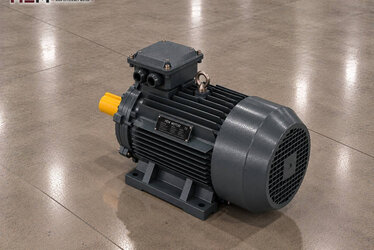
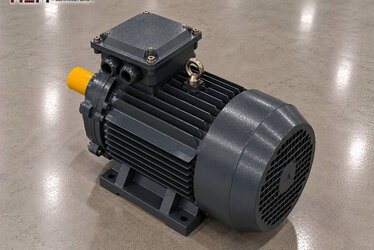
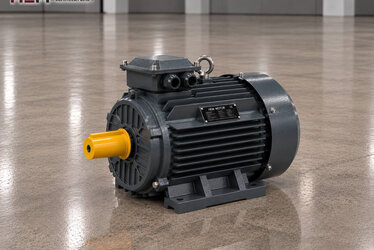
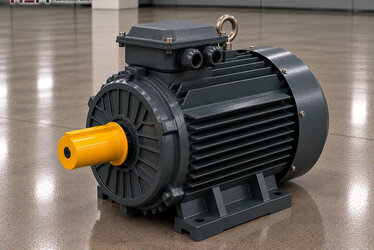
From the moment a marble block enters the factory until it leaves as a polished slab, it passes through at least four different machines: the cutter that slices the block, the bridge saw that brings the slab to size, the calibrating and honing line that levels the surface, and finally the machine that shapes the edge. Every one of these machines runs on a three-phase asynchronous motor, but each expects a different job from it. This page looks at the motor through the task of the machine and explains which details need to be confirmed when replacing a motor or buying a spare.

The cutting side: motor load on block-sawing machines
On cutting machines the motor has to keep the diamond segments moving through the stone at the same speed for hours. The load does not come in short bursts; it is long and continuous. On the cutting side, what matters most is that the motor can stay at its rated power for a long time without overheating.
Bridge saw
On a bridge saw the main motor turns a single large blade; on most machines the blade is driven through a belt and pulleys. Since the pulley ratio sets the peripheral speed of the blade, changing the motor speed also changes the cutting speed. Staying with the same number of poles as the old motor is the simplest way to keep the pulley arrangement unchanged. Bridge travel, head lift and table rotation are handled by separate, smaller drives.
Multi-blade block cutter
On block cutters several blades mounted on the same shaft enter the stone at once. The more blades there are, the higher the torque required at start-up and during the cut; on these machines the main motor becomes one of the largest consumers in the plant. The starting method, soft starters or inverter use are chosen according to the machine builder's electrical design.
Diamond wire saw
On a wire saw the motor turns the large flywheel that carries the diamond-beaded wire. The wire loop shortens as the cut progresses, and tensioning and feed are handled by a separate mechanism. Because wire speed is usually set with an inverter, operating conditions with a frequency converter should be discussed from the start when selecting the motor.
The surface side: calibrating, honing, polishing and brushing lines
Once the slab is cut, the work moves to the surface. Instead of one large motor, there are many heads side by side, each with its own motor. The head motor is usually mounted vertically with the shaft pointing down and turns the abrasive either directly or through a short transmission.
The calibrating machine brings the slab to a set thickness; the heads remove the most material here. The honing machine removes the marks left by calibration. On the polishing line the load drops as the abrasives get finer, but the number of heads grows. The belt motor carries the slab through the line at a set speed, and the bridge or beam motor oscillates the heads across the width of the slab.
The "este" machine is a surface machine used to give the slab a textured, aged look by brushing. A separate motor on each head is common here as well, and the selection logic is similar to honing heads. Because head type and brush arrangement vary by builder, the motor dimensions must always be taken from the existing motor.
Edge processing and auxiliary drives
Edge machines give the slab edge a chamfer, a half-round or a flat profile. Small spindle heads arranged in sequence each turn with their own motor; these motors are smaller than cutting motors but there are more of them. The machine's feed belt runs on a separate geared drive.
Other motor locations in the factory should not be forgotten: pumps that carry cutting water and slurry, the feed equipment of the slurry filter press, cranes and slab handling systems. The pump electric motors page covers water and slurry pumps, and the stone crushing plant motors page covers machines on the quarry and crushing side.
Water, slurry and humidity: the motor's real working environment
Stone processing is wet work. Blades, wires and heads are cooled with water all the time; the fine stone slurry splashes onto the motors and, once dry, clogs the fan cover and the cooling fins. Clogged fins prevent the motor from shedding its heat.
HEM Motor series have IP55 protection. IP55 means protection against water splashed from any direction and against dust; the motor is not designed to run under water, inside a continuous water jet or to be washed with pressurised water. If these conditions exist on the machine, the machine builder's protective cover, splash curtain or a special motor solution is needed; state this when ordering.
Moisture can condense inside a motor that cools down during night stops. An anti-condensation heater and a PTC/PT100 winding sensor can be added as order options. On vertical head motors, the sealing parts on the machine should also be checked so that water does not travel down the shaft into the motor.
Motor selection table by machine
| Machine | Motor's job | Value to check | Example HEM model |
|---|---|---|---|
| Multi-blade block cutter | Turning the blade shaft under long continuous load | Starting torque, continuous load, starting method | 75 kW 1,500 rpm cast iron 280S-4 (SF 1.15) |
| Bridge saw | Driving a single blade by belt and pulley | Number of poles, pulley ratio, foot mounting | 15 kW 1,500 rpm cast iron 160L-4 |
| Diamond wire saw | Turning the wire flywheel at adjustable speed | Inverter operation, cooling at low speed | 30 kW 1,500 rpm cast iron 200L-4 |
| Calibrating and honing head | Turning the abrasive on a vertical shaft | Vertical mounting, flange and shaft size | 7.5 kW 1,500 rpm cast iron 132M-4 |
| Edge processing head | Keeping the profile wheel at constant speed | Frame length, flange type, quantity | 4 kW 1,500 rpm aluminium 112M-4 |
The models in the table are examples; the final choice depends on the machine load, the required speed, mounting and operating conditions. The most reliable starting point is the nameplate of the existing motor.
Confirming dimensions when replacing a head motor
Head motors on surface lines are often built with a machine-specific shaft length, key and flange. Even if power and speed on the nameplate match, the motor will not fit the head if the shaft end or flange is different. A standard motor should therefore not be assumed to fit every stone machine directly.
HEM Motor models are offered in B3, B5, B14, B34, B35 and vertical V1/V3/V5/V6/V15 versions depending on frame size; flange and shaft dimensions are confirmed when ordering. For mounting options see the mounting arrangements question.
On wire saws and some bridge machines the motor is driven by an inverter. Our three-phase series are suitable for speed control with a frequency converter; for long periods at low speed and full torque an external fan may be needed, and with long cables a dv/dt or sine filter is considered; these conditions are stated when ordering. Details: use with an inverter.
What information should you send for a quote?
To help us identify the right motor quickly, send: machine type (bridge saw, block cutter, calibrating, honing, brushing, edge), motor power (kW), speed (rpm), supply voltage, mounting type (foot, flange, vertical) and the quantity you need. For head motors also add the shaft diameter, shaft length and flange size.
The quickest route is to send a photo of the existing motor's nameplate: find an equivalent motor from the nameplate. You can see models and current prices in the buy electric motors shop and reach us through the contact page. Models available for delivery from stock ship from our warehouse in Turkey.
Frequently Asked Questions
Can a standard flanged motor from the catalogue replace the motor on a honing head?
Only if the shaft diameter, shaft length, key and flange dimensions match the head exactly. Some head motors are built specifically for the machine, so the dimensions and nameplate of the old motor should be compared first.
Does replacing a bridge saw motor with a higher-speed motor make cutting faster?
If the speed changes, the blade's peripheral speed changes with the pulley ratio. The speed recommended by the blade maker may be exceeded, so staying with the same number of poles as the old motor is recommended.
Can the motor be used on a head that is constantly exposed to water?
An IP55 motor is protected against splashing water, but it is not designed to run under water or inside a continuous water jet. In such a position a protective measure on the machine side or a special motor is needed.
What can be done about humidity in motors that stand idle overnight?
An anti-condensation heater can be requested with the order. A PTC or PT100 sensor can also be added as an option to monitor winding temperature.
Is an aluminium frame suitable for the small motors on an edge machine?
Aluminium-frame models cover 0.25–11 kW and are often chosen for small head motors. In places with vibration and impacts a cast iron frame can be considered; the decision depends on the machine's mounting dimensions.