English
 Français
 Türkçe
 Español
 Русский

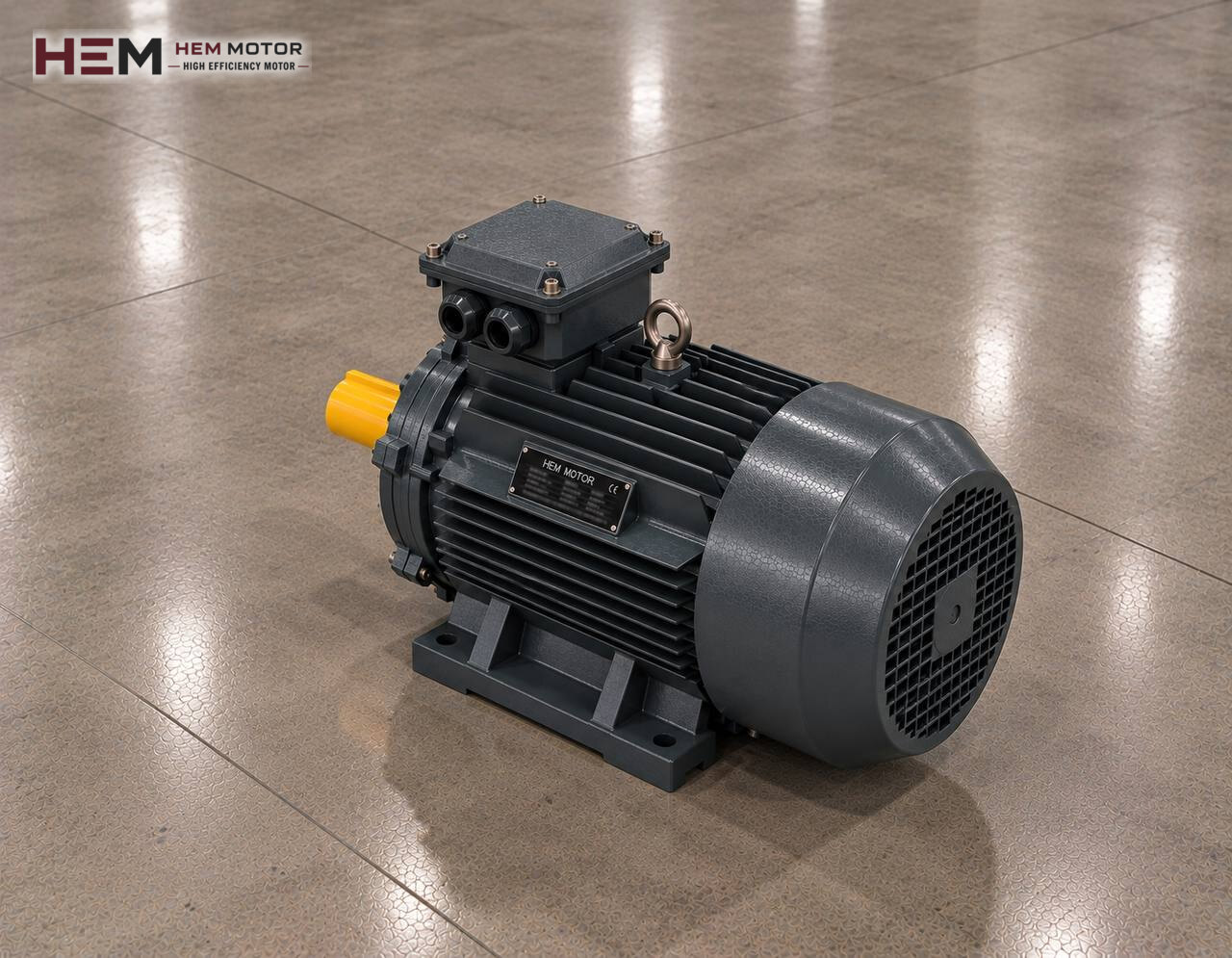
Small tiles, mosaic pieces and borders cut from travertine, marble or limestone are put through an antiquing process so that they lose their freshly cut, sharp look and take on the feel of aged stone. There are two common ways to do this: rubbing the pieces against each other in a rotating drum to round their edges, or texturing the slab surface with rotating abrasive brushes. All machines of a stone plant can be reached from the marble and natural stone processing motors page; this page focuses only on the electric motors that turn the antiquing drum and the brushing antiquing line.

How does drum antiquing work?
The drum is a lined steel cylinder or polygonal body rotating on a horizontal or slightly inclined axis. Stone pieces, water and usually coarse abrasive grains are loaded into it. As the drum turns slowly, the load is carried up, slides at a certain height and tumbles down; the pieces rub against each other and the abrasive, lose their edges, their surfaces become matt and their pores open.
Process time is measured in hours, depending on the hardness of the stone and the desired look. Throughout, the drum turns in the same direction at a low, constant speed. When the job is done, the drum is stopped, its lid is opened and the load is discharged either by tipping or by turning in reverse.
The drum motor's load: heavy, unbalanced and long
The load inside the drum is never evenly distributed around the axis. The mix of stone, water and abrasive collects on the rising side of the drum; the motor has to lift this mass on every turn. As the load tumbles and falls, the torque fluctuates. So the drum motor sees a load that runs continuously but is not smooth and has a shock component.
The hardest moment is starting. When a full drum is at rest, the load has settled at the bottom; on the first turn the motor must overcome both the drum's inertia and the settled load. If starting torque is insufficient, the motor cannot gain speed, draws high current for a long time and the protection trips. This becomes more marked as the fill ratio rises; the fill level recommended by the machine manufacturer should not be exceeded.
Starting options
On small drums the motor can be started directly on the mains. On large, heavily loaded drums a soft starter or inverter is preferred; an inverter also makes it easier to set drum speed to the type of stone and to turn slowly in reverse for discharge. With star-delta starting the starting torque drops, so it may be insufficient for a full drum; this point is assessed in the machine's electrical design.
Transmission: reducer, chain and belt
The drum should turn only a few to a few dozen revolutions per minute, while a standard motor is in the 1,000, 1,500 or 3,000 rpm class. The reducer bridges this large gap. In common layouts the motor turns the reducer through a belt stage, and the reducer turns the drum through a chain sprocket or directly through its shaft. On some machines the drum sits on two motor-driven rollers and turns by friction.
In slow, high-torque drives of this kind, 4- or 6-pole motors are common; at the same power a 6-pole motor gives higher shaft torque and reduces the reducer ratio. Which ratio is used depends on the machine design. For a motor that will be connected to a reducer, the electric motors for gear reducers page helps with flange and shaft compatibility.
Brushing antiquing machine
The second way to give an antique texture to a slab or large tile surface is brushing. In this machine the slab advances on a conveyor; heads arranged side by side above it turn nylon brushes with silicon carbide or diamond grit. The brushes wear away the soft veins of the stone, leave the hard parts and give the surface a wavy look that can be felt by touch.
Here each head turns with its own motor; the motor is usually vertical with the shaft facing down and drives the brush directly or through a short transmission. The load is much smoother than in the drum: the brush touches the slab with a set pressure and the motor runs continuously at constant speed. The belt motor is geared and its throughput speed is usually set with an inverter. On some machines the heads also oscillate across on a bridge; this movement too is provided by a separate small motor.
Effect of water, sludge and abrasive dust on the motor
Drum antiquing is a wet process; muddy water leaking from the lid seal or discharge opening can reach the base where the motor and reducer sit. On brushing machines, water spray and fine abrasive dust create a constant mist around the heads. In both cases, keeping the fan cover and frame fins clean is essential so that the motor can cool.
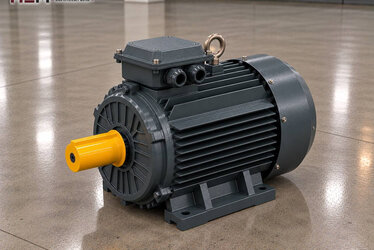
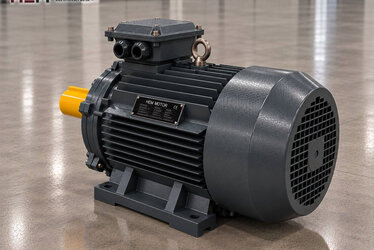
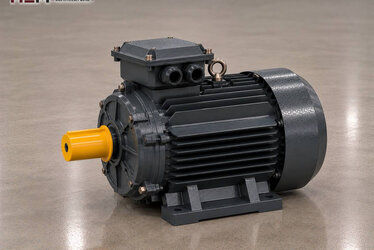
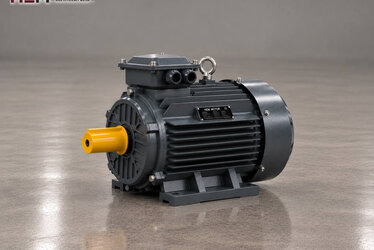
Standard HEM motors are IP55 protected; they are protected against water splashes and dust but are not designed for a continuous water jet, washing with pressurised water or running buried in sludge. If the motor is in the path of the sludge flow, a protective measure from the machine manufacturer or a special motor is needed; this should be stated in the order. On vertical brush motors, the sealing parts in the head are checked separately so that water does not run down the shaft into the motor. An anti-condensation heater and a PTC or PT100 winding sensor can be requested as order options.
Example motors by drive point
| Drive | Load type | Value to check first | Example HEM model |
|---|---|---|---|
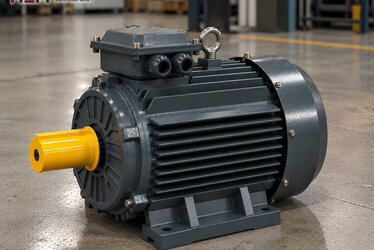
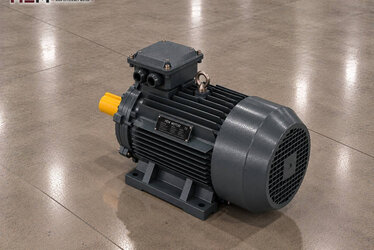
| Antiquing drum (geared) | Continuous, unbalanced, heavy starting | Starting torque, fill ratio, starting method | 6-pole 160L-6, 11 kW, cast iron |
| Small workshop drum | Continuous, medium fill | Reducer flange, shaft size | 6-pole 132M2-6, 5.5 kW, cast iron |
| Brush head | Continuous, smooth, on a vertical shaft | Vertical mounting, flange and shaft end, quantity | 4-pole 112M-4, 4 kW, cast iron |
| Brushing line conveyor | Low speed, adjustable | Reducer connection, inverter operation | 4-pole 80M1-4, 0.55 kW, cast iron |
The pairings above are meant as guidance; the right motor is determined by the real load of the drum or head, the desired speed, the connection style and the workshop conditions. The nameplate of the motor you already have is always the soundest starting point.
Mounting options and speed adjustment
Drum motors are usually foot-mounted on a base and flanged to the reducer; brush head motors work vertically with a flange. HEM's three-phase series include B3, B5, B14, B34, B35 and vertical V1/V3/V5/V6/V15 arrangements depending on frame size. We verify the flange diameter and shaft end together before the order; details are in the mounting arrangements question.
To change drum speed according to stone type or to adjust belt throughput, the motors can be driven by a frequency inverter. If the drum motor will turn at low frequency with full torque for many hours, its own fan may not provide enough cooling and an independent fan is added; if the cable between drive and motor is long, a dv/dt or sine filter is considered. State this operating mode in the order; details are on the inverter operation page.
What to send for a quote
So that we can quickly identify the right motor, share the following: whether the machine is a drum or brushing type, which point the motor turns (drum, brush head, conveyor), the power (kW) and speed (rpm) of the existing motor, your site voltage, the mounting type and the quantity needed. If the drum has a reducer, the reducer's flange size helps; for a brush head, the shaft diameter and length.
A nameplate photo of the old motor is often enough on its own: equivalent motor from a nameplate photo. The model list with current prices is on the electric motor sales page; use the contact page to reach us by WhatsApp or phone.
Frequently Asked Questions
A full drum struggles to start; do I need a bigger motor?
First check whether the fill ratio is within the manufacturer's recommended limit and look at the starting method. Star-delta lowers starting torque and may be insufficient for a full drum; a soft starter or inverter often solves the problem. If these are suitable and the motor still struggles, a higher power is considered.
Is there a benefit in using a 6-pole instead of a 4-pole motor on the drum?
At the same power a 6-pole motor turns at a lower speed and gives higher torque at its shaft, which reduces the reducer ratio. However, if the existing reducer and pulleys were chosen for a 4-pole motor, the speed change also changes drum speed, so the transmission should be reviewed at the same time.
Can the drum be turned in reverse for discharge?
On a three-phase motor the direction of rotation is reversed by swapping two phases; with an inverter the change of direction is smoother. The drum must stop completely before reversing; reversing a full drum while it turns puts shock loads on the reducer and the motor.
Do all brush head motors run at the same time?
On most lines yes, but if the heads are switched on together the total starting current rises. Starting the heads one after another a few seconds apart eases the load on the panel and the supply; this sequence is set up in the machine's controls.