English
 Français
 Türkçe
 Español
 Русский

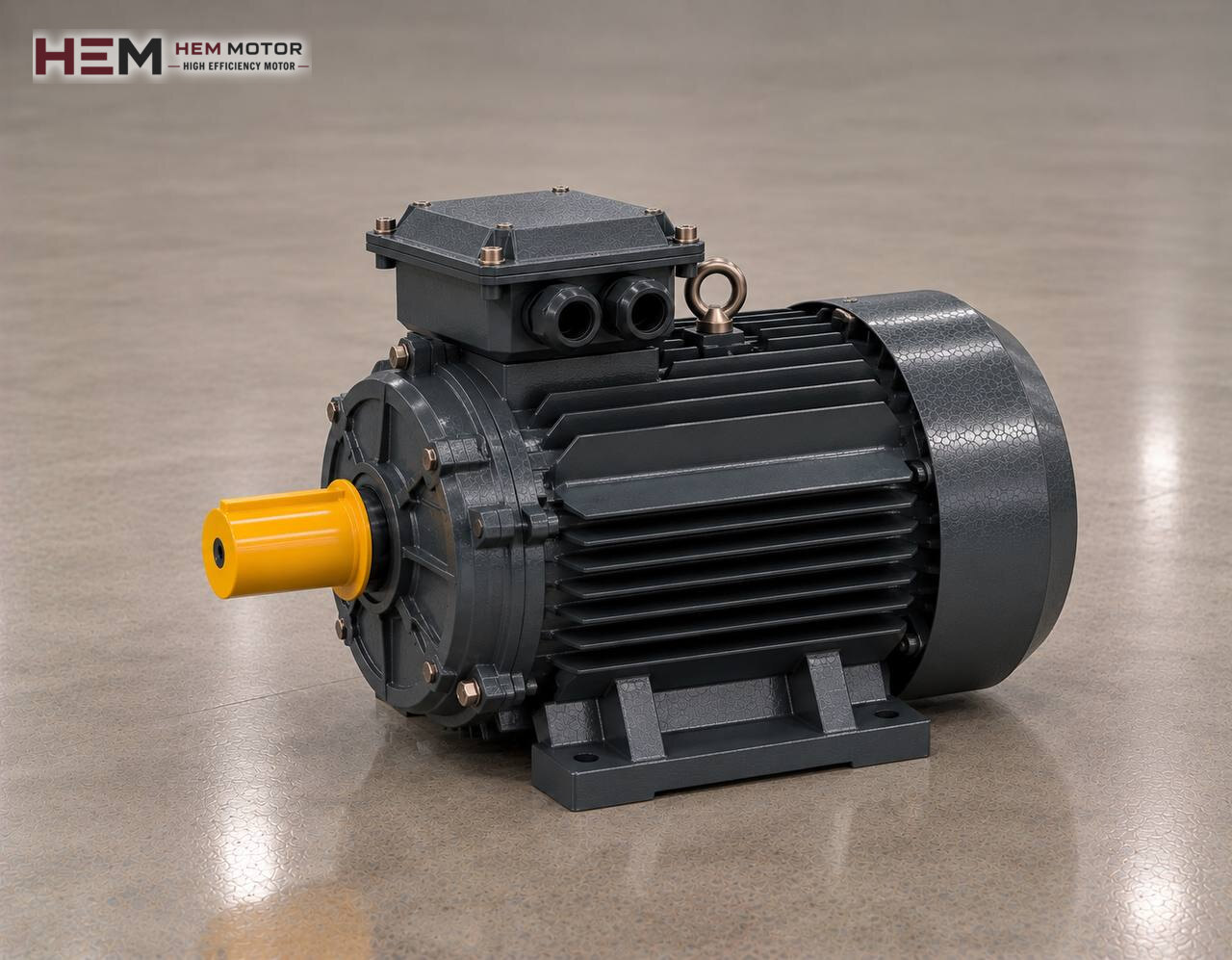
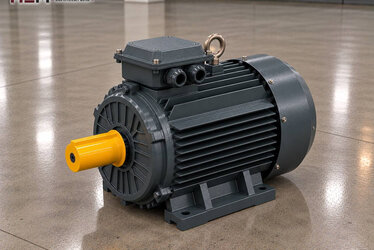
A block cutter is known in the Turkish stone trade as the “este”. It turns a raw quarry block straight into slabs or thick slices with large-diameter diamond blades; unlike a gang saw, it cuts with rotating blades rather than reciprocating steel strips. You can reach the other machines of a stone plant from the marble and natural stone processing motors page; this page covers the three-phase motors that turn the block cutter's blade spindle, its horizontal undercut blade and its auxiliary movements.

The cutting layout of a block cutter
A block cutter consists of a bridge sitting on two or four columns and a head moving up and down on that bridge. The horizontal spindle in the head carries one or several vertical blades. The block is placed on a carriage that runs on rails and is passed under the blades. On each pass the blade goes a little lower; this back-and-forth continues until the block is sliced from end to end.
On multi-blade heads the spacing between blades is set with spacer bushes according to the slab thickness required. Single-blade heads are used for thick slices or rough sizing. Some block cutters also have a horizontal undercut blade: once the vertical blades reach the required depth, the horizontal blade enters from the base and separates the slices from the block. The slab then breaks free without needing a separate machine.
Main blade motor: large mass, steady cutting
Block cutter blades run at a much higher cutting speed than gang saw strips, and their diameters are large. Blade and spindle form a heavy rotating mass. Once this mass is up to speed, the cutting load is fairly steady; the motor draws a current that rises when the head sinks into the stone on each pass and falls when it idles at the end of the pass.
The main factors behind the current are the number of blades, plunge depth, carriage travel speed and stone hardness. In granite the operator keeps the plunge shallow and the carriage slow; in marble deeper and faster work is possible. Adjusting carriage speed while watching motor current is the practical way to use the main motor near its limit without overloading it.
Connection of the blade spindle
The main motor usually stands foot-mounted on the bridge and turns the blade spindle through multiple belts. The pulley ratio brings motor speed down to the peripheral speed the blade needs. As blade diameter shrinks (through dressing and wear), peripheral speed drops at the same rpm; on some machines this difference is compensated with a drive. If the existing pulleys are to be kept, the new motor must have the same pole count as the old one.
Starting and power failure
The large mass of blades and pulleys lengthens the start. With direct-on-line starting the high current can strain the plant transformer; whether star-delta, a soft starter or a frequency inverter is used is decided by the electrical design. Motor protection must be set to allow this long run-up.
If power is lost during a cut, the blade stops inside the stone. Lifting the head slightly before restarting keeps the motor from a heavy start with a loaded blade. This step is done according to the machine maker's instructions. A PTC thermistor or PT100 sensor embedded in the winding is an order option; with it the real winding temperature can be watched during long starts.
Horizontal blade, carriage and head movements
The horizontal undercut blade turns with its own motor and needs less power than the main blade; it is usually placed at the side of the head. The carriage carrying the block runs on a geared motor, and its speed is mostly set with a drive. Raising and lowering the head is done with a lead screw and a small geared motor. For matching these drives with a gearbox see electric motors for gear reducers.
The pump that feeds water to the blades and the pumps in the settling system that recovers cutting water run on separate motors; pump drives are covered on the pump electric motors page.
Environment: water, stone slurry and open yards
Block cutters work sometimes in a closed factory and sometimes under a semi-open shed near the quarry. Plenty of water is fed to the blades throughout the cut; although the main motor on the bridge stays partly out of the splash, the horizontal blade motor and the carriage motor are close to the slurry. Dried stone dust clogs the fan cover grille; cleaning at the end of each shift is the easiest way to prevent overheating on these machines.
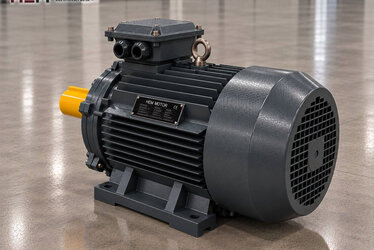
HEM three-phase series are IP55. This class is adequate against dust and splashing water reaching the motor, but the motor is not intended to stand under a water jet or to be hosed down. In that case a guard or a special motor is needed on the machine side; state this in the order. In a semi-open yard the temperature swing between night and day can cause condensation inside the motor; an anti-condensation heater is an order option.
Example motors for block cutter drives
| Drive | Load feature | Deciding information | Example HEM model |
|---|---|---|---|
| Main blade spindle (multi-blade) | Heavy mass, long start, steady cutting | Number of blades, pulley ratio, starting method | 55 kW 1,485 rpm cast iron 250M-4 |
| Main blade spindle (single blade) | Thick slices, medium mass | Blade diameter, pole count | 37 kW 1,485 rpm cast iron 225S-4 |
| Horizontal undercut blade | Short, deep cutting | Mounting position, flange and shaft end | 7.5 kW 1,460 rpm cast iron 132M-4 |
| Block carriage travel | Geared, adjustable speed | Gearbox connection, drive | 2.2 kW 1,450 rpm cast iron 100L1-4 |
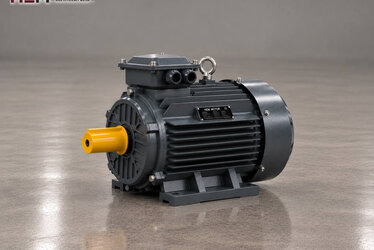
The ratings reflect the range commonly seen on this type of machine; they are not a final selection. The suitable motor is determined by the real load of the machine, the required speed, the mounting arrangement and the operating environment. When replacing the main motor, the first thing to look at is the old motor's nameplate.
Mounting and running on a drive
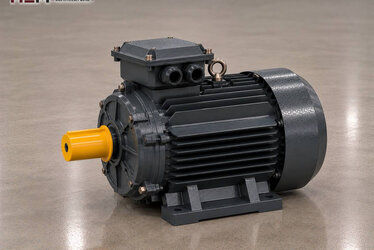
Main motors are mostly foot-mounted on the bridge; flange designs are common for the horizontal blade and travel motors. Depending on frame size, B3, B5, B14, B34, B35 and vertical V1, V3, V5, V6, V15 options are available; we check the flange size and shaft end together with you before the order. Details are in the mounting arrangements question.
If a drive will be used to keep blade peripheral speed constant or to slow the carriage according to the stone, our motors are suitable for this. On a motor that will carry a heavy load at low frequency for hours, the fan on the shaft end may not be enough; in that case an independently powered fan is added. If the drive panel is far from the bridge, a dv/dt or sine filter is considered for the output cable. Brief information is on the inverter operation page.
Information needed for a quotation
When writing about a block cutter motor, state: the machine type (single or multi-blade, with or without horizontal blade) and which drive the motor is on, power (kW), speed (rpm), supply voltage, mounting type, quantity required and starting method. If the main motor is belt-driven, add the pulley diameter as well.
Sending a nameplate photo is the fastest route: find an equivalent motor from the nameplate. Power and speed options are listed with prices on the shop page; our WhatsApp and phone numbers are on the contact page.
Frequently Asked Questions
What is the difference between a block cutter and a gang saw from the motor's point of view?
On a gang saw the motor drives reciprocating strips through a flywheel and connecting rod. On a block cutter the motor turns large blades via belts; the load stays rotary and is adjusted with carriage speed. Both have long starts, but the mechanical transmission is completely different.
Should motor speed be increased as the blade gets smaller?
As blade diameter decreases, peripheral speed falls at the same rpm and cutting slows down. On some machines this is compensated with a drive. When raising the speed, the maximum speed allowed by the blade maker must not be exceeded.
Is a separate motor used for the horizontal undercut blade?
On most block cutters, yes. The horizontal blade turns with its own motor and needs less power than the main blade. Since the shaft end and flange size may be specific to the machine, the old motor should be measured before replacement.
The main motor strains the transformer when starting; what can be done?
Instead of direct-on-line starting, star-delta, a soft starter or a frequency inverter can be used. Which one fits is assessed together with the plant's electrical design; a bigger motor does not solve this problem.
Does a block cutter motor in a semi-open yard need extra precautions?
Rain and hose water should not reach the motor directly; if needed, a guard should be added to the machine. Where temperature swings are large, an anti-condensation heater can be requested in the order.