English
 Français
 Türkçe
 Español
 Русский

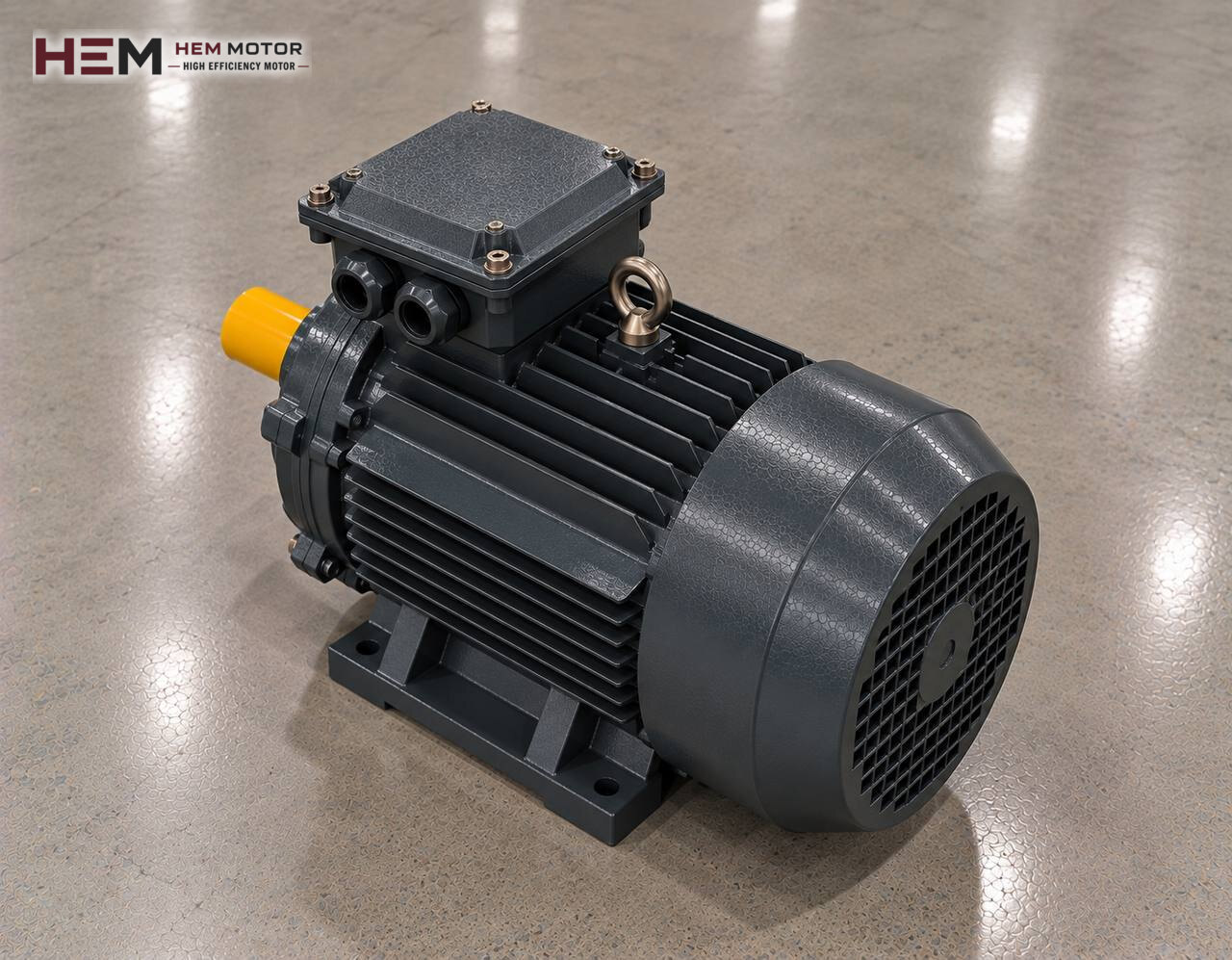
The pores, cracks and natural voids of marble and travertine slabs are filled with resin before polishing; on granite and fragile marbles a mesh is often bonded to the back face with epoxy. The resin does not harden on its own: it has to be held at a certain temperature for a certain time. A resin filling and epoxy curing line brings these two steps, application and curing, together. For the other machines of a stone plant see the marble and natural stone processing motors page; below, only the motors on this line are described.

Line flow: heating, pouring, holding
On a typical line the slab first enters a preheating section; when the stone is warm the resin flows more easily and penetrates deeper into the pores. Then at the application station the resin is poured by hand or by a dispensing head and spread with a trowel or squeegee. In some plants the slab is placed under a cover and vacuum is applied, drawing the air out of the pores so the resin is sucked into the voids. The last step is curing: the slab either passes slowly through a tunnel with circulating hot air or is placed in a multi-level drying rack and left for hours.
No motor in this flow cuts or abrades the stone. The motors' work is to transport, circulate air, mix resin and create vacuum. The loads are small and smooth but running times are long; some fans turn non-stop for the whole shift.
Curing oven fans: the longest-running motors on the line
What keeps the curing section at an even temperature is the air passing over the heaters and blown between the slabs. Circulation fans turn this air in a closed loop; the exhaust fan removes vapour from the resin and excess moisture. Fan load rises quickly with speed; it changes approximately with the cube of speed, although the exact relationship depends on duct and oven resistance. That is why it is common to set the temperature balance by adjusting fan speed with a drive.
The point to watch here is the motor's position. A standard motor is not made to run inside the hot air of a curing tunnel; the motor frame should stay outside the tunnel with the fan shaft passing through the wall. If the design does not allow this layout and the motor will sit in a high ambient temperature, state it in your order. Wider information on fan motor selection is on the fan and exhaust fan motors page.
Whether resin vapour is flammable depends on the product used. If the area is classified as an explosive vapour zone, an explosion-protected motor is required; such motors are not included in HEM Motor's 2026 catalogue. The classification is a decision for the plant's safety specialist and the line manufacturer.
Slab transport and rack lift
The conveyors carrying the slab between preheating and the application station and along the tunnel turn slowly, so their motors are connected to gearboxes. While the resin is still wet the slab must not be jolted; a sudden start can make the filler run to one edge. For this reason conveyor motors are often run from a drive with a soft acceleration and deceleration ramp. The electric motors for gearboxes page can be used for gearbox matching.
Multi-level drying racks have a lift or rack elevator that raises slabs level by level. Because this drive lifts a load and holds it at a certain height, the load must not descend when the motor stops; this task is left to the gearbox's own self-locking or to a brake. If a brake motor is needed, state it in your order. The lifting motor runs briefly but often; the number of starts per hour should be obtained from the machine manufacturer.
Resin mixer, dosing and vacuum pump
On lines using two-component resin, resin and hardener are combined in a set ratio in a mixer or by dosing pumps. These motors are low power; the mixer usually has a geared arrangement, the pump a direct-coupled one. On lines with vacuum there is a vacuum pump that draws the air from under the cover; the pump runs briefly for each slab and waits until the next one.
With these small drives the first issue is usually not power but connection dimensions. The pump or mixer flange was made for the old motor; the new motor's flange type and shaft diameter must be the same. If the workshop has only single phase, HEM's single-phase motor series in the 0.18–5.5 kW range can be considered for small mixers and pumps.
Temperature, resin contamination and maintenance
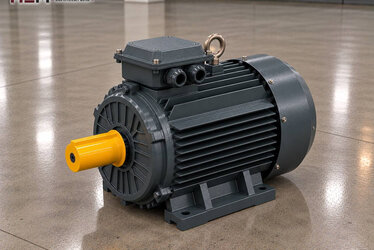
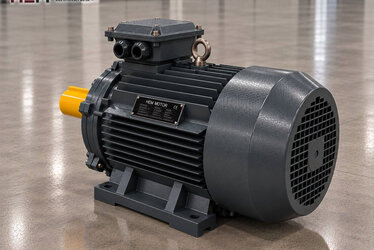
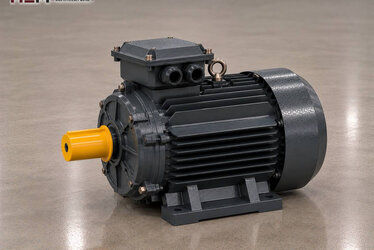
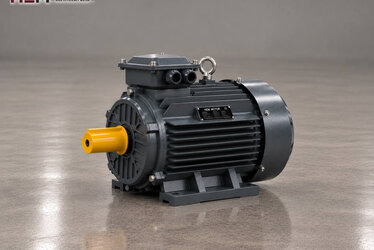
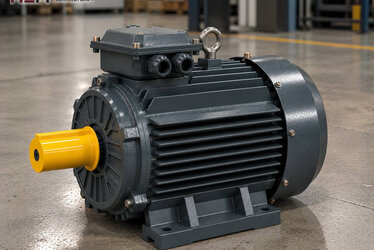
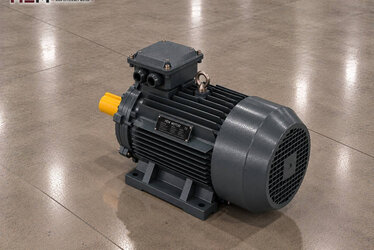
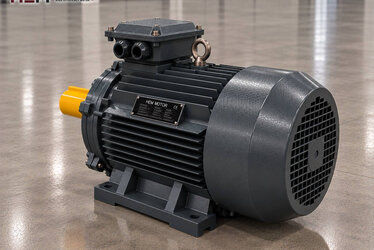
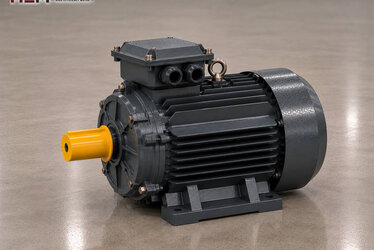
What tires the motor most on this line is heat. Conveyor motors close to the tunnel also absorb the heat radiated by the hot wall. HEM Motor three-phase motors have class F insulation and IP55 protection; even so, a high ambient temperature makes cooling harder. A PTC or PT100 sensor in the winding is an order option and allows overheating to be monitored from the actual winding temperature.
When a drop of resin lands on the motor it hardens and sticks to the fins and the fan cover. Clogged spaces between fins reduce cooling. Motors around the application station should be kept away from resin with a protective cover or splash curtain. If the line will be shut down for weeks, a condensation heater that prevents moisture building up inside the frame can also be requested in the order.
Example motors on a curing line
| Task on the line | Operating pattern | To be specified | Example HEM model |
|---|---|---|---|
| Oven circulation or exhaust fan | Continuous for the whole shift, adjustable speed | Motor kept outside the tunnel, ambient temperature | 1.5 kW 3000 rpm aluminium 90S-2 |
| Slab conveyor | Geared, slow, smoothly accelerating | Gearbox flange, ramp via drive | 0.55 kW 1500 rpm aluminium 80M1-4 |
| Rack lift | Short lifting, holding the load | Need for a brake, starts per hour | 2.2 kW 1500 rpm cast iron 100L1-4 |
| Resin mixer or vacuum pump | Small, intermittent load | Flange type, shaft diameter, number of phases | 0.37 kW 1500 rpm aluminium 71M2-4 |
The models in the table are examples. The suitable motor is determined by the drive's actual load, the required speed, the mounting arrangement and the ambient temperature; the nameplate of the existing motor is the most reliable starting data.
Mounting options and speed control
Depending on frame size, a choice can be made between foot-mounted B3, flange-mounted B5 and B14, foot-and-flange B34 and B35 and vertical V1, V3, V5, V6, V15 versions; we confirm with you at the order the flange and shaft dimensions that will connect to the gearbox, fan or pump. Options are listed in the mounting arrangements question.
Feeding fan and conveyor motors from a drive is normal on these lines and our three-phase motors are suitable for it. If a conveyor motor will deliver full torque at low speed for hours, the air from its own fan may not be enough and a separately powered cooling fan is added; if the control panel is far away, a dv/dt or sine filter at the drive output is considered. Writing these conditions in your request is enough; brief information is on the use with an inverter page.
What to send with a price request
For a quotation, share: the machine or line section (oven fan, conveyor, rack lift, mixer, vacuum pump); power (kW); speed (rpm); mains voltage and number of phases; mounting arrangement; and how many units are needed. For fan motors, add where the motor sits in relation to the oven wall; for the lift, whether you want a brake. A nameplate photo of the old motor shortens the process: find an equivalent motor from the nameplate.
Models with current prices are on the electric motor shop page, and WhatsApp and telephone details on the contact page.
Frequently Asked Questions
Can I put the curing oven fan motor inside the oven?
A standard motor is not designed to run in the hot air of a curing tunnel. The motor frame should stay outside the oven with only the fan shaft entering. If another layout is unavoidable, state the ambient temperature in your order.
Filler resin runs to the edge of the slab when the conveyor starts; should the motor be changed?
The problem usually comes not from the motor but from the abrupt start. Defining a soft acceleration ramp on a drive is often enough; if the motor already runs on a drive, the ramp time can be lengthened.
Can a standard motor be used in the area with epoxy vapour?
It depends on the flammability of the vapour and the zone classification. If the area counts as an explosive atmosphere, an explosion-protected motor is required; these motors are not included in HEM Motor's 2026 catalogue. The decision follows the plant's safety assessment.
Why might the load slide down when the rack lift motor stops?
If the gearbox is not self-locking and there is no brake, the load can drive the motor backwards. In that case a brake motor or a self-locking gearbox is needed; state your requirement in the order.