English
 Français
 Türkçe
 Español
 Русский

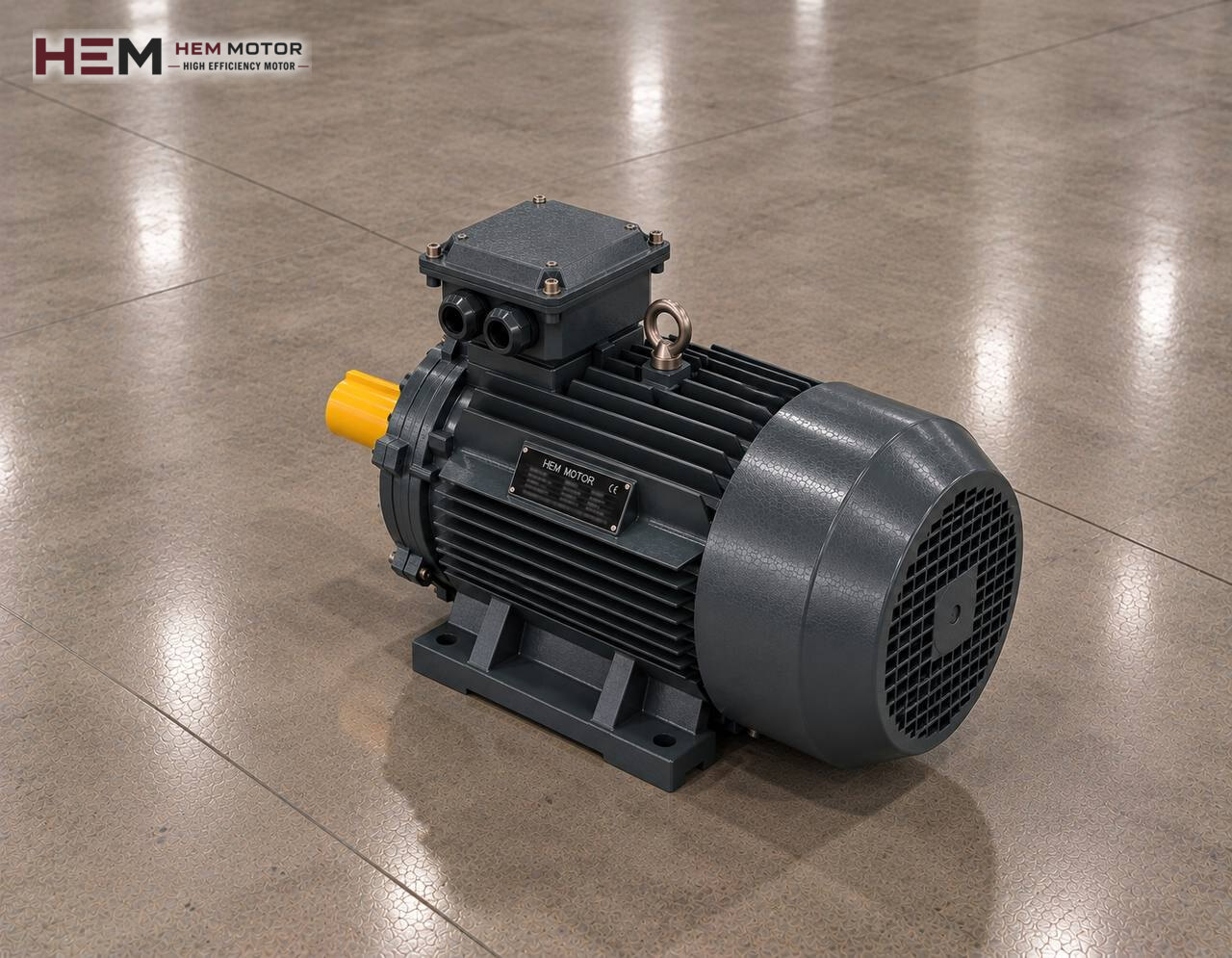
Brushing, bush hammering and flaming are three different ways of giving a marble or granite slab a textured, non-polished surface: one ages the surface with abrasive brushes, one roughens the stone by striking it with pointed tools, and the last makes the top layer of granite spall off with heat. The other machines of a stone plant are under marble and natural stone processing motors; this page covers the motors of surface texturing lines.

Three surfaces, three different motor loads
Although these machines often look like parts of the same line, their motors do quite different jobs. In brushing the load comes from friction and is fairly smooth. In bush hammering the load is impulsive; each time a tool tip strikes the stone the shaft receives a short torque blow. In flaming no mechanical tool touches the stone; the motors carry the slab, move the burner carriage, pump the cooling water and extract the fumes. When choosing a motor, first establish which method the line uses and where in that method the motor sits.
Brushing heads: friction and rotating satellites
On a brushing machine the slab travels on a belt while brushes carrying wire or abrasive filaments turn above it. In one common layout each head rotates about its own axis while the small brush discs inside it also rotate; the filaments then hollow out the soft veins of the stone from different directions, giving an antiqued, slightly undulating surface. The head motor is mostly mounted vertically with the shaft pointing down.
As the brush is pressed harder onto the stone, motor current rises. When the filaments wear, the operator lowers the head a little more; watching the current while making this adjustment keeps the motor from running continuously above its rating. Because the load is free of impacts, starting is usually easy; the real issues are heating over long hours and slurry sticking to the fan cover.
Bush hammering: impact load and vibration
A bush-hammered surface is created by striking the stone again and again with hard metal tools with toothed or pyramid tips. On mechanical bush hammering machines these tools are free rollers or hammers arranged around a rotating head; as the head turns, the rollers roll over the stone and their teeth dig into the surface, opening small pits. On some machines the tools are driven by pneumatic hammers; in that case the main energy comes from the compressor, and for its motor see the compressor motors page.
On a rotating-head machine the motor carries the sum of many small impacts. These return to the shaft, the bearings and the frame mounting bolts as vibration. A cast iron frame gives a more rigid structure on such jerky drives; tightening the foot and flange bolts periodically and checking coupling or belt alignment should be done more often on this machine than on a brushing machine. If the head is belt-driven, the belt dampens the blows somewhat; on a direct-coupled head the bearing load is more pronounced.
Flaming line: burner carriage, water and fumes
In flaming, a high-temperature flame is held over the surface of a granite slab; crystals in the heated top layer expand and break away, and the surface gains a rough, non-slip texture. Immediately afterwards water is sprayed to cool the stone. None of the motors on this line produces the flame; the burner, gas line and flame safety equipment are the machine maker's system.
The motors' jobs are: the belt or roller conveyor that passes the slab under the flame at constant speed, the travel drive that moves the burner carriage back and forth across the slab width, the pump that supplies cooling water and the exhaust fan that draws combustion gases from the booth. For the pump side see pump electric motors, for the fan side fan and exhaust fan motors. The exhaust fan motor should be placed outside the hot gas stream; standard motors are not approved smoke extraction motors and are not designed to run in hot gas.
Belt speed determines how deep the surface spalls: a slab that passes slowly absorbs more heat. That is why the belt motor is usually geared and its speed is set by a drive. For matching, see the electric motors for gearboxes page.
Ambient conditions and maintenance
Brushing and bush hammering are done wet; water both suppresses dust and cools the tools. In flaming there is radiant heat around the flame zone and steam just behind it. HEM Motor three-phase motors are IP55 and are protected against dust and splashing water; they are not made to run under a water jet, submerged or while being pressure washed. If a motor stands near the flame zone, a measure such as a heat shield must be taken on the machine side; if the ambient temperature is high, state it in your order.
For those who want to monitor the real winding temperature, a PTC or PT100 sensor is an order option, as is a condensation heater that stops steam from condensing inside during standstill. In maintenance, the priority checkpoints are the fan cover of brush head motors, the mounting bolts and bearing noise of bush hammering motors and, on the flaming line, soot and dust stuck to the fins of the exhaust fan motor.
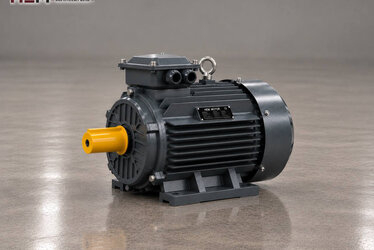
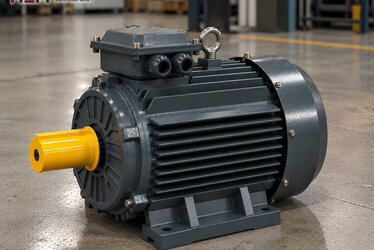
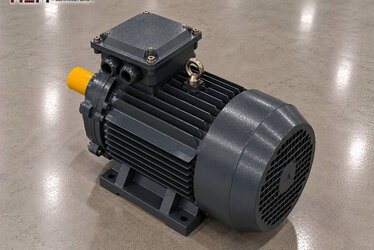
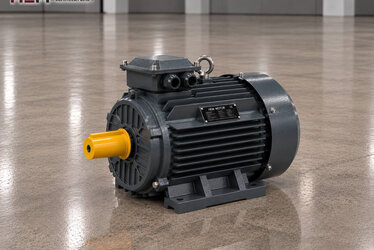
Example motors on a surface finishing line
| Machine and drive | Nature of load | Detail to discuss | Example HEM model |
|---|---|---|---|
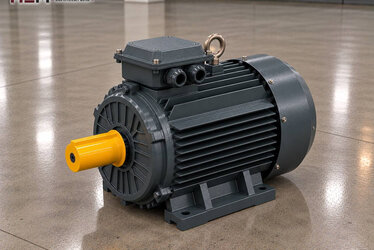
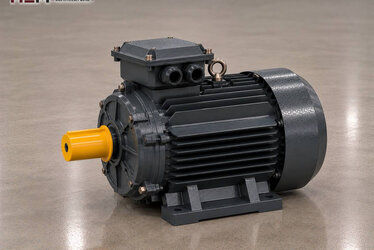
| Brushing head | Impact-free, long-lasting friction | Vertical mounting, flange and shaft end, number of heads | 4 kW 1500 rpm aluminium 112M-4 |
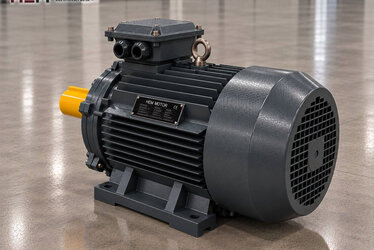
| Bush hammering head | Frequently repeated small impacts, vibration | Frame rigidity, belt or direct coupling | 7.5 kW 1500 rpm cast iron 132M-4 |
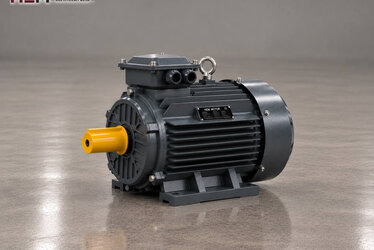
| Flaming line exhaust fan | Continuously running fan load | Motor kept outside the hot gas stream | 2.2 kW 3000 rpm aluminium 90L-2 |
| Conveyor or burner carriage | Geared, speed-adjusted travel | Gearbox flange, speed range with drive | 1.1 kW 1500 rpm aluminium 90S-4 |
The models in the table are for illustration; the right motor is chosen according to the machine's actual load, the required speed, the mounting arrangement and the working environment. The first place to look is the nameplate of the motor being removed.
Mounting arrangement and operation with a drive
Depending on frame size, B3 foot-mounted, B5 and B14 flange-mounted, B34 and B35 foot-and-flange versions and the vertical V1, V3, V5, V6, V15 positions can be selected; we finalise with you at the order the flange and shaft dimensions that must match the head or gearbox. The list of options is in the mounting arrangements question.
If the brush head speed or belt speed is to be changed with a drive, our three-phase motors are suitable for this use. If the motor will carry full load while turning slowly for long periods, the fan on its shaft may not deliver enough air; in that case an independently powered fan is added. If the cable between drive and motor is long, fitting a dv/dt or sine filter at the output is assessed. Adding this information to your request is enough; a short explanation is on the use with a frequency inverter page.
Information to provide when requesting a motor
Your request should include: the machine type (brushing, bush hammering, flaming) and which drive the motor is on; power (kW); speed (rpm); plant voltage; mounting arrangement; and how many units are needed. On multi-head brushing lines several units of the same motor are requested, so the quantity matters. A nameplate photo of the old motor covers most of this list: find an equivalent motor from the nameplate.
Power and speed options with current prices are on the shop page; for WhatsApp and telephone, use the contact page.
Frequently Asked Questions
Why might the bearings of a bush hammering head motor become noisy quickly?
Impacts on the rotating head are transmitted to the bearings as vibration. A loose foot bolt, belt misalignment or an unbalanced head increase this effect. Check the mounting and alignment first, then the wear of the tools on the head.
Does lowering the speed of a brush head motor extend brush life?
Wear may drop when the brush peripheral speed falls, but the surface texture changes too. If speed is reduced with a drive, stay within the range recommended by the machine maker and state the cooling situation for long low-speed operation in your order.
Can the exhaust fan motor on a flaming line be close to the flame zone?
The motor should stay outside the hot gas stream and the flame's radiant heat. A standard motor is not designed to run in hot fumes; placement follows the machine maker's design.
Which motor is replaced on a pneumatic bush hammering machine?
If the tools run on compressed air, the electric motor on the machine is usually the conveyor or head travel drive; the hammers' energy comes from the compressor. The compressor motor can also be chosen from HEM's three-phase series.