English
 Français
 Türkçe
 Español
 Русский

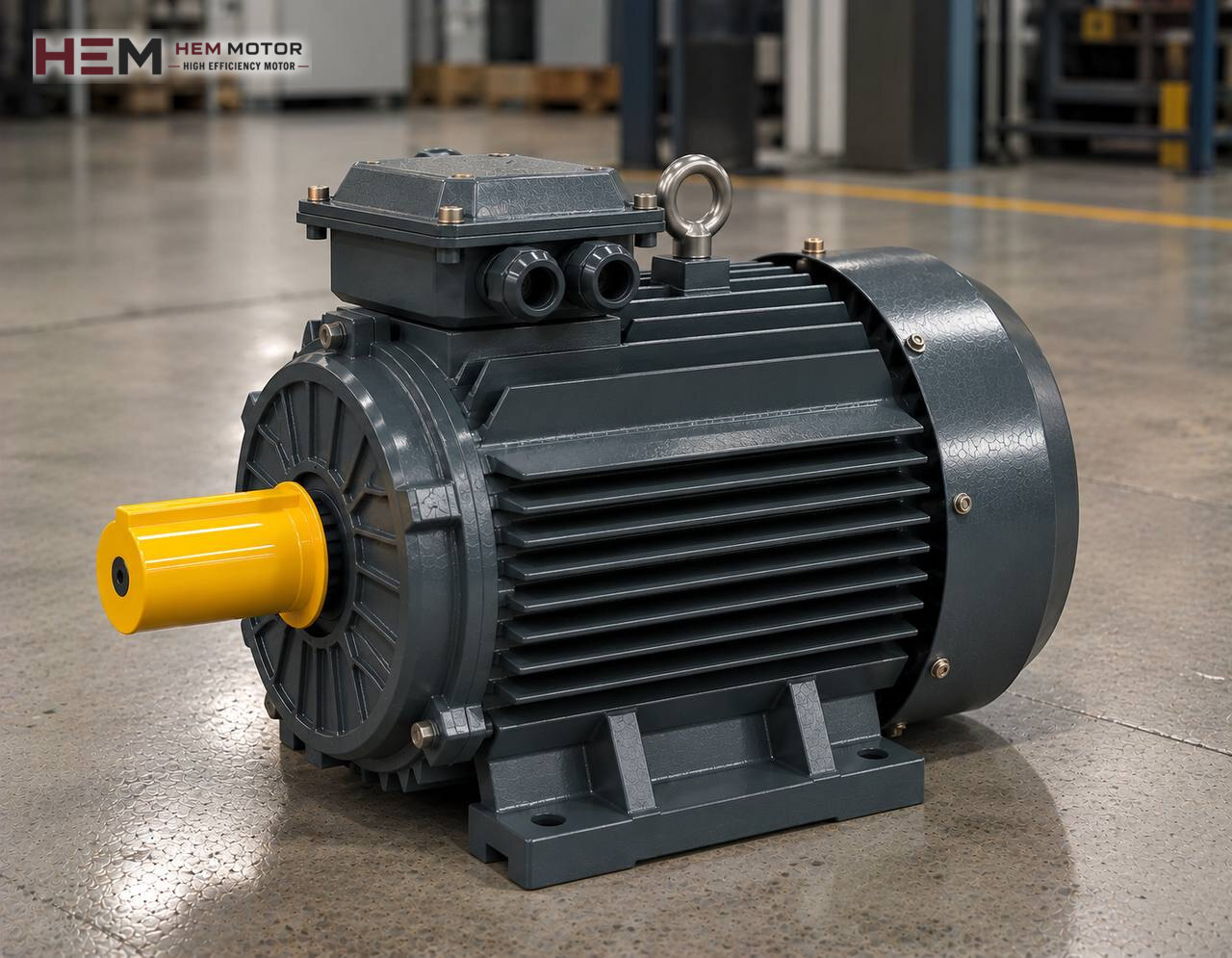
Tile and mosaic cutting machines divide a large slab or a narrow strip into the small pieces used for wall and floor cladding, down to mosaic tesserae only a few centimetres across. The other machines of a stone workshop are collected on the motors for marble and natural stone plants page; here we look only at the motors of the cutters that produce small formats.

Small pieces, many cuts: three machine layouts
Three layouts are common in this group. On a rail-type tile cutter the workpiece rests on a fixed table, and the head carrying the blade and motor is pulled along a rail by hand or by a small travel motor. On a multi-blade mosaic cutter many thin blades are stacked closely on one spindle, and the strip is split into sticks in a single pass; turning the sticks and passing them again produces square mosaic. A splitting machine does not cut the stone at all: it squeezes it between two blades until it breaks, which is how natural split-face mosaic and wall stone are made.
The motor does a different job in each layout. So rather than describing a single "tile machine motor", it is better to look at which movement of the machine the motor actually drives.
Blade motor: direct mounting and high speed
With small-diameter blades, the blade speed is kept high to reach the required peripheral speed. On most workshop-type cutters the blade is clamped between two flange washers directly on the motor shaft. In this arrangement 2-pole motors with a synchronous speed of 3000 rpm are common; on machines with large blades a 4-pole motor and a belt are preferred. The maximum speed allowed by the blade manufacturer decides which is right. Keeping the same pole count when replacing a motor is the simplest way not to exceed that limit.
Because the blade sits on the shaft, the front bearing of the motor carries both the weight of the blade and the cutting force. A small runout at the shaft end shows up as wobble at the blade and causes chipping on the edge of the cut piece. When ordering a new motor, the shaft diameter, shaft length and key or thread arrangement should be compared one to one with the old motor.
In terms of load, tile cutting is short work repeated often: the blade enters the stone, is loaded for a few seconds, then idles while the piece is changed. If the motor is not switched off between cuts, winding heating stays limited; if it is stopped and restarted for every piece, the number of starts per hour should be discussed separately.
Multi-blade mosaic spindle
On a mosaic spindle, the more blades there are, the larger the total section cut at the same time; the motor is loaded more heavily and more continuously than on a single-blade cutter. As the spindle is long and heavy, it usually runs in its own bearings, separate from the motor, and is turned by a belt. The strip is fed at constant speed on the rubber belt underneath; the belt speed is lowered or raised according to the hardness of the stone. The belt motor is small and usually connected to a gearbox; for matching see the geared drive motors page.
A fully stacked mosaic spindle, with its washers and pulleys, forms a considerable inertia. A motor connected directly to the mains draws high current while accelerating this mass; that is why soft starters or drives are often used on mosaic lines.
Splitting machine and auxiliary drives
Most splitting machines are hydraulic. The electric motor turns the hydraulic pump; the force that breaks the stone is produced by the cylinder and the pump pressure. Motor power is found from the pump flow, the working pressure and the number of cycles per minute; details are on the hydraulic pump motors page. Mechanical splitters with levers and eccentrics also exist; in these the motor turns a flywheel and the start-up takes longer because of the flywheel inertia.
The small pump that circulates cooling water, the motor that moves the head along the rail and, on large tables, the drive that adjusts table height are the other motors of these machines. For the water pump side, the pump motors page is a guide.
Water, stone dust and small workshop conditions
Almost all tile cutting is done wet. Water spilling from the blade guard mixes with fine stone dust and splashes onto the motor frame, especially the end shield on the blade side. HEM Motor three-phase series are IP55: they withstand dust and splashing water, but they are not built for the water jet at the base of the blade, for running submerged or for pressure washing. On machines where water is directed at the front end shield, a measure such as a splash guard is the machine maker's task; if different protection is needed, state it in your order.
Small workshops do not always have a three-phase supply. If the blade motor power is low, HEM's single-phase motor series in the 0.18–5.5 kW range can be considered. A condensation heater that reduces moisture inside the frame in workshops that cool down at night, and a PTC or PT100 sensor placed in the winding, are among the order options.
Example motors by cutter type
| Cutter or drive | Motor load | Point to check | Example HEM model |
|---|---|---|---|
| Table tile cutter blade | Short, frequently repeated cuts; blade directly on the shaft | Blade speed limit, shaft end dimensions | 3 kW 3000 rpm aluminium 100L-2 |
| Multi-blade mosaic spindle | Long cutting periods, belt drive, high-inertia start | Number of blades, pulley ratio, starting method | 5.5 kW 1500 rpm aluminium 132S-4 |
| Hydraulic splitting machine | Turns the pump; splitting force comes from hydraulics | Pump flow, pressure, cycle rate | 2.2 kW 1500 rpm aluminium 100L1-4 |
| Feed belt or head travel | Slow, adjustable movement through a gearbox | Gearbox flange, need for speed control | 0.75 kW 1500 rpm aluminium 80M2-4 |
The models in the table are examples only. The final choice is made according to the machine load, the required speed, the mounting arrangement and the operating conditions, and the most reliable starting point is the nameplate of the motor being removed.
Mounting arrangement and speed adjustment
Depending on frame size, our motors can be supplied foot-mounted B3, flange-mounted B5 and B14, foot-and-flange B34 and B35, or in the vertical V1, V3, V5, V6, V15 positions; we confirm with you at the order stage the flange and shaft dimensions that must fit the blade head or gearbox. The list of options is in the mounting arrangements question.
If adjustment is needed on the mosaic belt or blade speed, our three-phase motors can be fed from a drive. If the motor will turn slowly for long hours while still carrying full load, its own fan may not cool it enough and a separately powered fan is added; if the cable between drive and motor is long, a dv/dt or sine filter at the output is considered. Writing this in your request is enough; a short explanation is on the use with a drive page.
Information to send when asking for a price
When asking for a motor for a cutter, write: the machine type (table cutter, mosaic spindle, splitting machine) and which movement the motor drives; the power (kW); the speed (rpm); the workshop voltage and whether the supply is single or three phase; the mounting arrangement; and how many units are needed. If the blade is directly on the shaft, the shaft diameter and length help; if belt-driven, the pulley diameter. A nameplate photo provides most of this in one go: find an equivalent motor from the nameplate.
Power and speed options are listed with current prices in our motor shop; WhatsApp and telephone details are on the contact page.
Frequently Asked Questions
Can I replace a tile cutting motor with a motor of a different speed?
If the blade sits directly on the shaft, a speed change directly changes the blade's peripheral speed. Fitting a 4-pole motor instead of a 2-pole one slows the cut; the other way round, the blade maker's limit may be exceeded. Staying with the same pole count is the safest route.
Can chipping on the edges of cut pieces come from the motor?
It can. Runout at the shaft end, a worn bearing or a loose flange washer causes blade wobble. Check the blade and washers first, then the motor bearing and shaft end.
My workshop has no three-phase supply; can a single-phase motor be used?
On low-power cutters, yes. HEM's single-phase series covers 0.18–5.5 kW. For heavy-starting drives such as a mosaic spindle, the starting torque should be assessed separately.
How do I determine the motor power of a hydraulic splitting machine?
Power is calculated from the pump flow and working pressure; the most reliable data are the machine maker's sheet and the nameplate of the existing motor. Send us this information and we will choose a suitable model together.