English
 Français
 Türkçe
 Español
 Русский
 العربية

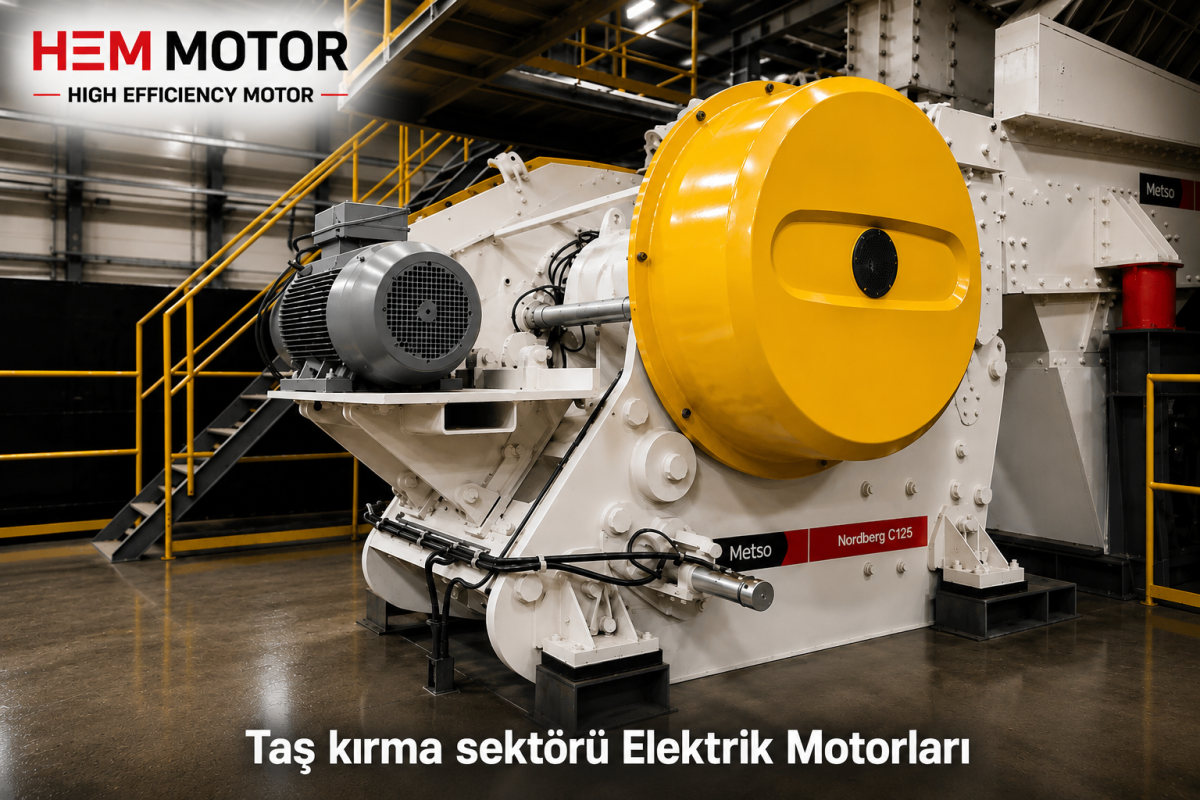
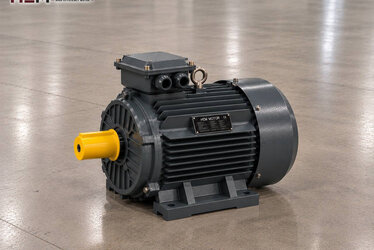
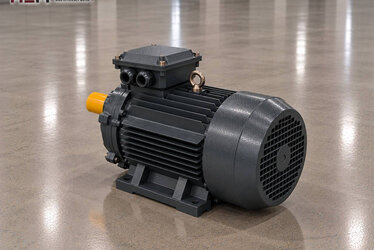
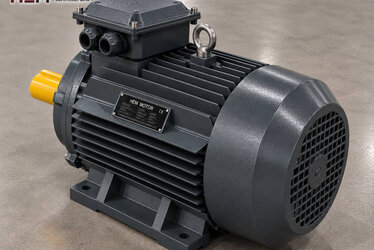
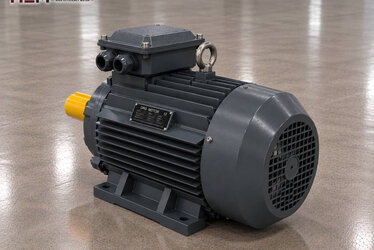
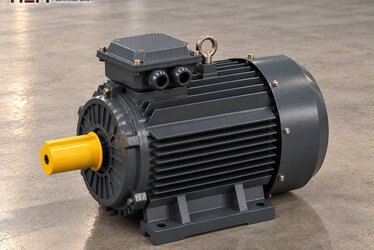
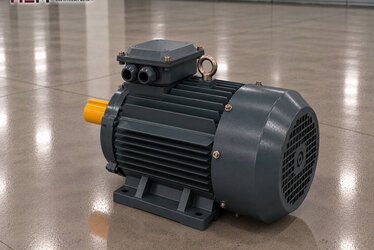
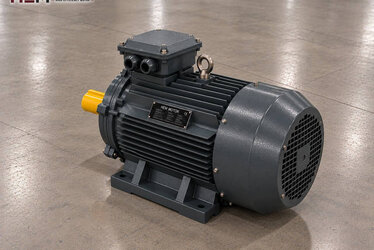
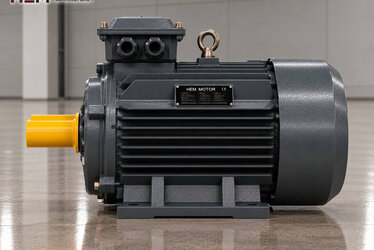
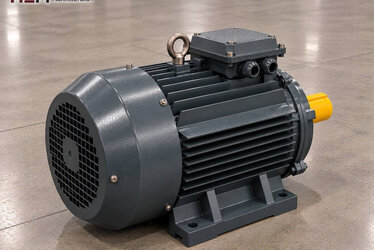
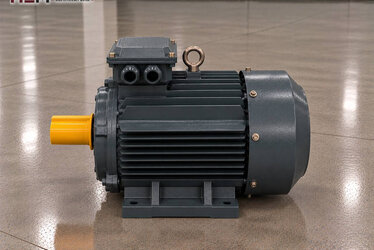
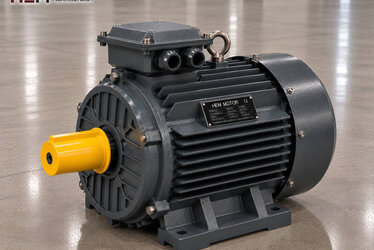
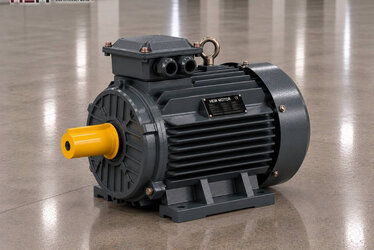
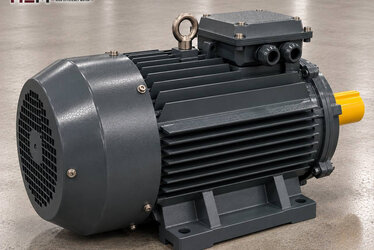
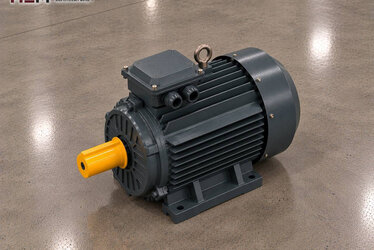
Turning blasted quarry rock into saleable aggregate, sand and road base takes several machines working in sequence: a feeder delivers the rock to the crusher, crushers reduce the size stage by stage, screens split the material into fractions, and belts link everything together and carry it to the stockpile. One or more three-phase induction motors turn at every link of this chain. This page looks at the electric motors that drive these machines in a stone crushing plant, machine by machine; the crushers and screens themselves are not part of the HEM Motor 2026 catalogue — what we supply are the standard motors that drive them.

From quarry rock to aggregate: where do the motors work?
In a stationary plant the flow begins at the primary stage. A feeder pushes the large rock dumped into the hopper into a jaw crusher or a primary impact crusher. The output goes to the secondary stage, a cone or impact crusher; if sand is required, a vertical shaft crusher works at the tertiary stage. Screens separate sizes between the stages, and oversize returns to the crusher.
That is why there are far more motors than crushers. The highest power is in the crushers, while the largest group by number is the belt drives. Lubrication units, dust extraction fans and washing pumps are the small motors of the line. For similar machines see the mining sector electric motor page.
The load the motor sees, by crusher type
All crushers belong to the heavy-duty class, but the shape of the load changes from machine to machine; the details of each type are on its own sub-page.
Jaw crusher
On each turn of the eccentric shaft, the moving jaw presses the rock against the fixed jaw. Heavy flywheels on the shaft store in advance the energy spent in one stroke. The motor drives these flywheels through V-belts; the load fluctuates every revolution, and accelerating the flywheel mass takes time at start-up. 6-pole (1,000 rpm) motors are common on these machines.
Impact crushers and the vertical shaft impactor (VSI)
In a horizontal shaft impact crusher the rotor throws rock onto the breaker plates; the motor is belt-connected, and because rotor inertia is large, start-up takes long. The primary impact crusher meets large quarry blocks with the heaviest rotor. The secondary impact crusher makes cubical chippings with a faster rotor; its speed is set by pulleys or a drive. The tertiary crusher produces sand at the third stage, and its motor runs close to rated load throughout the shift. In a vertical shaft impactor (VSI) the rotor takes rock at the centre and flings it against a surrounding rock bed; on large models two motors turn the same rotor.
Cone crusher
The motor turns a horizontal pinion shaft; the eccentric motion gyrates the mantle inside the bowl. The load is smoother than on flywheel machines, but when the crushing chamber chokes the current rises quickly. Besides the main motor there are small motors for the oil pump and the setting system; the lubrication circuit must run before the main motor.
Hammer and roll crushers
These two types are used on softer material such as limestone, marl, gypsum and clay. In the hammer crusher the high-inertia start of a fast, heavy rotor stands out; in the roll crusher, each roll has its own motor and needs high torque at low speed.
Feeder, screen, washing and belt drives
Smooth crusher operation depends on smooth feeding. The apron feeder in front of the primary crusher carries the heavy blocks slowly through a gearbox; grizzly pre-screens under the hopper remove the fines before they enter the crusher. A vibrating feeder shakes its pan to deliver material evenly to the crusher or screen; the vibration comes from vibrating motors bolted to the pan or from a vibrator turned by a motor sitting on the frame.
On a vibrating screen the motor turns the eccentric shaft through belts; when starting and stopping the screen passes through the resonance zone, and the bearings carry constant vibration load. A rotary screen (trommel) is a slowly turning drum; through a gearbox or drive rollers the motor sees a smooth but heavy load. A dewatering screen drains washed sand with high-frequency vibration. In a sand washing and stone sorting machine a screw or bucket wheel turns slowly through a gearbox and the motor works in a wet environment.
On a belt conveyor the motor turns the drum through a gearbox, and starting with a loaded belt is the hardest moment; the stacker conveyor that builds the stockpile is covered on a separate sub-page. General belt selection is on the conveyor belt electric motors page. For geared drives the electric motors for reducers page also helps.
Starting, belt transmission and service factor
On large crusher motors, direct-on-line starting strains both the supply and the belts. Star-delta, soft starters and frequency inverters are the most common on site. With star-delta, the reduced starting torque may not be enough to accelerate a large flywheel; the method is chosen from the crusher maker's starting conditions and the transformer capacity. Starting the crusher empty and opening the feed once the motor is at full speed makes any method easier.
Our three-phase range is suitable for drive operation. If the motor must turn slowly for long periods at full torque, a separate fan may be needed, and a long cable may need a dv/dt or sine filter; state these with the order. Details are on the inverter-compatible motors page.
The pulley should be mounted close to the motor shaft and belt tension kept at the maker's value. Our cast iron models of 75 kW and above have a service factor of 1.15; this margin is for short overloads and is not counted when sizing the power.
Dust, vibration and open-site conditions
In a crushing plant the motor's worst enemy is rock dust clogging the cooling fins. Dust building up on the frame stops heat from escaping; the fan cover and fins should be cleaned regularly. All our motors come with an IP55 enclosure and class F winding insulation. If a motor is to be placed in a sand washing or dewatering area sprayed with water or at a point cleaned with pressure, the standard IP55 enclosure was not designed for such an environment; a shield or a special motor is needed — state it in the order.
Vibration from the crusher loosens base bolts and upsets belt alignment; periodic bolt checks are needed. An anti-condensation heater and PTC or PT100 sensors can be added to the order. Depending on frame size, foot-mounted B3, flange B5 and B14, combined B34 and B35 and vertical V1, V3, V5, V6, V15 options are available; we confirm flange and shaft dimensions together at the order stage.
Sample motor table by machine
| Crushing/screening machine | Load character | Critical point | Sample motor (HEM) |
|---|---|---|---|
| Jaw crusher | Flywheel load fluctuating every revolution | Start-up time, pulley ratio | 55 kW 1,000 rpm 280M-6 |
| Impact crusher | Heavy rotor, shock load depending on feed | Rotor speed, starting method | 132 kW 1,500 rpm 315M-4 |
| Cone crusher | Continuous load, current rise when the chamber chokes | Current monitoring, lubrication interlock | 75 kW 1,000 rpm 315S-6 |
| Vibrating screen | Start and stop through resonance | Start and stop time | 15 kW 1,500 rpm 160L-4 |
| Belt conveyor | Loaded-belt start, continuous geared load | Gearbox input speed, belt length | 7.5 kW 1,500 rpm 132M-4 |
The table is only a guide: which motor suits your crusher is decided from the machine load, the required speed, the mounting and the operating conditions. The nameplate of the motor on site is the most reliable starting point.
What to send for a quotation
When asking for a motor for a crusher or belt, write: the machine type and model, the power in kW and speed in rpm required, supply voltage, mounting arrangement, transmission (belt, coupling or gearbox), starting method and quantity. If a motor is being replaced, sending a photo of its nameplate is a good start.
You can see models and current prices in our shop and the larger powers among the cast iron frame models; for WhatsApp or phone, go to the contact page. Models in stock are shipped from our warehouse in Türkiye. Related articles are in the crusher and stone crushing blog section.
Frequently Asked Questions
Is it safer to buy the crusher motor one size larger?
Not always. An oversized motor often runs at part load; starting current, cable size and protective devices grow as well. Power is determined from the crusher maker's rated-load value and the existing nameplate.
Why does the crusher motor keep tripping the thermal relay?
The most common causes are excessive or uneven feeding, a choked crushing chamber, a dusty frame that cannot shed heat and voltage drop on a long cable. It should also be checked that the relay is set to the rated current on the nameplate.
Can a 1,500 rpm motor be used instead of 1,000 rpm on a jaw crusher?
The crusher speed can be kept by changing the pulley ratio, but at the same power a 4-pole motor has lower shaft torque and the belt speed changes. This change should be made with the crusher maker's approval and a pulley calculation.
Is the cone crusher oil pump motor selected together with the main motor?
Yes, it should be listed as a separate small motor. Because the lubrication circuit starts before the main motor, the control sequence is also stated in the project; its power and mounting come from the crusher maker's data.