English
 Français
 Türkçe
 Español
 Русский

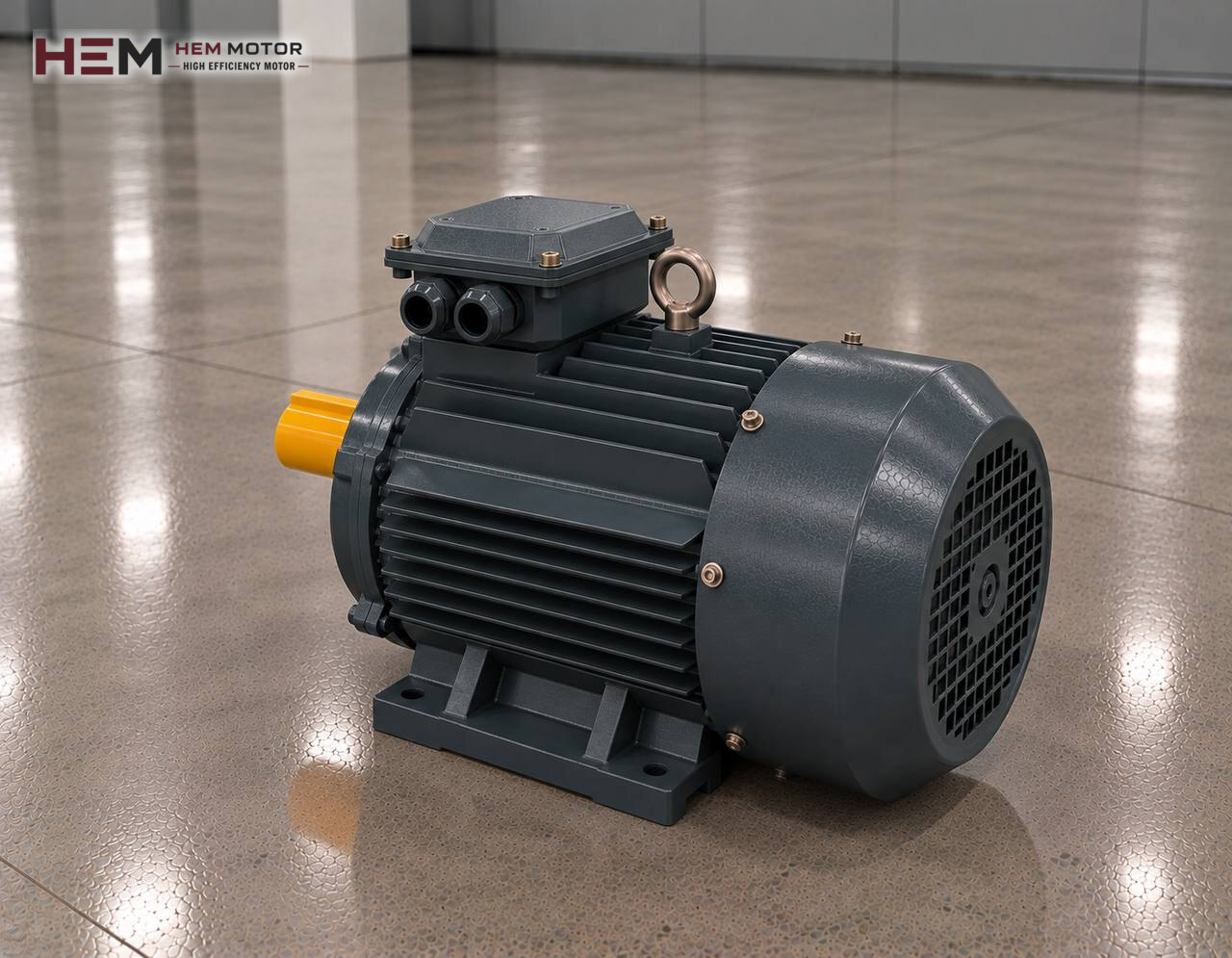
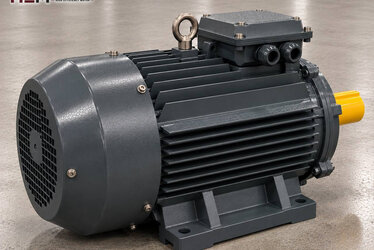
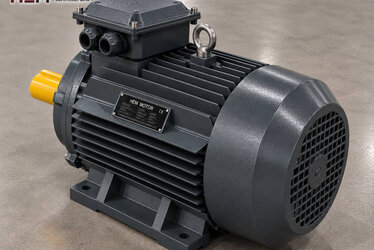
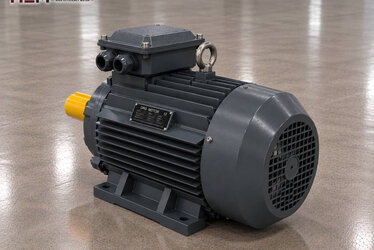
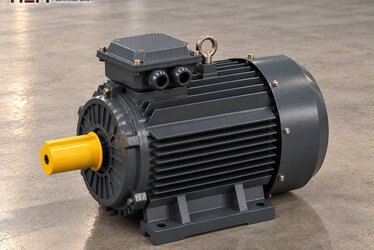
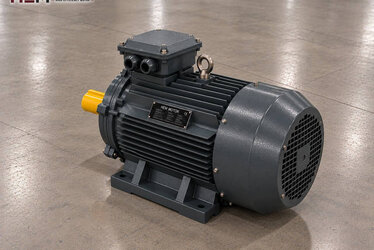
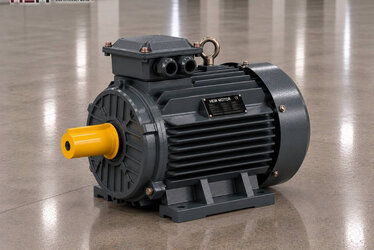
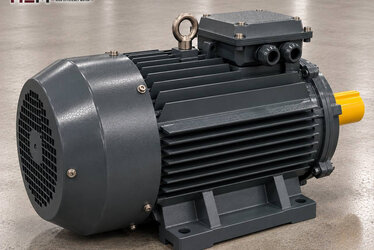
A secondary impact crusher is the second-stage machine that takes stone from the primary stage and turns it into cubical chippings by flinging it with the blow bars of a horizontal-shaft rotor against impact aprons. Compared with a primary impactor, its feed opening is narrower, its rotor is usually lighter and its tip speed is higher; the gap between aprons and rotor, together with rotor speed, sets the product size. The plant-wide overview is on the electric motors for crushers and stone crushing plants page; this page deals only with the three-phase motor that turns this crusher's rotor.

Blow bars, aprons and rotor: where does the load come from?
Two to four blow bars fixed around the rotor strike the stone falling into the crushing chamber at high speed. Carrying the energy it received from the bar, the stone is thrown against the first and second impact aprons, breaks there and drops back in front of the rotor. The smaller the apron-to-rotor gap, the finer the product and the more energy the motor spends.
From the motor's point of view the picture is this: the rotor loses a little speed at every blow and the motor replaces that loss continuously. The load keeps changing with feed rate, stone hardness and moisture. If the crusher works in closed circuit with a screen, oversize returning from the screen joins the feed; when the screen blinds, the return flow rises and the motor current shows it at once.
Rotor speed, pulley ratio and particle shape
On a secondary impactor, rotor speed is an operating setting. Higher speed means more breakage, a larger share of fines and a more cubical grain; the price is faster blow bar wear. Plants strike this balance either by changing pulleys or with a frequency converter.
With pulley adjustment the motor is usually chosen in the 1,500 rpm class, i.e. 4-pole, and the rotor pulley diameter is sized to the target speed. As blow bars wear, tip speed drops; some plants compensate over time by moving to a smaller rotor pulley. When doing so, belt speed and motor torque must be recalculated and the maximum rotor speed given by the manufacturer must not be exceeded.
With a drive, the product curve can be adjusted without stopping the machine. Our series are suitable for use with a frequency converter. If the rotor will run well below rated speed for long periods while the motor delivers full torque, the motor's own fan may not cool it enough and an external fan is considered. If the cable between panel and motor is long, a dv/dt or sine filter can be fitted at the drive output. Stating these two points in your order is enough; details are on the inverter compatible electric motors page.
Starting a heavy rotor and coasting down
Because the rotor's mass and diameter are large, the motor draws high current for a long time until it reaches rated speed. This time can approach the motor's locked-rotor heating limit. That is why the rotor's moment of inertia and the starting time foreseen by the crusher manufacturer are information we need for motor selection.
Direct-on-line starting gives the shortest run-up, but it also hits the supply and the belts hardest. In star-delta, starting torque falls to about one third; if the changeover to delta comes before the heavy rotor has accelerated enough, a second current surge follows. A soft starter limits current but also reduces torque, so acceleration takes longer. A frequency converter offers high-torque starting at low current. The choice is made by looking at transformer capacity, cable length and rotor inertia.
When power is cut, the rotor keeps spinning freely for a long time. Restarting before the crusher has fully stopped causes belt slip and extra winding heating; adding a restart delay to the controls prevents this. Feed should be opened only after the motor reaches full speed and should be the first thing cut when stopping.
Uncrushable objects, apron release and overload
When an uncrushable object such as a bucket tooth or drill bit enters the chamber, the impact aprons swing back on springs or hydraulics and let it pass. For the motor this is a short but sharp torque shock. The ability of V-belts to slip slightly damps the shock; in a direct coupled layout the shock reaches the shaft and bearings unchanged.
A current monitoring relay or the drive's overload function signals the moment to cut back feed before the winding heats up. A control that sets feeder speed according to crusher motor current keeps the motor close to, but not above, rated load. Our cast iron models of 75 kW and above have a service factor of 1.15; this margin is for short peaks, not for continuous overfeeding.
Slide base, belt line and dust
The motor usually sits beside the crusher on a sliding or hinged base used to adjust belt tension, so foot-mounted B3 is the most common arrangement. Depending on frame size, B5, B14, B34, B35 and vertical V1, V3, V5, V6, V15 versions are also offered; flange and shaft dimensions are confirmed with the order. With heavy pulleys, the drive-end bearing carries a constant radial load. Mounting the pulley against the shaft shoulder, replacing belts as a matched set and checking slide base bolts directly affect bearing life.
The second stage produces plenty of fine dust. Our motors come with IP55 enclosures and class F insulation; even so, dust sticking to the fins reduces heat dissipation. The fan cover and fins should be in the maintenance plan, and where possible the motor should be placed away from the crusher's dusty discharge. A PTC thermistor or PT100 to monitor winding temperature, and an anti-condensation heater against moisture during long stoppages, can be added to the order.
Sample motor options
| Crusher arrangement | Transmission | Point to watch | Sample HEM motor |
|---|---|---|---|
| Small secondary impactor, speed set by pulley | V-belt, 4-pole | Pulley ratio, starting time | 55 kW 1500 rpm 250M-4 |
| Mid-size, closed circuit with a screen | V-belt, 4-pole | Return load, current monitoring | 90 kW 1500 rpm 280M-4 |
| Crusher with rotor speed set by a drive | V-belt, frequency converter | Cooling at low speed | 110 kW 1500 rpm 315S-4 |
| Large-rotor secondary impactor | V-belt | Starting method, transformer capacity | 160 kW 1500 rpm 315L1-4 |
The motors in the table are examples; the final choice depends on the machine's load, required speed, mounting arrangement and operating conditions. As a guide: the 280M-4 model delivers 578.4 Nm rated torque at 1,486 rpm, and the 315L1-4 model 1,027 Nm at 1,488 rpm.
What to send when asking for a quote
The crusher's make and type, the required power (kW) and speed (rpm), supply voltage, mounting type, transmission (belt or coupling), starting method, whether a drive will be used, and the quantity speed up the quote. Sending a nameplate photo of the motor to be replaced answers most questions on its own.
You can find models and current prices in our shop, and larger ratings under cast iron frame motors. For WhatsApp and phone, use the contact page.
Frequently Asked Questions
How does raising rotor speed change the product of a secondary impact crusher?
As the rotor speeds up, the share of fines rises and grain shape improves; in return, blow bar wear and the power demanded from the motor also increase. Any speed increase must stay within the rotor manufacturer's limit, and motor power should be rechecked for the new speed.
Why might the overload trip during starting?
The most common cause is a prolonged start: a heavy rotor, reduced torque in star-delta or material left in the chamber. The rotor should be started empty, and the trip class of the overload relay should match the real starting time.
Can the motor from a primary crusher be used on a secondary crusher?
If power, speed and mounting dimensions match, the same model can be used. What decides is rotor speed, pulley ratio and starting condition; nameplate values should be compared with the crusher manufacturer's data.
What should be checked if motor vibration rises after blow bars are replaced?
First check that the bars come from the same set and have the same weight. Then check belt tension, pulley runout and slide base bolts. If vibration persists, rotor balance should be dealt with on the crusher side.