English
 Français
 Türkçe
 Español
 Русский

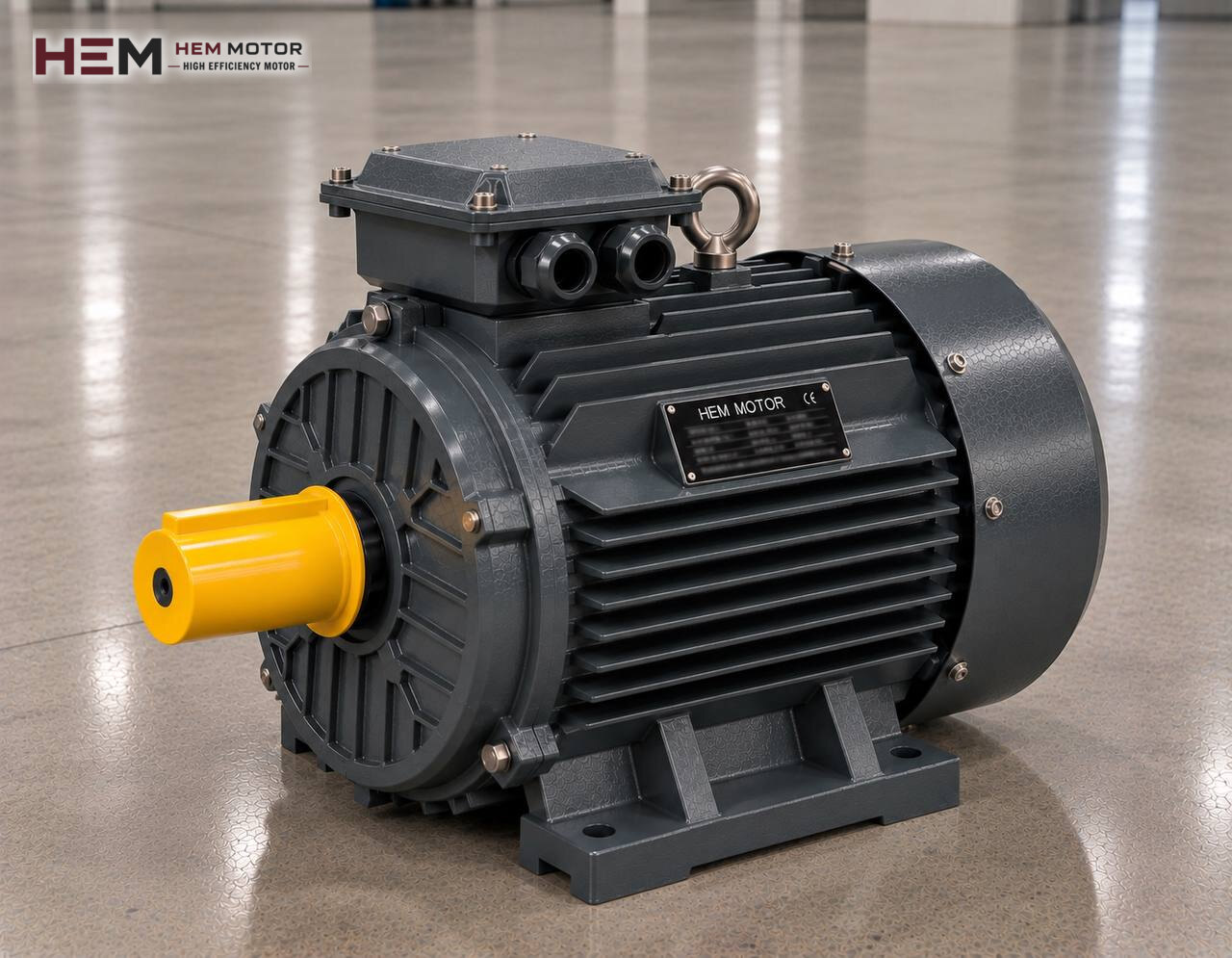
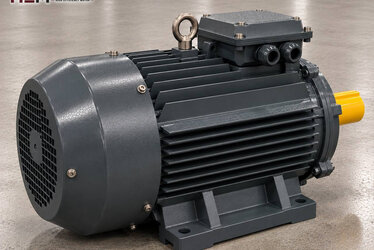
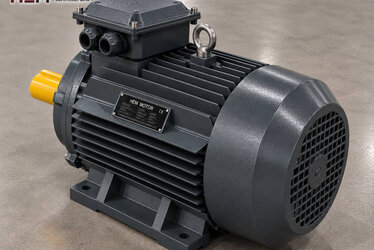
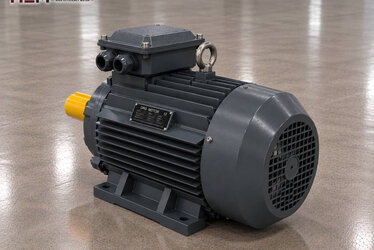
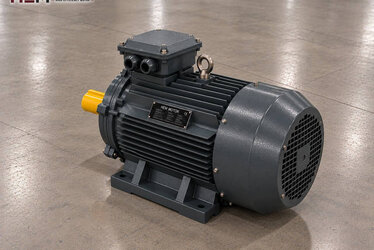
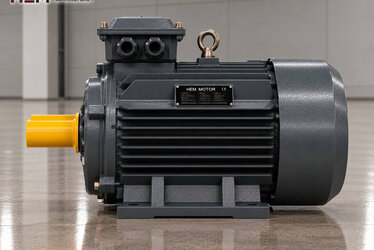
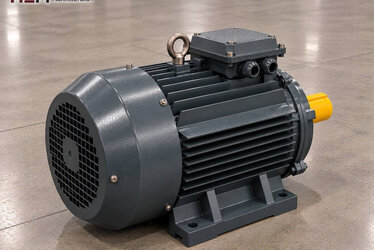
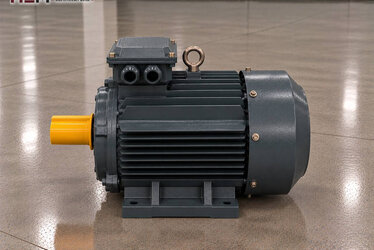
In a crushing and screening line, it is often the vibrating feeder that decides how much material passes from one machine to the next. These shaking troughs, sitting in the reclaim tunnel under a stockpile, at the outlet of intermediate bins or in front of a secondary crusher, keep crushers and belts supplied with an even flow. This page covers the three-phase motor that produces the feeder's vibration; to look at the whole plant, you can return to the electric motors for stone crushing plants page.

Where does the feeder sit in the line?
A vibrating feeder is a short, shallow, spring-mounted trough; a vibration source fitted beneath or beside it pushes it forward and upward at a set angle. With each push the material makes a small hop and drops off the end of the trough into the next machine. The heavy grizzly types that feed quarry rock to the primary crusher are covered on a separate page; here the focus is mainly on the metering feeders in the middle of the line:
- Stockpile reclaim feeders: In the concrete tunnel under a conical pile, they deliver the material coming down through openings in the roof onto a belt. A tunnel can hold two or three feeders in a row.
- Crusher feeders: Used to fill the chamber of a cone or vertical shaft crusher evenly; the rate is adjusted so the crusher does not overfill and run empty in turns.
- Bin and hopper outlet metering: Under sand and chippings bins, several feeders work together to prepare a blend in a set ratio.
The vibration source: motor, exciter and other arrangements
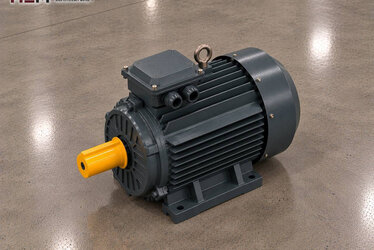
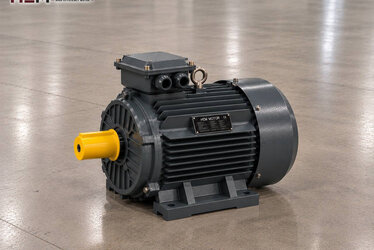
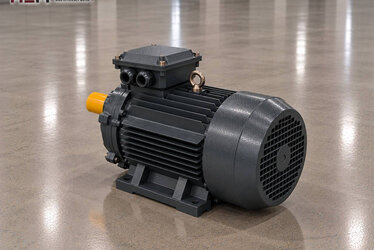
There are three common ways of shaking a feeder, and what is expected of the motor changes accordingly. In the first, a twin-shaft exciter box is bolted under the trough; the counter-rotating unbalanced weights inside it push the trough in a single direction. A standard three-phase motor sits on a fixed base and turns the exciter via a cardan shaft or V-belts. This arrangement is the main subject of this page.
In the second, vibration motors (vibromotors) carrying unbalanced weights on their housing are fixed directly to both sides of the trough. These special motors are not included in the HEM Motor 2026 catalogue. The third is the electromagnetic feeder: a magnet coil produces the vibration and there is no rotating motor. Identifying which group your existing machine belongs to from its nameplate and drive layout avoids a search for the wrong motor from the outset.
Starting under a full bin and the nature of the load
A feeder in a reclaim tunnel carries a pile that can reach tens of metres in height. The material pressure on the trough does not directly stop the unbalanced weights from turning; but material that has settled on the trough while it was still acts for a while like a damper as vibration begins, and stretches the time the exciter needs to reach full speed. For this reason the feeder motor's thermal protection should be set to suit the starting time, and current and run-up time should be measured with a full bin at first commissioning.
During operation the load is steady; the motor mainly covers friction in the exciter bearings and the springs being compressed and released by the trough mass on every stroke. With wet, sticky material a layer builds up on the trough floor like a lining, the moving mass grows and the current rises permanently. In winter, a short load increase may also be seen when a frozen lump drops in.
Flow control and the role of the inverter
There are two basic ways of changing a feeder's output: changing the vibration amplitude or changing the vibration frequency. Amplitude is adjusted mechanically through the angle of the weights in the exciter, with the machine stopped. Frequency, however, can be changed during operation by driving the motor from a frequency inverter. That is why inverters are common on crusher feeders and bin metering feeders; the crusher motor current or a belt scale signal is connected to the inverter and the feeder speeds up or slows down accordingly.
Lowering the speed too far brings the vibration to a point where it can no longer carry the material; at very low frequency the trough also approaches the natural frequency of the spring system. The usable lower and upper speed limits are given by the machine manufacturer. HEM three-phase motors are well suited to inverter operation; if the motor will turn at low speed with full torque for hours, its own fan may not be enough and an external fan is added, and if the panel is far from the tunnel a dv/dt or sine filter is considered depending on cable length. Add these to the order notes; the subject is also covered on the inverter-compatible motors page.
Mounting in tunnels and under bins
Reclaim tunnels are narrow, damp and dusty. The motor usually sits beside the feeder on a concrete plinth or on a bracket fixed to the tunnel wall. With a cardan shaft connection there is an angle limit between motor and exciter; with a belt connection the belt run is kept long enough to absorb the trough movement. In both cases it is important that the motor feet sit firmly and that the base does not pass vibration to the motor.
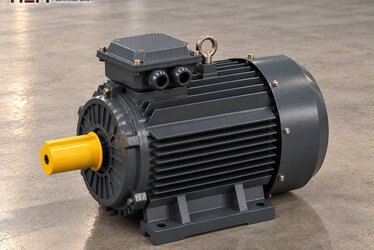
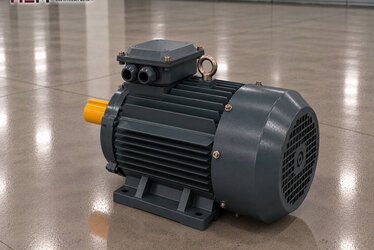
HEM offers the foot-mounted B3 design and, depending on frame size, B5, B14, B34, B35 and the vertical V1/V3/V5/V6/V15 positions; flange and shaft dimensions are confirmed when ordering. On some compact feeders the motor is fixed at an angle to a platform close to the top of the trough; if there is such an arrangement, it should be stated clearly in the order.
Environment and maintenance
There is little air movement in a tunnel; the motor's own fan draws back dusty, warm air. The IP55 enclosure limits harmful dust ingress, but fine dust filling the gaps between fins and the fan cover lowers cooling; the motor housing should also be cleaned during feeder maintenance. If water collected on the tunnel floor or washing water splashes onto the motor, a shield is advisable.
Tunnels are cold and damp in winter; after long stoppages, condensation may appear in the winding. An anti-condensation heater and a PTC sensor monitoring winding temperature are order options. The oil level in the exciter and the grease in the cardan joints are the real source of many current increases that look like a motor fault.
Example motors and selection table
Metering and reclaim feeders are generally smaller in power than primary feeders. On a light bin feeder, the 3 kW 100L2-4 delivers 19.8 Nm at 1,450 rpm. For tunnel feeders, the 5.5 kW 132S-4 (1,460 rpm, 36 Nm) and the 7.5 kW 132M-4 (49.1 Nm) are models worth considering. On a feeder whose exciter is designed for the 1,000 rpm class, the 7.5 kW 160M-6 provides 73.8 Nm at 970 rpm.
| Feeder location | Main issue for the motor | Information to ask for | Example HEM model |
|---|---|---|---|
| Bin outlet metering | Continuous rate control by inverter | Lower and upper speed limit | 100L2-4, 3 kW |
| Stockpile reclaim tunnel | Start under a full pile, damp surroundings | Anti-condensation heater, starting time | 132S-4, 5.5 kW |
| Crusher feeder | Speeding up and slowing down with crusher current | External fan, PTC | 132M-4, 7.5 kW |
| Feeder with 1,000 rpm exciter | Driving a heavy exciter by cardan | Number of poles, cardan angle | 160M-6, 7.5 kW |
The table is for guidance; the final selection depends on the feeder load, required speed, mounting layout and tunnel conditions.
Information to send with your request
The feeder make and its position in the line (tunnel, under a bin, in front of a crusher), the type of vibration source, the power (kW), speed (rpm), supply voltage and mounting type of the existing motor, the cardan or belt connection, whether an inverter is used and the quantity required are enough for us. You can photograph the old motor's nameplate as explained on the nameplate submission page and send it.
Models and current prices are listed on the shop page; for auxiliary drives working through a gearbox, the electric motors for gear reducers page is also useful. Our numbers are on the contact page, and you can send your request by WhatsApp or phone; models held in our warehouse are dispatched from within Türkiye.
Frequently Asked Questions
Can I convert an electromagnetic feeder into a motor-driven feeder?
This is a machine conversion; the trough, springs and vibration source change together. The decision belongs to the machine manufacturer. If the conversion is made, motor power and speed are selected according to the data of the new exciter.
Why does the tunnel feeder motor often run hot?
In a tunnel, warm and dusty air circulates around the motor and the fan cover clogs easily. Housing cleanliness, ventilation and whether the motor runs at low speed on an inverter for long periods should be checked together.
What frequency range is used on an inverter-driven feeder?
This range depends on the exciter design and the trough's spring system. Do not go beyond the lower and upper limits given by the machine manufacturer; if the limits are unknown, ask the manufacturer for them.
Can several feeders in the same tunnel use the same motor model?
Yes, if the feeders are of the same type and size; this also simplifies spare parts and stock management. Where they differ in size, each is selected according to its own exciter data.