English
 Français
 Türkçe
 Español
 Русский

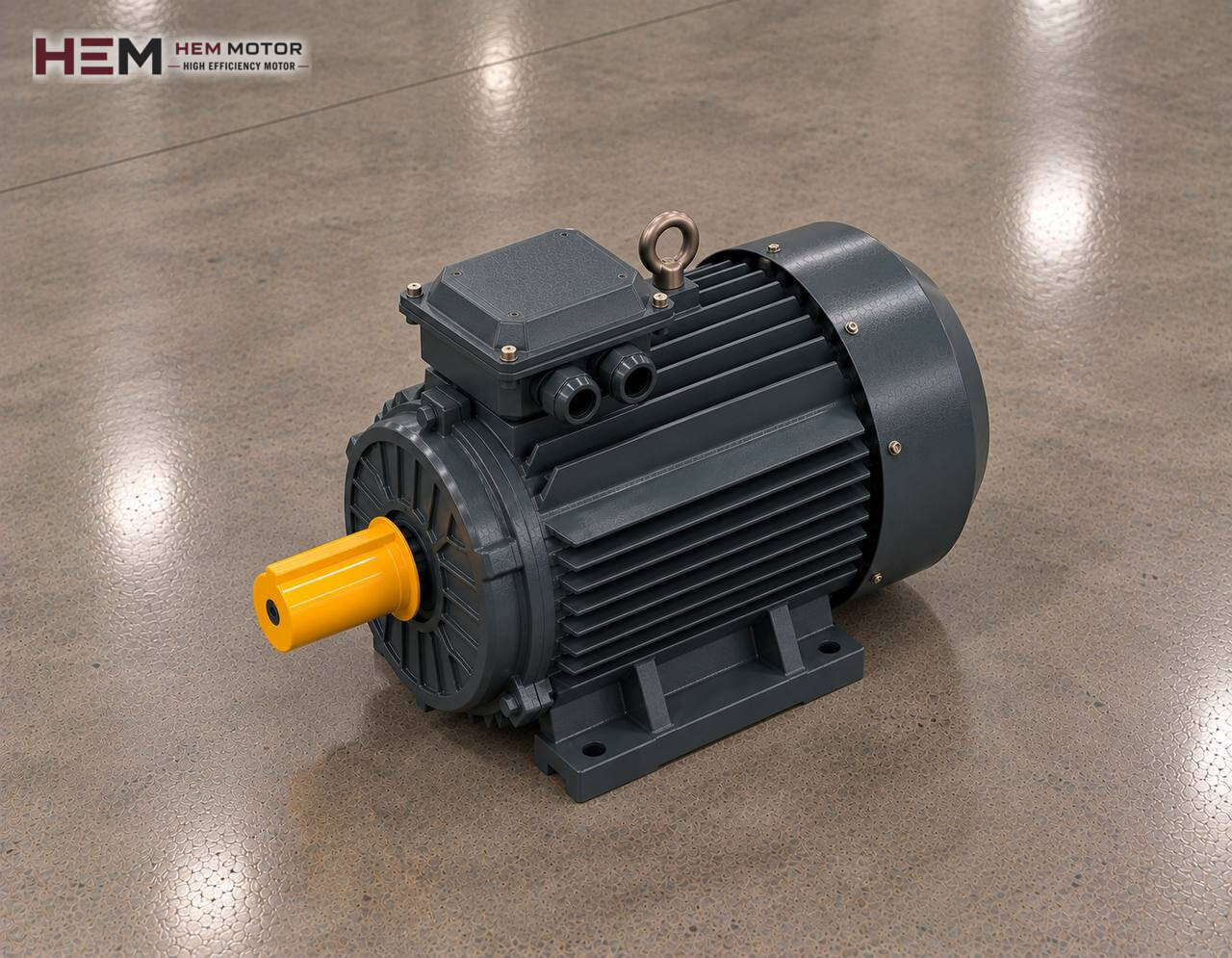
Clay, silt and dust left in sand after crushing and screening are unwanted contaminants in concrete and plaster. The machines that remove them work in water, turning very slowly while moving a large mass. This page covers the electric motor that drives sand washing and log washer machines; for the crusher, screen and belt side of the plant, the stone crushing plant electric motors page gives the general picture.

Three washing layouts, three different motor loads
Washers found on site differ in how they work, and what is expected from the motor changes accordingly.
- Bucket wheel sand washer: A large wheel with perforated buckets around its rim turns slowly inside a water-filled tank. The buckets pick up sand from the bottom, let the water drain while lifting it and discharge it into a chute; fine clay leaves with the water over the overflow weir. The load is smooth and continuous, and the wheel turns only a few revolutions per minute.
- Screw (spiral) sand washer: A long screw in an inclined tank pushes sand upwards against the water. The material is scrubbed along the screw and clean sand leaves at the top end. Here the motor provides torque both to lift the sand and to turn the screw inside the sand bed at the bottom of the tank.
- Twin-shaft log washer: Two heavy shafts fitted with paddles rotate towards each other; they scrape sticky clay off gravel and aggregate and clean the pieces by rubbing them together. This is the heaviest duty in the washing family; the load fluctuates and clay lumps strain the motor momentarily.
Sand settled in the tank: the real starting problem
The most critical moment for a washer is the first start after the plant has been stopped for a while. When the water stops moving, sand settles to the bottom of the tank and packs down. The lower part of the screw or the buckets at the bottom of the wheel stay buried in this bed. The motor has to deliver a breakaway torque that shifts the packed sand; this cannot be compared with starting an empty machine.
Plants ease this in two ways: the feed is cut and the machine is run empty for a while before stopping, or the water in the tank is circulated again at the first start to loosen the sand. These are operating measures on the machine side. On the motor side, the starting method should be chosen with this worst case in mind. A soft starter or an inverter takes up the load without jolting the gearbox and the screw; with star-delta starting the torque also drops, so it may not be enough in settled sand. The right decision is made with the machine builder's data and the plant's electrical design.
Slow output shafts and the drive train
Because the wheel and the screw turn slowly, the motor shaft speed cannot be given directly to the machine. The common layout is a 4- or 6-pole motor driving a gearbox through a belt and pulleys, with the gearbox connected to the wheel or screw shaft. The pulley ratio also lets the operator adjust the output speed slightly later on. On some screw washers the gearbox is mounted directly on the screw shaft and the motor is bolted to the gearbox by its flange.
On a twin-shaft log washer, the two shafts are usually turned in sync by a single motor and gearbox through gears or a chain; on large machines a separate motor per shaft is also seen. In that case, choosing both motors with the same power and speed matters so that they share the load evenly. Matching with gearboxes is explained separately on the electric motors for gearboxes page.
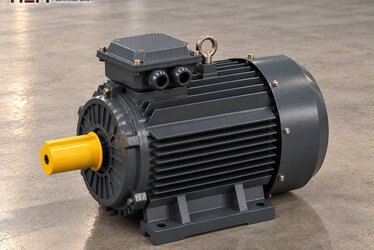
In a belt drive, a foot-mounted (B3) motor sits on a slide base and belt tension is adjusted by moving the motor; when mounted directly on the gearbox, a flange B5 or foot-and-flange B35 design is preferred. You can see which designs are available for which frame in the mounting arrangements question; the gearbox flange and shaft dimensions are compared with the motor at the order stage.
Where the motor sits relative to water, mud and splashing
The area around a washer is the wettest part of the plant: the tank overflows, buckets drip and muddy water runs from the weir. All models in our range come with IP55 protection and class F insulation. IP55 limits dust ingress and splashing water; however, it is not designed for operation under water, being buried in mud or pressure washing. Placing the motor on a platform at the upper level of the tank, outside the splash line, and fitting a simple cover over it is the most effective measure. If the motor has to stay somewhere beyond these limits, an extra enclosure from the machine builder or a special motor is needed; describe this clearly in your order.
In a motor standing on a wet site, condensation can form in the winding as it cools overnight; an anti-condensation heater is an order option. A PTC or PT100 sensor can also be requested to monitor winding temperature. Turning the terminal box cable entry downwards and keeping the belt guard closed make it harder for water to find its way into the motor.
Auxiliary drives on the line
A washing unit does not work alone. A centrifugal pump supplying fresh or recycled water, a pump sending muddy water to a settling pond or a cyclone, and a dewatering screen taking the water out of washed sand are on the same line. For pump motor selection, see the pump electric motors page. These drives run continuously and start and stop together with the washer; starting the water first and then the machine, and doing the reverse when stopping, reduces sand settling.
Example HEM models and selection table
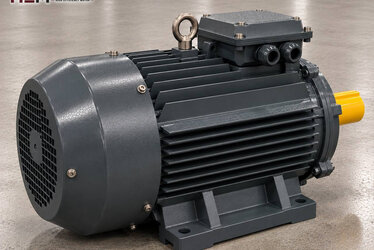
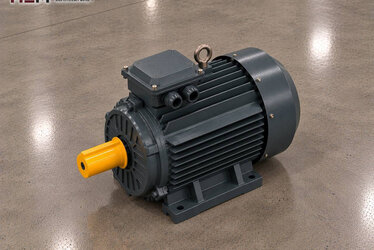
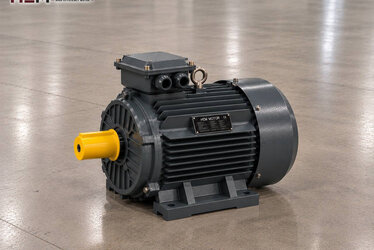
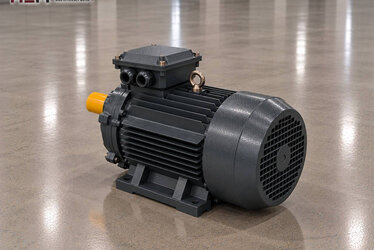
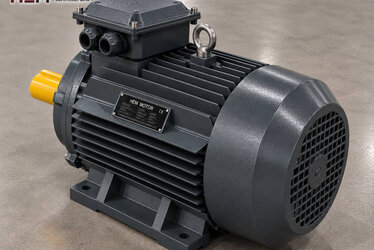
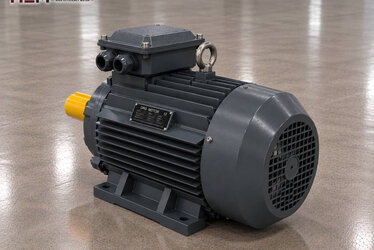
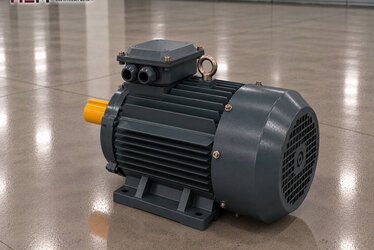
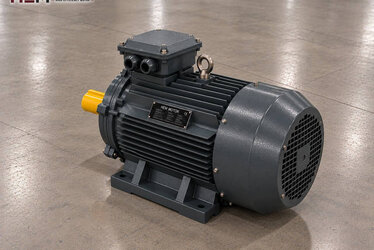
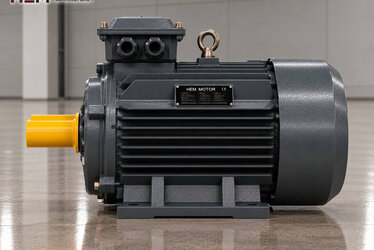
4-pole cast iron motors used with a gearbox are common on washing drives. For example, the 7.5 kW 132M-4 model delivers 49.1 Nm at 1,460 rpm and the 11 kW 160M-4 model 71.7 Nm at 1,465 rpm. Where a lower input speed is wanted, the 6-pole 11 kW 160L-6 produces 108.3 Nm at 970 rpm. On heavy log washers, larger frames such as the 22 kW 180L-4 come into question.
| Machine | Motor load | What to check | Example HEM model |
|---|---|---|---|
| Bucket wheel sand washer | Smooth, continuous, low speed | Belt and gearbox ratio | 132M-4, 7.5 kW |
| Screw sand washer | High breakaway torque in the sand bed | Starting method with settled sand | 160M-4, 11 kW |
| Low-speed gearbox input | High torque, slow output | Gearbox input speed | 160L-6, 11 kW |
| Twin-shaft log washer | Fluctuating heavy load with clay lumps | Motor per shaft, load sharing | 180L-4, 22 kW |
The models in the table are only examples; the final decision depends on the real load of the washer, the required output speed, the connection type and how wet the site is. The nameplate of the old motor running on the machine is the most reliable starting point.
What to send when asking for a quote
Tell us the machine type (bucket wheel, screw, twin-shaft) and which shaft you need a motor for. Then add the motor power in kW, the speed, the plant voltage, the mounting type, the belt or gearbox connection and how many units you need; how high the motor sits above the tank is also useful information. If an old motor is being replaced, sending a photo of its nameplate speeds up the match.
You can see the models with current prices on the buy electric motors page. Our WhatsApp and phone numbers are on the contact page; motors in our warehouse are shipped from within Türkiye.
Frequently Asked Questions
Why does the sand washer start hard in the morning?
Overnight the sand settles at the bottom of the tank and packs around the screw or the buckets. Emptying the machine before stopping, circulating the water first at start-up and choosing the starting method for this condition greatly reduce the problem.
Can the motor be placed right next to the tank?
It can, but it should be outside the splash line and covered from above. An IP55 motor is not designed for operation under water or pressure washing; if such a condition exists, state it in your order.
What should be watched if two separate motors are used on a twin-shaft log washer?
Both motors must have the same power, number of poles and gearbox ratio. Otherwise one carries more of the load and heats up early; shaft synchronisation is provided by the machine design.
Does adjusting the screw speed with an inverter strain the motor?
Our three-phase motors can be driven by an inverter. If the screw will turn slowly and loaded for hours, the motor's own fan may not be enough for cooling and a separate fan is added; if the line between inverter and motor is long, a dv/dt or sine filter is considered. Simply state this operating mode in your order.