 English
 Français
 Türkçe
 Español
 Русский

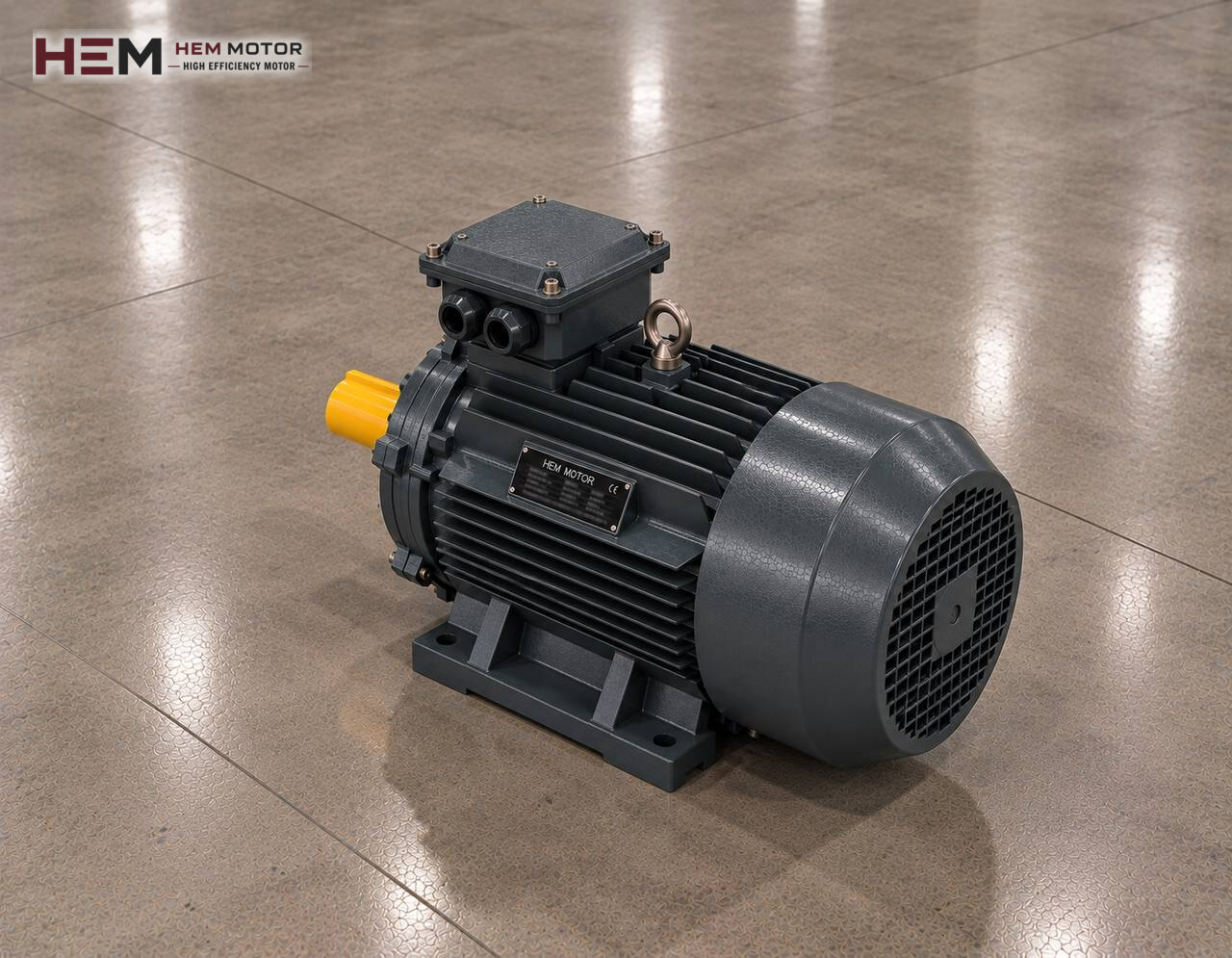
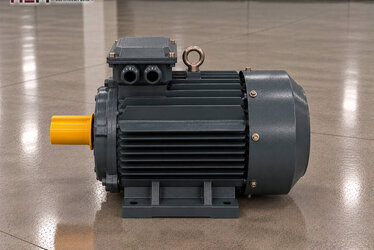
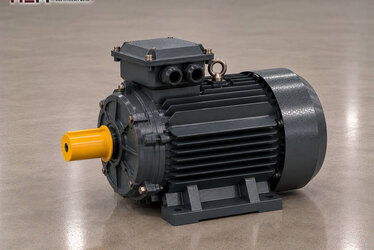
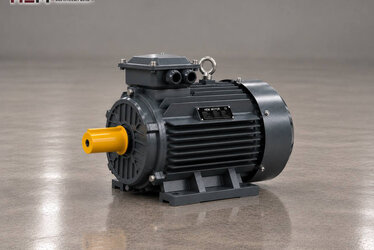
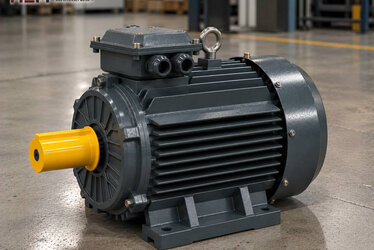
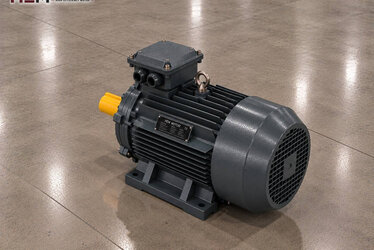
In a recycling plant, the material an electric motor faces changes every day: pallets and wooden crates in the morning, PET bottle bales in the afternoon, copper cable scrap in the evening. A piece of metal caught in a shredder blade or a pile of wet film in a granulator can push the motor far above its rated load within seconds. This page explains, machine by machine, what the motor does in waste shredders, plastic granulators, pelletising lines, cable separation machines and baling presses, and which values to check before ordering.

Three Situations That Strain the Motor on a Recycling Line
The first is starting with a full hopper: when the line stops, material remains in the cutting chamber and at the next start the rotor has to begin turning with that load.
The second is shock load. When a blade hits a hard object, the current spikes briefly and the shaft sees a sudden torque swing. The third is the long shift; as long as the infeed belt keeps arriving full, the motor runs close to full load for hours and heat builds up.
Single-Shaft and Twin-Shaft Shredder Drives
In single-shaft shredders, one rotor cuts the material that a hydraulic ram pushes against the blades, over a fixed screen. The rotor is usually driven through a belt and pulley or a gearbox; when a 1,500 rpm class motor is chosen, the required low rotor speed comes from the transmission ratio.
In twin-shaft shredders, two shafts turn slowly towards each other and tear the material apart. Because high torque is needed at low speed, the drive usually runs through a gear reducer. For flange and shaft fit, see the electric motors for gear reducers page.
On some models each of the two shafts is powered by its own motor; on others a single drive unit feeds both through timing gears. The replacement motor is chosen to match that arrangement.
Plastic Granulators and the Auxiliary Machines of a Pelletising Line
A plastic granulator reduces parts to a size that passes through the screen, as the rotor knives work against fixed bed knives. Because the rotor spins fast and has a large flywheel effect, the run-up time is long; the motor is expected to carry this acceleration period without overheating.
On a pelletising line the granulator is followed by a washing tank, friction washer, centrifugal dryer, feed screws and transfer fans; each of their motors sees a different load.
The melt side of the line (extruder and screw drive) is not the subject of this page; you will find it on the plastic and rubber processing motors page. For the belts carrying material between stations, see the conveyor belt electric motors page.
Cable Stripping and Cable Granulation Machines
Cable stripping machines open the outer sheath of thick cables with a knife and feed rollers. The motor is small, but it starts and stops often because the operator restarts the machine for each cable.
In cable granulation plants the cable is first chopped, then finely ground, and copper and plastic are separated on an air or water table. The chopper and grinder take hard shocks; the separation table and suction fan run under a steadier load.
Next to a water table the motor may be exposed to splashing water. A standard IP55 motor is not designed for pressure washing or submerged operation; if the layout requires it, a protective measure from the machine builder or a special motor is needed, so state this in your order.
In a Baling Press the Motor Drives the Pump
A cardboard, PET or metal baling press is a hydraulic machine. The pressing force is produced by the cylinder and the hydraulic system; the electric motor's job is to turn the hydraulic pump.
That is why the power of a baling press motor is set by the pump flow, the system working pressure and the duration of one press cycle. The motor is loaded as pressure rises and unloaded while the cylinder retracts, so it goes through a varying load cycle with every bale.
For coupling, bell housing and shaft compatibility, see the electric motors for hydraulic pumps page.
Starting, Shock and Running Time: Reading the Nameplate
When replacing a motor, the first source is the old motor's nameplate; then the way the machine really works is assessed.
Starting: Does the machine start with a full hopper? Star-delta starting lowers starting torque, which can make starting a loaded granulator harder.
Shock: If jams are frequent, the protection settings and the transmission elements (belts, coupling) should be reviewed together.
Running time: One shift or continuous? For a motor running at full load for long periods, a PTC or PT100 winding sensor can be added as an order option.
Environment: In plants where dust and fibres build up, regular cleaning of the fan cover and cooling fins reduces heating. For motors waiting in humid stores, an anti-condensation heater is an order option.
Inverters, Reversing and Jam Detection
Many shredders briefly reverse the rotor when a jam occurs and then try forward again. This reversing logic, current monitoring and jam detection belong to the machine's control system; the motor itself only follows the direction and speed command it receives.
Our three-phase series are suitable for speed control with a frequency inverter; for long operation at low speed with full torque a separate fan may be needed, and with long cables a dv/dt or sine filter is considered; these conditions should be stated with the order. More detail is in our inverter FAQ.
Which Sample Model for Which Waste Machine
| Machine | What the motor does | Critical value | Sample HEM model |
|---|---|---|---|
| Single-shaft shredder | Turns the rotor via belt or gearbox | Starting with full hopper, jam frequency | 22 kW 1,500 rpm, 180L-4 (142.9 Nm) |
| Twin-shaft shredder | Drives the slow shafts through a reducer | Reducer output torque, flange fit | 37 kW 1,000 rpm, 250M-6 (358.7 Nm) |
| Plastic granulator | Accelerates the heavy rotor and holds knife speed | Run-up time, flywheel effect | 15 kW 1,500 rpm, 160L-4 (97.8 Nm) |
| Cable granulation chopper | Chops cable for the grinder | Shock load, daily running time | 11 kW 1,500 rpm, 160M-4 (71.7 Nm) |
| Baling press | Turns the pump shaft | Flow, system pressure, time per bale | 7.5 kW 1,500 rpm, 132M-4 (49.1 Nm) |
The models in the table are examples; the final selection depends on the machine load, required speed, mounting and operating conditions. The powers show a range commonly seen on this type of machine; check the nameplate of your existing motor.
The sample models have cast iron frames, IP55 protection and class F insulation. Mounting is offered as B3, B5, B14, B34, B35 and vertical V1/V3/V5/V6/V15 depending on frame size; flange and shaft dimensions are confirmed with the order. For large shredders, options are in the cast iron frame motor list, up to 355 kW.
What to Send Us for an Order
To help us identify the right motor quickly, send this information together: machine type (shredder, granulator, cable machine, baling press), motor power (kW), speed (rpm), supply voltage, mounting type and the quantity you need. If the machine runs on an inverter or reverses, mention that too.
If the nameplate is readable, a photo is enough; through the nameplate submission page we will identify the equivalent model with you. For the model list and current prices visit the buy electric motors store; for quotes and technical questions, reach us via the contact page. Listed models are delivered from stock.
Frequently Asked Questions
Will a more powerful shredder motor than the old one solve jamming?
Not always. Jams are often caused by blade wear, overfeeding or the wrong screen. Before increasing power, ask the machine builder whether the transmission elements can carry that torque.
Is the press tonnage enough to choose a baling press motor?
No. The values that determine the motor are pump flow, system working pressure and cycle time. Pressing force comes from cylinder bore and pressure; for the motor, the flow and pressure on the pump nameplate are the basis.
Should a granulator motor be 1,000 rpm or 1,500 rpm?
It depends on the rotor speed and the transmission ratio. If the belt or reducer ratio is not changing, choose a motor with the same speed as the old one; otherwise blade speed and cutting behaviour change.
Can a standard motor be used on a reversing shredder?
Yes, the direction change command is given by the drive or contactor arrangement. Frequent reversing can increase motor heating, so state the duty pattern and any inverter use in your order; a PTC winding sensor can be added if needed.
Does it make sense to buy the same model for every motor in a cable granulation plant?
The chopper, grinder, fan and separation table run under different loads, so their powers and speeds are usually different. Staying within the same frame family can make spares easier, but power and speed must be set separately for each machine.