English
 Français
 Türkçe
 Español
 Русский

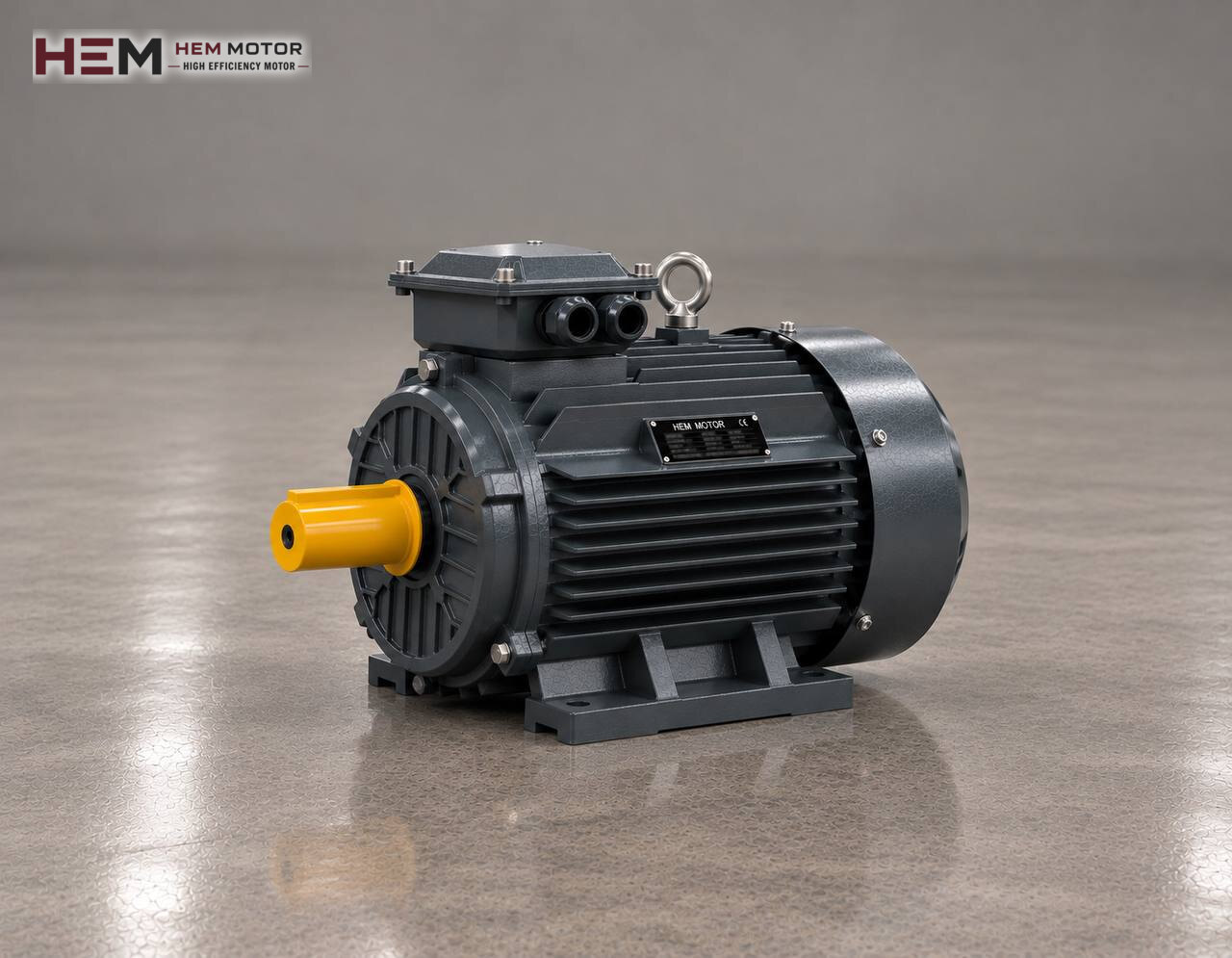
An end-of-life tyre is a hard-to-cut product in which rubber, steel wire and textile cord are tightly bonded. A recycling line separates these three materials step by step: first coarse pieces, then wire-free chips, and finally rubber granulate and powder of a defined size. At each stage the load the motor faces is different. For the general framework of the plant, the waste processing and recycling machine electric motors page is the starting point.

Bead Wire Extraction: The Hydraulic Step Before the Line
On truck and earthmover tyres, the thick bead wire at the edge where the tyre sits on the rim blunts the knives quickly. That is why many plants pass the tyre through a bead wire extractor before feeding it to the shredder. This machine is mostly hydraulic: the electric motor turns the pump and the cylinder produces the force that pulls the wire. Motor selection is based on pump flow and pressure; the subject is covered in detail on the hydraulic pump electric motors page. Ring cutters and slicers that cut large tyres into pieces generally work on the same principle.
Primary Shredder: Slow Shaft, Fibrous and Wired Load
The whole tyre is cut into roughly palm-sized pieces in a twin-shaft shredder whose shafts turn towards each other. The shafts turn at a few tens of revolutions per minute; the motor is chosen as 4-pole and delivers high torque through a large gear reducer. On wide machines each shaft runs with its own motor and reducer.
Rubber is elastic compared to metal; the knife does not break it at once but first stretches and then cuts it. As a result, the load comes as long zones of high torque rather than the sudden impacts seen with scrap metal. As the steel cord inside the tyre wears the knives, the torque needed for cutting rises; a slow increase in motor current over weeks signals that knife maintenance is due.
When a tyre lodges between the knives the wrong way, the shaft may stop. The control system turns the shaft back briefly and tries again. If this back-and-forth movement is frequent, driving with a frequency inverter reduces starting currents; adding a PTC sensor to the winding also allows the motor's thermal state to be monitored.
Rasper and Granulator: Separating Wire, Reducing Size
At the second stage, a machine called a rasper grinds the pieces between a rotating rotor and a fixed screen and separates the steel wire from the rubber. The rasper rotor turns faster than the primary shredder and uses one of the most powerful motors on the line. Because the rotor is both heavy and fast, starting takes a long time; at high power, soft starters or frequency inverters are common.
Next comes the granulator. A bladed rotor reduces the chips to the desired grain size (granulate), and the pieces stay in the cutting chamber until they pass the screen. The motor is usually belt-connected and sits on a slide base. Rubber heats up as it is cut; if the screen clogs, the pieces stay longer in the chamber, the product heats up and the power drawn by the motor increases.
Plants that want finer powder also have a two-roll cracker mill: two grooved rolls turning at different speeds crush the granulate finer. Each roll can be driven by a separate motor or by a single motor and gearbox.
Separating Wire and Textile: Magnet, Screen and Air
The mix leaving the rasper and granulator passes overband magnets and magnetic drums, where the freed steel wire is separated. The belts around the magnets are turned by small geared motors.
Textile cord is a light fibre and is removed by suction fans over oscillating screens. For the screen drive, the box is shaken either by a standard motor with an eccentric shaft or by vibration motors. For the suction fan motors, the industrial fan motors page will guide you, and for the conveyors the conveyor belt electric motors page.
Rubber Dust, Heat and Maintenance
The air on a tyre line is full of fine rubber dust and fibre. This dust sticks to the motor's cooling fins and fan cover; over time the motor runs hotter than normal. The fins should be cleaned regularly with compressed air and the fan cover kept clear. IP55 protection is suitable for a dusty environment; motors suitable for areas requiring explosive-atmosphere classification are not found in our 2026 catalogue.
The primary shredder and rasper produce heavy vibration. Motor anchors, belt tension and coupling alignment should be checked regularly. Depending on frame size, B3, B5, B14, B34, B35 and V1/V3/V5/V6/V15 vertical arrangements can be offered; we confirm the flange to fit the reducer and the shaft diameter before the order.
Example Motors by Line Stage
| Stage | What the motor does | Point to check | Example HEM model |
|---|---|---|---|
| Primary shredder (per shaft) | Turning the bladed shaft at high torque via a reducer | Reversing frequency, reducer ratio | 75 kW, 1,486 rpm, 280S-4 |
| Rasper | Bringing the heavy rotor up to grinding speed | Rotor inertia, starting method | 132 kW, 1,488 rpm, 315M-4 |
| Granulator | Turning the bladed rotor by belt | Screen opening, knife condition | 55 kW, 1,485 rpm, 250M-4 |
| Magnet and conveyor drives | Pulling belts at constant speed | Reducer connection | 2.2 kW, 1,450 rpm, 100L1-4 |
These models are examples only; the final selection is determined by the machine load, required speed, mounting and ambient conditions. The power and speed given by the machine builder are decisive; when replacing, check the nameplate of the existing motor. Models of 75 kW and above have a service factor of 1.15.
Preparing a Request for a Tyre Line Motor
When requesting a quotation, write the following for each machine: machine name (primary shredder, rasper, granulator, etc.), motor power (kW), speed, site voltage, mounting (on a reducer flange, on a slide base or with a coupling) and quantity. Reversing operation, inverter use and the starting method also affect the selection.
Starting with a photo of the existing motor's nameplate is quickest; you can find the method on the find an equivalent from the nameplate page. See our shop for models and current prices, and our contact page for WhatsApp and phone.
Frequently Asked Questions
Why does the primary shredder motor current rise over the weeks?
The steel cord in the tyre wears the knives; a blunt knife starts stretching the rubber instead of cutting it, and the required torque increases. Logging the current trend is an easy way to plan when to sharpen or replace knives.
Why does the rasper motor trip the overload relay on starting?
The rotor is heavy and fast; it takes a long time to reach rated speed. If the star-delta changeover happens too early or the overload is not set for this long start, the protection trips. With a soft starter or an inverter, starting time and current are kept under control.
Can a 6-pole motor be used instead of a 4-pole one on the granulator?
Rotor speed is set by the pulley ratio; if the motor speed changes, the pulleys must be recalculated too. The decision should be made together with the machine builder's rotor speed and the existing pulley diameters.
How do I select the motor for a bead wire extractor?
These machines are mostly hydraulic; the motor is determined not by the pulling force but by the pump's flow and working pressure. Sending the pump nameplate and the existing motor data is enough.