English
 Français
 Türkçe
 Español
 Русский

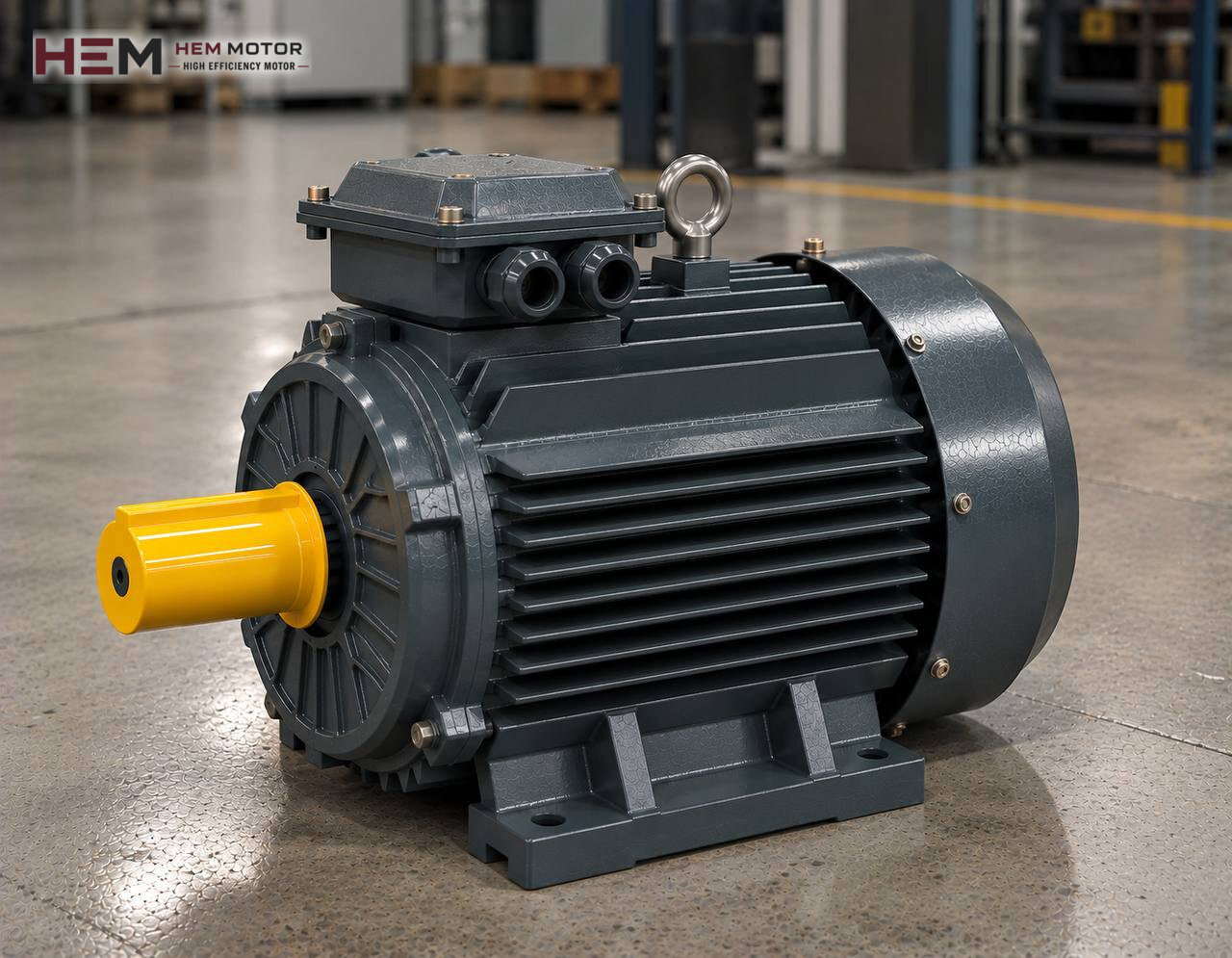
Paper recycling happens on two different scales. Collection and sorting facilities shred, bale and send cardboard, newsprint and office paper to the paper mill. The paper mill, in turn, turns these bales into stock with water and produces new paper and board. Dozens of electric motors run on both sides, but their loads are very different. For other recovery machines, return to the waste processing and recycling machine electric motors page.

Dry Side: Cardboard Shredding and Document Destruction
Packaging board and corrugated cardboard are reduced in size before baling or pulping. Twin-shaft slow shredders or bladed-rotor crushers are used for this. In document destruction machines, the aim is confidentiality, so paper is cut into strips or small particles.
The load of cardboard is light compared with metal and tyres, but it is bulky. When the shredder mouth suddenly fills with a large pile of cardboard, the motor is strained for a short time; wet cardboard tends to wrap around the knives because of its fibre structure. On twin-shaft machines the motor is chosen as 4-pole and runs with a reducer; because jams can trigger reversing, it is useful to monitor the winding temperature.
Shredded cardboard is usually carried by conveyor to a baling press. Baling presses are mostly hydraulic; the motor turns the pump and the cylinder provides the compaction force. The hydraulic pump electric motors page explains press motor selection.
Pulper: The Heart of Repulping
In the paper mill, the heart of recycling is the pulper. A paddle rotor turning at the bottom of a large tank churns the paper from the bales with water and separates the fibres. The resulting mixture is called stock or paper slurry.
The pulper rotor is one of the plant's largest drives. The load depends on the paper consistency in the tank: as the stock thickens, the resistance the rotor must turn against increases. During filling the load rises gradually, during emptying it falls. In batch pulpers this cycle repeats for every batch.
The rotor is usually driven from below the tank via belt and pulley or a reducer. In some designs the motor is vertical. Starting is heavy when the tank is full; many plants therefore start the rotor with the tank partly filled or use a soft starter or frequency inverter. The motor under the tank sits in an area where leaks and wash water flow; motor location and a drip shield should be planned accordingly.
Cleaning and Screening: Pumps and Pressure Screens
The stock leaving the pulper contains staples, plastic tape, sand and adhesive particles. These are removed in a series of cleaning units. High-consistency cleaners and hydrocyclones remove heavy contaminants by centrifugal force; pressure screens let fibres through and hold back contaminants with a rotor turning inside a perforated or slotted basket.
All these units move the stock with pumps. Because stock pumps handle a fluid denser than water, their motors can be more heavily loaded than a water pump at the same flow; the values given by the pump manufacturer are decisive. For pump drives, see the pump electric motors page. Pressure screen rotors are generally belt-driven and run continuously.
Thickening, Dewatering and Conveying
Excess water is removed from the cleaned stock by disc filters, inclined screens or screw presses. In a screw press a slow screw compresses the stock; the motor delivers high torque at low speed through a reducer. Disc filters and drum thickeners are also slow, geared drives.
Stock tanks are agitated constantly; otherwise the fibres settle. These agitators are mounted on the tank wall from the side or from above and run day and night. Bale conveyors, the bale de-wiring machine and the pulper feed conveyor are the other drives at the dry end of the line. For geared motors, the electric motors for gear reducers page is a guide.
Humidity, Fibre Dust and Motor Maintenance
In the wet end of a paper mill the air is humid and warm; in the dry end, paper dust collects on motor cooling surfaces. For motors in wet areas, an anti-condensation heater and a winding sensor (PTC/PT100) are order options. Areas washed with pressurised water are not a design condition of a standard IP55 motor; in that case the machine builder should provide a shield or a special motor should be requested – state this on the order.
Because the plant runs without interruption, a motor failure can stop the whole line. Keeping spare motors for critical pumps and agitators in stock, standardising on the same frame size and monitoring bearing temperature are important parts of the maintenance plan. Mounting designs are offered in foot, flange and vertical options according to frame; flange and shaft dimensions are confirmed on the order.
Example Motors in Paper Recycling
| Machine | Character of the drive | Value to watch | Example HEM model |
|---|---|---|---|
| Cardboard shredder | Geared, slow, reversing | Jam frequency, reducer input | 15 kW, 1,465 rpm, 160L-4 |
| Pulper rotor | Consistency-dependent, heavy start | Tank fill level, starting method | 75 kW, 985 rpm, 315S-6 |
| Stock pump | Continuous, coupled | Stock consistency, pump curve | 30 kW, 1,475 rpm, 200L-4 |
| Tank agitator | Round-the-clock duty, geared | Mounting position, humidity | 7.5 kW, 1,460 rpm, 132M-4 |
The models in the table are examples; the machine load, required speed, mounting and ambient conditions determine the final selection. If a motor is to be replaced, the best approach is to start from the nameplate values of the existing motor. Our models of 75 kW and above have a service factor of 1.15.
What to Send for a Quotation
For the motors in your paper recycling plant, list the following per machine: machine name, motor power (kW), speed, site voltage, mounting (foot, flange, vertical) and quantity. Note separately the motors that run on an inverter or stand in a wet area.
You can send the nameplate photo of the existing motor following the steps on the send a motor nameplate page. You can browse our range and current prices in our online shop and reach us via WhatsApp and phone on the contact page.
Frequently Asked Questions
Why does the pulper motor draw more current towards the end of a batch?
As paper is added to the tank, the stock consistency rises and the resistance the rotor faces grows. This is a normal trend; but if the current climbs higher with every batch, wear of the rotor paddles or clogging of the screen plate should be checked.
Should I select a stock pump motor the same way as a water pump motor?
Because stock is denser than water, more power may be needed at the same flow. Check the power value the pump manufacturer gives for the stock consistency; share the pump nameplate and duty point instead of estimating.
Can you supply a motor for an office document shredder?
The special motors of small under-desk machines are not in our catalogue. Industrial document shredders, however, can use standard three-phase motors or, at low power, the single-phase series (0.18–5.5 kW); see the single-phase electric motor page for details.
What is the most common problem with motors in the wet end?
After long stoppages, moisture build-up in the winding and a drop in insulation resistance are common. An anti-condensation heater and an insulation measurement before commissioning reduce this risk.