 English
 Français
 Türkçe
 Español
 Русский
 العربية

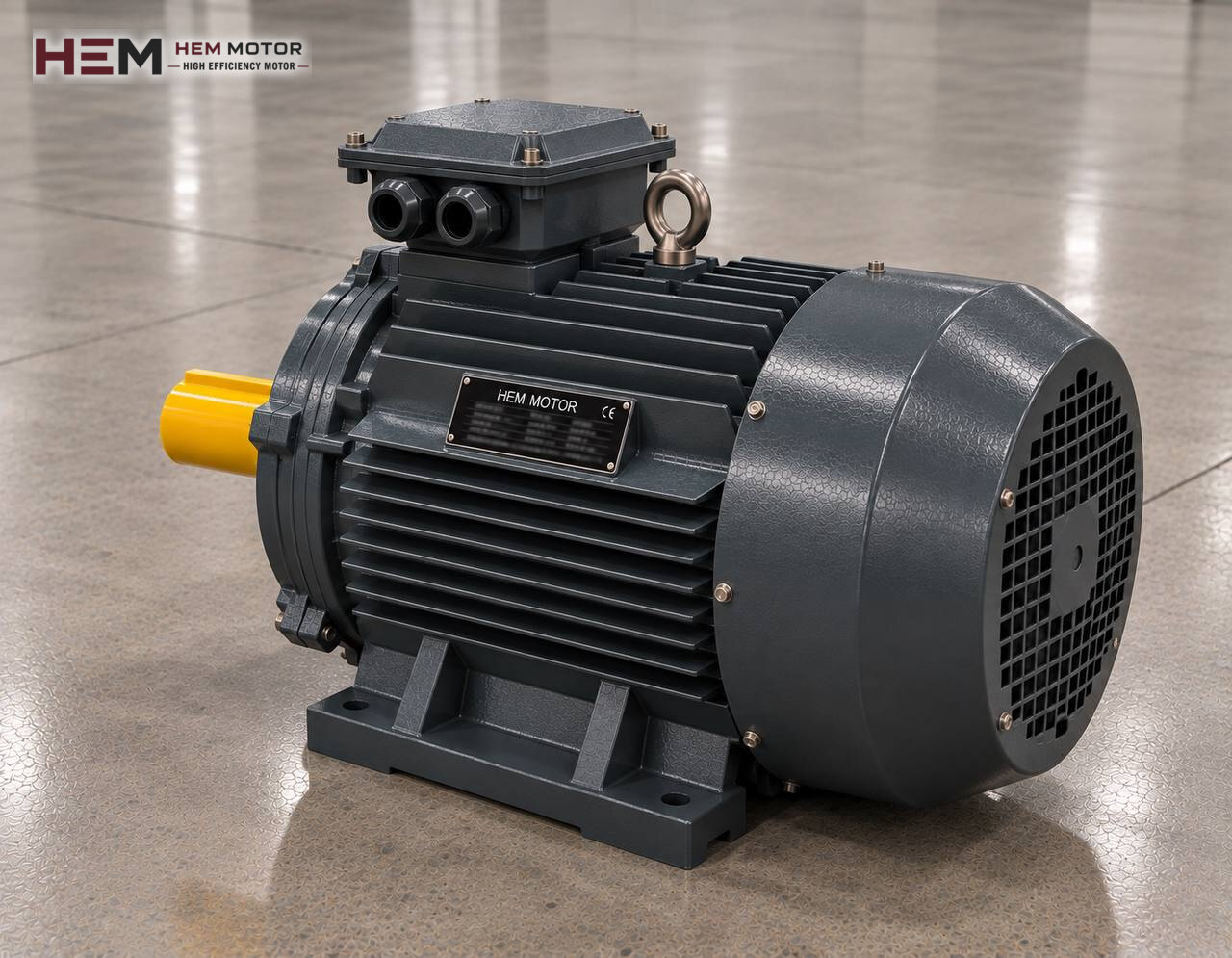
When a machine's speed has to be adjusted, the usual answer is to feed the three-phase motor from a frequency drive (inverter, VFD). Connecting the drive, however, is only half the job: the speed range, the load and how long the motor runs at each speed decide many details, from cooling to bearings. This page explains what changes on the motor side when you plan a drive application and which conditions you should state in your order.

How the Drive Changes Speed: Frequency and the V/f Ratio
The rotating field of an induction motor turns at a speed proportional to the supply frequency. A 4-pole motor runs at 1,500 rpm synchronous speed at 50 Hz; when the drive output is lowered to 25 Hz this becomes 750 rpm, and 1,200 rpm at 40 Hz. The actual shaft speed is slightly lower by a load-dependent slip.
The drive adjusts the voltage together with the frequency. As frequency is lowered, the voltage supplied to the motor is lowered in the same proportion; this is called the V/f ratio. As long as this ratio is kept, the magnetic flux stays constant and below rated frequency the motor can deliver close to its rated torque. Vector-controlled drives apply the same logic with more precise current control; the principle does not change.
The Character of the Load Sets the Speed Range
In a drive application the first question is not the motor power but how much torque the machine demands as speed changes. There are two basic behaviours.
Machines that need constant torque
Conveyor and belt systems, mixers, extruders and lifting arrangements need roughly the same torque when slowed down. The motor then draws a current close to rated even at low speed, while shaft power falls in proportion to speed. In other words, the motor does less work when slowed down, but winding heating hardly falls.
Machines with variable torque
Centrifugal pumps and fans need much less torque as they slow down. For this reason, lowering the speed to match demand can reduce the power requirement of these machines noticeably. How much it falls depends on system pressure and line resistance; the real difference can only be seen by measuring in the application.
| Load type | Example machine | Watch at low speed | State in the order |
|---|---|---|---|
| Constant torque | Belt conveyor, screw conveyor | Torque does not fall and current stays high; the shaft fan may not cool enough | Lowest speed and running time at that speed |
| Constant torque, heavy start | Mixer, extruder | Short high torque when starting loaded; the drive's current limit decides | Starting condition, required speed range, drive model |
| Variable torque | Centrifugal pump | Little heating issue; at very low speed the pressure may be insufficient | Flow control range, cable length |
| Variable torque | Fan, extractor | Above rated speed the power demand rises quickly | Highest frequency, fan diameter or existing motor nameplate |
The table shows the general trend; the final choice depends on the machine's real load curve and running time.
Cooling a Slowed-Down Motor and Temperature Monitoring
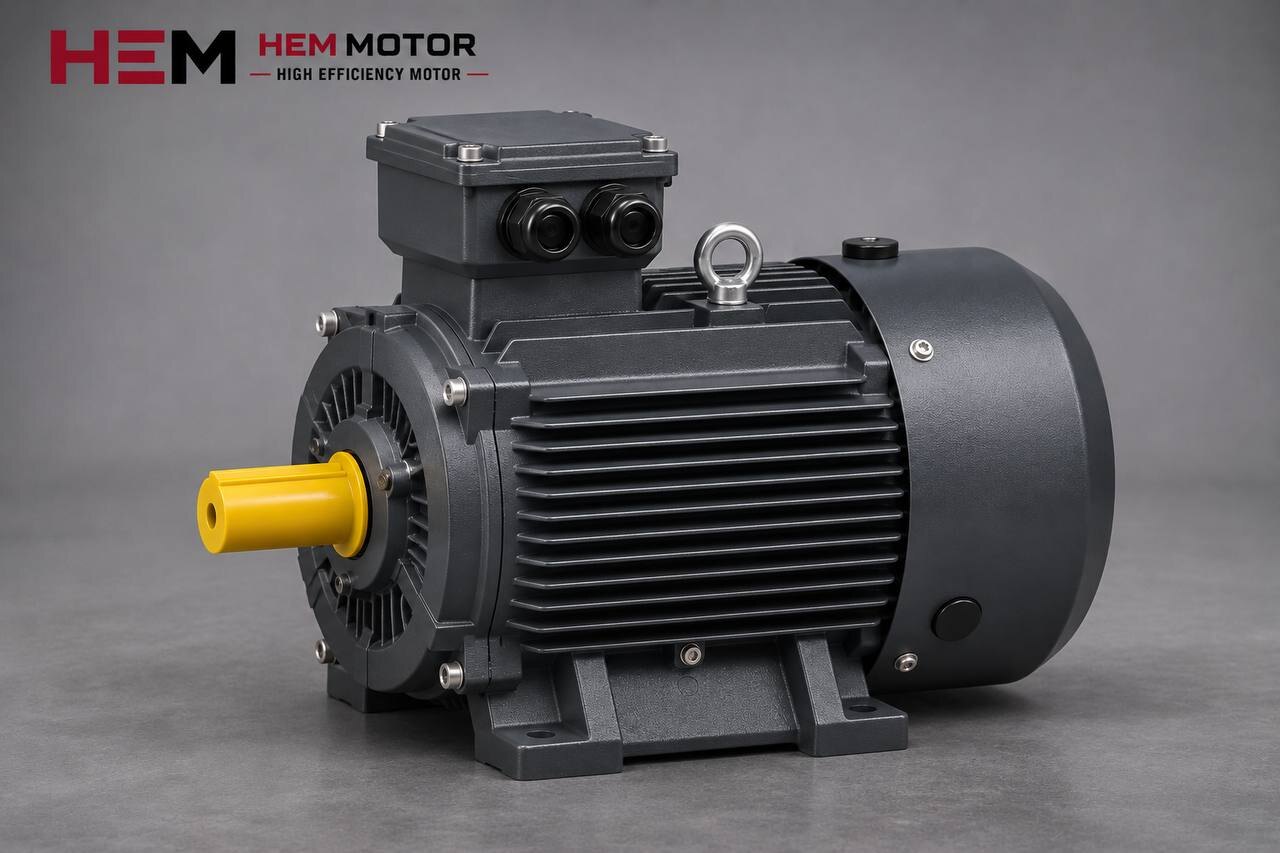
Our standard motors are cooled to IC411, meaning a fan on the shaft blows air over the frame surface. As speed falls, the air this fan delivers also decreases. With pumps and fans the torque falls too, so this is usually not a problem; on a constant-torque machine the motor produces almost full heat with little air.
If the motor will run for long periods at low speed and full torque, a separately powered external fan (forced cooling) may be needed. It must be specified in the order; retrofitting it later costs both time and money. The difference between cooling arrangements is covered in our IC411 and IC416 cooling article.
To monitor winding temperature directly, a PTC thermistor or PT100 sensor is added as an order option. A PTC sends a trip signal to the drive or relay at a set temperature; a PT100 allows continuous temperature reading. The drive's current protection alone cannot always detect insufficient cooling at low speed.
Running Above 50 Hz: Field Weakening
The drive can raise frequency above 50 Hz, but its output voltage cannot exceed the mains value. In this region the V/f ratio falls, the flux weakens and the available torque decreases in inverse proportion to frequency, while shaft power stays approximately constant. If you plan to run the motor above 50 Hz, state the target frequency on the order; suitability is assessed together with the motor data.
High speed affects the mechanical side as well: bearing life, grease life, rotor balance and fan noise all change with speed. If you plan continuous operation well above rated speed, say so clearly in your enquiry; suitability is assessed separately for the motor type, and we do not recommend high-speed operation without that approval.
Cable Length, Bearing Currents and Drive Matching
A drive output consists of very fast-rising voltage pulses. As the motor cable gets longer, these pulses reflect at the cable end and can create voltage peaks at the motor terminals that stress the winding insulation. With a long cable, a dv/dt filter or sine filter at the drive output is considered; which one is needed is decided by looking at cable length and drive type together.
On large-frame motors the common-mode voltage created by the drive can pass current through the shaft into the bearings. Over time this current marks the balls and raceways. In such applications an insulated bearing or a shaft grounding brush may be required.
Drive selection is based on the rated current on the motor nameplate; the drive's continuous output current must cover it. The carrier (switching) frequency matters too: as it rises motor noise falls, but drive losses and cable effects increase. You can check drive sizing by comparing nameplate current and torque with our torque table.
Which Series Can Be Used with a Drive
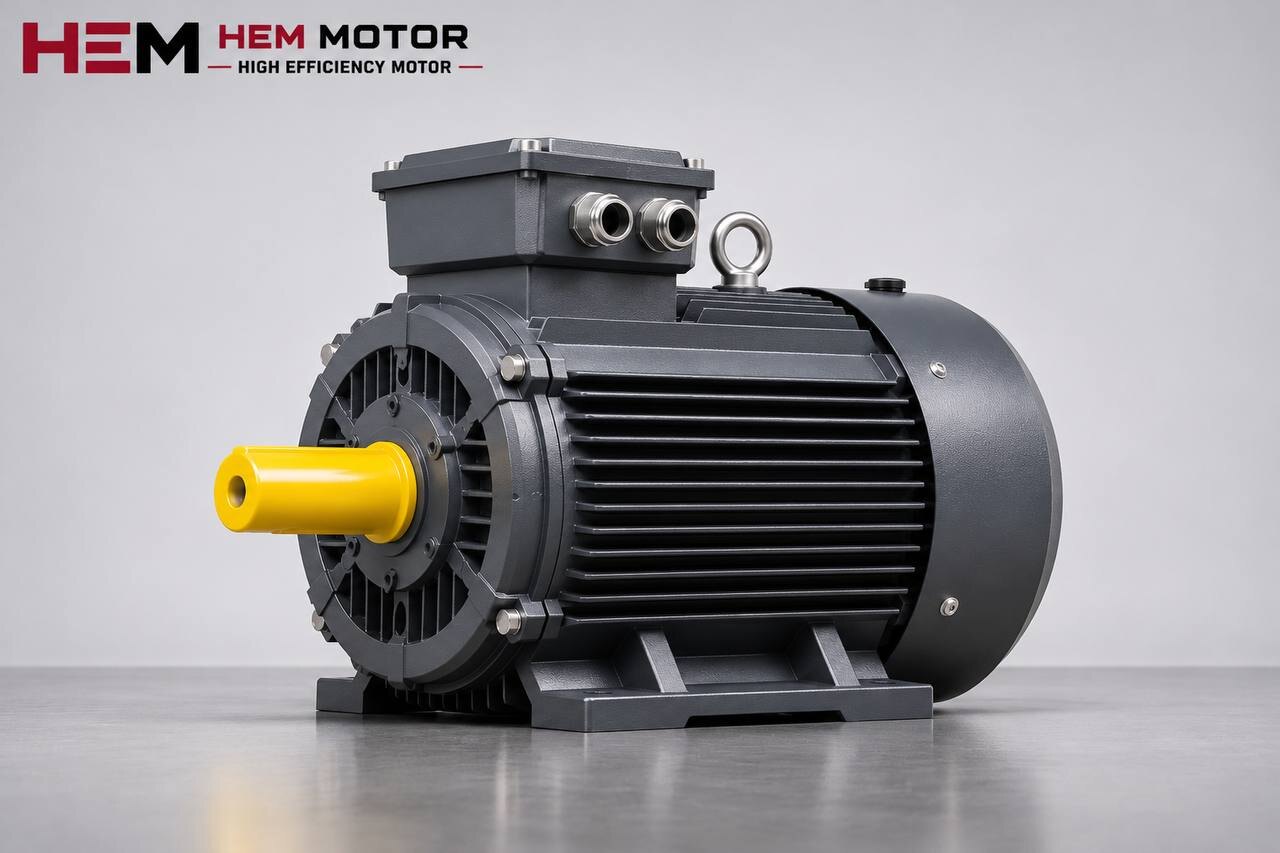
According to our 2026 catalogue, operation with an inverter is assessed for all three-phase series according to the application conditions. The models on sale range from 0.25 kW in aluminium frames up to 355 kW in cast iron frames, all with IP55 protection and class F insulation; the need for an external fan, thermal sensor or filter is set by the application. You can view standard models and current prices in our electric motor shop.
Requesting a Quote for a Drive Application
To let us propose the right motor, send the following in one message:
- The machine the motor will drive and the load type (constant torque, or pump/fan).
- Power (kW) and rated speed (rpm); the required lowest and highest frequency.
- Daily running time at low speed.
- Mains voltage, drive make and model, and cable length between motor and drive.
- Mounting type and quantity; any request for an external fan or PTC/PT100.
If you are replacing an existing motor, send a photo of its nameplate. You can pass on the details through our contact page and see the standard models in the shop.
Frequently Asked Questions
Can I later connect my existing mains-fed motor to a drive?
In most cases yes, but the speed range, load type and cable length need to be checked. If there is long full-load operation at low speed, cooling may be insufficient. For general information see the inverter FAQ page.
Can I run my conveyor continuously at 10 Hz?
Because a conveyor needs constant torque, the motor still draws high current at this speed and the shaft fan delivers very little air. For such use an external fan and a winding sensor are considered; state the lowest speed and its duration in the order.
Can I raise my fan to 60 Hz to increase airflow?
As the fan's power demand rises quickly with speed, the motor can soon be overloaded; motor torque also falls above 50 Hz. This decision should be made with the fan and motor data, after the manufacturer's assessment.
When is the cable between drive and motor considered long?
The limit depends on the drive type and its carrier frequency; the value in the drive manufacturer's manual applies. If you tell us the cable length and drive model, we will assess the filter requirement together.
How do I request an external fan instead of the motor's own fan?
The external fan is an option specified at the order stage. In your enquiry, mention the low-speed operation, the machine type and the voltage available for powering the fan.

