 English
 Français
 Türkçe
 Español
 Русский


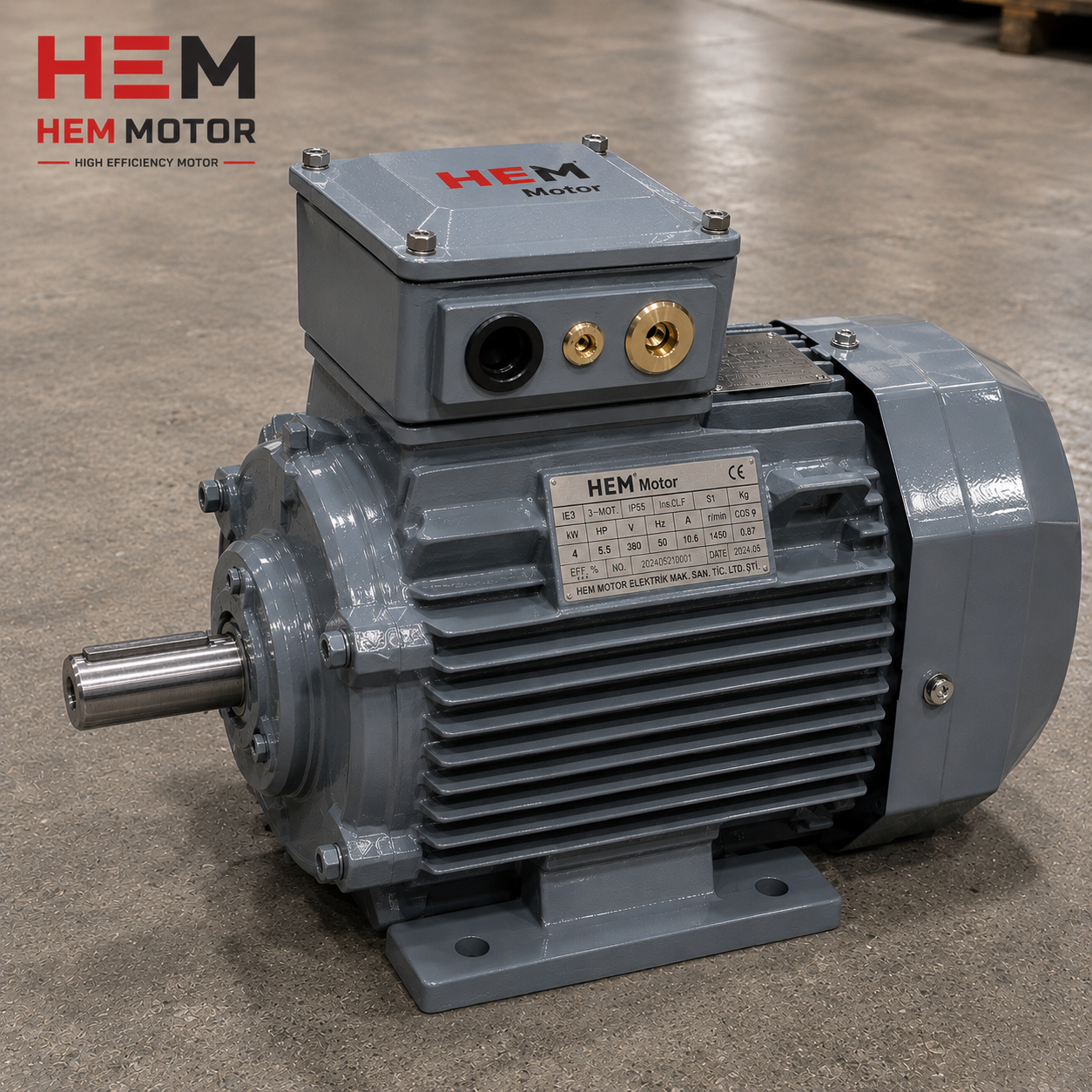
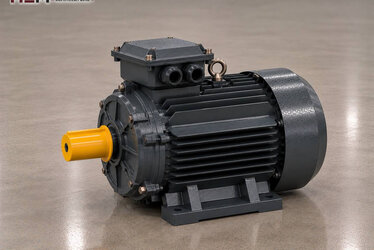
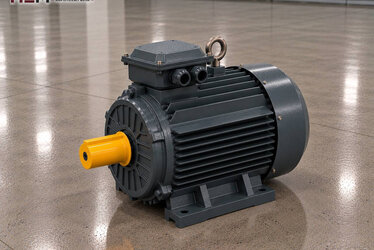
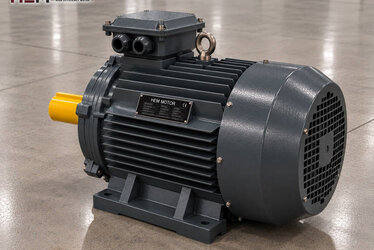
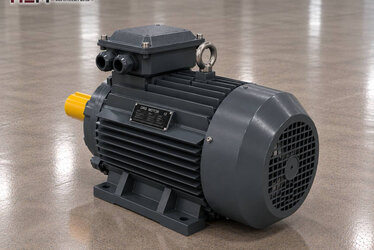
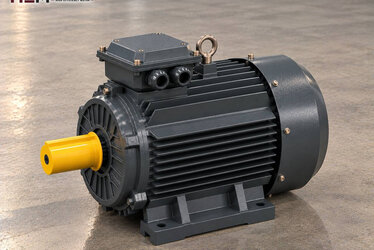
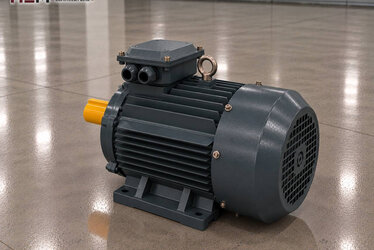
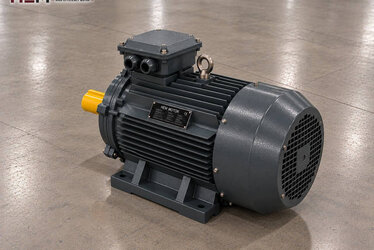
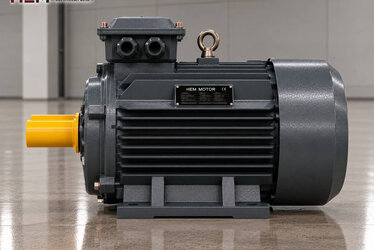
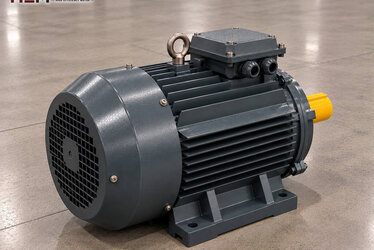
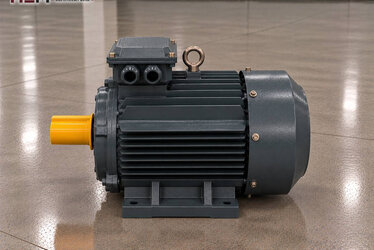
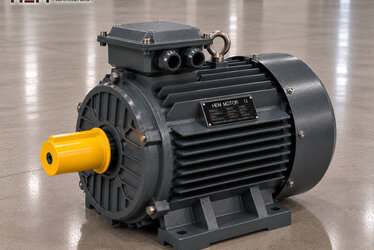
In a furniture workshop most motors turn a cutting tool: a saw blade, a planer cutterblock, a spindle moulder cutter or a sanding belt. With these tools the cut quality depends largely on peripheral speed, and peripheral speed is set by motor speed, pulley ratio and tool diameter. This page covers the three-phase asynchronous motors that drive woodworking machines: how the motor works on each machine, how fine chips and dust affect it, and which values you need to know when replacing a motor or ordering one for a new machine.

Cutting Tool Speed and Motor Speed
A clean surface in wood comes from a high tool peripheral speed. On machines such as circular saws and planers, 2-pole motors in the 3,000 rpm class are therefore common, and the pulley ratio can raise the tool speed even higher. Where torque comes first, as on band saws, log sawing and heavy feed systems, 4-pole motors are more usual. Tool speed can be changed by changing pulley diameter, but every tool has a maximum speed stated by its maker, and that limit must not be exceeded.
If the cutting tool is heavy and large in diameter, the motor first has to accelerate that mass at start-up. When stopping, the tool coasts for a long time; that is why many machines have a motor brake or electronic braking. If you need a brake motor, please state it in the order.
Pages Dedicated to the Machines of This Sector
Details are on each machine's own sub-page; here is a short road map:
- The Wood Router and CNC Router Motor page covers the auxiliary drives other than the work spindle, such as vacuum, dust extraction and hydraulics.
- The Panel Saw Motor page explains how the main blade and scoring blade motors share the work.
- The Log Sawing Machine Motor page deals with the multi-blade saw that cuts the log and its feed drive.
- The Sanding Machine Motor page covers the continuous load of belt and drum drives.
- The Planer Motor page explains the high speed of the cutterblock and the belt arrangement.
- The Thicknesser Motor page looks at the separate drives of the cutterblock and the feed rollers.
- The Four-Sided Planer and Moulder Motor page describes multiple heads, each turned by its own motor.
- The Circular Saw Machine Motor page covers the relationship between blade diameter, speed and braking.
- The Band Saw Machine Motor page explains the large-wheel drive and the long start.
- The Edge Banding Machine Motor page deals with the small motors in feed, trimming and finishing units.
- The Multi-Spindle Boring Machine Motor page describes the drive of the multi-spindle boring head.
- The Wood Lathe Motor page covers speed adjustment according to workpiece diameter.
- The Log Splitter Motor page looks at the drive of the hydraulic pump that produces the splitting force.
- The Chip Collection and Dust Extraction System Motor page describes the motor turning the workshop's extraction fan.
Chips and Fine Dust: the Motor's Worst Enemy
The fine dust from sanding and MDF cutting forms a felt-like layer on the fan cowl and frame fins. Since the motor cools through its frame surface, this layer makes it harder to dissipate heat and winding temperature rises. Weekly cleaning with compressed air makes a real difference, especially for motors sitting in a closed compartment under the machine.
The enclosure is IP55 and the winding insulation is class F; this design suits a dusty workshop. Wood dust is also combustible: a standard motor is not suitable for a dust silo or filter area that requires hazardous-area classification. Ex-protected motors are not included in HEM Motor's 2026 catalogue; if such an area exists, assess it with the system designer.
Belt Arrangement, Vibration and Bearings
On most woodworking machines the motor turns the tool through a V-belt or a ribbed belt. Belt tension puts a side load on the motor shaft, which is carried by the bearing on the pulley side. An over-tight belt wears the bearing early, while a loose belt slips, heats up and lets speed drop during the cut. Vibration caused by poor tool or pulley balance shows up as marks on the surface; check the blade and pulley before blaming the motor.
For mounting, a foot-mounted B3 motor or flanged B5 and B14 designs are used depending on the machine; B34 and B35, which combine feet and flange, and vertical V1, V3, V5, V6, V15 variants are also offered depending on frame size. Keeping the same shaft diameter and flange size as the old motor lets the pulley and tool be reused unchanged; these values are confirmed together at the order stage. For frame dimensions, see the frame size table article.
Preliminary Motor Selection Table by Woodworking Machine
| Machine | Motor load | Value to check | Example HEM model |
|---|---|---|---|
| Circular saw / panel saw | High-speed tool, shock during the cut | Blade diameter and maximum speed, braking | 5.5 kW 132S1-2 (2,930 rpm) |
| Planer / thicknesser cutterblock | Continuous cutting, belt drive | Pulley ratio, belt tension | 3 kW 100L-2 (2,895 rpm) |
| Band saw / log sawing | Large wheel, long start | Wheel inertia, starting method | 15 kW 160L-4 (1,465 rpm) |
| Sanding machine | Steady friction load, heavy dust | Belt width, cleaning of cooling surfaces | 7.5 kW 132M-4 (1,460 rpm) |
| Chip extraction fan | Fan load rising with speed, long running hours | Fan diameter and speed | 11 kW 160M1-2 (2,945 rpm) |
These models are given only as a guide; the actual choice depends on the machine load, the required speed, the connection method and workshop conditions. The power and speed on the old motor's nameplate are a good starting point.
Starting, Speed Adjustment and Small Workshops
On band saws and log sawing machines with heavy wheels, starting can take several seconds, during which current stays high. Our models of 4 kW and above have 400/690 V windings, so they run in delta on a 400 V supply and are suitable for star-delta starting. On lathes and some sanding applications a frequency converter can be used to set speed to the workpiece; our three-phase series are suited to this. If the motor will run at low speed under full load for long periods, its own fan may not be enough and a separate fan is added; on a long cable run a dv/dt or sine filter is considered. For details, see the inverter-compatible electric motors page.
In small joinery workshops without a three-phase supply, our 220 V single-phase series can be considered for light machines; it covers 0.18 kW to 5.5 kW and is presented on the single-phase electric motor page.
Information to Prepare for an Order
So that we can prepare a quote, please send: machine type (circular saw, planer, sander, extraction fan, etc.), motor power (kW), speed (rpm), site voltage, mounting arrangement, shaft diameter and pulley details, whether a brake is needed, and the quantity you want. Take a photo of the old motor's nameplate and send it following the steps on the send a motor nameplate page.
Current prices are on the buy electric motors page; for WhatsApp and phone go to our contact page. If you are unsure between an aluminium and a cast iron frame, the answer to aluminium or cast iron will help.
Frequently Asked Questions
Should I choose a 2-pole or 4-pole motor for a circular saw?
Saws that carry the blade directly or have a small pulley ratio usually use a 2-pole motor in the 3,000 rpm class. The final decision depends on the blade's maximum speed and the pulley ratio.
Why does the sanding machine motor get so hot?
The most common cause is fine dust covering the fan cowl and fins. Regular cleaning, correct belt tension and a position where the motor can draw air reduce the heating.
My old motor has a different shaft diameter; can I still use yours?
Shaft and flange size depend on frame size; if you send the old motor's nameplate and dimensions, we confirm the equivalent frame together at the order stage.
Is there an Ex-protected model for a motor next to a dust silo?
Ex-protected motors are not included in HEM Motor's 2026 catalogue. If there is a classified explosion-risk area, it must be assessed with your system designer.

