English
 Français
 Türkçe
 Español
 Русский

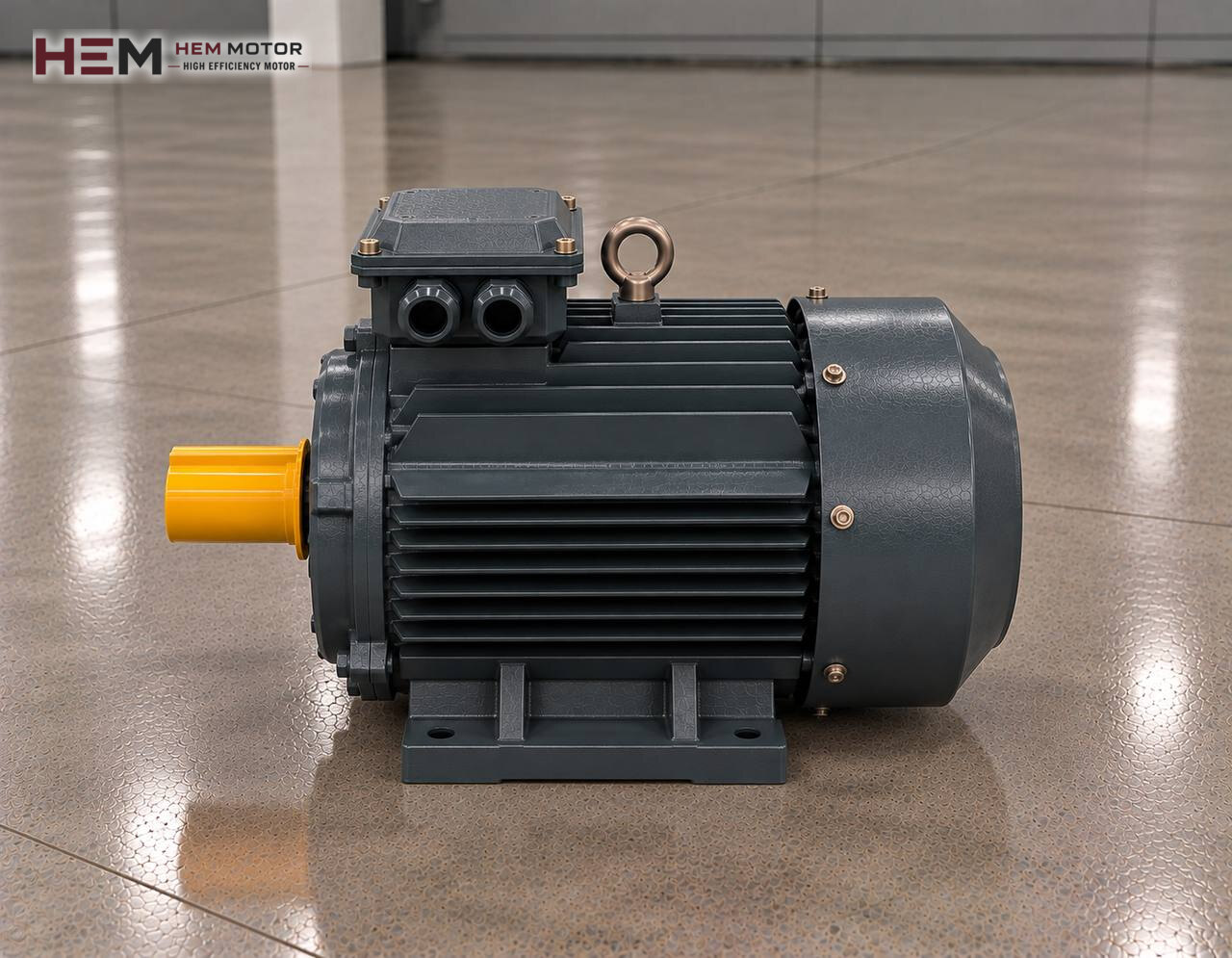
A log splitter separates a log into two or four along the grain, either by pushing it against a wedge or by driving a rotating threaded cone into it. Farms preparing stove and boiler wood, firewood yards, municipal parks teams and shops using up timber offcuts all rely on this machine. This article deals with the electric motor that runs the splitter; for all the workshop machines, see our Woodworking Machine Electric Motors page.

Three Splitting Principles, Three Different Motor Loads
Most machines on the market are hydraulic: a cylinder presses the log against a fixed wedge or drives the wedge into the log. In this design the electric motor never touches the log; it only turns the hydraulic pump, and the cylinder produces the splitting force.
The second group is the screw cone (countersink type) splitter. Here the motor slowly turns a threaded cone through a belt or a gearbox; the cone opens the fibres and advances into the log. The load sits directly on the motor shaft and can rise suddenly in a knotty piece.
The third group is the kinetic, or flywheel, splitter. The motor accelerates a heavy flywheel; when the operator pulls the lever, the energy stored in the flywheel is transferred to the wedge through a clutch and the log splits in one stroke. The motor's job is to bring the flywheel back up to speed between strokes.
How Is the Motor Assessed on a Hydraulic Splitter?
On a hydraulic machine, motor choice is set by pump flow and the system's working pressure. Until the log reaches the wedge, the cylinder moves idle and fast; pressure is low and the motor is at ease. When the wedge enters the wood and the fibres start to resist, pressure rises and the motor sees its heaviest moment. On machines with a two-stage pump, the pump automatically switches to low flow at this point and limits the strain on the motor.
The calculation of this flow–pressure relationship and the pump-side details are explained on our hydraulic pump electric motors page. For a splitter, the point to remember is this: the motor covers the power the pump asks for, not the splitting force of the cylinder. One cannot conclude directly that a machine with a high force rating needs a large motor; cylinder diameter and cycle time also come into the calculation.
Gear pumps usually run with a four-pole motor of the 1,500 rpm class; the 3,000 rpm class is also seen on some compact units. If the new motor's speed differs from the value intended by the pump maker, flow and therefore cycle time will change.
Starting and Jamming on Screw and Flywheel Splitters
On a screw cone machine, the riskiest moment is when the screw catches on a hard knot and stops. The motor then draws locked-rotor current; if the thermal relay is not set correctly, the winding heats up quickly. On many machines the belt is deliberately allowed to slip somewhat, or a safety clutch is fitted at the gearbox output. If there is a reverse button so the operator can back the log out, remember that an abrupt change of direction at full speed creates mechanical stress; leaving a short pause protects both motor and gearbox.
On a flywheel splitter the start is heavy: at first switch-on the motor brings a large mass from standstill up to speed, and this takes several seconds. Direct-on-line starting is enough at small powers, but a soft starter can be considered on larger machines. After each stroke the flywheel slows and the motor briefly recovers it with high current; rapid successive splitting keeps the motor constantly in this recovery zone.
Outdoor Use, Working Beside a Tractor and Supply
Splitters mostly work outdoors, next to the woodpile. The IP55 enclosure protection of our motors is suitable against splashing rain and dust; even so, the machine should be covered when not in use, the terminal box cover kept tight and the cable entry closed with a gland. On a cold winter morning, when hydraulic oil thickens, the pump asks for more power in the first minutes; spending this warm-up time idle protects the motor. A condensation heater is an order option for motors that stand for long periods in damp conditions.
Three-phase power is not always available in rural areas. Small hydraulic splitters are therefore often fitted with a 230 V single-phase motor; HEM Motor's separate single-phase electric motor range covers 0.18–5.5 kW. A long extension cable causes voltage drop and makes the motor struggle at start; the cable cross-section should be chosen to suit the distance.
Example Motors for a Log Splitter
| Machine type | Motor task | Value to check | Example HEM model |
|---|---|---|---|
| Small horizontal hydraulic splitter | Gear pump drive | Pump flow, supply type | 2.2 kW 100L1-4 (1,450 rpm) |
| Vertical hydraulic splitter | Pump, long logs | Working pressure, cycle time | 4 kW 112M-4 (1,450 rpm) |
| Screw cone splitter | Cone, via belt or gearbox | Cone speed, jam protection | 5.5 kW 132S-4 (1,460 rpm) |
| Professional hydraulic splitter | Two-stage pump | High- and low-pressure flow | 7.5 kW 132M-4 (1,460 rpm) |
These models were chosen to give an idea; the right motor is determined by considering your machine's pump data or the needs of the cone drive, the mounting and the intensity of use together.
Maintenance and Fault Tips
If the motor runs hot on a hydraulic splitter, first check the oil level, the suction filter and the relief valve setting; a clogged suction filter strains the pump and, indirectly, the motor. The rubber element of the coupling between motor and pump hardens and cracks over time; when replacing it, check shaft alignment again. On a screw machine, worn cone threads lengthen splitting time and increase the time the motor spends under load. If the bearing noise has changed, do not neglect the lubrication interval.
Requesting a Quote for Your Splitter
Photograph the old motor's nameplate and, on a hydraulic machine, the pump label; how to do this is explained in the send your motor nameplate article. Send us the machine type (hydraulic, screw, flywheel), the required power and speed, the voltage (400 V three-phase or 230 V single-phase), the mounting form (foot, flange or both) and the quantity. Current prices are on the buy electric motors page, and WhatsApp and phone numbers on the contact page.
Frequently Asked Questions
Can I convert my petrol log splitter to an electric motor?
On most hydraulic splitters it is possible, but petrol engines usually run at a higher speed. The speed the pump requires and the shaft connection must be checked, and if necessary the coupling or adapter flange should be renewed.
Does a machine with a high tonnage rating always need a powerful motor?
No. The tonnage relates to cylinder diameter and system pressure. Motor power depends more on pump flow, that is, on how fast the cylinder moves back and forth.
On my screw cone splitter the thermal relay trips often; what should I do?
Check the cone threads, belt tension and thermal setting. Splitting very thick or knotty logs down the middle first reduces cone jamming.
Does the motor's direction of rotation matter for the hydraulic pump?
Yes. Most gear pumps are unidirectional; a pump turning the wrong way delivers no oil and can be damaged. After connecting the new motor, compare the direction with the arrow on the pump body and swap two phases if necessary.