English
 Français
 Türkçe
 Español
 Русский

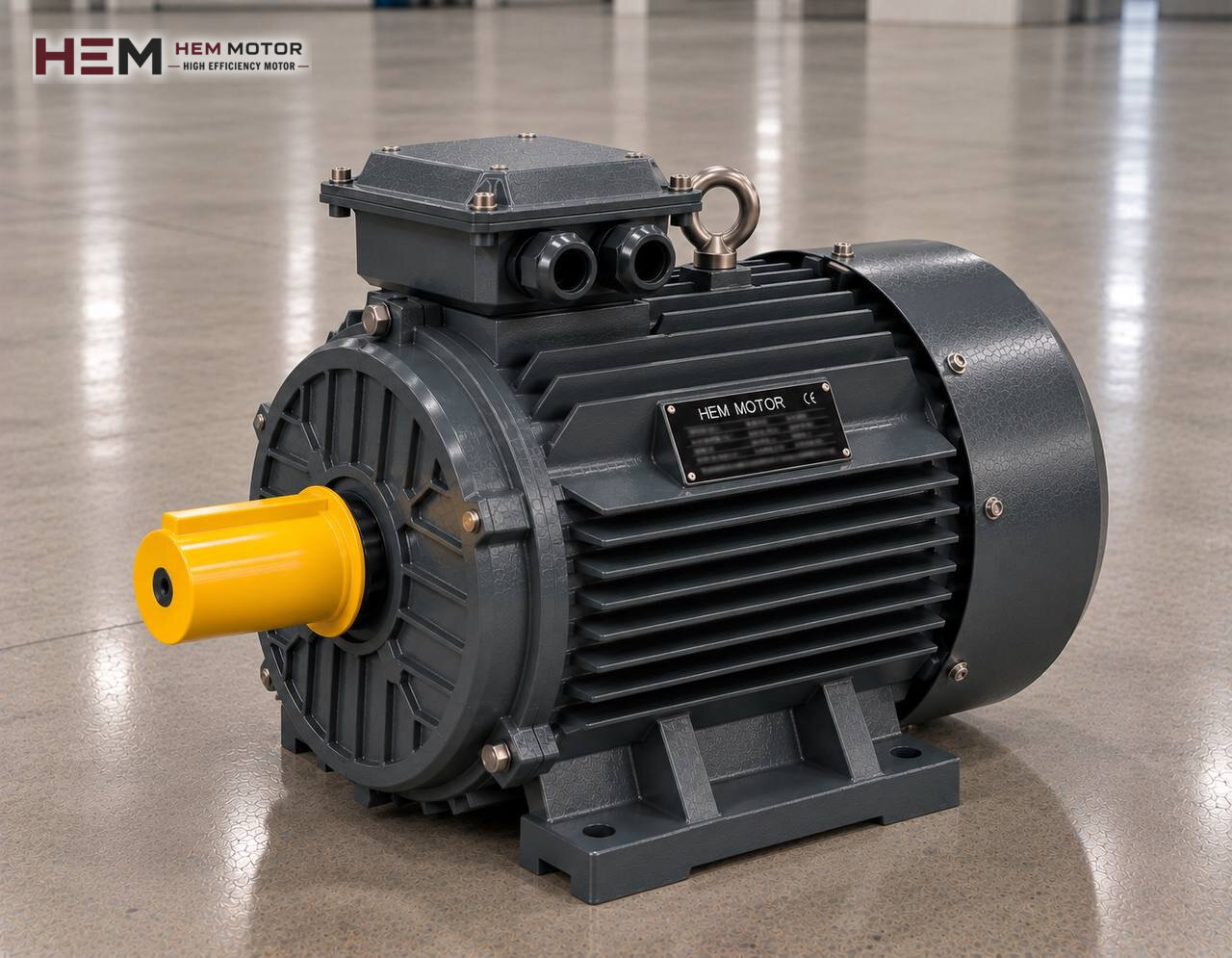
In a joinery shop or furniture factory every machine produces chips and dust: the planer throws thick chips, the circular saw fine sawdust, and the sander a flour-like dust that hangs in the air. A chip collection system draws this waste from the machine outlet, carries it through ducting, separates it from the air and sends it to a bag, a silo or a briquetting press. This article covers the motors inside the system, namely the extraction fan, the rotary airlock valve and the silo discharge screw; for all the shop machines, see our Woodworking Machine Electric Motors page.

From a Mobile Bag Unit to a Central System
In small shops, chip collection is often done with a wheeled unit: one or two plastic bags at the bottom, cloth filter bags on top and an impeller mounted directly on the motor shaft in the middle. The unit is pulled next to one or two machines and moved to another when the job is done. Here the motor carries the impeller directly; there is no belt and the impeller speed equals the motor speed.
As the number of machines grows, the shop moves to a central system. All machine outlets are connected to a main duct, the duct runs to a cyclone or filter tower outside, and the chips drop into a silo there. In this layout a single large fan must overcome the resistance of tens of metres of duct, bends and branches; the motor is correspondingly larger and usually stands outside the building on a base.
The Difference Between a Chip-Carrying Fan and a Clean-Air Fan
In chip collection systems the fan can sit in two positions. A fan placed before the cyclone or filter, in the material stream, is hit directly by the chips. These fans use thick, straight or slightly inclined, clog-resistant impellers; weight and robustness come first. Chips striking the blades cause wear and imbalance over time, which returns to the motor bearings as vibration.
A fan placed after the filter sees only cleaned air, so lighter and more efficient blade types can be used. The operating point that shifts as the filter clogs and pressure-controlled speed adjustment are covered on our sister page about the dust collector fan; in a woodworking shop, the key topic is the impact and wear load on a material-handling fan. Whichever layout is used, the motor must sit outside the airflow and impeller balance should be checked at every service.
Speed, Number of Poles and Starting
For chips to be carried along the duct without dropping out, the air must stay above a certain velocity. Chip fans therefore mostly run at high speed with two-pole motors of the 3,000 rpm class. Heavy fans with large-diameter impellers use four-pole motors and a belt and pulley arrangement. The correct speed is the value given by the fan maker; raising impeller speed when replacing the motor can overload both fan and motor.
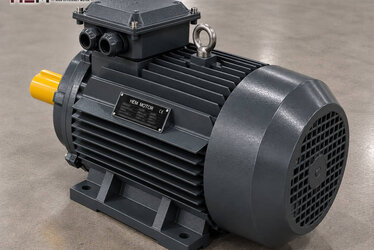
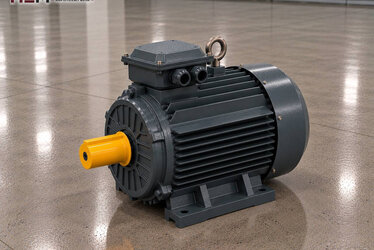
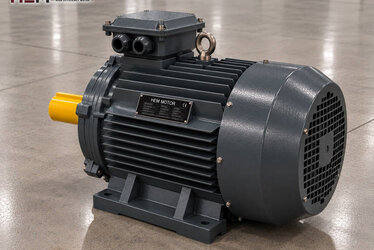
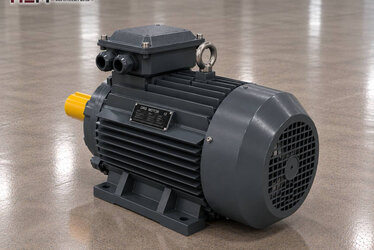
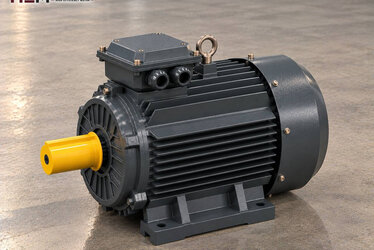
A heavy impeller takes several seconds to accelerate at start-up. Star-delta starting is common on large central fans; for this the motor nameplate must show a delta connection at 400 V. In the HEM Motor range, models from 4 kW upward are wound for 400/690 V and suit this method. Some plants adjust fan speed with a frequency inverter according to the number of active machines; the conditions for inverter use are summarised on the inverter-compatible motors page.
Rotary Valve, Silo Screw and Briquetting Press
The rotary airlock valve under the cyclone releases chips into the silo or bag without letting air escape. The valve turns slowly, so a low-power motor is connected through a gearbox. If a foreign object such as a nail or a piece of wedge enters the valve, the rotor can lock suddenly; to protect the motor, the thermal relay must be set correctly and, where possible, a safety clutch fitted at the gearbox output. For geared drive details see the electric motors for gear reducers page.
The screw at the bottom of the silo feeds chips to a boiler or a briquetting press. When chips bridge and compact in the silo, the screw starts heavily; some silos also have rotating arms that sweep the floor. Briquetting presses are mostly hydraulic and the motor turns the pump; choosing that side is explained on the hydraulic pump electric motors page.
Fire, Dust Explosion and Motor Position
Fine wood dust can ignite and explode under the right conditions. For this reason, the silo, filter and cyclone area is subject to a separate risk assessment in most plants. Our motors have IP55 enclosure protection and class F insulation; however, if the zone is classified as an explosive atmosphere, a standard motor is not designed for that area and this must be stated in the order. In practice the safest approach is to place the motor at a clean point outside the dusty airflow and the silo.
Dust sticking to the motor's own cooling fins also raises temperature. A canopy protecting an outdoor fan motor from rain, and regular compressed-air cleaning for indoor motors, are good habits. A PTC thermistor for monitoring winding temperature is an order option.
Example Motors for a Chip Collection System
| System section | Motor task | Value to check | Example HEM model |
|---|---|---|---|
| Mobile bag unit | Turning the impeller directly | Fan maker's speed, old motor nameplate | 2.2 kW 90L-2 (2,895 rpm) |
| Small central system fan | Extraction for several machines | Duct length, number of outlets | 4 kW 112M-2 (2,905 rpm) |
| Factory main extraction fan | Material-handling fan | Starting method, impeller balance | 11 kW 160M1-2 (2,945 rpm) |
| Rotary valve or silo screw | Slow drive via gearbox | Gear ratio, lock-up protection | 0.75 kW 80M2-4 (1,420 rpm) |
The models in the table are for guidance; the final choice is made according to the fan or valve maker's data, the mounting and the running time.
Requesting a Motor for Your System
Photograph the nameplate of the motor to be replaced and, if possible, the fan label; the send your motor nameplate article explains how. Write to us with the machine or system section (fan, valve, screw), the required power and speed, the supply voltage, the mounting type (foot, flange, vertical) and the quantity. You can see prices on the buy electric motors page and reach us by WhatsApp or phone via the numbers on the contact page.
Frequently Asked Questions
The motor of my mobile chip extractor burnt out; can I fit a 4-pole motor of the same kW?
Not on direct-drive units. The impeller would turn at half speed and suction would drop noticeably. If the impeller is mounted directly on the motor shaft, stay with the same number of poles as the old motor.
Suction has weakened; is a bigger motor the solution?
Usually not. First check whether the filter bags are clogged, whether duct joints leak and whether unused outlets have been left open. As long as the fan turns at the same speed, a larger motor alone does not increase suction.
The rotary valve motor trips the thermal relay often; what could be the cause?
A foreign object may have entered the valve, chips may be jammed between rotor and housing, or the gearbox oil may be low. Clean the valve and check it by turning it by hand; if the problem continues, measure the gear ratio and motor current.
Is it a problem to place the fan motor outside the building?
The IP55 enclosure suits splashing rain; still, a simple canopy over it, a tightly sealed terminal box and a condensation heater for long idle periods all help motor life.