English
 Français
 Türkçe
 Español
 Русский

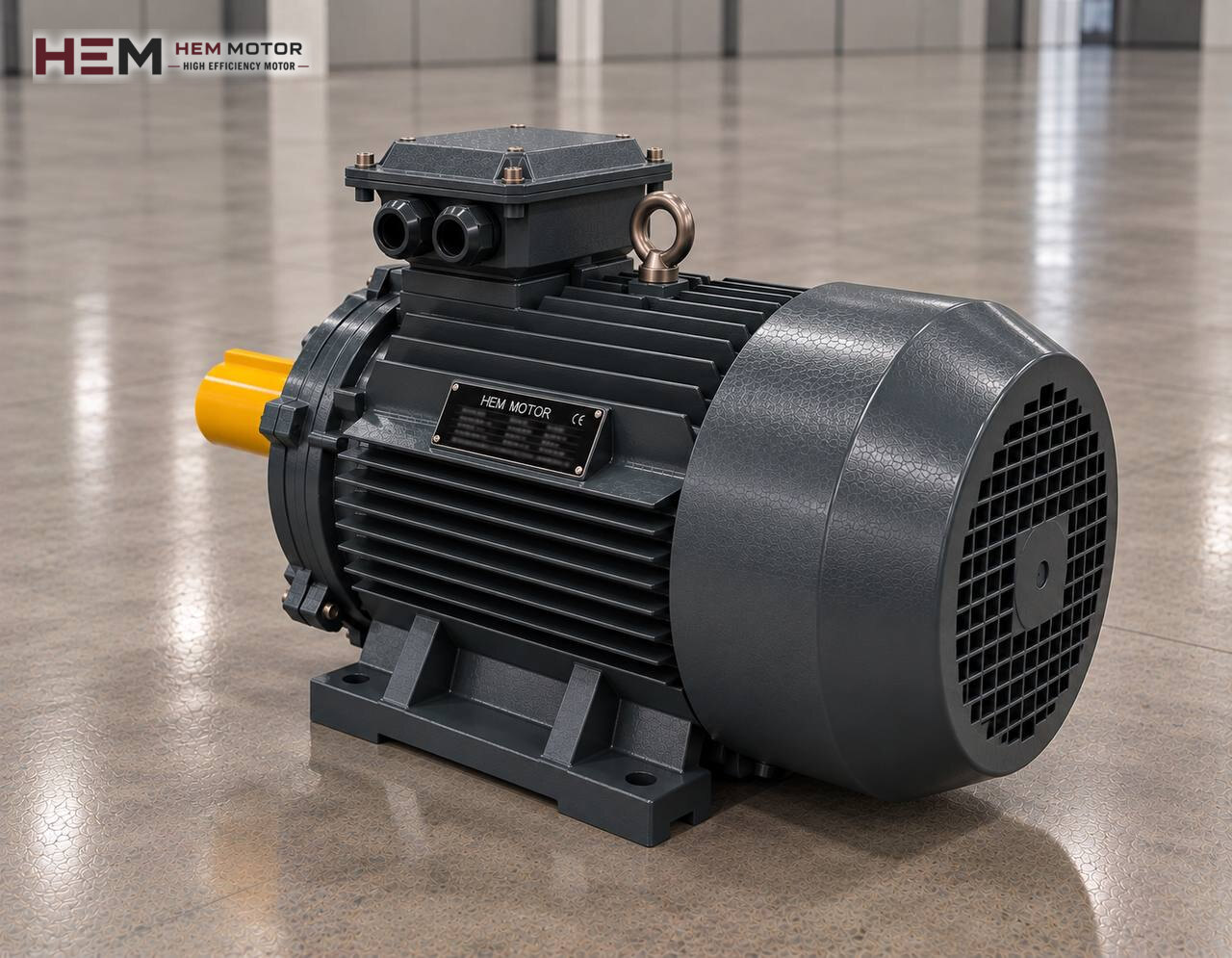
Sawmill machines turn logs arriving from the forest into beams, boards and battens. The main members of this group are the band saw that first opens the log, the multi-blade (multi-rip) circular saw that splits a thick cant into many boards in one pass, and the edger that trims the edges. For the whole woodworking sector see woodworking machine electric motors; this page focuses only on the motors in the sawmill.

The material's journey through the sawmill
The log is brought from the yard to the saw by a chain or roller conveyor. The band saw carriage clamps the log and passes it through the endless blade; each pass removes one slice. The resulting thick cant goes to the multi-rip saw, where several circular blades on the same arbor split it into many boards in one pass. The edger cuts off the bark edges, and the cut pieces are conveyed to the stacking area.
Along this chain the motor loads differ clearly: the band saw wheels need a heavy, long start, the multi-rip arbor draws continuous high power, and the feed and conveying drives must be low-speed but robust.
Band saw: wheel inertia and long starting
On a log band saw the endless blade runs over two large wheels. The lower drive wheel is connected to the motor by belt. The wheels are heavy; at start-up the motor goes through a high-current period lasting several seconds while accelerating this rotating mass. That is why star-delta or soft starting is common on large band saws. The starting method belongs to the machine's electrical design; it is enough to state the method used when ordering the motor.
During cutting the load varies with log diameter, wood species and moisture, and carriage feed speed. Knots or frozen wood cause sudden load peaks. The motor can be 4-pole, in the 1,500 rpm class; the pulley ratio sets the blade speed.
Multi-rip saw: continuous, high load
On a multi-rip saw, blades lined up on the same arbor cut the cant at several points at once. As the number of blades and the cant height increase, the power the motor carries also rises. Because cants are fed one after another, the motor runs close to rated power for long periods; a large-frame motor suited to continuous duty is therefore preferred. Some machines have separate lower and upper arbors with two motors.
Feeding is done by serrated rollers or a chain turned by a separate geared motor. When feed speed is to be adjusted to the cutting load, this motor can run on a frequency converter. For details, electric motors for reducers will help.
Example motors for the sawmill line
| Machine | Motor load | Checked in selection | Example HEM model |
|---|---|---|---|
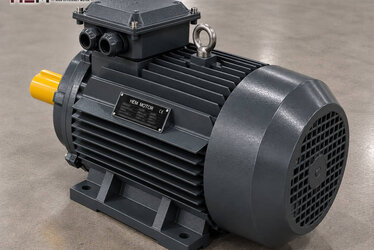
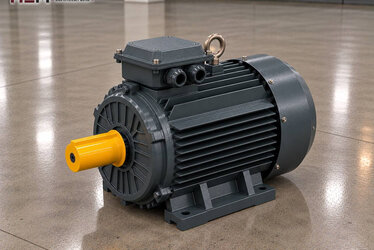
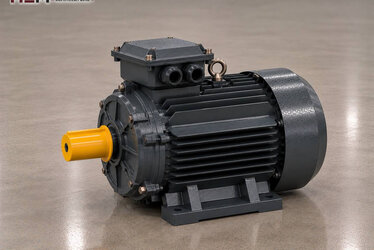
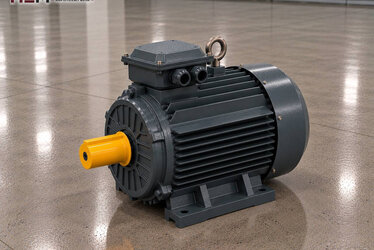
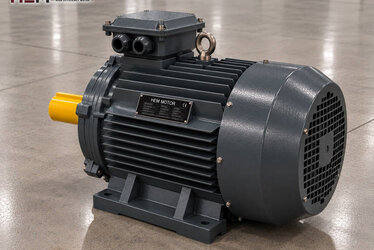
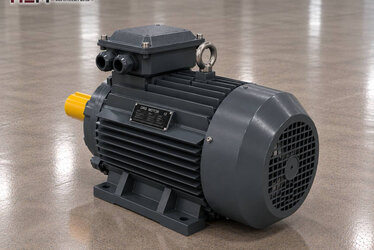
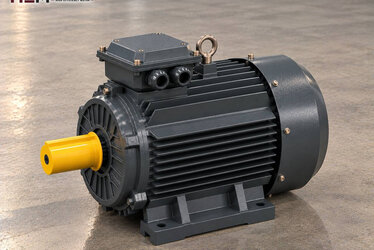
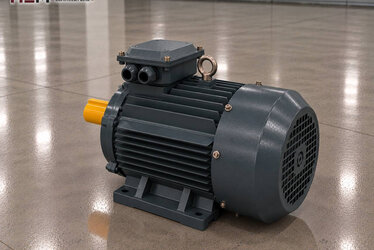
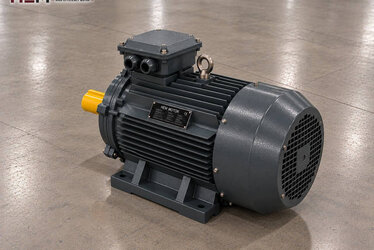
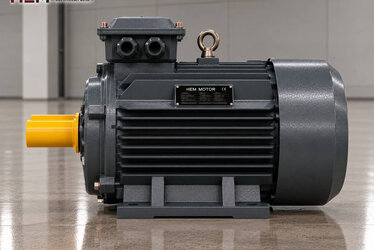
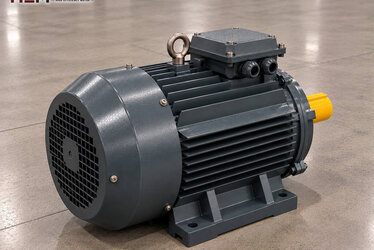
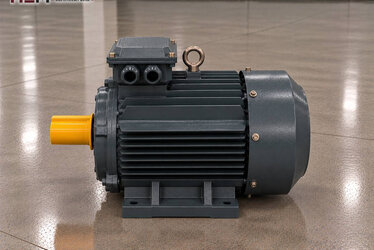
| Log band saw | Heavy wheels, long start, variable cutting | Wheel diameter, starting method, log diameter | 200L-4 cast iron — 30 kW, 1,475 rpm |
| Multi-rip saw | Continuous load close to rated power | Number of blades, cant height, arbor speed | 225M-2 cast iron — 45 kW, 2,965 rpm |
| Edger | Intermittent load at medium power | Blade diameter, feed speed | 160M1-2 cast iron — 11 kW, 2,945 rpm |
| Feed roller / log conveyor | Low-speed pulling through a gearbox | Gearbox connection, need for speed adjustment | 100L2-4 cast iron — 3 kW, 1,450 rpm |
The models in the rows are for orientation. The final choice is made according to the machine's actual load, required speed, mounting and the sawmill's operating conditions.
Sawmill environment and connection
Most sawmills are semi-open or open-air. Motors are exposed to sawdust, resinous water splashing from wet wood, winter cold and morning condensation. HEM's standard series are IP55; this class protects against dust and water splashes but the motor is not designed to stand in the open under rain. A shelter or protective cover should be provided for an outdoor motor, and an anti-condensation heater can be requested as an order option for long standstills.
Sawdust, especially resinous pine and fir dust, sticks to the fan cover and blocks the cool air inlet. Weekly cleaning, belt tension checks and pulley alignment are simple habits that extend the life of a sawmill motor. Motors are supplied in B3, B5, B14, B34, B35 and V1/V3/V5/V6/V15 arrangements depending on frame size; shaft and flange sizes are confirmed at ordering. If the feed motor will stay loaded at low speed on a drive for long periods, a separate cooling fan is considered, and a dv/dt or sine filter for long cables.
What is needed for a quote request
For a quote, send us the machine type (band saw, multi-rip, edger, feed), the required power (kW) and speed (rpm), supply voltage, mounting type, starting method and quantity. For belt drives, add the shaft diameter as well.
A photo of the old motor with a readable nameplate is also enough: send a motor nameplate, we find the equivalent. Models and prices are on the buy electric motors page; WhatsApp and phone are on the contact page.
Frequently Asked Questions
The band saw motor trips the fuse at start-up; what should I do?
Heavy wheels cause a long starting current. Fuse and thermal relay settings should be chosen for this start, with star-delta or soft starting if necessary. An over-tight belt also makes starting harder.
Why does the multi-rip saw motor heat up quickly?
Too many blades, a tall cant or fast feeding can push the motor continuously above rated power. Sawdust build-up on the fan cover also reduces cooling; compare operating current with the nameplate value.
How is the motor of an outdoor saw protected?
Provide a shelter or cover that keeps rain and snow off the motor. An anti-condensation heater can be requested as an order option against condensation during long standstills.
What is needed to adjust feed speed?
By driving the feed motor with a frequency converter, roller speed can be changed according to cutting load. If it will run at low speed for long periods, state this when ordering.