English
 Français
 Türkçe
 Español
 Русский

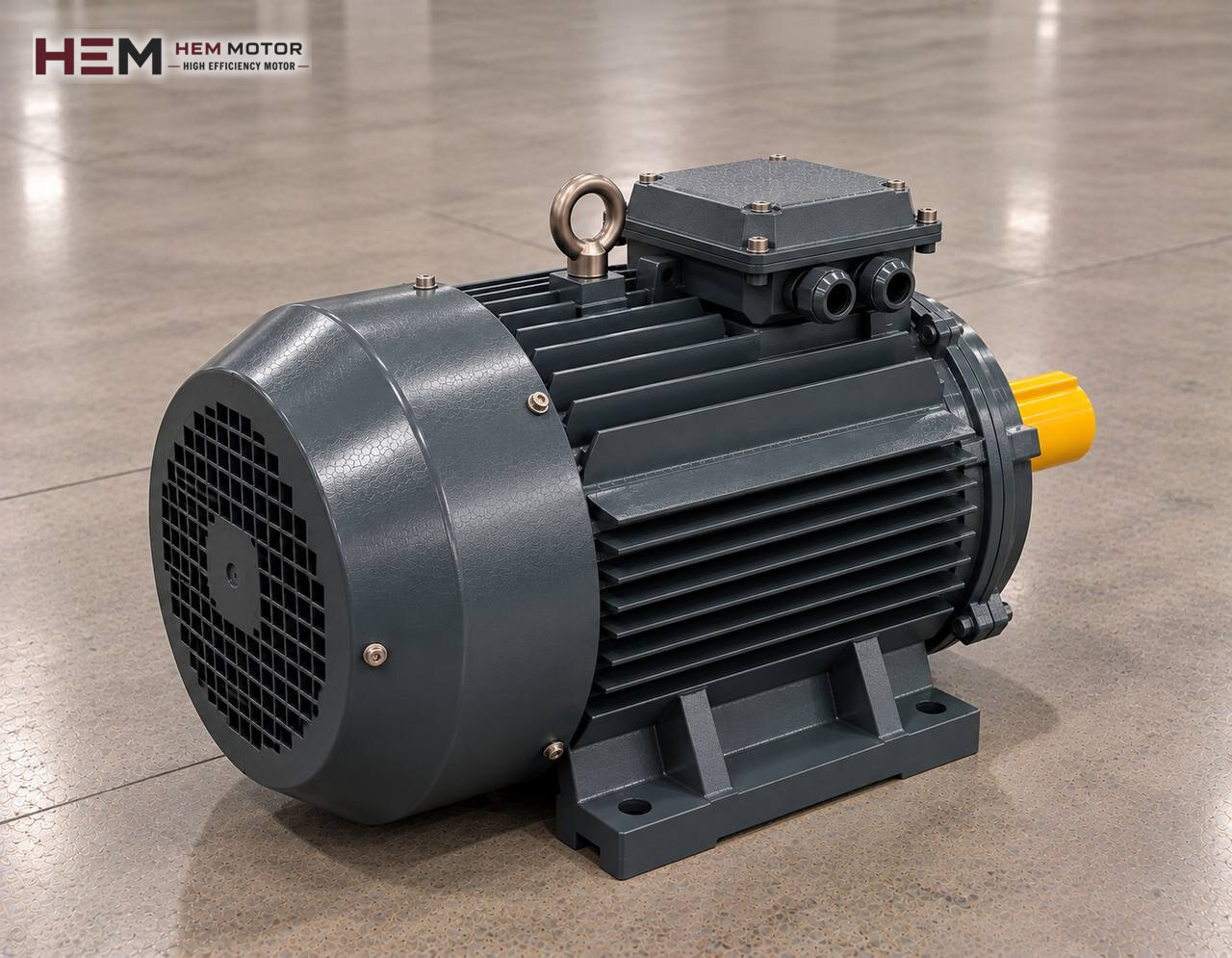
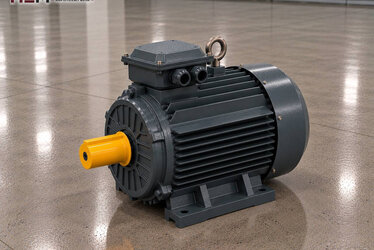
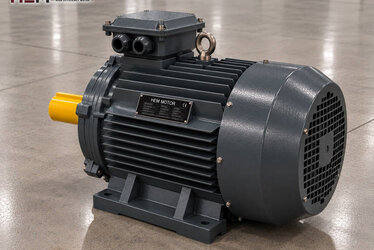
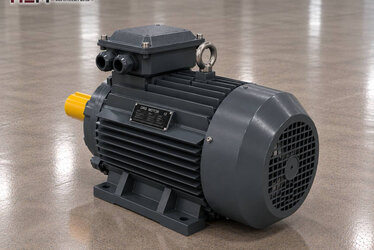
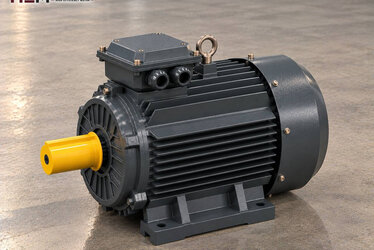
A wood lathe spins a piece of timber held between two centres or in a chuck; the turner rests a gouge on the tool rest, or a copy attachment moves a knife along a template, to give the piece a round profile. Chair legs, stair balusters, bowls, candlesticks and handles are shaped on this machine. This article focuses on the electric motor that turns the headstock spindle; for the other machines in the shop, see our Woodworking Machine Electric Motors page.

On a Lathe the Load Comes From the Workpiece Diameter
On a planer or a circular saw the cutting tool rotates and the workpiece moves. On a lathe it is the other way round: the wood itself spins while the chisel stays still. The torque the motor sees is therefore the cutting force multiplied by the radius of the workpiece. When a thin spindle is turned, the force of the gouge acts on a short lever; at the rim of a wide bowl the same force acts on a much longer lever and the headstock spindle needs noticeably more torque.
Turners who make bowls and platters therefore want high torque at low speed. A shop working on long, slender parts wants high speed, because at small diameters a useful surface speed is only reached by fast rotation. Covering both ends on the same machine is the real question when choosing a wood lathe motor.
Speed Control: Step Pulleys, Variator or Frequency Inverter
Older and simpler machines have matching step pulleys on the motor shaft and on the headstock spindle; the belt is moved by hand from one step to another to get a few fixed speeds. Some machines instead use a mechanical variator with opening and closing cone pulleys for stepless adjustment. In both cases the motor runs at a fixed speed, and a four-pole motor of the 1,500 rpm class is common.
Today many turners fix the step pulley at a single ratio and set the speed with a frequency inverter. This brings two gains: speed can be changed with a potentiometer while the work is turning, and since the inverter allows a change of direction, reverse rotation becomes possible when sanding the inside of a bowl. The point to watch is heavy cutting at very low spindle speed for long periods. Because the motor's own fan also slows down, cooling weakens in this mode; if such use is expected, an independent cooling fan and the cable length between inverter and motor should be discussed at the ordering stage. Inverter use of our three-phase range is explained on the inverter-compatible motors page.
Unbalanced Blanks, Vibration and a Safe Start
A log roughly cut from green wood or a knotty block is never perfectly balanced. If the machine is started at high speed the piece may fly out from between the centres; the unbalanced mass also sends a shock to the spindle bearings and, through the belt, to the motor shaft on every turn. The right habit is to start the piece at the lowest speed and raise it once roughing is done.
On an inverter-driven lathe this is easily set with the ramp time and the start frequency. On a step-pulley lathe the belt should be left on the slowest step. From the motor's point of view the start is light; the real care is to keep the vibration from an unbalanced piece from loosening the motor foot fixings. Tightening the foot bolts at regular intervals is a cheap precaution.
Copy Lathes and Automatic Lathes
On production copy lathes the workpiece is turned by one motor while the knife carriage travels along the template through a separate drive. Some automatic machines also have a rotating cutter head that rough-rounds the blank; this head usually runs on a two-pole, higher-speed motor. Such a machine has not one motor but two or three with different tasks, and each is assessed separately by the value on its nameplate. The slow travel of the knife carriage is often obtained through a gearbox; the electric motors for gear reducers page gives guidance on that topic.
On stopping, the inertia of a large-diameter piece keeps the machine turning for a long time. This time can be shortened with an inverter braking resistor or an electronic brake in the panel. If a brake is wanted on the motor itself, state it in your order.
Shavings, Sanding Dust and Where the Motor Sits
A lathe produces two kinds of waste: long ribbons and curled shavings when cutting with a gouge, and very fine dust during sanding. Coarse shavings usually fall under the machine and pile up on the motor plate; fine dust hangs in the air and sticks between the motor's cooling fins. If the motor sits in a cabinet under the bed, opening the cabinet and cleaning the fan cover weekly keeps winding temperature reasonable.
Our motors, with IP55 enclosure protection and class F insulation, suit the dust of a normal joinery shop. If the dust extraction area is classified as an explosive atmosphere, a standard motor is not designed for that zone; state this in your order.
Example Selection Table for a Wood Lathe Motor
| Lathe type | Motor task | Value to check | Example HEM model |
|---|---|---|---|
| Hobby and small-shop lathe | Headstock spindle, via belt | Distance between centres, old motor nameplate | 1.1 kW 90S-4 (1,445 rpm) |
| Bowl and platter lathe | Low speed at large diameter | Maximum turning diameter, inverter | 1.5 kW 90L-4 (1,445 rpm) |
| Heavy long-work lathe | Headstock spindle, hardwood | Workpiece mass, pulley ratio | 2.2 kW 100L1-4 (1,450 rpm) |
| Copy lathe cutter head | Rough-rounding head | Head speed, belt layout | 4 kW 112M-4 (1,450 rpm) |
The models in the table are only meant to give an idea; the final choice depends on the capacity of the machine, the speed control method, the mounting and the duty. For shops with a single-phase supply, our separate single-phase electric motor range covers 0.18–5.5 kW.
Requesting a Motor for Your Lathe
Before asking for a quote, photograph the nameplate of the old motor; how to take the photo is explained in the send your motor nameplate article. Send us the machine type (hand lathe, bowl lathe, copy lathe), the required power and speed, the supply voltage, the mounting type (foot or flange) and the quantity. If you will use an inverter, mention that too. Current prices of the models are on the buy electric motors page; WhatsApp and phone details are on the contact page.
Frequently Asked Questions
Why is a 4-pole motor usually preferred on a wood lathe?
The working range of the headstock spindle usually lies below and around the 1,500 rpm class. A four-pole motor reaches this range with reasonable pulley ratios and, at the same power, delivers more torque at the shaft than a two-pole motor.
Does running in reverse with an inverter harm the chuck?
On threaded chucks, reverse rotation can loosen the chuck from the spindle. Before running in reverse, make sure the chuck has a locking screw or safety nut, and do only light sanding work in reverse.
My lathe struggles at very low speed; do I need a bigger motor?
Look at the pulley ratio first. Moving the belt to a lower ratio increases torque at the spindle. Simply lowering the frequency with an inverter may not meet the torque need; a motor one size larger is only considered if adjusting the ratio is not enough.
Can an old single-phase lathe be switched to a three-phase motor?
If the building has a three-phase supply, yes; shaft diameter, pulley and foot dimensions are matched and the switch is changed for three-phase. Some inverters give a three-phase output from a single-phase input; in that layout the motor power is limited by the inverter's capacity.