 English
 Français
 Türkçe
 Español
 Русский

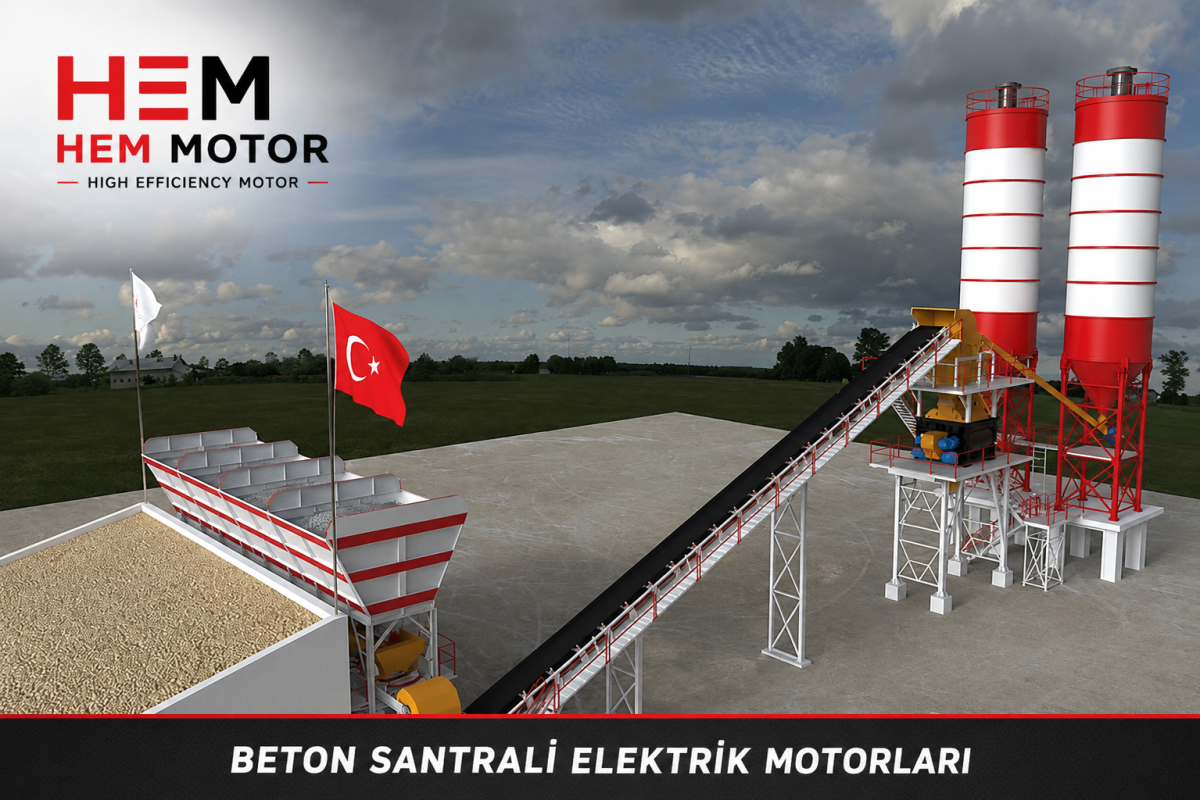
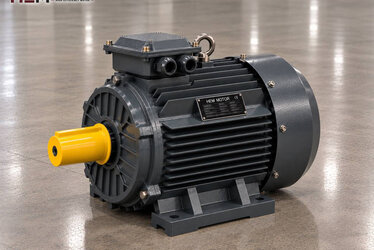
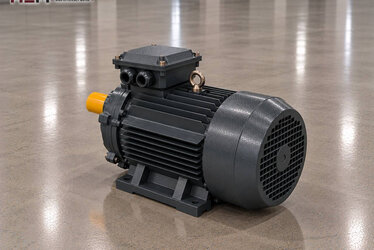
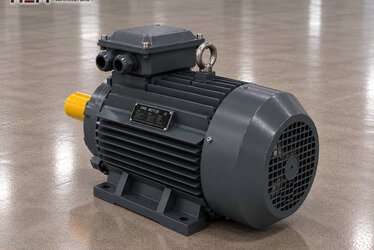
A concrete plant has no single main motor; every step from the aggregate bin to the mixer gate is run by a separate drive. A weighing belt measures the aggregate, an inclined charging belt or a skip bucket carries it above the mixer, cement comes down from the silos to the weigh hopper by screw, water and admixture arrive by pump, and the mixer turns all of it into a homogeneous mass in a few minutes. This page summarises the motor side of this equipment; the mixer and the aggregate line are covered in detail on separate sub-pages.

Where Motors Work in the Plant
Mixer: The heart of the plant. In twin-shaft, planetary or single-shaft types the mixing arms turn inside fresh concrete; the torque the motor meets changes with every batch depending on consistency and fill level. This topic is covered on our Concrete Mixer Motor page.
Aggregate bins, weighing and charging belts: Releasing sand and gravel from the bin through a gate, measuring it on a short weighing belt and carrying it above the mixer on an inclined belt form a chain. Bin vibration, wet sand and run-back on the inclined belt are the topics of this section; details are on the Aggregate Bin and Weighing Belt Motor page.
Cement screw: Carries cement or fly ash from the bottom of the silo to the weigh hopper. It works briefly but intensively, starting and stopping with every batch.
Water and admixture pumps: Push the weighed water and chemical admixture into the mixer. Small two- or four-pole motors are common here.
Silo filter and compressor: The filter fan on top of the silo captures the dust raised during filling; the compressor opens and closes gates and valves pneumatically. For the compressor motor, see our compressor electric motors page.
The Load That Batch Production Puts on the Motor
Ready-mix and precast plants produce in batches, not continuously. In each batch, weighing, discharging, mixing and emptying repeat in sequence. As a result, most motors in the plant start and stop dozens of times an hour or idle between loads. The mixer motor has the hardest duty because it may have to start with a full pan; being able to turn a mixer full of concrete again after a power cut is the real criterion for choosing the motor and reducer.
Frequent starting heats the winding. If the number of starts per hour is high, it is wise to fit a PTC or PT100 sensor in the winding and set thermal protection accordingly; these sensors are added with the order. A soft starter or frequency inverter reduces both the current surge and the jolt on the reducer gears.
Speed Selection and Transmission
Mixer arms and belt drums turn slowly; on these drives a four-pole motor in the 1,500 rpm class is used with a reducer or belt and pulleys. On some large mixers the motor drives the reducer through a belt pulley; the pulley helps set the speed and, by slipping slightly under overload, softens shocks. On the water pump and filter fan, speed is kept high; two-pole motors in the 3,000 rpm class are common.
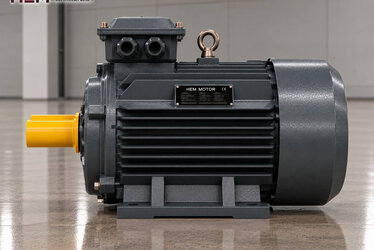
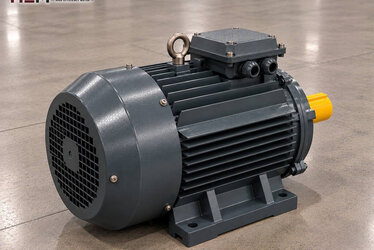
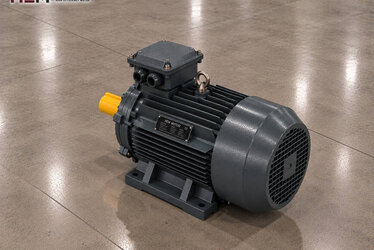
For motors mounted on reducers, flange and shaft matching matters. Foot-mounted (B3), flange-mounted (B5, B14) and foot-and-flange (B34, B35) designs as well as vertical positions are possible depending on frame size; which flange and shaft diameter will be supplied is settled at the order. For geared drives, the electric motors for gear reducers page gives guidance.
Cement Dust, Water and Winter Conditions
Plant motors face fine cement dust, mixer washing water and temperature swings on an open site all at once. IP55 protection is sufficient against dust and rain; however, washing the mixer floor with pressurised water is not a design condition of this protection. The motor should be covered during washing or placed away from the water jet; if different protection is needed, state it in the order.
A cement crust hardening on the frame traps heat; regular cleaning matters for motor life. In plants that stand idle for long periods in winter, condensation can form in the winding; an anti-condensation heater can be added with the order. For heavy mixer and belt drives, cast iron frame models are preferred.
Speed Adjustment by Recipe
In some plants the mixer speed is changed according to the recipe, and the weighing belt is slowed as it approaches the target weight. Our three-phase series can run with such drives. If the motor is expected to deliver full torque for long periods while turning slowly, we check together whether an extra cooling fan is needed, and whether a filter is needed depending on the cable length between drive and motor; simply note these in your order.
Example Motors by Plant Equipment
| Equipment | Motor's task | Value to check | Example HEM model |
|---|---|---|---|
| Twin-shaft mixer | Start with full pan, variable torque | Volume, consistency, starting method | 30 kW 200L-4 (1,475 rpm) |
| Aggregate charging belt | Inclined conveying, run-back | Belt length and slope | 7.5 kW 132M-4 (1,460 rpm) |
| Cement screw | Short, frequent stop-start | Screw diameter, length | 4 kW 112M-4 (1,450 rpm) |
| Water pump | Steady load, high speed | Flow and pressure | 3 kW 100L-2 (2,895 rpm) |
| Silo filter fan | Fan running during filling | Filter maker's value | 1.5 kW 90S-2 (2,895 rpm) |
These models are for guidance; the final choice depends on the machine load, required speed, mounting arrangement and site conditions.
What to Include in Your Quote Request
Write which plant machine you need a motor for (mixer, belt, screw, pump, fan), the required power and speed, the supply voltage, the mounting arrangement or reducer flange, the number of batches per hour and the quantity. For a replacement, a photo of the old motor's nameplate is usually enough.
You can see the models with prices in our shop and use the contact page to reach us by WhatsApp or phone. Belt drives in general are covered on the conveyor belt electric motors page, and water and admixture pumps on the pump electric motors page.
Frequently Asked Questions
What is the most important selection criterion for a concrete mixer motor?
Its ability to restart with a full pan. The power and starting data given by the mixer manufacturer are the basis, and the starting method is chosen according to that data.
Can the motors in the plant withstand washing water?
An IP55 frame is protected against water splashes but is not designed for washing with a pressurised water jet. Protect the motor from the washing area; if you have a different requirement, state it in the order.
Can the same motors be used in a mobile plant?
Yes, if the supply is 400 V and 50 Hz. On sites running on a generator, the starting current should be assessed together with the generator rating; soft starting helps here.
Why does the cement screw motor struggle?
Cement that has absorbed moisture or formed lumps jams the screw and the motor starts under strain. Correct thermal settings, a winding sensor and properly working silo aeration reduce this problem.
Which frame is preferred for plant motors?
Cast iron frames are common on mixer and heavy belt drives. For pumps, fans and small screws up to 11 kW, aluminium frame models can also be used.

