English
 Français
 Türkçe
 Español
 Русский

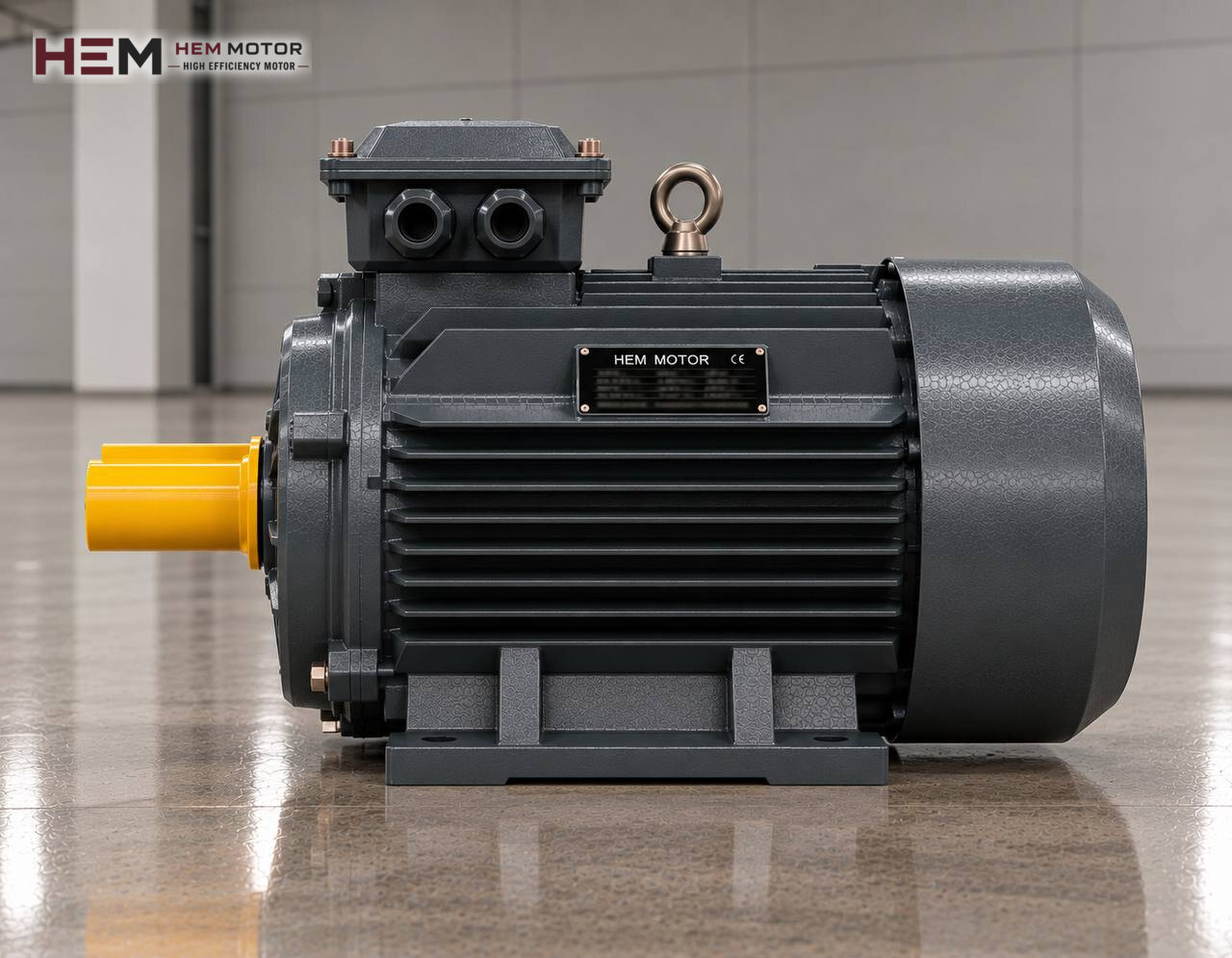
In a ready-mix plant or a precast factory, the quality of every concrete batch depends on how evenly the arms or the star inside the mixer blend aggregate, cement and water. This page deals only with the three-phase motor that turns the mixer; for the plant's belt, screw, pump and fan motors, see the concrete plant electric motors page.

Types of plant mixer and where the motor sits
The most common type in stationary plants is the twin shaft mixer. The two shafts inside the horizontal trough are turned in opposite directions; the arms and paddles on the shafts both turn the material over and push it back and forth along the trough. On large twin shaft mixers each shaft is driven by its own motor and gearbox, and a synchronising link between the two gearboxes keeps the shafts in position relative to each other. On smaller ones a single motor turns a common gearbox.
In a planetary mixer the mixing star rotates about a vertical axis and at the same time travels around the pan. It is preferred for precast elements, blocks and coloured concrete. The motor usually sits above the pan, connected to a right-angle gearbox. In pan mixers the pan may be fixed or rotating; the drive logic is similar to the planetary type.
The rotating drum on truck mixers is turned by the vehicle's hydraulic system, not by an electric motor; this page covers mixers that stand fixed in the plant.
The torque wave within one batch
The mixer motor's load is not constant; every batch repeats the same cycle. The empty trough turns lightly. When aggregate is dropped in, torque rises; when cement and water are added the mix thickens, and the highest torque is usually seen at this stage. With stiff concrete, for example paving stone or block mixes, this peak is more pronounced. When the discharge gate opens, the load falls quickly and the trough waits for the next batch.
Because this cycle happens dozens of times per hour, the motor's thermal state is set by the average load; but its breakdown torque must have enough margin to handle the heaviest moment. The mixer manufacturer specifies motor power according to trough volume and concrete grade. If a motor is being replaced on an existing mixer, the power and speed on the old motor's nameplate are the most reliable starting point.
Restarting with a full trough
The hardest moment for a mixer comes after a power cut or an emergency stop. With the trough half full or full, the arms are buried in fresh concrete; the material has settled and begun to stiffen. The motor then faces a breakaway torque far above a normal start.
In star connection the torque a motor can produce is roughly one third of that in delta; this is why a star-delta arrangement often falls short with a full trough. A soft starter reduces the current drawn from the supply but also cuts the torque reaching the shaft; its ramp must be set for the mixer's real load. A frequency inverter is the most flexible solution for a heavy restart because it gives a controlled start with high torque at low speed. On a twin shaft mixer both motors must start at the same time and by the same method; if one lags, it strains the synchronising link and the gearboxes. Mixer manufacturers often also define a gate-opening and manual emptying procedure for clearing the trough after an outage.
Belts, gearbox and how the motor stands
Two layouts are seen on twin shaft mixers. In the first, a foot-mounted motor stands on its own base and is connected to the gearbox input shaft with V-belts; the belts contribute to the speed ratio and also leave some slip margin if the mixer jams. In the second, the motor is flange-mounted directly on the gearbox. With a belt layout, the radial load on the motor shaft and the pulley diameter should be stated with the order.
On a planetary mixer the motor usually sits horizontally on top of the right-angle gearbox; some designs need a vertical position. Foot-mounted (B3), flange (B5, B14), foot-and-flange (B34, B35) and vertical (V1, V3, V5, V6, V15) designs are available depending on frame size; we confirm the flange and shaft dimensions that fit the mixer gearbox together at the order stage. For gearbox selection, see the electric motors for reducers page.
Cement dust, wash water and vibration
There is always cement dust in the air on the mixer floor. When it gets wet, the dust forms a hardening layer on the motor frame and spoils cooling; the fan cover and fins must be cleaned regularly. At the end of the day the trough is washed with water; the IP55 protection of HEM motors covers splashing water, but directing pressurised water at the motor is outside the scope of this class. Shielding the motor from the wash area or covering it is the machine builder's measure.
In open plants in winter, condensation can form during standstill; an anti-condensation heater and a PTC winding sensor are order options. Vibration during mixing can loosen the motor foot bolts and the pulley connection; checking their tightness periodically is simple maintenance that prevents motor failures. If the motor will run at low speed with full torque for long periods on an inverter, a separately powered fan is considered, and with a long cable a dv/dt or sine filter; details are on the inverter compatible motors page.
Example HEM models and selection table
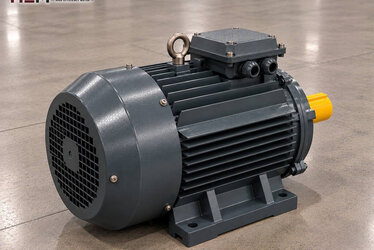
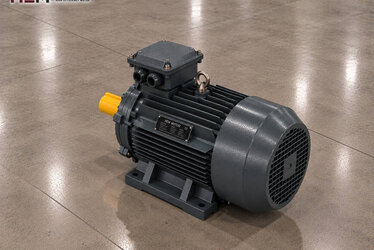
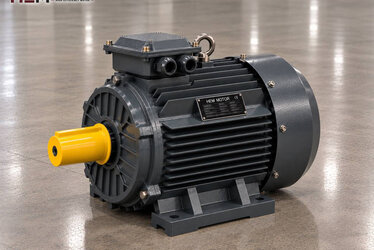
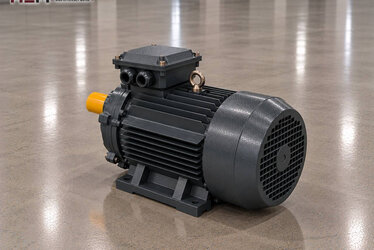
Since the gearbox input on plant mixers is mostly selected for the 1,500 rpm class, 4-pole cast iron motors stand out. For example, the 18.5 kW cast iron 180M-4 gives 120.2 Nm at 1,470 rpm, the 30 kW cast iron 200L-4 194.2 Nm at 1,475 rpm, the 37 kW cast iron 225S-4 237.9 Nm at 1,485 rpm and the 55 kW cast iron 250M-4 353.7 Nm at 1,485 rpm.
| Mixer and how it is used | What is hard for the motor | Point to ask when ordering | Example HEM model |
|---|---|---|---|
| Small planetary mixer (precast) | High torque peak with stiff mix | Right-angle gearbox input, mounting position | 180M-4, 18.5 kW |
| Medium twin shaft mixer, one motor per shaft | Batch cycle, synchronised start | Same starting method for both motors | 200L-4, 30 kW |
| Large twin shaft mixer, belt drive | Belt load, heavy mix | Pulley diameter, shaft radial load | 225S-4, 37 kW |
| Plant with frequent outages on a full trough | High breakaway torque | Inverter or adequacy of starting torque | 250M-4, 55 kW |
The models in the table are examples; the final selection depends on the machine load, required speed, mounting and operating conditions.
When requesting a quote for a mixer motor
Write to us with the mixer type and volume (machine information), motor power (kW), speed (rpm), plant voltage, mounting arrangement (foot-mounted with belts or flange-mounted), starting method and the quantity you need. A photo of the old motor's nameplate often provides enough information on its own. All power ratings and current prices are listed on the shop page; for WhatsApp and phone you can use the contact page.
Frequently Asked Questions
Should the two motors on a twin shaft mixer have the same power?
Yes; since both shafts share the same work, the motors are selected with the same power and speed. When one is replaced, a model identical to the other's nameplate values should be used.
Why can't the motor start with a full trough?
Settled concrete demands a high breakaway torque. A star-delta start may not be enough because it reduces this torque; the starting method, belt tension and motor power should be reviewed together.
Can a mixer motor be 6-pole?
It can; what matters is the input speed for which the gearbox and pulley ratio were calculated. If the number of poles changes, the mixing speed also changes, so the existing arrangement should be kept.
How is the motor protected while the mixer is washed?
An IP55 motor is protected against splashing water, not against a pressurised water jet. During washing the motor should be covered, or water should not be aimed at it.