 English
 Français
 Türkçe
 Español
 Русский

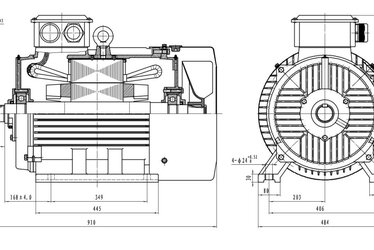
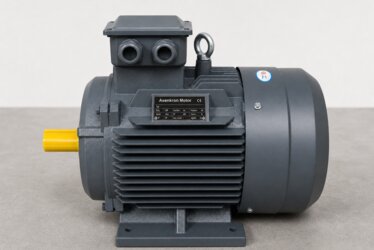

HEM Motor Technical Drawings: Fit the Right Motor into Your Design
The last step in proving that an electric motor is the right choice is seeing that it physically fits the machine. In this section you will find dimensioned 2D drawings and 3D STEP models of HEM Motor three-phase asynchronous motors, together with the technical catalog covering every series. Prepared for machine designers, project engineers and maintenance teams looking for a replacement motor, these files let you confirm mounting compatibility before you buy.
2D drawings: dimensioned outline drawings
The 2D technical drawings are supplied as PDF and show the side and front/flange views of the motor with all dimensions. They are the quickest reference for planning base and frame hole patterns, checking coupling and pulley alignment, or comparing an existing motor with a new one. If you need a different file format, just let us know.
3D STEP models
The STEP (.stp) files on the 3D technical drawings page are software-independent and open in all common CAD programs. Place the model in your machine assembly to check for clashes with the terminal box, fan cover and surrounding parts before anything is built.
Which dimensions should you check?
Shaft diameter, shaft length and key size: determine the fit to the coupling, pulley or gearbox input.
Flange dimensions: outer diameter, spigot diameter, bolt circle and number of holes must match exactly on a flange connection.
Foot hole spacing: on foot-mounted motors, compare it with the existing holes in the base or frame.
Frame height (IEC frame code): in codes such as 90L, 132M or 180L the number is the shaft centre height in millimetres; the same code as the motor being replaced usually means the same mounting dimensions.
Choose the drawing that matches your mounting type
The dimensions of a motor of the same power change with the mounting arrangement. Foot holes matter on a B3 motor, the large flange on a B5, the small face flange on a B14, and both feet and flange on B35 and B34 motors. Decide on your mounting first, then open the drawing for that code. The differences between mounting types are explained on the electric motor mounting types page.
Use the drawings together with the catalog
Electrical data such as power, speed, rated current and efficiency are in the HEM Motor Technical and Product Catalog 2026. The recommended sequence: choose the type code from the catalog by power, speed and efficiency class, check the mechanical fit with that type's 2D drawing, and add the 3D model to your design if needed. For the general features of the product families, see the asynchronous electric motors and cast iron frame electric motors pages.
No drawing for your model?
If the drawing for the power, frame or mounting you need is not in this section, send the motor power, speed, mounting type and, if possible, a photo of the existing motor's nameplate via WhatsApp or +90 532 345 49 86, and our technical team will share the relevant drawing.
Frequently Asked Questions
Is there a charge for downloading the technical drawings?
No. The 2D drawings, 3D models and technical catalog in this section can be downloaded free of charge.
Should I use a 2D drawing or a 3D model?
A 2D drawing is enough for dimension checks, base layouts and comparing a replacement motor. If you are placing the motor into a machine assembly in CAD and checking for clashes, use the 3D STEP model.
Which HEM Motor model will replace my old motor?
Compare the power, speed and IEC frame code on the nameplate, then the shaft diameter, flange and foot hole spacing with the drawings. If you are unsure, send us a photo of the nameplate.
Which mounting type do the dimensions in a drawing apply to?
Each drawing belongs to a specific mounting type. Before opening it, identify your mounting code, such as B3, B5, B14, B34 or B35, and use the file for that code.