 English
 Français
 Türkçe
 Español
 Русский

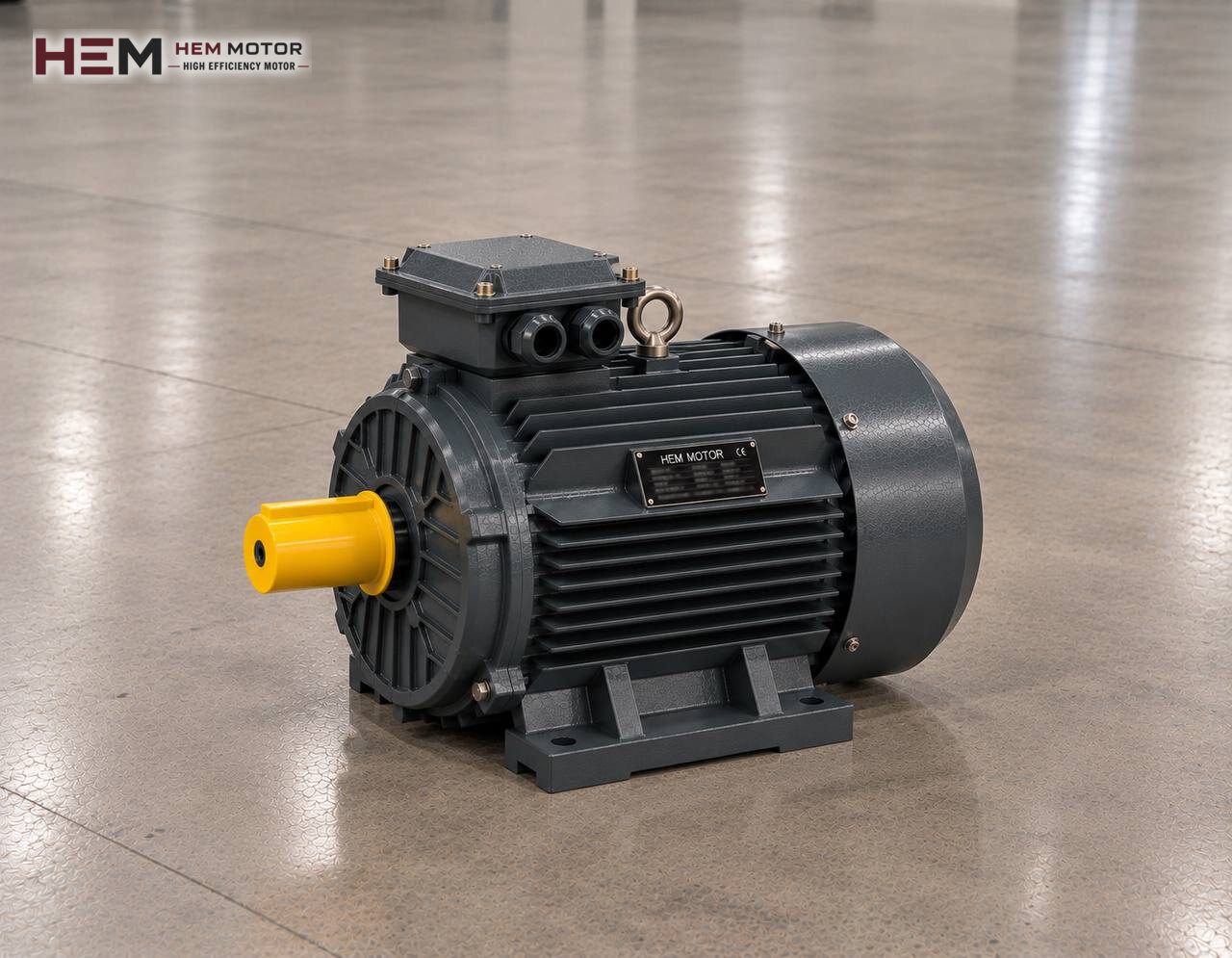
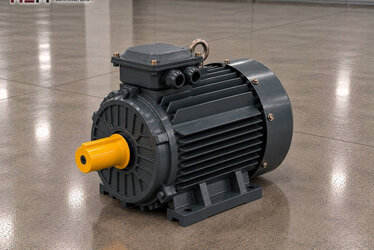
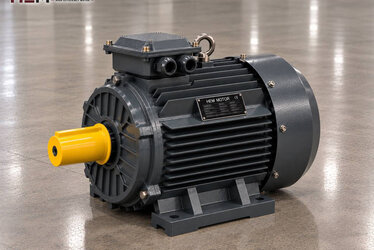
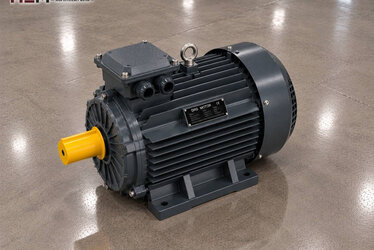
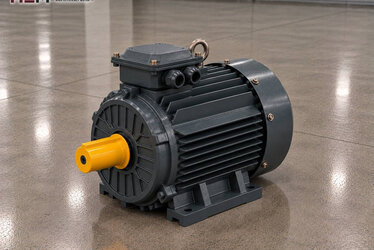
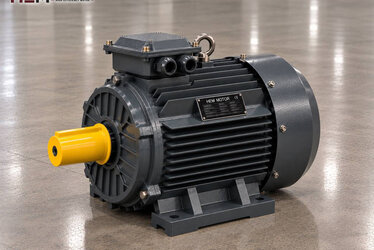
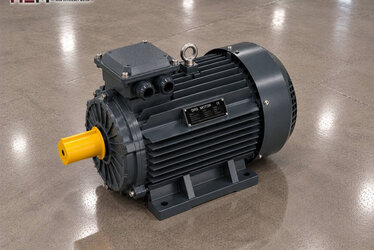
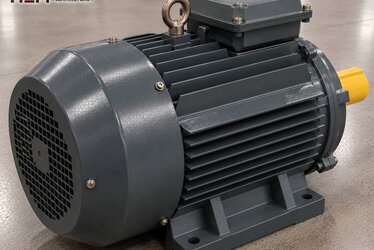
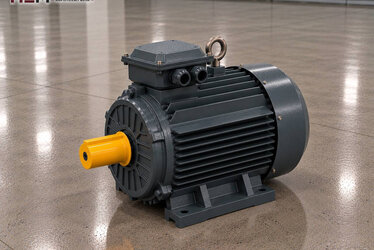
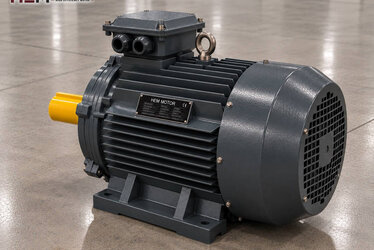
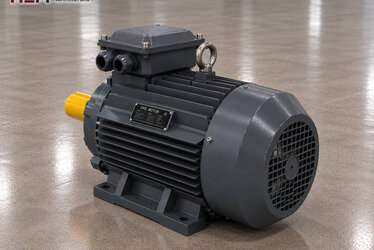
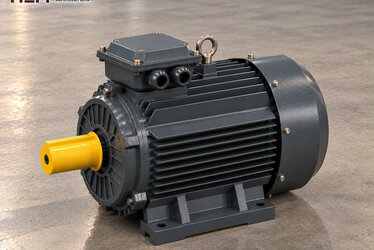
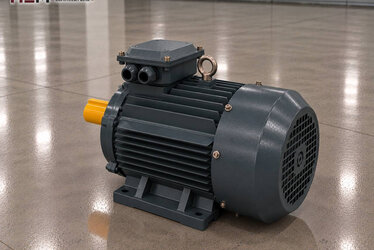
In a brick plant, clay from the quarry passes through a chain of machines before it reaches the kiln, and almost every one of them is turned by an electric motor. The crusher that breaks up lumps, the rollers that crush and refine the clay, the screen that removes coarse grains, the vacuum extruder that pushes de-aired clay through the die and the fans that dry the green product all carry very different load profiles. This page follows the production sequence and explains what to check when matching HEM Motor's three-phase asynchronous series to these machines.

Raw Material Preparation: Clay Crusher, Rollers and Rotary Screen
The common problem for motors in the preparation section is that the material never arrives the same way twice. Quarry clay can be dry and hard one day and wet and sticky after rain the next, so the current drawn by the same machine fluctuates from hour to hour.
Clay crusher
The lump crusher reduces large clods to a size the rollers can accept. The heavy rotor is usually driven by belt and pulley. When a stone gets in, sudden torque shocks occur; a little belt slip protects the motor. Cast iron frame models are preferred on these machines.
Rollers
Coarse and fine rollers pass the clay between two cylinders, crushing stones and increasing plasticity. Most roller mills run on two separate motors; the cylinders turn at different speeds, so the clay is both crushed and smeared. Load rises as the gap narrows, which is why the fine roller usually gets a larger motor than the coarse one. For a replacement order, the most reliable starting point is the nameplate of the existing motor.
Rotary screen
The drum screen separates prepared clay or ceramic powder by grain size. Its load is light and steady, but the surroundings are very dusty. The motor is normally brought down to the slow drum speed through a gear reducer.
In ceramic and glaze preparation, the ball mill and glaze mill stand out: starting a full drum needs high starting torque, and the mill runs non-stop for hours.
Forming: Vacuum Extruder, Extrusion and Cutting Machine
The largest motor on the line is usually here. The vacuum extruder combines three jobs in one body: the upper mixer wets and kneads the clay, the vacuum chamber removes air, and the lower auger pushes the clay through the die as a continuous column. The machine is mechanical; pressure comes from the rotating auger, not from hydraulics.
Mixing and extrusion drive
The main motor turns the auger through a large gear reducer or belt and pulley. The extruder is started in the morning full of clay, so starting under load is its normal condition. Die resistance changes with clay moisture and die type: a perforated brick die and a roof tile slab demand different torque. The starting method (star-delta, soft starter or frequency inverter) is therefore decided together with the machine builder. Models of 75 kW and above have a service factor of 1.15; this is a safety margin, not a reason to choose a smaller motor.
Vacuum pump
The pump that evacuates the vacuum chamber runs on a small motor independent of the main drive. Its load is constant but it never stops; if the pump fails, air bubbles and cracks appear in the clay column. Keeping a spare for this motor on the shelf is valuable for continuous production.
Cutting machine
The column leaving the extruder is divided to size on a wire cutting table. The cutter starts and stops at short intervals; frequent starts, braking needs and speed adjustment are decisive. On a roof tile line, the cut slab then goes on to the tile press.
What the Motor Actually Does on a Concrete Block Machine
On concrete block and paving stone machines, compaction force comes from hydraulic cylinders. The electric motor does not generate this force itself; it drives the hydraulic pump. Motor power is set by pump flow, working pressure and the duration of one pressing cycle; details are on our hydraulic pump motors page.
The other movements on the machine should be considered separately. The vibration table is a special unit designed by the machine builder. The feed box carries the mix into the mould; conveyors move aggregate and finished products. For belt drives see conveyor belt motors, and for the plant that prepares the mix see concrete plant motors.
Drying Fans and Fans Working Near the Kiln
In drying rooms or tunnel dryers, fans run day and night to remove water slowly from the green product. Air volume is often adjusted with a frequency inverter. Our three-phase series are suitable for speed control with a frequency inverter; for long periods at low speed with full torque a separately driven fan may be needed, and with long cables a dv/dt or sine filter is considered; these conditions are stated with the order. For general information see the fan and blower motors page.
Hot gas circulation fans inside the kiln are a different case. A standard motor is not placed in the hot gas stream; it stands outside the kiln wall and drives the fan by belt or through a long-shaft bearing unit. If the ambient temperature at the motor position is high, this special condition must be stated with the order.
Humid dryer air can cause condensation in the winding during stoppages. PTC/PT100 winding sensors and anti-condensation heaters are order options.
Example Motor Matching by Machine
| Machine | Motor's job | Value to check | Example HEM model |
|---|---|---|---|
| Clay crusher | Turning a heavy rotor by belt | Shock load, starting under load | 11 kW, 160L-6 cast iron |
| Fine roller | Turning the cylinder via reducer or pulley | Cylinder speed, speed difference between the two motors | 30 kW, 200L-4 cast iron |
| Rotary screen | Turning the drum at low speed | Dust, reducer ratio | 5.5 kW, 132S-4 aluminium |
| Vacuum extruder main drive | Driving mixer and auger | Starting under load, starting method | 75 kW, 280S-4 cast iron |
| Vacuum pump | Continuously evacuating the chamber | Non-stop duty, spare motor | 4 kW, 112M-4 aluminium |
| Block machine hydraulic unit | Driving the hydraulic pump | Pump flow, pressure, cycle time | 11 kW, 160M-4 cast iron |
| Drying fan | Circulating air all day | Continuous duty, humidity, speed control | 18.5 kW, 180M-4 cast iron |
The models in the table are examples; the final choice depends on machine load, required speed, mounting and operating conditions.
Dust, Loaded Starts and Reducer Connection: Points to Watch
Dust: Clay and ceramic dust is fine and abrasive. All our models have IP55 protection and class F insulation; even so, the motor will run hot if the fan cover and cooling fins are not cleaned. In areas washed with pressurised water, a standard IP55 motor is not designed for this condition; protective measures by the machine builder or a special motor are required, so state it with the order.
Load variation: As clay moisture and stone content change, roller and extruder current fluctuates. Measure the machine's actual running current and leave a margin against the nameplate current.
Loaded starts: Extruders, rollers and mills are often started full; since starting torque drops markedly in star-delta, the starting method should be discussed from the outset.
Reducer connection: Most roller, screen and mixer drives use a gear reducer. B3, B5, B14, B34, B35 and vertical V1/V3/V5/V6/V15 are offered depending on frame size; flange and shaft dimensions are confirmed with the order. The motors for gear reducers page helps with matching.
Continuous duty: Drying fans and the vacuum pump run for days without stopping; this also counts when choosing the frame.
Information That Speeds Up Your Motor Request
For quick matching, send us: the machine the motor will drive (e.g. fine roller, vacuum extruder main drive, block machine hydraulic unit), required power (kW), speed (rpm), supply voltage, mounting type and quantity. Sending a photo of the old motor's nameplate makes the job easier.
You can browse all models on the buy electric motors page; the current price is on each product page. Models delivered from stock are shipped from our warehouse in Türkiye. For questions, reach us via our contact page.
Frequently Asked Questions
Why can a vacuum extruder motor struggle with star-delta starting?
The extruder starts full of clay. In star connection torque falls to roughly one third of the delta value; if that is not enough to turn the loaded auger, the motor hangs in star. In that case a soft starter or frequency inverter is considered.
Can I choose a roller motor with a different speed from the old one?
Not recommended. If the speed changes, cylinder speed and the speed difference between the two cylinders are upset; the clay slips instead of being crushed. If a different speed is needed, the pulley or reducer ratio must be recalculated.
How do I determine motor power for a concrete block machine?
Hydraulic pump flow, working pressure and cycle time are decisive. The hydraulic system does the compaction; the motor only turns the pump. The pump and motor nameplates are the most reliable starting data.
Can a standard motor be used on a kiln fan?
Yes, provided the motor is not placed in the hot gas stream: it stands outside the kiln wall and drives the fan by belt or long shaft. If the ambient temperature where the motor sits is high, state it with the order.
Is an aluminium or a cast iron frame better for a clay crusher?
Because of shock and vibration, a cast iron frame is preferred on heavy machines such as crushers, rollers and extruders. For a rotary screen or a small belt drive, the 0.25–11 kW aluminium series may be sufficient; see the frame selection question for details.