English
 Français
 Türkçe
 Español
 Русский

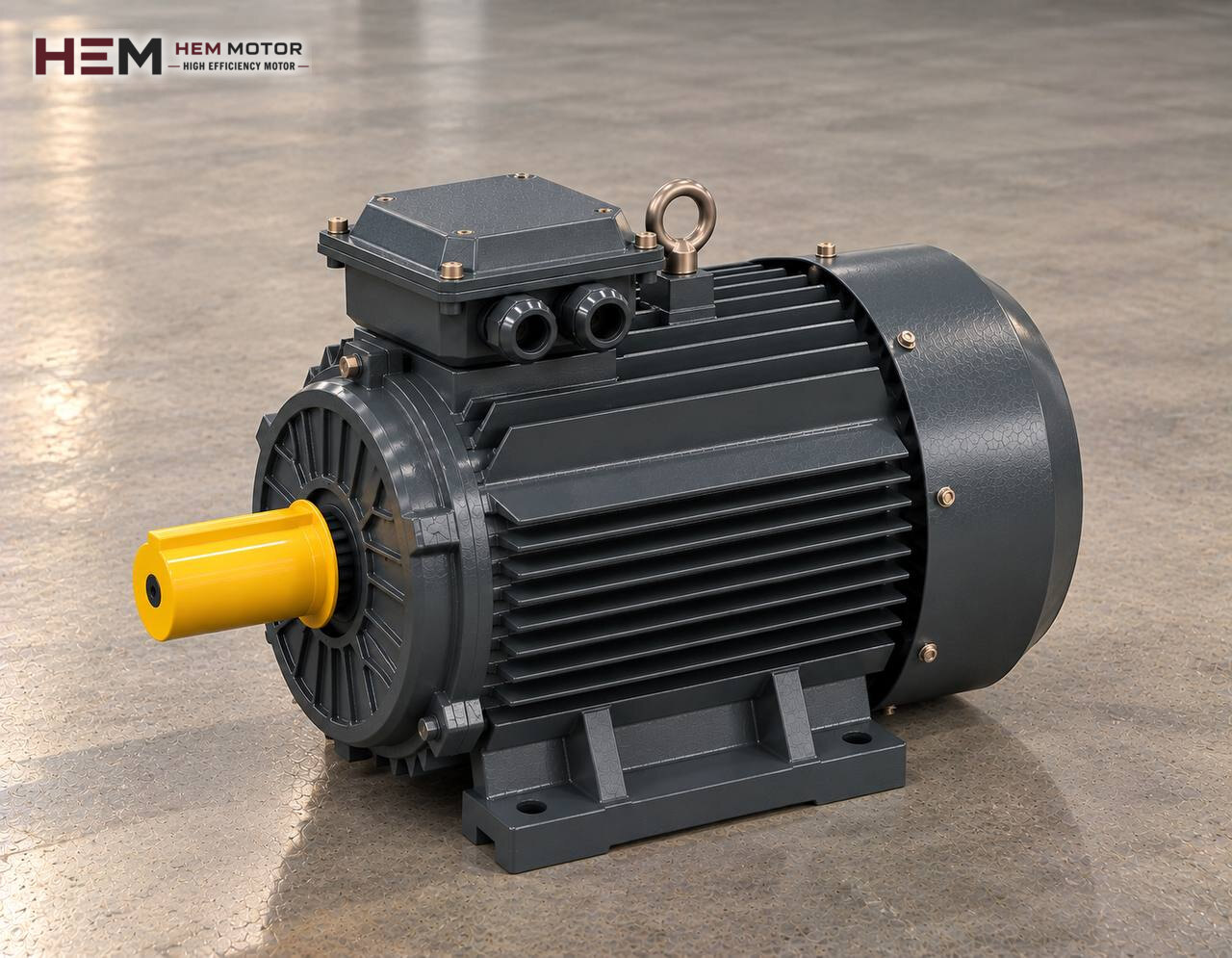
During firing, tiles and porcelain slabs travel on hundreds of horizontal ceramic rollers that form the floor of the kiln. The motors that keep these rollers turning all day and drive the transfer belts at the kiln entry and exit are among the quietest yet most critical parts of the line. The motor layout of the whole line is summarised on the brick, tile and ceramic production line motors page; this article covers only the drive side of the roller kiln.

How the Rollers Turn: A Drive Split into Sections
A long roller kiln consists of preheating, firing and cooling sections, and each section is divided into several drive groups. A geared motor sits at the head of each group; its output is distributed to every roller in that group through a chain, gear or belt train. The roller ends protrude outside the kiln wall, so the motors are lined up along the side of the kiln, outside the insulation rather than inside the hot zone.
Separate motors per group bring two benefits: a failure affects only that section, and the speed of each section can be set independently. Some kilns also use a fast back-and-forth oscillation of the rollers; even while the tile waits at one point, the rollers keep moving. This arrangement forces the motor to reverse constantly and increases the number of starts.
The Motor Load: Light but Uninterrupted
Turning a roller group does not take much power; the rotating mass is the ceramic rollers and the tiles on top of them. The real challenge is continuity. A kiln usually runs for weeks or even months without cooling down, and the drive motor never stops during that time. Thermal balance, bearing life and ambient temperature therefore matter more than peak power when choosing the motor.
Rollers sag slightly in the heat, chains stretch with temperature and tension changes. When a roller breaks or jams, the torque of the group rises suddenly. Setting the motor protection so that it catches such jams protects both the motor and the chain sprockets.
What Happens During a Power Cut?
A ceramic roller that stops turning in the firing zone bends under its own weight or cracks; this is what kiln operators fear most. For this reason the drive system of a roller kiln is usually backed up by a UPS, a generator or a manual turning arrangement. This backup is the design of the kiln builder; on the motor side, what we need is the correct supply voltage and connection compatible with the backup to be stated in the order. Keeping spare motors ready also shortens downtime; HEM Motor's standard models ship from the warehouse in Türkiye.
Speed Control and Transmission
The time a tile spends in the kiln depends on its thickness and glaze, and it is set by the roller speed. Roller groups are therefore mostly driven by a frequency converter. If the motor will run at low frequency for long periods, the fan on its own shaft may not be enough; in that case a separately powered cooling fan is considered. If the cable between drive and motor runs a long way along the kiln, an output filter (dv/dt or sine) should be evaluated. Please write these details in your order; general information is on the inverter-compatible electric motors page.
Because the rollers turn at only a few revolutions per minute, there is a high-ratio gearbox between motor and roller. The motor is usually flange-mounted to this gearbox; the flange type and shaft diameter are chosen to suit the gearbox input. For this matching, see the electric motors for gearboxes page.
Heat and Dust at the Kiln Side
Even though the motors sit outside the insulation, the air beside the kiln is noticeably hotter than the rest of the hall. HEM models have class F insulation and IP55 protection; however, if the ambient temperature where the motor stands is high, state that value in the order so the selection takes it into account. The motor's cooling air should not be drawn straight from the hot stream rising off the kiln body.
Glaze dust and tile fragments collect on the fan cover; regular dry cleaning preserves cooling. PTC or PT100 sensors for plants that want to monitor winding temperature, and an anti-condensation heater to keep moisture out of the winding when the kiln is stopped for maintenance, are order options. Depending on frame size, foot-mounted (B3), flange (B5, B14), combined (B34, B35) and vertical (V1, V3, V5, V6, V15) arrangements are possible; flange and shaft dimensions are confirmed at order time.
Example HEM Models for a Roller Kiln Line
| Drive point | Duty | What to check | Example HEM model |
|---|---|---|---|
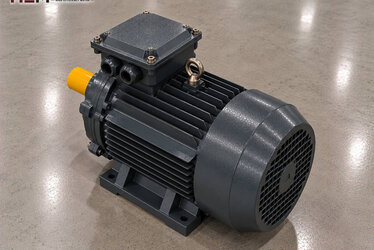
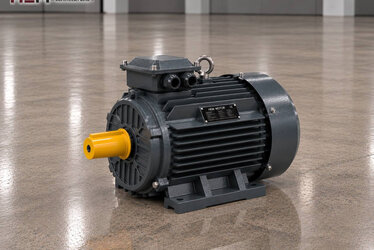
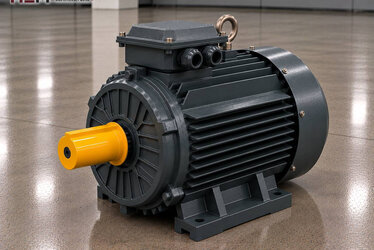
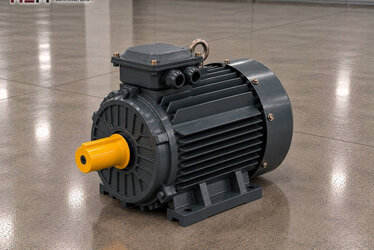
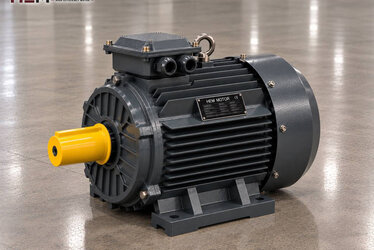
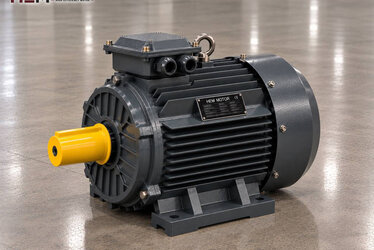
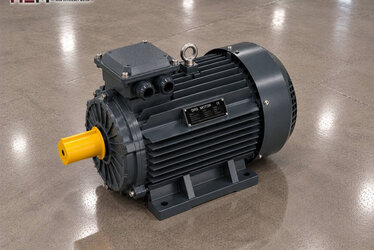
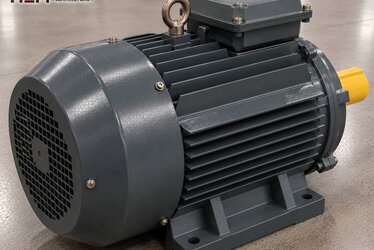
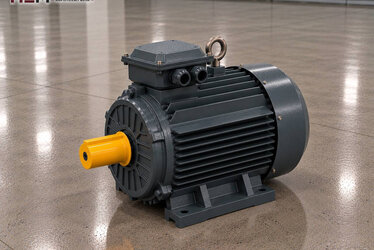
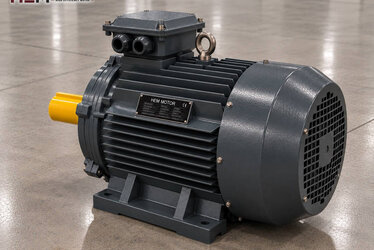
| Roller group inside the kiln | Continuous, low speed, geared | Low frequency on inverter, ambient temperature | 0.75 kW, 1,420 rpm, 80M2-4 cast iron |
| Long firing section group | Continuous, may oscillate | Reversing frequency, chain tension | 1.1 kW, 1,445 rpm, 90S-4 cast iron |
| Entry and exit transfer belt | Frequent stop-start | Number of starts, gearbox flange | 0.55 kW, 1,400 rpm, 80M1-4 aluminium |
| Combustion air or cooling fan | Continuous, fan load | Fan speed, belt or direct coupling | 7.5 kW, 1,460 rpm, 132M-4 cast iron |
The table is for guidance only; the right motor is chosen by evaluating the kiln's real load, the required speed, the mounting arrangement and the operating environment together. For more on kiln fans, see the process and kiln fan motor page.
What We Need for a Spare or New Motor Request
To prepare a quotation, please send: the machine or section the motor is for (roller group, transfer belt, fan), the required power and speed, your plant voltage, the mounting arrangement and gearbox connection, and how many units you need. If the kiln has many motors of the same type, also state the total quantity and the number you want to keep as spares. A nameplate photo of the existing motor is often enough on its own.
To see the price, open the model page in our electric motor shop. You can send your questions by WhatsApp or phone using the details on our contact page.
Frequently Asked Questions
Why does a roller kiln drive motor run without ever stopping?
If the ceramic rollers in the firing zone stop turning, they can bend and break in the heat. The drive therefore keeps turning while the kiln is hot; endurance in continuous duty matters more than peak power when choosing the motor.
Can I run a roller group motor without an inverter?
Technically yes, but the roller speed is then fixed only by the gearbox and gear ratio, and you cannot adjust the firing time. If speed control is needed, state frequency converter operation and the time spent at low speed in your order.
The motor beside the kiln runs very hot. What should I do?
First check for dust on the fan cover and whether the motor's cooling air is being drawn from the hot stream coming off the kiln body. If it runs at low speed on an inverter for long periods, a separate fan may be needed; measure the ambient temperature and send it to us.
Should I choose the same model for every roller motor in the kiln?
If possible, yes; motors with the same power, speed and flange simplify spare stock and allow quick replacement after a failure. Longer or more heavily loaded sections may need a different power, however; compare this with the kiln builder's data.