English
 Français
 Türkçe
 Español
 Русский

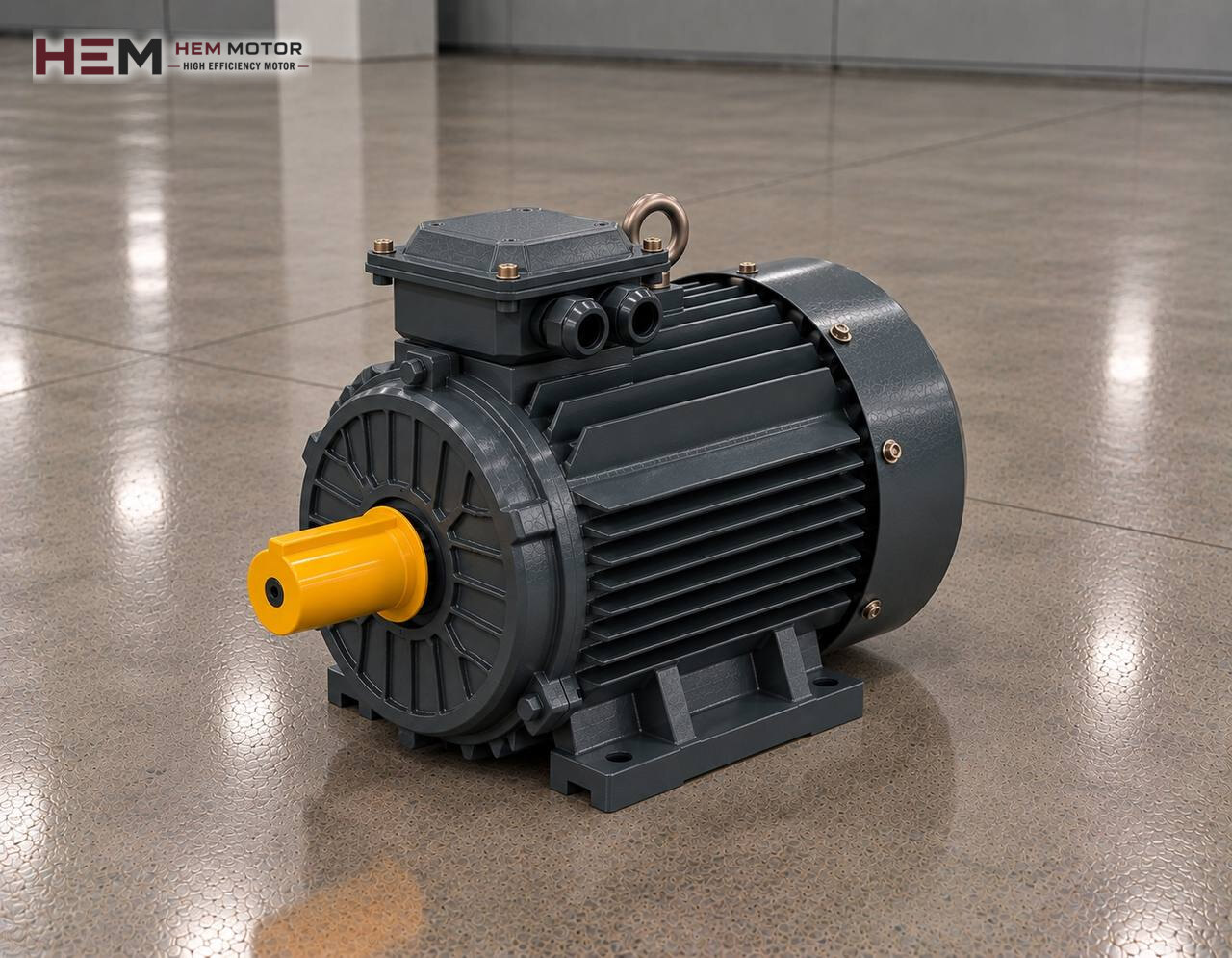
If roots, gravel, pieces of limestone or large clods remain in the clay, a brick tears when it is cut and bursts in the kiln. The rotary screen in the preparation section separates this foreign material and sends only clay of the required fineness down the line. For the whole line, see our brick, tile and ceramic production line motors page; this page covers only the motor that turns the rotary screen drum and its auxiliaries.

How Does a Rotary Screen Separate Clay?
The machine consists of a cylindrical drum laid at a slight incline, its shell covered with perforated plate or wire mesh. Clay enters at the high end of the drum. As the drum turns slowly, the material is lifted, slides and tumbles; fine particles fall through the openings into a hopper or onto a belt below. Stones, roots and clods that cannot pass through the screen are discharged at the low end of the drum.
In ceramic and roof tile plants, screens used for ground dry clay powder usually have fine openings. On a brick line, drums with larger openings serve to remove coarse foreign matter from moist clay. In both cases the motor's job is the same: to turn a loaded drum at a steady, low speed.
Drum Rotation: Slow, Continuous and Heavy
The drum speed is chosen so that the material tumbles without sticking to the shell. In a drum turning too fast, the material clings to the shell by centrifugal effect and screening stops; in one turning too slowly, capacity drops. This speed is a value chosen by the designer and is limited to a few tens of revolutions per minute. A transmission is needed to bring the motor speed down to this level.
The load on the motor is the rolling resistance and lifting work coming from the weight of the drum and the clay inside it. As long as the clay feed is even, this load is fairly constant. It is not a shock load; but when the drum is full, its centre of gravity shifts to one side, so at start-up the motor must overcome this imbalance.
Transmission: Central Shaft, Support Rollers and Chain
In small and medium screens, the drum sits on a central shaft and the shaft is turned directly by a geared motor. Large drums rest on support rollers by tyres on their outer shell; one of the rollers, or a chain sprocket around the drum, is driven. In both arrangements there is a gearbox between the motor and the drum. Our electric motors for reducers page gives guidance on the motor side of geared arrangements.
When the drum speed needs to be readjusted, the first idea is often to change the number of motor poles, but this is generally not right. Since the gearbox input is selected for a certain speed, changing the speed also affects the gearbox torque limits. If speed adjustment is needed, using a drive is more flexible than changing poles.
Screen Blinding, Brushes and Speed Adjustment
Moist clay sticks to the screen openings and closes them. To prevent this, a brush shaft running the full length above the drum or a knocking cleaning device is fitted. The brush shaft is usually driven by a separate, low-power motor. As blinding progresses, fine material cannot pass the screen and is thrown out of the drum; this may not cause a clear change in motor current, so the screen surface should be checked visually.
When the moisture of the clay changes with the season, adjusting the drum speed can improve screening quality. For this purpose some plants feed the motor from a drive. Our three-phase motors can be used with a frequency converter; if they will run at full load at low speed for long periods, a separately powered cooling fan may be needed, and if the cable between the drive and the motor is long, a filter may be needed. For details see our inverter compatible electric motors page and write these conditions in your order.
Dust, Rain and Motor Care in the Screening Area
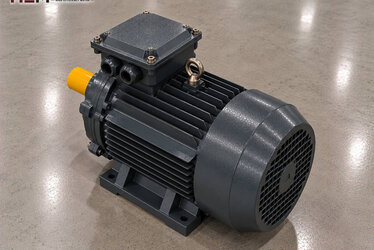
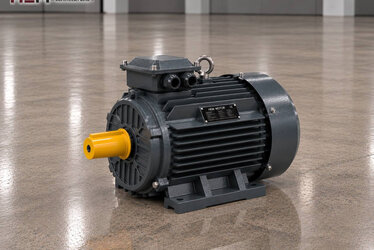
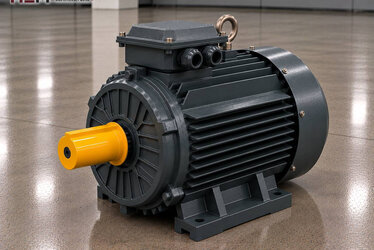
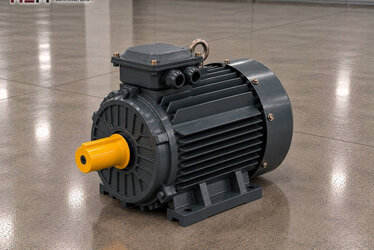
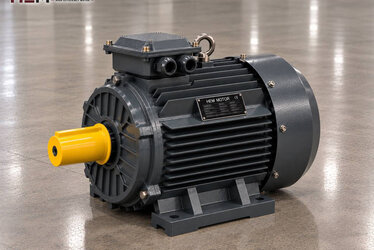
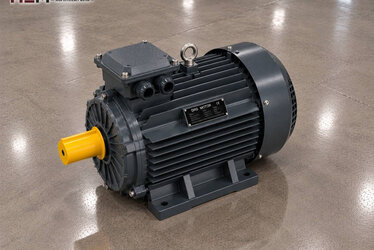
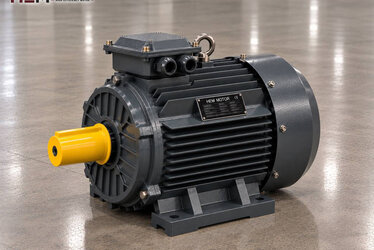
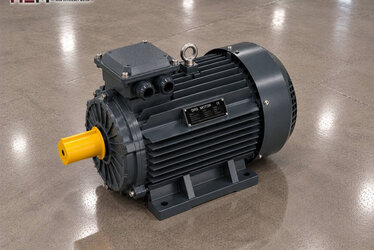
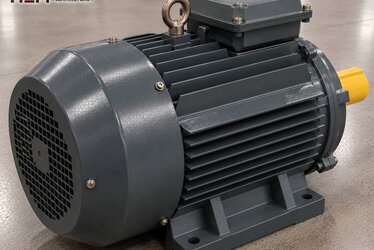
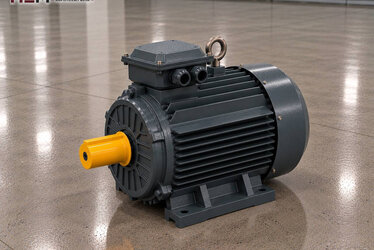
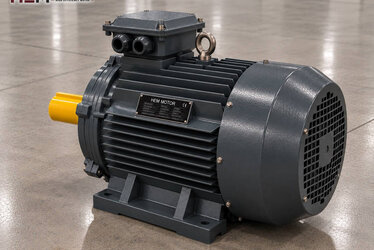
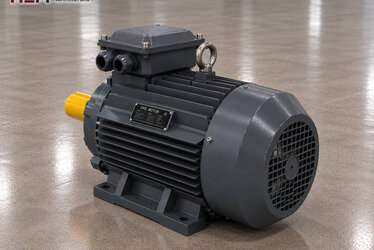
Drums screening dry clay dust are usually inside an enclosure, but dust still reaches the motor. When a dust layer covers the cooling fins, the motor runs hot; the fins and fan cover therefore need cleaning at intervals. For screens standing outdoors, rain and snow must also be considered. HEM motors are built with IP55, class F insulation and for 50 Hz; a condensation heater for long stoppages and a PTC/PT100 sensor for monitoring winding temperature can be added with the order.
The motor is mostly connected to the gearbox by a flange or sits on a frame with a foot-mounted housing. Depending on frame size, foot, flange, foot-and-flange and vertical options are available; we confirm flange and shaft dimensions together at the order. For small auxiliaries such as the brush shaft, if a single-phase supply is used, our single-phase electric motor range (0.18–5.5 kW) is an option.
Example HEM Models for Rotary Screens
| Driven part | Motor load | What to check | Example HEM model |
|---|---|---|---|
| Small drum with central shaft | Continuous, even | Gearbox input speed and ratio | 112M-4 · 4 kW · 1,450 rpm |
| Large drum on support rollers | Heavy, unbalanced when starting full | Drum length and diameter, roller drive arrangement | 132M-4 · 7.5 kW · 1,460 rpm |
| Chain-driven drum (6-pole arrangement) | Continuous, slow | Pole number of existing motor, sprocket ratio | 132M2-6 · 5.5 kW · 968 rpm |
| Cleaning brush shaft | Light, continuous | Brush speed, type of transmission | 100L1-4 · 2.2 kW · 1,450 rpm |
The models in the table are examples; the final choice is made by considering the machine load, required speed, mounting and operating conditions.
Information to Send for a Screen Motor
The machine type (central shaft or roller-supported drum), the power and speed of the existing motor, gearbox or chain details, the supply voltage, the mounting type and the quantity you need are enough for us. Sending a photo of the old motor's nameplate helps us find the equivalent model quickly.
Current prices are on the product pages; for all models see our shop, and to reach us by WhatsApp or phone see our contact page.
Frequently Asked Questions
Why does the rotary screen drum sometimes fail to start on the first attempt?
If the drum stayed full while the line was stopped, the clay gathers on one side and the centre of gravity shifts. The motor spends extra torque to lift this imbalance. Cutting the feed and emptying the drum before stopping usually solves the problem.
Does turning the drum faster increase screen capacity?
Up to a certain limit. Beyond it, the clay sticks to the shell and rotates with it, and screening almost stops. Any speed change should stay within the range recommended by the drum manufacturer.
Is a separate motor required for the brush shaft?
Not necessarily; on some machines the brush turns from the drum drive by chain. A separate motor, however, allows the brush speed and direction to be set independently of the drum.
What should be checked if the screen motor often trips on overcurrent?
First the feed rate, then the condition of the support rollers or the central shaft bearings. A seized roller, a loose chain or low oil in the gearbox keeps the motor load permanently higher.