English
 Français
 Türkçe
 Español
 Русский

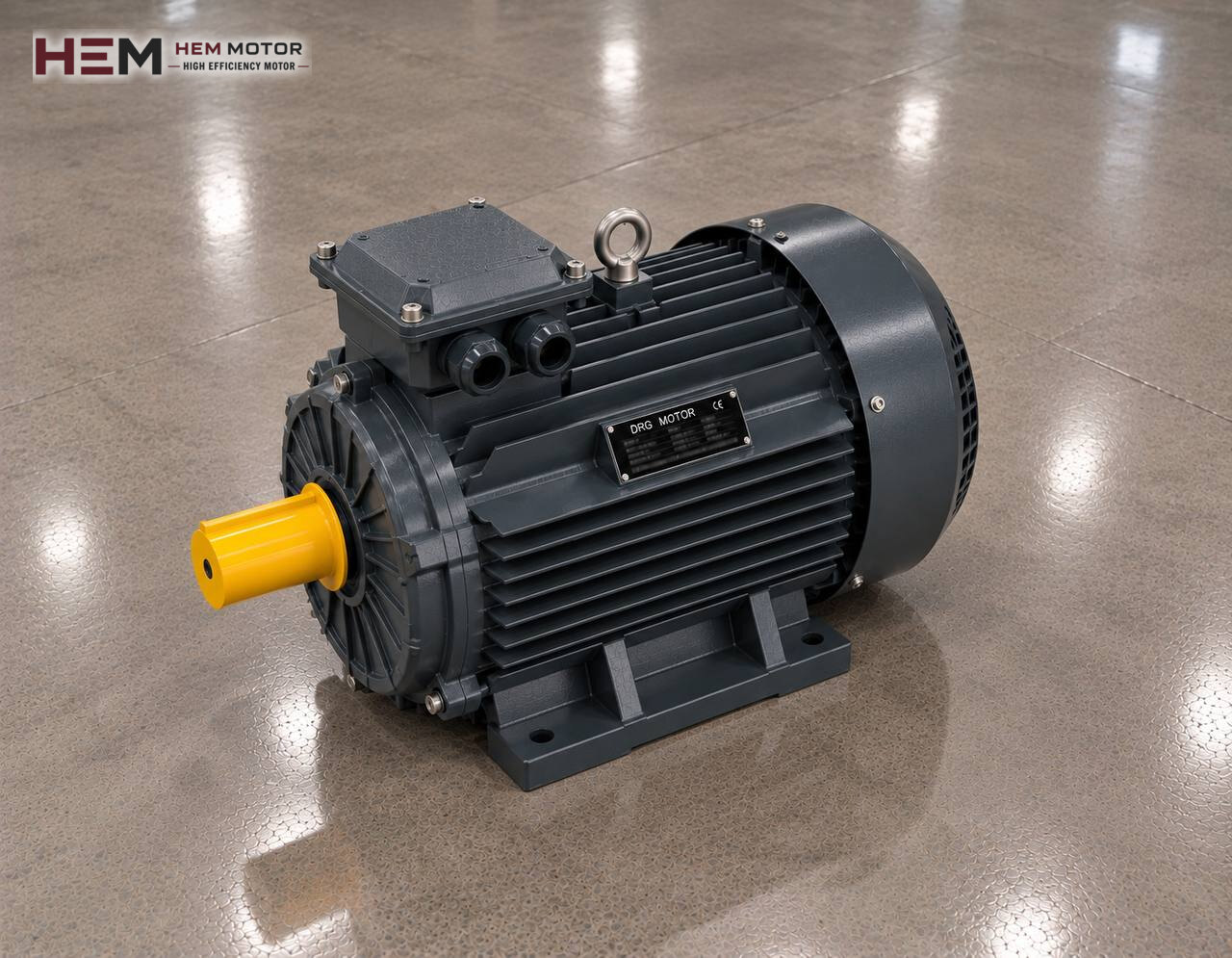
Green bricks and tiles leaving the press must lose most of their water before entering the kiln; if this water is not removed slowly and evenly, the product cracks or warps. In the dryer, that balance is provided by air movement, and behind every fan that moves the air there is an electric motor. This page deals with the motors of drying fans; all machines in the line are summarised on the brick, tile and ceramic production line motors page.

The Jobs Fans Take On in the Dryer
There is no single type of fan in a brick dryer. Each works at a different point, at different temperature and humidity:
- Circulation fans: Turn the air inside the chamber or tunnel between the product stacks, equalising temperature and humidity on every shelf.
- Travelling (moving) fans: In chamber dryers they move back and forth on rails, directing air over the stacks; the motor drives the fan and often the travel drive as well.
- Hot-air transfer fan: Carries warm air taken from the kiln's cooling zone to the dryer through ducts.
- Moisture exhaust fan: Draws water-saturated air out of the dryer; if extraction stops, moisture builds up inside.
What these fans have in common is that they run without stopping for hours or even days. A fan should not stop suddenly, so the drying curve is not disturbed; that is why heating, bearing life and redundancy come first in motor selection.
The Nature of Fan Load: Speed, Air and Power
A fan is not a pulsating load like a press or crusher. The power drawn by the impeller grows quickly with rotational speed: airflow rises roughly in proportion to speed, pressure changes with the square of speed and shaft power roughly with its cube. This relationship depends on system resistance and is only a rough guide; still, the practical result is clear. Running a fan a little faster raises motor load disproportionately, while slowing it a little lowers the load markedly.
At start, impeller inertia matters. A large-diameter centrifugal impeller lengthens the motor's run-up to full speed; current stays high during this time. Starting with the damper closed reduces the air load and eases acceleration. For details by impeller type, see the fan and extractor motors page.
Temperature: Where Should the Motor Sit?
The air entering the dryer is distinctly hot. Placing a standard motor inside this hot air stream is not appropriate. The common solution is to keep the motor outside the dryer wall or duct and turn the impeller through an extended shaft or a belt and pulley. The motor winding then keeps cooling with ambient air.
If the ambient temperature where the motor is mounted is above usual values, this must be stated clearly in the order; motor selection is then reassessed. Special conditions such as high-temperature operation in smoke extraction or fire scenarios are outside the scope of a standard motor. For hotter applications such as in-kiln circulation fans, the process and kiln fan motor page offers a separate resource.
Adjusting the Drying Curve With Speed Control
Green product is sensitive in the first hours: if air is supplied too fast and too dry, the surface dries before the inside and cracks form. That is why many plants change fan speed according to the drying programme. Reducing speed with a frequency inverter instead of throttling with a damper allows both finer air adjustment and benefit from the fan load falling quickly with speed.
HEM's three-phase motors are suitable for inverter drive. Since fan load is already light at low speed, a self-cooled motor is comfortable in most drying applications; still, if a special case demands full torque at low speed for long periods, a separately powered cooling fan may be needed. If the cable between inverter and motor is long, an output filter is considered to protect the winding. These details should be given with the order; more on the inverter-compatible electric motors page.
Example HEM Models for Drying Fans
| Fan | Operating pattern | Key selection issue | Example HEM model |
|---|---|---|---|
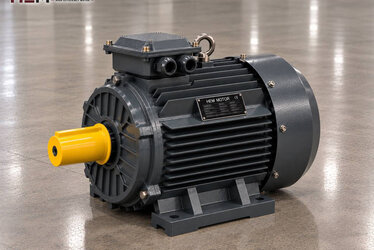
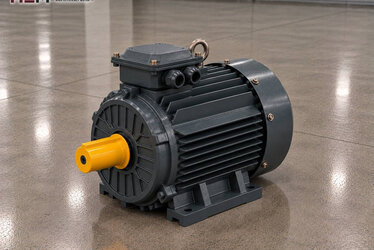
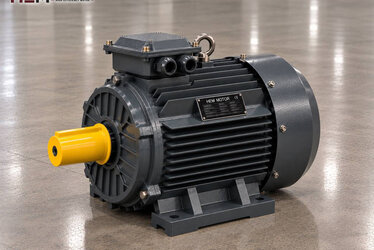
| In-chamber circulation fan | Uninterrupted, humid air | Condensation, motor position | 1.5 kW, 1,445 rpm, 90L-4 aluminium |
| Travelling fan | Continuous rotation, moving carrier | Light frame, cable movement | 3 kW, 1,450 rpm, 100L2-4 aluminium |
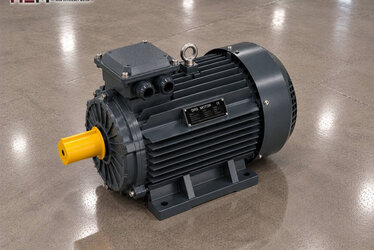
| Moisture exhaust fan | Uninterrupted, speed-controlled | Inverter, mounting outside the exhaust duct | 18.5 kW, 1,470 rpm, 180M-4 cast iron |
| Hot-air transfer fan from the kiln | Large impeller, long acceleration | Belt or long-shaft layout, starting | 55 kW, 1,485 rpm, 250M-4 cast iron |
The models above are a starting point for selection; the right motor is determined by the fan's real airflow and pressure demand, impeller speed, drive arrangement and the ambient conditions where the motor sits.
Maintenance Under Humidity, Dust and Long Running Hours
Air on the exhaust side of the dryer is nearly saturated. When the motor runs all night and is stopped in the morning, water can condense inside the cooling winding. For this risk an anti-condensation heater, and for monitoring winding temperature a PTC/PT100 sensor, can be added as order options. Our motors have IP55 protection and class F insulation; however, directing water straight onto the motor to wash the dryer is not a condition this protection is designed for, and in such a case protective measures or a special motor should be discussed at order.
Dried clay dust sticks to the fan impeller and causes imbalance; an unbalanced impeller places a constant extra load on the motor bearings. Periodic impeller cleaning, tension checks on belt drives and a bearing lubrication schedule are the basic maintenance items for these continuously running motors. For large transfer fans, cast iron frame models can be preferred for robustness against shock and vibration, while the aluminium frame series suits small in-chamber fans.
Send Us the Details for a Drying Fan Motor
For correct matching, it is enough to share: the fan type and its role in the machine (circulation, travelling, exhaust, transfer), required power, impeller speed, supply voltage, mounting type (foot, flange, vertical) and quantity. A nameplate photo of the existing motor and the temperature at the motor's location make the job easier.
All models are in our electric motor shop, with the current price shown on the product page. You can send requests by WhatsApp or phone using the numbers on the contact page.
Frequently Asked Questions
Why does speeding up a drying fan slightly strain the motor so much?
Fan shaft power grows roughly with the cube of speed. Even a small increase in speed raises motor load noticeably. The exact value depends on system resistance; before increasing speed, measure how close the motor is to its nameplate current.
Can the motor be placed inside the dryer, in the hot air path?
It is not suitable for a standard motor. The motor should be kept outside the wall or duct and turn the fan through a long shaft or belt. If the ambient temperature at the motor's location is high, state this in the order.
Why does a drying fan motor have moisture problems at morning start-up?
When a motor running in saturated air stops, the winding cools and the moisture inside condenses. An anti-condensation heater that switches on during stops keeps this water away from the winding; it can be requested as an option at order.
Is an aluminium frame motor suitable for a travelling fan?
Because travelling fans sit on a moving carrier, a light frame is an advantage, and in this power class the aluminium series is often sufficient. Fan power, speed and the carrier's mounting dimensions are assessed together in selection.