English
 Français
 Türkçe
 Español
 Русский

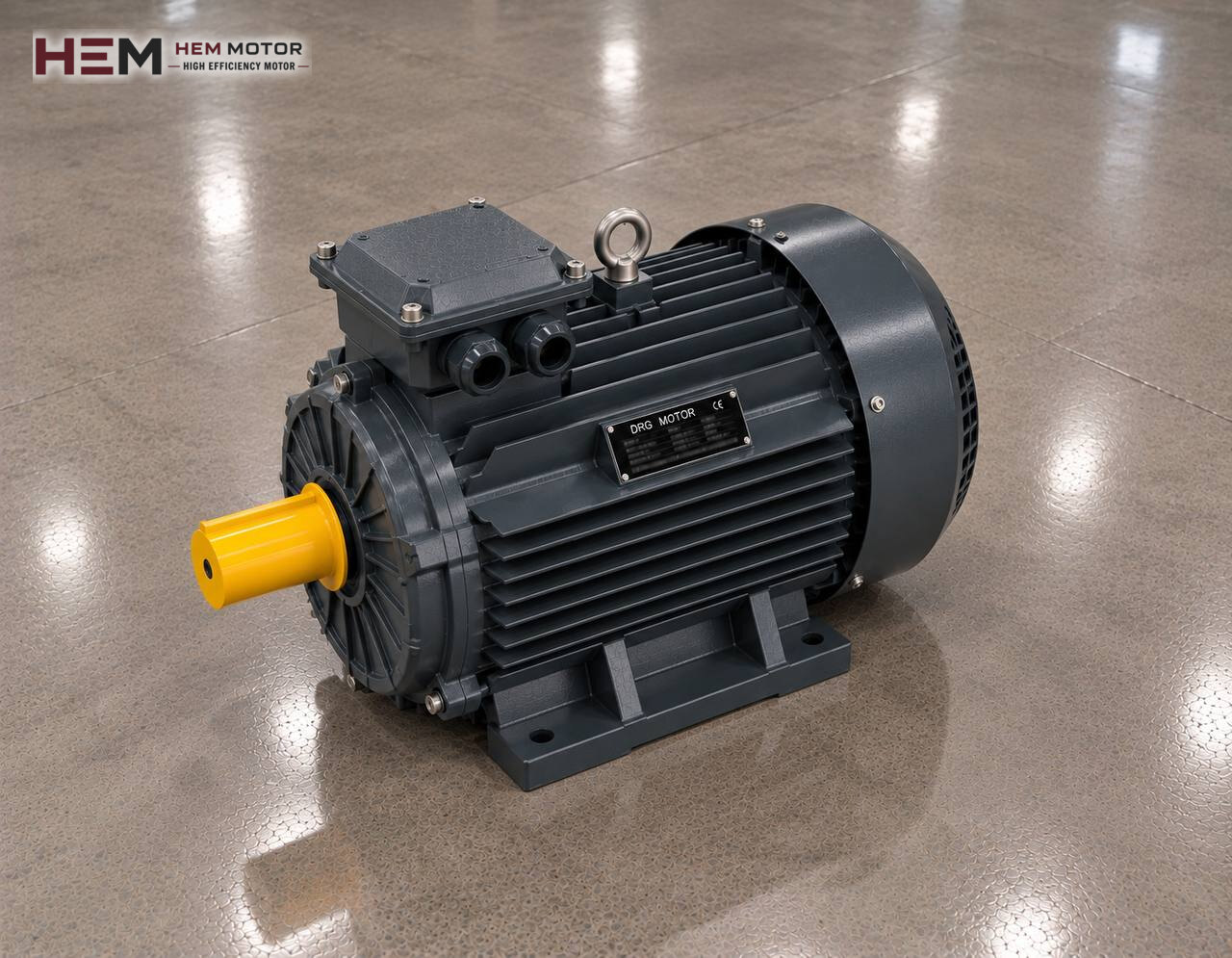
In a brick and tile plant, the head of the preparation line is where clay and additives are first measured in a set proportion and fed into the line. This job is done by the box feeder, also called the raw material feeder: a large hopper filled by a loader, a floor belt moving slowly along its bottom and a toothed shaft at the outlet that breaks up the clay. For the whole line, see our brick, tile and ceramic production line motors page; this page looks at the motors of the box feeder one by one.

What Does a Box Feeder Bring to the Line?
Clay from the pit or an open stockyard is brought by a loader in one go, in irregular quantities. The crusher, rollers and mixer, however, want an even, continuous flow. The box feeder acts as a buffer between these two rhythms: the loader fills its hopper, and the feeder releases the same quantity of clay into the line minute after minute.
In plants using more than one raw material, two or three box feeders stand side by side. One supplies the main clay, another lean clay or sand, and another an additive such as coal dust or sawdust. The mix ratio is set by adjusting the speed of each feeder separately. That is why the motor in a box feeder does not just move material; it also plays a role in applying the recipe correctly.
Floor Belt: A Drive Moving Very Slowly Under Load
The bottom of the hopper is a floor belt made of steel slats attached to chains or of a thick rubber belt. The belt moves at a very low speed and carries the clay mass on it to the outlet. The weight of all the clay rests on the belt; although the load changes with how full the hopper is, it is generally high and continuous.
To reach such a low speed, a high-ratio gearbox, sometimes with an additional chain sprocket, is placed between the motor and the belt drum. Whatever the rated speed of the motor, it is this overall ratio that sets the belt speed. Notes on motor selection for geared drives are on our electric motors for reducers page.
Distributor Shaft: Loosening Clay and Releasing It in Measure
At the end of the floor belt, above the outlet, a toothed or bar shaft rotates. This shaft rakes and breaks up the compacted clay mass brought by the belt and drops it from the outlet as an even layer. Some feeders have two or three distributor shafts one above the other.
The distributor shaft turns much faster than the floor belt and its load is shock-type: current fluctuates as the teeth strike hard lumps and dried clods. The shaft is usually driven by its own motor through a belt or chain. The floor belt and the distributor shaft are not turned by the same motor; this way, when one is strained under load, the other can keep running.
How Is the Feed Rate Adjusted?
On older feeders, speed was adjusted with step pulleys or by changing chain sprockets. Today most plants feed the floor belt motor from a drive and change the speed from the control panel. This method makes it easy to change the mix ratio; when the rollers or mixer are overloaded, feeding can be slowed down automatically.
Our three-phase ranges can be driven by a frequency converter. Since the floor belt motor runs for long hours at low frequency and high torque, the cooling fan turning on its own shaft may be insufficient; in that case a separately powered fan is considered. If the drive cabinet is far from the feeder, a filter may be needed for the motor cable. Write these conditions in your order; details on the subject are on our inverter compatible electric motors page.
Loader Impact, Rain and Mud: The Feeder's Environment
In most plants the box feeder stands under a semi-open shelter. As the loader empties clay over the hopper, dust rises and large pieces may spill over its edge. Motors should, if possible, be placed outside the loader's dumping direction and below the hopper edge. In this environment, wet in winter and dusty in summer, cooling suffers if the fins of the motor frame are coated with clay; regular cleaning is essential.
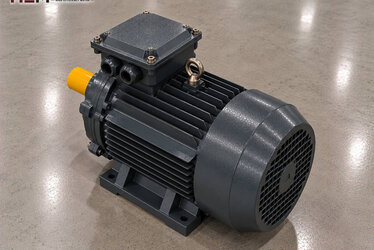
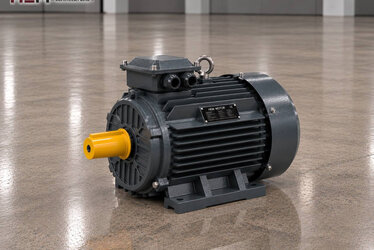
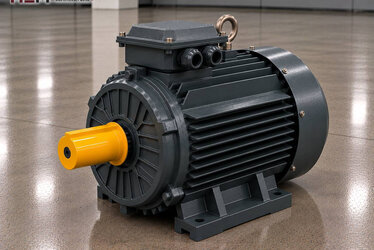
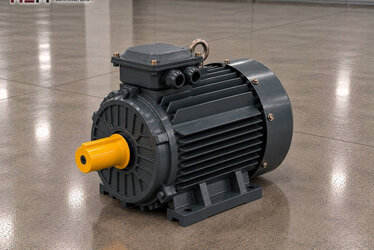
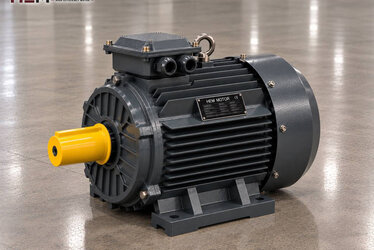
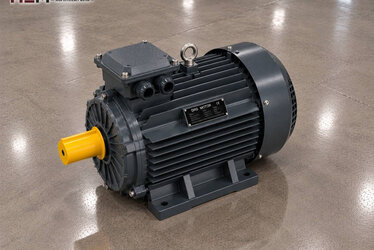
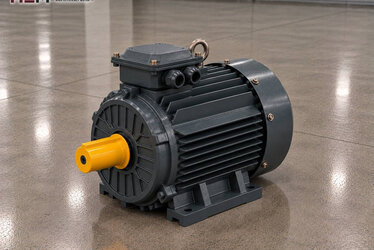
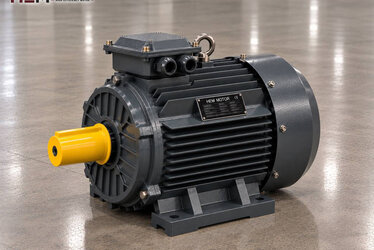
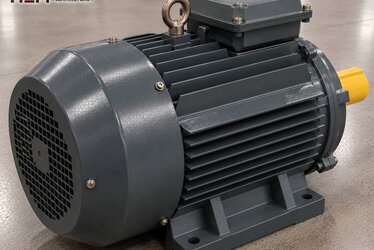
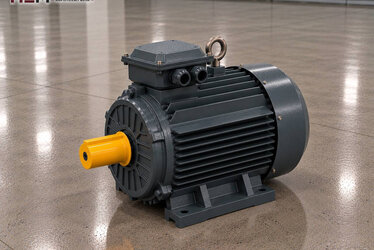
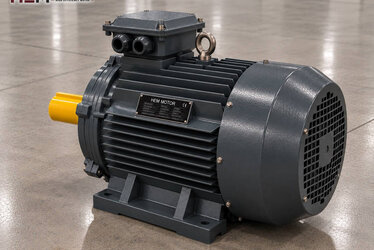
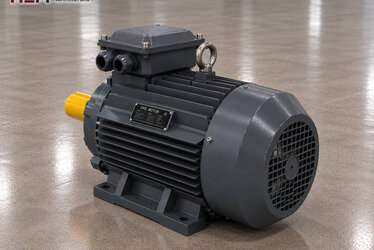
HEM motors are built with IP55, class F insulation and for a 50 Hz supply. On feeders exposed to rain, a small canopy over the motor is a good idea; IP55 is not designed for direct hose washing, so if such a need exists, state it in your order. In cold regions, a heater that prevents condensation after long stops and a PTC/PT100 sensor that monitors winding temperature can be added as order options. The motor is usually flanged to the gearbox, sometimes mounted on a bracket with a foot-mounted frame; depending on frame size, foot, flange, foot-and-flange and vertical forms are possible, and we confirm flange and shaft dimensions at the order. For flange-mounted frames, see the B5 and B14 flange motors page.
Example HEM Models for Box Feeders
| Drive on the feeder | Nature of the load | Information needed for a quote | Example HEM model |
|---|---|---|---|
| Floor belt of a small additive feeder | Slow, continuous, light | Gearbox ratio, belt width | 132S-6 · 3 kW · 968 rpm |
| Floor belt of the main clay feeder | Slow, continuous, depends on hopper fill | Hopper volume, use of a drive | 132S-4 · 5.5 kW · 1,460 rpm |
| Distributor shaft | Shock load, lumps and clods striking | Shaft speed, belt or chain ratio | 132M-4 · 7.5 kW · 1,460 rpm |
| Twin distributor shafts on a large feeder | Shock load, heavy clay mass | Existing motor nameplate, number of shafts | 160L-6 · 11 kW · 970 rpm |
The models in the table are for guidance; the final choice is made by evaluating the feeder load, required speed, mounting and operating conditions.
Before Ordering a Feeder Motor
Tell us which part of the machine you need a motor for (floor belt or distributor shaft), the power and speed of the existing motor, whether a drive is used, the supply voltage, the mounting type and how many you want. You can share the old motor's nameplate by following the steps on the send motor nameplate page.
All power and speed options are in our shop, and current prices are on the product pages. To correspond by WhatsApp or phone, use our contact page.
Frequently Asked Questions
Why is the floor belt motor strained when the hopper is completely full?
In a full hopper, the weight of all the clay rests on the belt and chain, and the clay also rubs against the hopper walls. At start-up the motor spends high torque to overcome this friction. Not exceeding the upper limit of the hopper with the loader reduces the load noticeably.
If the distributor shaft stops, should the floor belt stop too?
In most plants, yes. If the belt keeps moving while the distributor shaft is stopped, clay jams at the outlet and the belt motor becomes overloaded. Interlocking the control circuits of the two motors is therefore common.
Is it right to change the motor from 4-pole to 6-pole to change the feed rate?
It is possible for a permanent ratio change, but the gearbox input speed and torque limit must be rechecked. If frequent speed changes are needed, a drive is the more practical way.
Can a small additive feeder run on a single-phase supply?
If the required power is low, our single-phase electric motor range (0.18–5.5 kW) can be considered. However, for speed adjustment and control together with the main line, a three-phase motor with a drive is a more flexible solution.