English
 Français
 Türkçe
 Español
 Русский

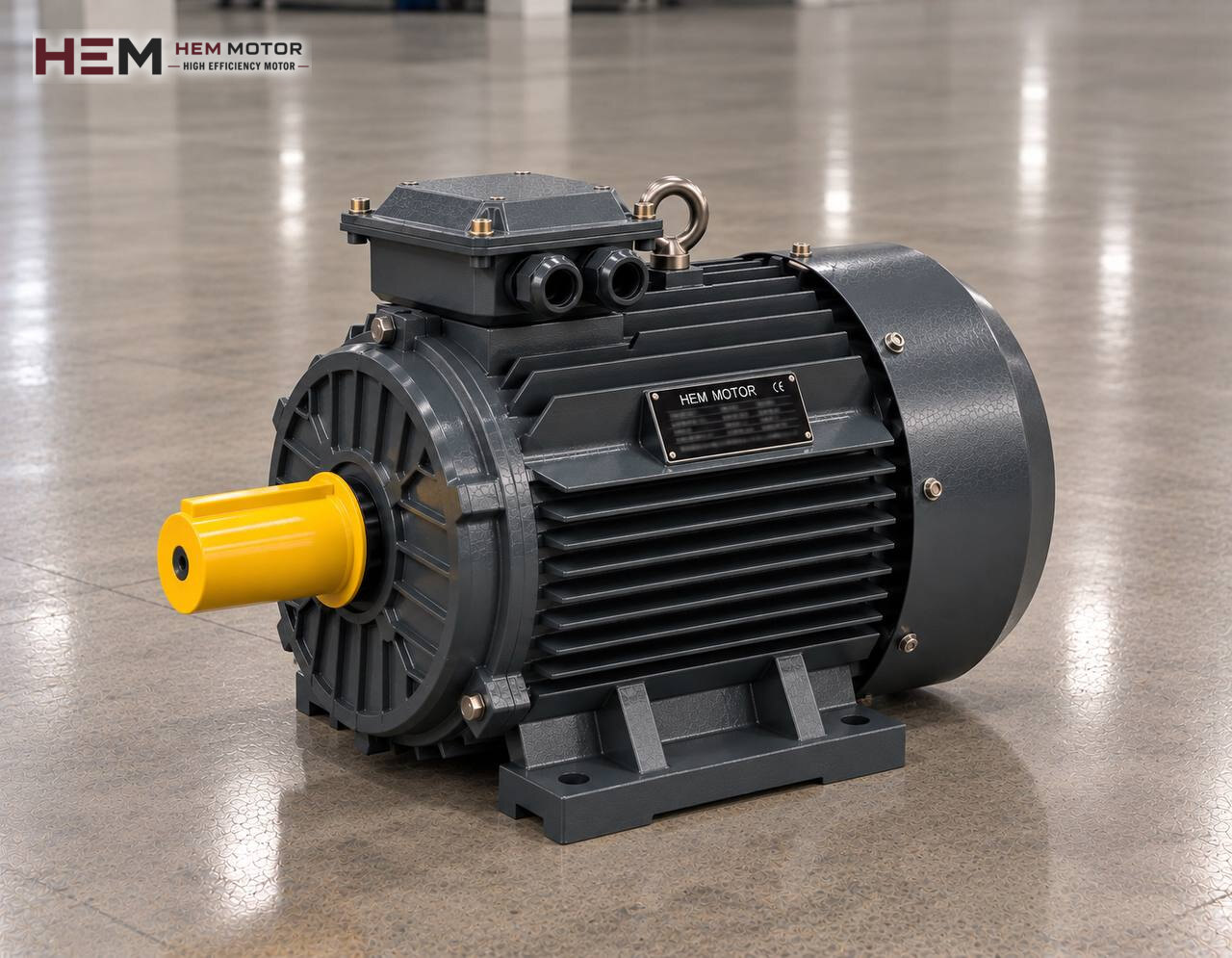
After passing through the crusher and the rollers, clay is still not a uniform body; its moisture varies from place to place, and additives such as sand, ash or sawdust are not yet distributed. The mixer removes these differences, and the filter mixer does the same job while also straining roots and foreign matter out of the clay. For the rest of the line, see our brick, tile and ceramic production line motors page; here we deal only with the motor of these two machines.

How Does a Double-Shaft Mixer Knead Clay?
The most common mixer on a brick line consists of two shafts rotating in opposite directions inside a long U-shaped trough. The shafts carry paddles or blades set at an angle. The paddles both cut the clay and push it from one end of the trough to the other. Meanwhile water or steam is sprayed from pipes above, bringing the clay to a consistency at which it can be shaped in the press.
The mixer stands just ahead of the extruder or between the clay store and the press. Because it feeds clay continuously, it also sets the pace of the line: if the mixer stops, the press runs empty.
What Makes the Filter Mixer Different
In a filter mixer, there is a screw at the outlet end of the trough and a perforated grate in front of it. The screw presses the mixed clay against this grate; as the clay passes through the holes, roots, plant fragments and large stones remain on the grate. The body thus leaves both mixed and strained.
This straining noticeably increases the motor load. Over time the holes of the grate fill up, resistance against the screw grows and motor current slowly rises. This rise in current is a good sign that the grate needs cleaning. If operation continues with a clogged grate, the screw crushes and heats the clay and the motor stays permanently overloaded.
Motor Load: Even but Intense
The load in a mixer does not consist of sudden shocks as in a crusher; it is rather a continuous, high torque that depends on the consistency of the clay. Dry, stiff clay requires more torque, and the load falls as water is added. A fault in water dosing is therefore reflected directly in motor current. Some operators set the water by watching the motor current.
Overfilling the trough also increases the load. The feeder or belt ahead of the mixer should keep the quantity of body steady. When selecting the mixer motor, the nameplate of the existing motor and the power value given by the machine manufacturer should be the basis; since the consistency of the body varies from plant to plant, giving a general power range would be misleading.
Belts, Gearbox and the Gears Between the Shafts
In double-shaft mixers the motor is usually connected to a gearbox by V-belts; the gearbox output turns one shaft and a gear pair turns the other in the opposite direction. The belt pulley softens the motor start and, in an unexpected jam, protects the transmission to some extent by slipping. On some machines the motor is flanged directly to the gearbox; there is then no belt flexibility, and correct setting of the overcurrent protection becomes more important. How the motor side is selected in geared drive arrangements is explained on the page titled electric motors for reducers.
In a filter mixer the screw and paddle shafts usually turn from the same drive. On machines with a separate drive, running the screw motor from a drive makes it easier to adjust the pressure towards the grate.
Restarting with a Full Trough and Using a Drive
The hardest moment for a mixer is restarting a trough left full of body after an unexpected line stop. The body begins to stiffen between the paddles, and the motor has to start against a high counter-torque. With direct-on-line starting, this means drawing a very high current from the supply. That is why soft starters or frequency converters are often used on large mixers; emptying the trough when a stop will be long is also a good habit.
HEM's three-phase motors can be operated with a frequency converter. If long periods of full-torque operation at low speed are expected, adding a separate cooling fan to the motor may be necessary, and if there is a long cable between the drive and the motor, a filter may be needed; let us know this information in your order. For details, read our answer to the inverter operation question.
Wet Body, Steam and Motor Care
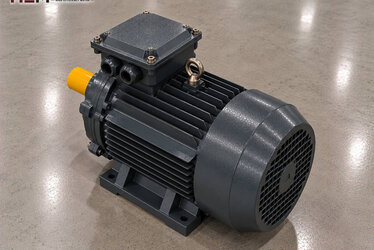
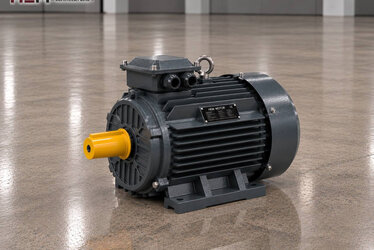
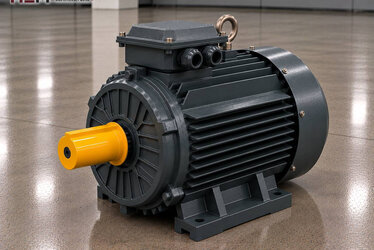
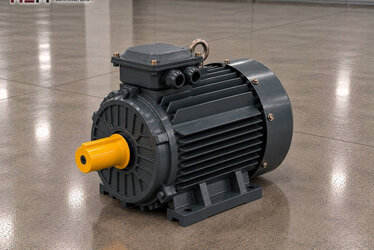
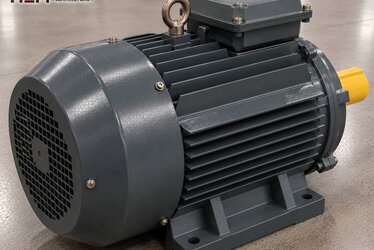
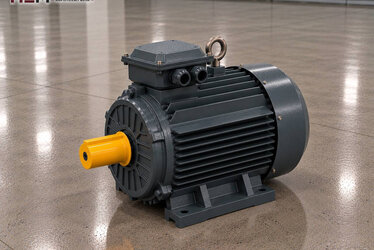
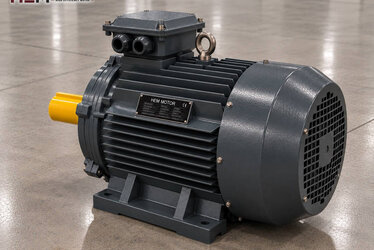
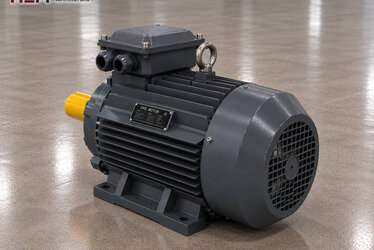
The mixer area is one of the wettest places on the line. Water spray pipes, steam and splashing body keep the area around the motor constantly damp. HEM motors have IP55 protection and class F insulation and run on a 50 Hz supply; IP55 is against splashing water, but if the machine is washed with a hose, water should not be aimed directly at the motor. If such a cleaning method is to be used, state it in your order; in that case additional protection by the machine builder or a special motor solution is required.
On steam-fed mixers the motor must be kept out of the hot steam flow. During long stoppages such as weekends or holidays, a condensation heater keeps the winding dry, and a PTC/PT100 sensor gives early warning of overheating caused by grate clogging; both are order options. Depending on frame size, the motor can be supplied foot-mounted, flange-mounted, with both feet and flange, or for vertical position; flange and shaft dimensions are confirmed with the order. You can see foot-and-flange frames on the B34 and B35 motors page.
Example HEM Models by Mixer Type
| Mixer | Type of load on the motor | What to check | Example HEM model |
|---|---|---|---|
| Small single-shaft mixer | Continuous, depends on consistency | Pulley ratio, gearbox input speed | 160L-6 · 11 kW · 970 rpm |
| Double-shaft mixer | High, continuous torque | Trough length, existing motor nameplate | 180L-4 · 22 kW · 1,470 rpm |
| Filter mixer | Load rising as the grate fills | Grate hole size, screw drive arrangement | 225S-4 · 37 kW · 1,485 rpm |
| Large double-shaft mixer | Heavy start with a full trough | Starting method, supply capacity | 250M-4 · 55 kW · 1,485 rpm |
The models in the table are for example purposes; the final choice is made taking into account the machine load, required speed, mounting type and operating conditions.
Preparing a Request for a Mixer Motor
Write to us the machine type (single-shaft, double-shaft or filter), the power and speed of the existing motor, whether the transmission is belt or flange, the supply voltage at your plant, how the motor is mounted and the quantity needed. Photographing and sending the old motor's nameplate is the shortest way to find its equivalent.
You can find the models and current prices in our shop. To reach us by WhatsApp or phone, use the numbers on the contact page.
Frequently Asked Questions
Why does the filter mixer motor current rise during the day?
As the holes of the grate fill with roots and stones, the resistance against the screw increases. A slow rise in current shows that the grate needs cleaning. After cleaning, the current usually returns to its previous level.
Does the amount of water added to the mixer affect the motor?
Yes. Dry, stiff body creates more resistance in front of the paddles and the motor spends more torque. A fault in water dosing therefore shows up immediately in motor current.
Is it a problem to connect the motor directly to the gearbox instead of a belt drive?
It is not a problem, but the flexibility the belt provides during a jam is lost. In that case, correct setting of motor protection and, if needed, use of a soft starter become more important.
What should be done if the mixer will not start with a full trough?
Forcing the motor repeatedly heats the winding. First part of the trough should be emptied or the body loosened by adding water. If the problem recurs often, a starter that softens the start or a frequency drive should be considered.