English
 Français
 Türkçe
 Español
 Русский

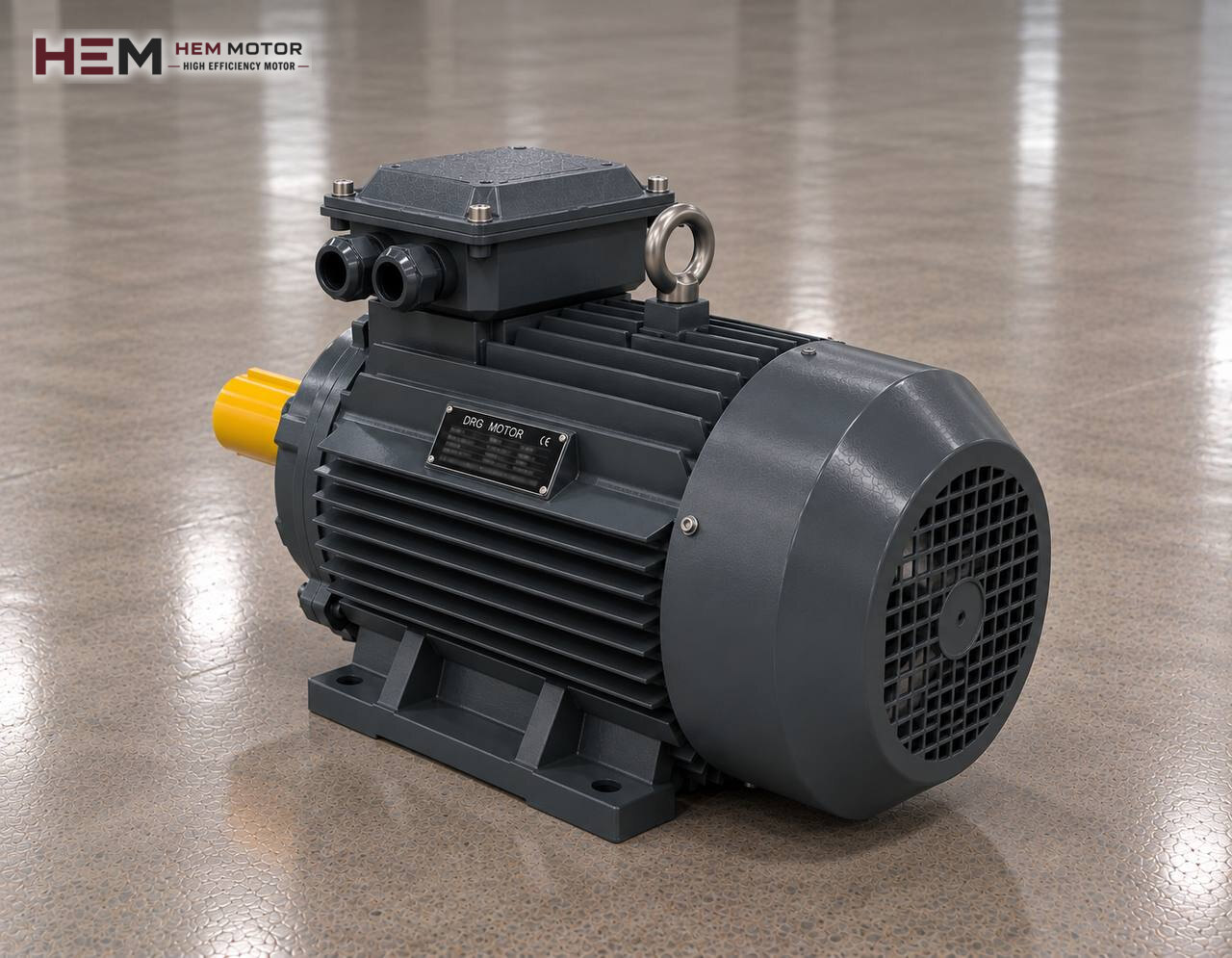
Glaze is the glassy layer covering a ceramic surface, handled as a watery slurry: frit, kaolin, colour pigments and additives stay suspended in it. From the mill where it is prepared to the applicator on the glazing line, this liquid must be kept moving and carried without settling. The motors of the glaze pump, tank agitator and sieve are therefore quiet but non-stop parts of the line. For the whole line see the brick, tile and ceramic production line motors page; here we cover only the motors involved in moving glaze and keeping it ready.

The Journey of Glaze from Preparation to the Line
Glaze discharged from the mill first passes through a vibrating sieve and, in most plants, a magnetic iron separator before going into storage tanks. In these tanks its density and flow are measured, and water or additives are added if needed. A transfer pump then carries the glaze to daily tanks beside the line; from there a feed pump sends it to a bell-type applicator, a rotating disc head or spray guns.
Glaze not used at the applicator is collected, sieved again and returned to the tank. So along the line the glaze circulates in a closed loop all day. If movement stops at any point in this loop, heavy particles settle, pipes clog and colour differences appear on the surface.
Pumps Used for Glaze and the Motor's Load
Diaphragm pump
One of the most common types on glaze lines is the double diaphragm pump. Many of these run on compressed air; in that case the electric motor sits not on the pump but on the compressor producing the air, and selection follows the logic on the compressor motors page. On electric types the motor pushes the diaphragm back and forth through a gearbox and eccentric mechanism; the load rises and falls with each stroke.
Progressive cavity (eccentric screw) pump
For dense and abrasive glazes the progressive cavity pump is preferred. The rotor turns inside a rubber stator, carrying the liquid in the delivery direction. On this pump the motor gives high torque at low speed and is usually connected through a gearbox or belt. When the stator runs dry or the glaze thickens, friction rises and motor current goes up; at start, too, the resistance of the standing liquid makes the strain clear.
Centrifugal pump
Centrifugal pumps are also used where fluid glazes and wash water are moved. On this type the motor is mostly directly coupled to the pump and runs continuously; flow and head are set by the pump curve. The detailed selection route is explained on the centrifugal pump electric motor page.
Tank Agitators and Sieves
Every glaze tank has an agitator that stops the glaze from settling. The motor sits vertically on a gearbox on the tank's top cover and turns the impeller slowly and continuously. Even when the plant stops at the weekend, these agitators are often left running; so remember that these motors work almost non-stop all year. On such continuously running drives, a PTC/PT100 sensor monitoring winding temperature can be added as an order option.
Glaze sieves are vibrated by two small unbalanced masses; these drives are usually made with special vibration motors and are outside the standard motor scope. On rotary drum sieves, however, a standard geared motor turns the drum. For small agitators and laboratory tanks without a three-phase supply, our single-phase motor range from 0.18 to 5.5 kW can be considered.
Flow Control and Frequency Inverter
In glazing, the amount of glaze reaching the surface is adjusted to line speed and tile size. In most plants this is done by changing the speed of the feed pump. HEM three-phase motors can be run from an inverter for this purpose. If a progressive cavity pump runs at low speed with full torque for long periods, the motor's own fan may not be enough; then a separately powered fan is added. If the panel is far away, a dv/dt or sine filter is considered because of the cable length. It is enough to pass this information on with your order; the inverter-compatible electric motors page gives details on inverter operation.
Example HEM Models for Glaze Drives
| Drive | How the motor works | First thing to check | Example HEM model |
|---|---|---|---|
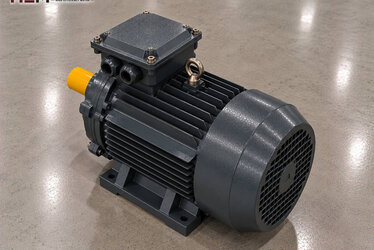
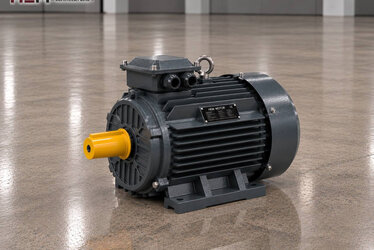
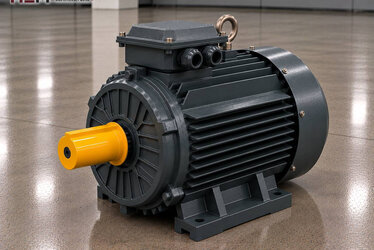
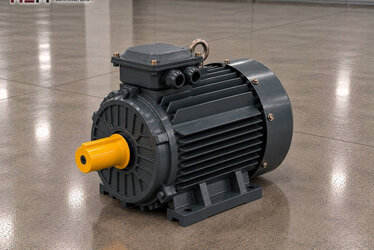
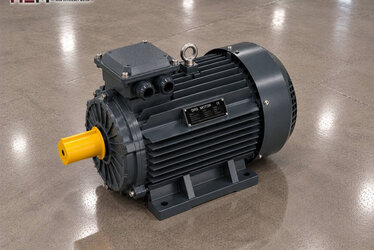
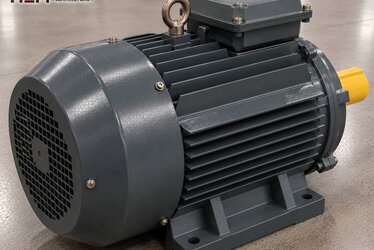
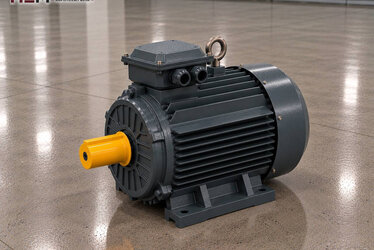
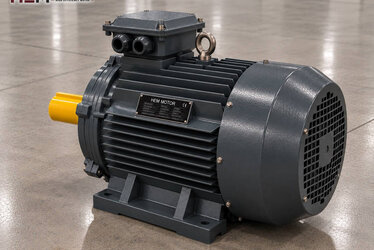
| Tank agitator (vertical, geared) | Slow, continuous | Tank volume, gearbox flange | 0.55 kW, 1,400 rpm, 80M1-4 aluminium |
| Progressive cavity pump (feed) | Low speed, high torque, variable speed | Glaze density, flow, inverter range | 1.5 kW, 1,445 rpm, 90L-4 cast iron |
| Transfer pump (storage to daily tank) | Intermittent, loaded during filling | Line length, head | 3 kW, 1,450 rpm, 100L2-4 cast iron |
| Rotary drum glaze sieve | Continuous, light | Drum speed, gear ratio | 1.1 kW, 1,445 rpm, 90S-4 aluminium |
The models in the table are examples; the final choice depends on machine load, required speed, mounting arrangement and operating conditions.
Splashes, Wet Floors and Mounting
In the glaze preparation area the floor is often cleaned with water and glaze splashes from the tank edges. Our motors have IP55 protection; even so, hosing down or holding water directly on the frame is not a situation this protection is meant for. If such cleaning is done, the motor needs a cover or a special motor must be chosen; state this in your order. Since condensation can form in the winding in a damp environment after long stops, an anti-condensation heater is also an order option.
On vertical agitators the motor is connected shaft-down in a V1 or flanged V3 arrangement; if a rain canopy is needed on top of a vertically running motor, state it in your order. On pump and sieve drives, foot-mounted B3, flange B5 and B14 and foot-and-flange B34/B35 frames are common; vertical arrangements such as V5, V6 and V15 are also available depending on frame size. Flange and shaft dimensions are confirmed at order. For gearbox matching, see the electric motors for gear reducers page.
Quotation for a Glaze Pump Motor
Share the following in your request: the machine (agitator, progressive cavity pump, transfer pump, sieve), the required power and speed, the site voltage, the mounting arrangement (vertical, flanged, foot-mounted) and the quantity. If you send the nameplate photo of the existing motor together with the pump nameplate, finding an equivalent is faster.
You can see all models on the buy electric motors page and find the current price on the product page. Our WhatsApp and phone details are on the contact page.
Frequently Asked Questions
Can I stop the glaze tank agitator at the weekend?
That depends on the glaze recipe and how fast it settles. Glazes with heavy particles settle quickly, and on restart the agitator and motor are strained. That is why most plants run agitators continuously or use an intermittent running programme.
Why does the progressive cavity pump's motor current rise over time?
As the stator wears or the glaze thickens, friction between rotor and stator changes. Dry running quickly damages the stator. When current rises, first check glaze density, stator condition and any blockage in the delivery line.
If I use an air-operated diaphragm pump, how do I choose the motor?
This pump has no electric motor; it is supplied by the air compressor. The motor is chosen according to the compressor's air demand, taking the consumption of all air-powered equipment in the plant into account together.
Why is it preferable to set glaze feed pump speed with an inverter?
The amount of glaze applied changes with line speed and product size. By changing pump speed with an inverter, flow is adjusted directly; compared with throttling by a valve, flow is steadier and the stator of a progressive cavity pump is strained less.