English
 Français
 Türkçe
 Español
 Русский

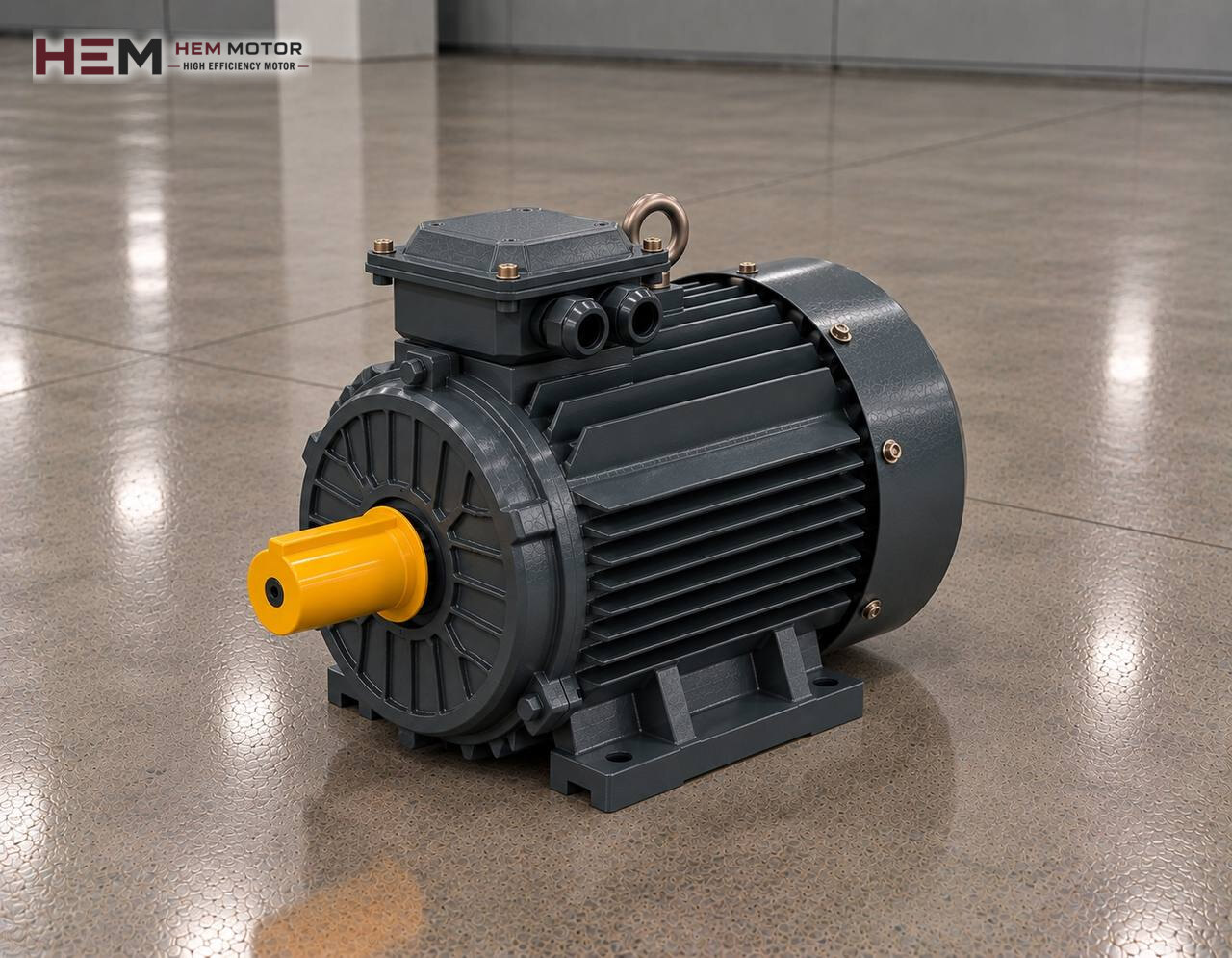
On a roof tile line, the clay column leaving the extruder is first cut into slugs, and those slugs then take their interlocking, grooved shape in the moulding press. How the press produces its squeezing stroke changes the motor's load completely: in one design the motor accelerates a heavy flywheel, in another it feeds a hydraulic pump. The whole line is covered on the brick, tile and ceramic production line motors page; here we deal only with the drive of the moulding press.

The Press in the Line and One Pressing Cycle
A clay slug arriving at the press is placed on the lower die, the upper die comes down, and the slug is squeezed between the two surfaces until it gains the tile's edge hooks and water channels. Surplus clay squeezes out at the edges, is collected as flash and returns to the preparation section. When the upper die rises, the shaped green tile is transferred to the drying rack.
In a common layout the dies sit around a five- or six-sided drum. After every stroke the drum indexes one step; one die is filled while another is emptied. This indexing and the pressing blow repeat hundreds of times an hour. For the motor this does not mean a steady load but a strain that rises and falls in rhythm.
Motor Load on a Mechanical (Eccentric, Flywheel) Press
On a mechanical press the motor turns a large flywheel through belts. When the clutch engages, the flywheel pushes the upper die down through a crank or eccentric shaft. The peak force at the moment of pressing comes not from the motor but from the rotational energy stored in the flywheel. The motor's real job is to restore the speed the flywheel loses between two strokes.
Long run-up time
The flywheel's inertia is high. Even with the clutch open, the motor draws high current for a long time to bring this mass from standstill to working speed. The longer the acceleration, the hotter the rotor gets; on a press that is stopped often during the day, this heat builds up. The starting method should therefore be chosen together with the machine builder, with the flywheel inertia known. In star-delta connection the torque the motor can deliver at start drops and acceleration becomes even longer; a soft starter or a frequency inverter are among the options to consider.
Pulsating duty and current swings
At every stroke the flywheel slows slightly, motor slip increases and current rises for a short moment. This swing on the ammeter is normal; what really matters is where the average current sits relative to the nameplate value. When the clay gets stiffer or the die wears, the peak of the swing grows. In that case check the die and clay moisture before moving to a larger motor.
Belts and the tensioning slide
Because the flywheel is belt-driven, the motor is usually mounted with a foot-mounted frame on a tensioning slide. Belt tension loads the bearings directly: an over-tight belt fatigues the drive-end bearing, while a slack belt slips and heats up at start. If the motor speed is changed without changing the pulleys, flywheel speed and strokes per minute shift as well.
What Does the Motor Turn on a Hydraulic Tile Press?
On a hydraulic press a cylinder moves the upper die. Here the electric motor is not the source of force; it turns the hydraulic pump, and the pressurised oil is used by the valve block and cylinder. Motor power is set by the amount of oil the pump delivers, the system pressure and how long one stroke takes. For the sizing approach, see the hydraulic pump electric motors page.
On this type of press the motor usually runs without stopping; it is loaded during pressing and unloads during return and dwell. There is often a coupling and bell housing between pump and motor, so foot-and-flange or flange-mounted frames are common. As the oil warms up, pump efficiency drops and the motor may draw more current for the same work.
Auxiliary Drives Around the Press
A moulding press does not work with one motor. The feed belt bringing the clay slugs, the drive that indexes the drum, the small pump spraying release oil onto the dies and the belts carrying green tiles to the racks each run on their own motors. Most of them are geared and start and stop often. For matching on the gearbox side, the electric motors for gear reducers page will guide you.
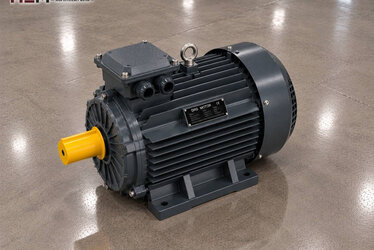
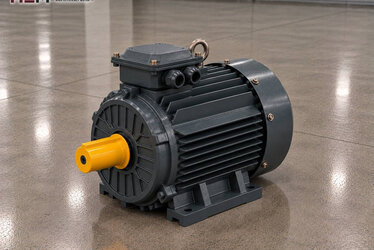
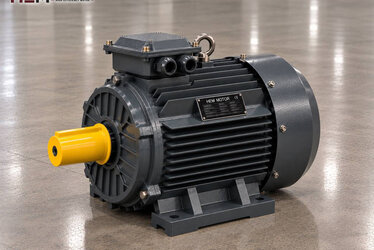
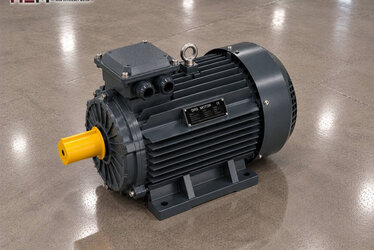
Example HEM Motor Matching
| Drive | Load type | Point to watch | Example HEM model |
|---|---|---|---|
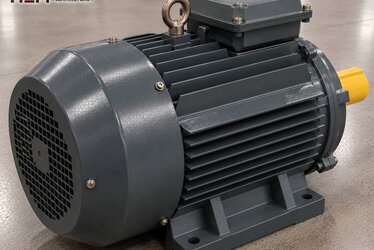
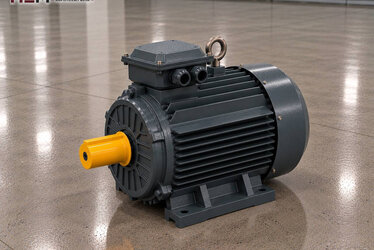
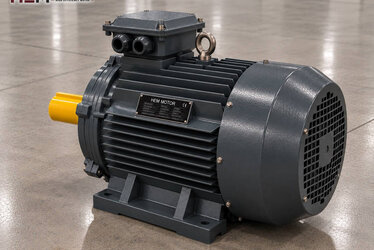
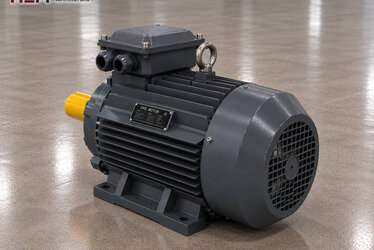
| Mechanical press flywheel drive | High inertia, pulsating | Run-up time, pulley ratio, strokes per minute | 22 kW, 980 rpm, 200L2-6 cast iron |
| Large mechanical press | High inertia, pulsating | Flywheel inertia, starting method | 37 kW, 1,485 rpm, 225S-4 cast iron |
| Hydraulic press pump | Continuous, varies with pressure | Pump flow, pressure, cycle time | 30 kW, 1,475 rpm, 200L-4 cast iron |
| Feed and drum indexing drive | Frequent starts, geared | Gearbox flange, start-stop frequency | 5.5 kW, 1,460 rpm, 132S-4 cast iron |
These models are only meant as a guide; the right motor is chosen by looking at the machine's real load, the required speed, the mounting arrangement and the operating environment.
The Motor Against Clay Slurry, Die Oil and Vibration
The forming hall is a damp and dirty place. Clay splashed onto the frame dries and fills the gaps between the cooling fins; release-oil mist makes this layer sticky. HEM models have IP55 protection and class F insulation, but direct water-jet cleaning is not a condition this protection is designed for. If such cleaning is done in the hall, either the machine builder must shield the motor or a special motor should be considered; state this in your order.
Pressing blows shake the press frame. Motor foot bolts and slide fixings should be retightened at intervals and pulley alignment checked. On lines that stand over the weekend, moisture can collect in the winding; PTC/PT100 winding sensors and an anti-condensation heater can be requested as order options. For presses with heavy shaking, cast iron frame models stand out.
The mounting arrangement depends on frame size: foot-mounted B3, flange B5 and B14, foot-and-flange B34 and B35, and vertically V1, V3, V5, V6 and V15. Flange and shaft dimensions are confirmed together at order.
What to Send With a Press Motor Request
To speed up your quote, send us: which machine it is for (mechanical rotary press, hydraulic press or feed drive), the required power and speed, the voltage at your site, the motor's mounting arrangement and how many units you need. A photo of the nameplate of the motor on the press is often the shortest route; on flywheel presses it also helps to add the pulley diameters.
All models are listed in our electric motor shop, with the current price shown on the product page. You can send requests and questions by WhatsApp or phone using the details on our contact page.
Frequently Asked Questions
Why does a flywheel press motor draw high current for so long at start?
The motor has to bring the flywheel's large inertia from standstill to working speed. Current stays high until acceleration is complete, and this time gets longer as the flywheel gets bigger. That is why the starting method matters so much on presses that are stopped often.
How do I size the motor for a hydraulic tile press?
The basic data are the pump flow, the pressure setting and the duration of one pressing cycle. The motor does not press by itself, it turns the pump; the pump nameplate together with the existing motor's nameplate is the soundest starting point.
Can I replace the press motor with a higher-speed motor?
If the pulley ratio stays the same, flywheel speed and strokes per minute change; die filling and drum indexing are affected. If a different speed is being considered, the pulleys should be recalculated with the machine builder.
Is the ammeter jumping at each stroke a sign of a fault?
On a mechanical press, a brief rise in current at every stroke is normal. If the average current exceeds the nameplate value or the peaks grow over time, check clay moisture, die wear, belts and bearings.