English
 Français
 Türkçe
 Español
 Русский

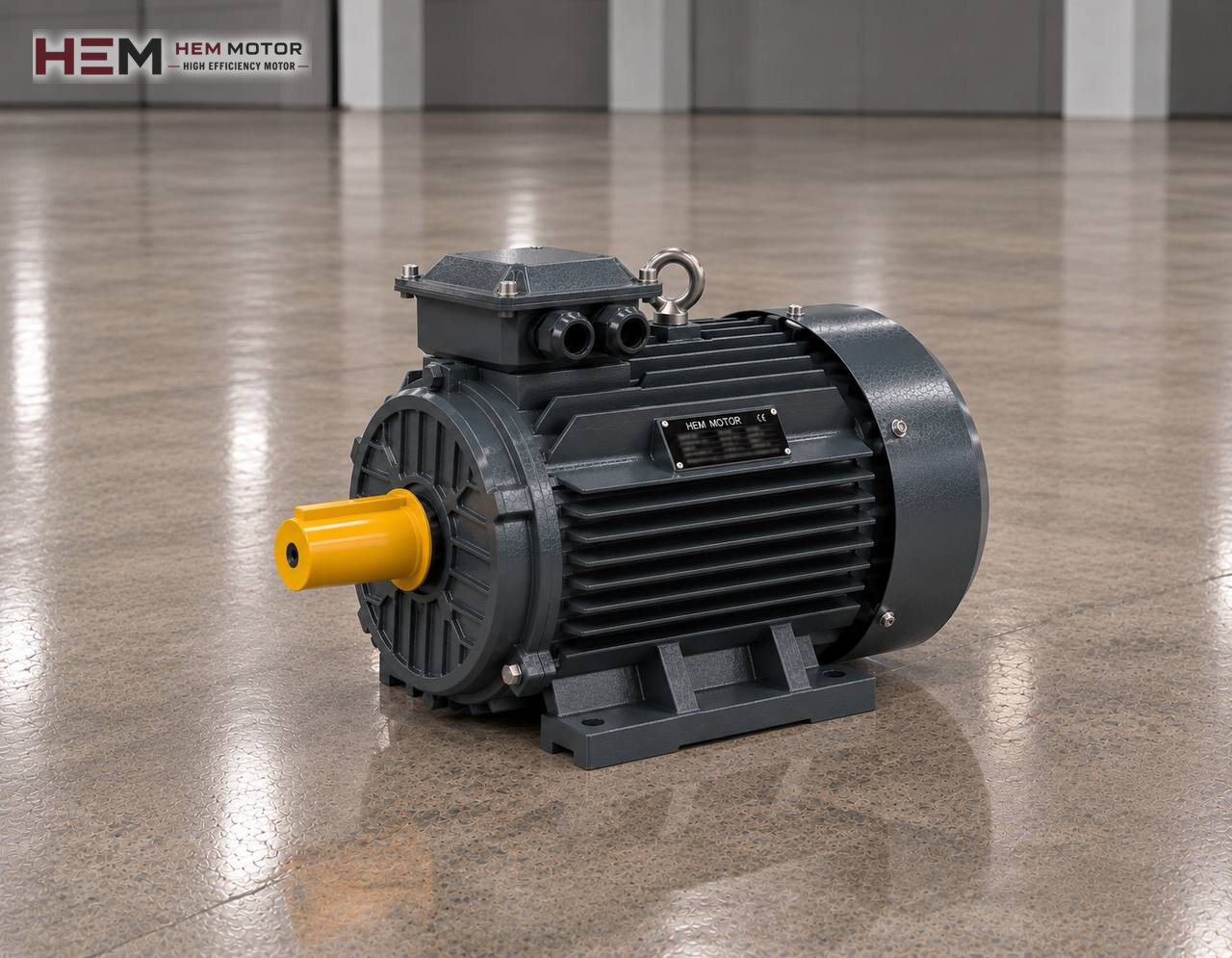
The vacuum press is the machine that turns clay from a plastic mass into a shaped column and is regarded as the heart of the brick and roof tile line; we summarised the whole line on our brick, tile and ceramic production line electric motors page. This page looks only at the extruder: what kind of load the motors driving the auger, the mixing section and the vacuum pump carry, how they start and under which conditions they wear out.

Which Path Does the Clay Follow Inside the Press?
Moist clay from the mixer first drops into the upper section of the press. Here two bladed shafts knead the clay and push it in small pieces into the vacuum chamber. The low pressure created by the pump draws the air out of the clay; de-aired clay is denser, more plastic and cracks less during drying. The auger below the chamber then gathers and compresses this clay and presses it out through the die as a continuous column. The column is then divided into brick lengths on the wire cutter.
This process is mechanical: the force that moves the clay comes from the rotating auger, not from a hydraulic cylinder. That is why the extruder's main motor, unlike block machine or hydraulic press motors, carries the forming load directly.
Main Auger Motor: Continuous, Heavy Load
The largest motor of the press turns the lower auger. Because the auger rotates at only a few tens of revolutions per minute, there is a belt drive and a large gearbox between motor and auger. For gearbox selection and motor connection see our electric motors for gearboxes page.
The load is almost constant over the shift but very sensitive to the condition of the clay. When the clay dries, the die narrows or the column section is enlarged, the auger's resistance rises and motor current climbs immediately. Operators therefore watch the ammeter on the press panel like a quality indicator: rising current means the clay has stiffened. It would not be right to give the motor power as an exact figure; the machine builder's value and the nameplate of the existing motor should be the basis.
Starting: Restarting with a Full Barrel
The hardest moment for an extruder is turning the machine again after a stop, with the barrel and die full of clay. Clay compacts as it stands, and the first turn of the auger needs more torque than normal operation. Some presses have a clutch between motor and gearbox; the motor starts unloaded and the clutch is engaged once it reaches speed. On machines without a clutch the motor must start under full load, and the starting method is chosen accordingly.
At large ratings, direct-on-line starting stresses the supply. With a clutch arrangement star-delta is often sufficient; for loaded starts a soft starter or frequency converter is considered. Thermal protection and fuse settings should be made for the long starting time.
Mixing Section and Vacuum Pump
In two-stage presses the upper mixing and feeding section has its own motor and gearbox. Its load is lighter than the main auger's, but the feed rate must match the main auger; if too much is fed, the vacuum chamber fills and the vacuum drops. Some plants achieve this balance by running one of the two motors on a drive.
The vacuum pump is usually a liquid ring type, connected directly to its motor by a coupling. Its load is constant and its start light; the motor runs without interruption through the shift. What matters here is the speed class required by the pump manufacturer. Because the pump's seal water and steam are right next to the motor, the terminal box orientation and the sealing of cable entries need attention. Our pump electric motors page also explains the general logic on the pump side.
Column Speed, Drive and Temperature Monitoring
On new lines the auger speed is adjusted with a frequency converter to match the pace of the cutter and dryer loading. HEM's three-phase series are suitable for operation with a drive (inverter-compatible motors). If the auger motor has to run at full torque at low frequency for long periods, its own fan may not be enough; in that case an external fan is considered. If the drive panel is far from the press, a dv/dt or sine filter comes into question for the long motor cable. Please share this information with your order.
Under heavy, continuous load, monitoring winding temperature directly gives more reliable information than a current relay. A PTC or PT100 winding sensor is an order option. An anti-condensation heater can also be added to prevent moisture condensing in a motor that cools down during weekend stops.
Wet Clay, Mud Splash and Maintenance
The area around the press is the wettest part of the plant: the clay is moist, the die is lubricated with water and the floor is washed often. Our motors are built with IP55 protection and class F insulation for 50 Hz supply. IP55 protects against splashing water, but the motor is not designed to be hosed down directly or buried in mud; if such a condition exists, the machine builder's protective measure or a special motor is needed, please state it with your order.
The auger motor's bearings carry belt tension continuously. Keeping to the lubrication interval, replacing belts as a set and checking pulley alignment directly affect motor life. Depending on frame size, B3, B5, B14, B34, B35 and vertical V1/V3/V5/V6/V15 mounting options are available; we confirm flange and shaft dimensions together with the order.
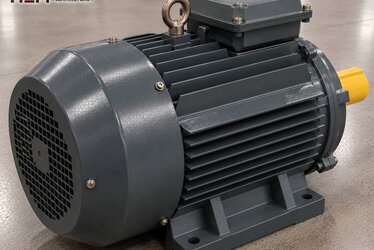
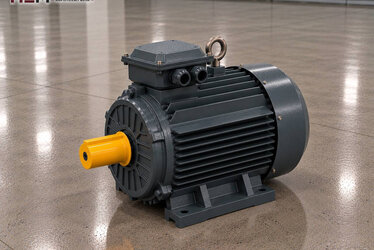
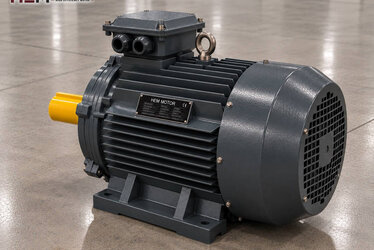
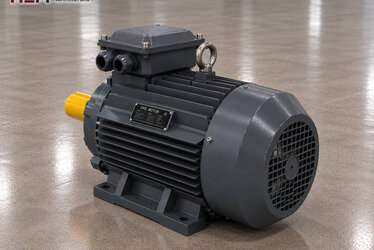
Example HEM Motors for a Vacuum Press
| Press section | Nature of the load | Information that drives the choice | Example HEM model |
|---|---|---|---|
| Main auger (4-pole arrangement) | Continuous, torque rising with clay stiffness; loaded start | Gearbox ratio, pulley diameters, clutch or not | 75 kW · 280S-4 · 1,486 rpm · SF 1.15 |
| Main auger (6-pole arrangement) | Same load, lower input speed | Pole number of the existing motor | 55 kW · 280M-6 · 985 rpm |
| Upper mixer-feeder | Medium load, speed matched to the main auger | Feed rate, gearbox input | 45 kW · 225M-4 · 1,485 rpm |
| Vacuum pump | Constant load, light start, uninterrupted running | Pump manufacturer's speed and power value | 15 kW · 160L-4 · 1,465 rpm |
These models are for guidance and are not a final selection; the motor is determined by assessing the press load, required speed, mounting type and operating environment together. For larger ratings see our cast iron frame motor list.
When Requesting a Quotation for a Press Motor
Write to us with the brand and model of the press, which section the motor drives, the required power and speed, the supply voltage (400 V or 690 V connection), mounting type and how many units you need. Stating whether the machine has a clutch or a drive makes the starting assessment easier. If the old motor's nameplate is legible, we can look for an equivalent using the send a nameplate photo method.
You can see the models on our purchase page and reach us by WhatsApp or phone. Prices are kept current on the product pages.
Frequently Asked Questions
Why does the vacuum press motor current change during the day?
Auger resistance depends on the moisture and consistency of the clay. When drier or stonier clay arrives from preparation, more torque is needed at the same speed and current rises. If current constantly exceeds the nameplate value, the problem should be sought in clay preparation or die setting, not in the motor.
Can the extruder main motor be changed from 6-pole to 4-pole?
Only if the pulley or gearbox ratio is changed accordingly. Otherwise the auger turns faster and the column speed and load change. The safest way is to keep the existing pole number; if a change is needed, it should be calculated together with the machine builder.
Where to start if the vacuum pump motor fails often?
First check whether the pump's seal water or water escaping from the seals reaches the motor and terminal box. Then check coupling alignment and whether clay is building up inside the pump; a clogged pump loads the motor more than necessary.
Is a drive necessary on a press without a clutch?
It is not mandatory, but it eases both the supply and the mechanical transmission when starting with a full barrel. A drive also lets the column speed be adjusted to the pace of the line. The decision should be based on supply capacity, motor power and how often the press stops.