English
 Français
 Türkçe
 Español
 Русский

The circulation fan that moves air around the product in a drying oven, a paint oven or a tunnel bakery oven is one of the machines a plant least wants to stop: when the fan stops, the temperature inside the oven becomes uneven and the batch waits. This page covers the standard three-phase asynchronous motor that drives these fans, how the motor is kept away from oven heat and which details we need with an order. The selection steps common to all fan types are collected on the Fan and Exhaust Fan Motors page.

Heat stays on the fan side: the separation between motor and oven
In a process fan the impeller turns inside the hot air, while the motor sits outside the oven wall or roof. The extended shaft between them, the cooling disc on the shaft and the heat barrier placed in front of the motor connection are the design of the company that builds the fan. Shaft length, disc diameter and insulation thickness belong to the fan manufacturer's calculation; thanks to these parts the motor never touches the hot gas.
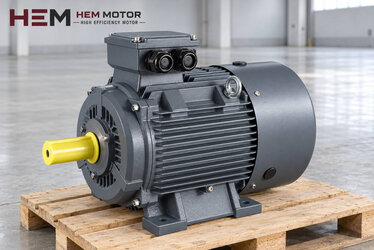
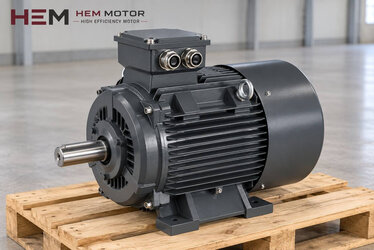
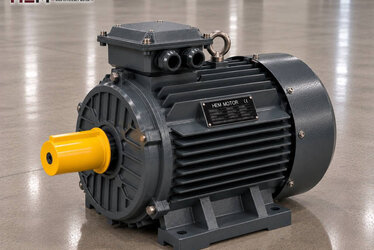
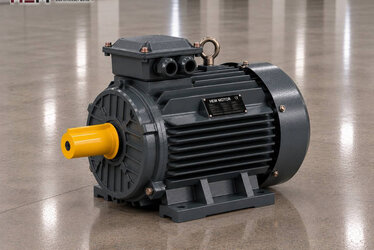
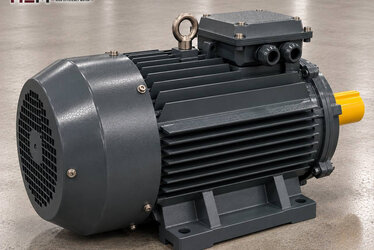
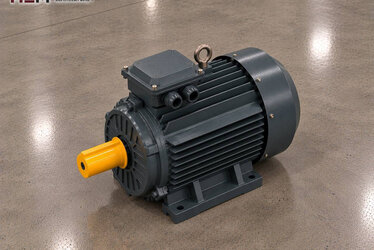
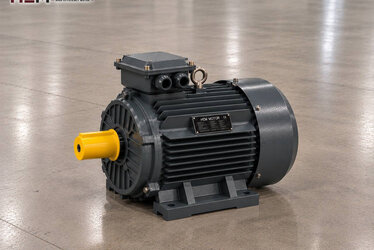
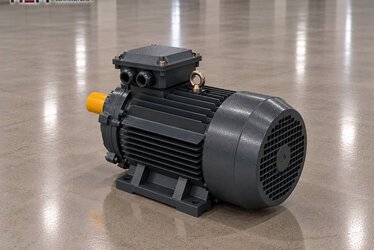
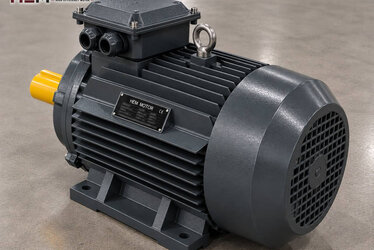
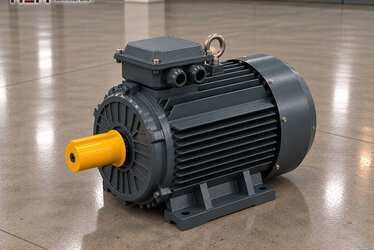
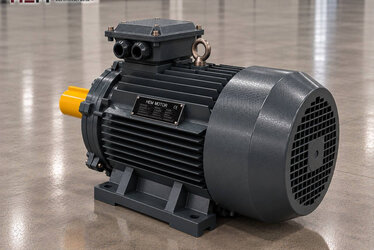
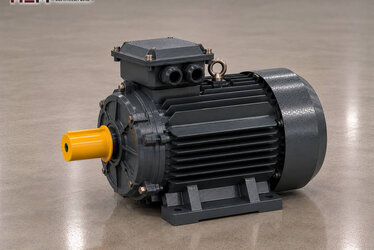
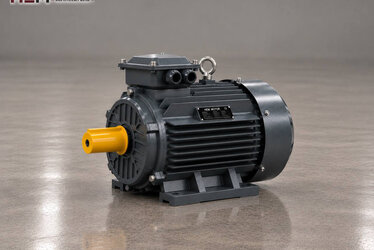
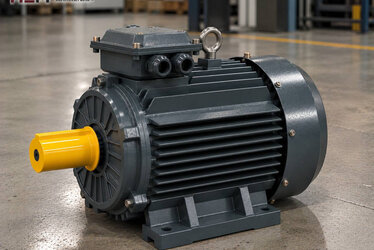
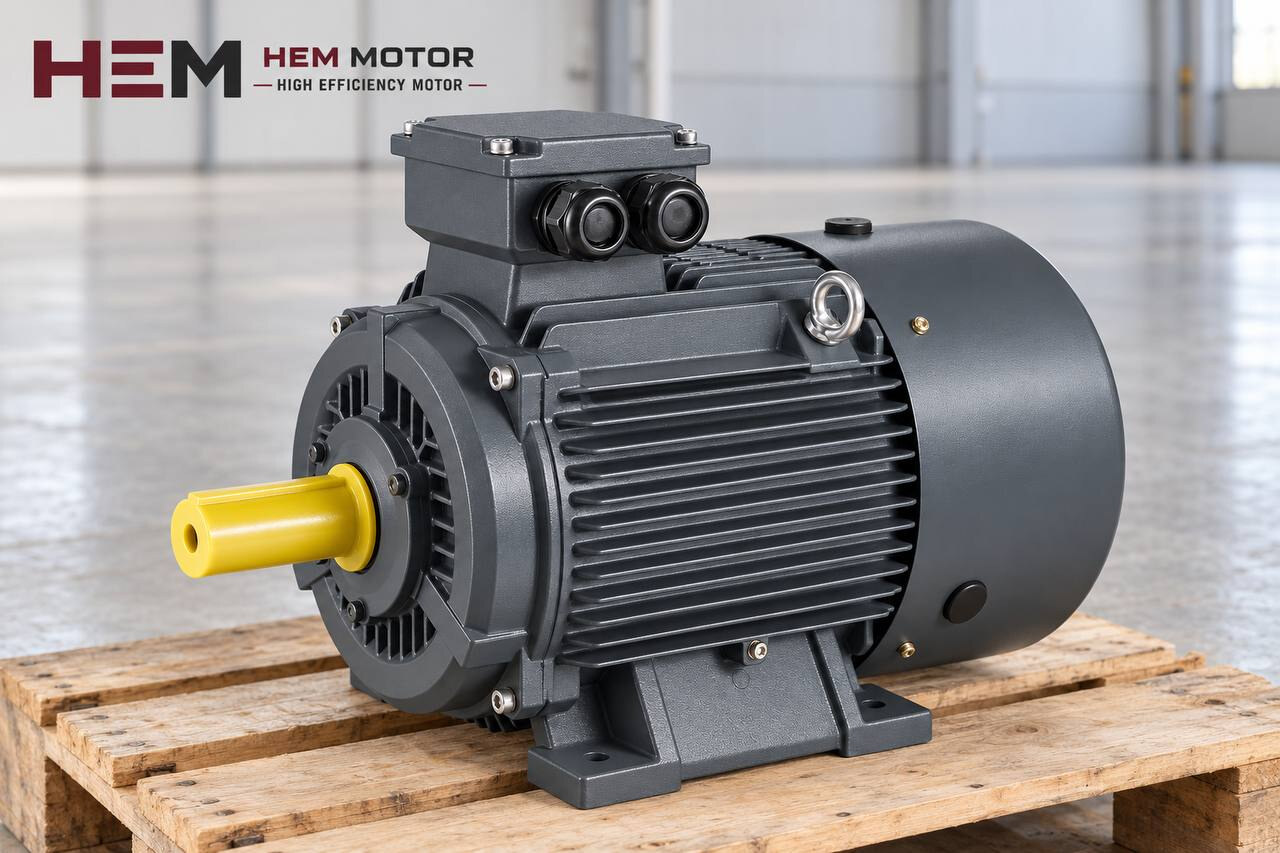
What HEM Motor supplies is the electric motor outside this arrangement: IP55 protection, class F insulation, 50 Hz. The standard design in our catalogue is for ambient temperatures from −15 °C to +40 °C and altitudes up to 1000 m. If the air at the motor's location rises above +40 °C, this must be stated before ordering; a higher power rating or a different layout is then considered during selection.
Applications that require a fire or smoke extraction class need a certified motor; a standard IP55/F motor is not designed for that class.
What does the fan do in each type of oven?
Drying ovens (timber, agricultural produce, foundry cores, textiles): the fan drives humid air between the layers of product, exhausts part of it and draws in fresh air. A single drying cycle can last hours, and in timber kilns, days.
Paint ovens: in powder or wet paint curing, the fan carries heat evenly to every face of the part.
Bakery and food ovens: in convection, rack and tunnel ovens the fan mixes the air in the baking chamber; steam and moisture can reach close to the motor. For the other drives of the line, see the food processing machine motors page.
Ceramic and brick dryers: circulation fans that push hot air between stacks of green ware and transfer fans that carry surplus heat from the kiln to the dryer work here. All motors of the line are described on the brick, tile and ceramic production line motors page. The fan that supplies combustion air to the burner is a separate duty: burner fan electric motor.
Cold start: the motor carries more load before the oven warms up
At the same speed a fan moves a similar volume of air, but cold air is denser than hot air. While the oven is still cold the impeller has to push a heavier mass of air, and the power demanded from the shaft is higher than in hot operation. Since the fan is usually sized for the hot operating point, the hardest moment is the first start in the morning or after maintenance.
For this reason motor power is not chosen from the hot operating value alone; the cold start condition is also taken into account, and the reference is the power the fan manufacturer gives for cold air. Three approaches are common in practice: keeping the damper throttled during warm-up, starting the fan at low speed with an inverter and raising the speed as the oven heats up, or selecting the motor directly for the cold condition.
Large impellers have high inertia and take a long time to start. The choice of star-delta, soft starter or inverter and the thermal protection setting must suit this long start; otherwise the protection may trip before the motor reaches speed.
A fan that turns day and night: continuous duty, winding sensors, speed control
Process fans often run to the production cycle rather than to shifts, and in drying rooms they may not stop all week. In continuous operation it matters that the motor's own cooling fan draws cool air and that the frame fins do not get coated with dust or paint vapour.
A PTC thermistor or PT100 sensor can be added as an order option to monitor winding temperature; the sensor is wired to a relay in the control panel or to the PLC. In humid ovens, an anti-condensation heater is also an order option to keep water from collecting inside the frame during long stops.
For plants that want to adjust the air volume to the oven temperature, the inverter-compatible electric motors page gives details. Our three-phase series are suitable for speed control with a frequency inverter; for long periods at low speed with full torque a separate cooling fan may be needed, and with long cables a dv/dt or sine filter is considered; these conditions are stated with the order. On fan loads, power changes roughly with the cube of speed; this is a general rule and the actual value depends on system resistance.
Motor selection by process type
| Process | Conditions the fan works in | What to watch in motor selection | What to state with the order |
|---|---|---|---|
| Drying oven | Humid hot air, long and uninterrupted cycle | Continuous duty, moisture, condensation | Cycle length, temperature around the motor, need for an anti-condensation heater |
| Paint oven | Curing temperature, paint vapour, dust | Cold start load, keeping the frame clean | Fan manufacturer's cold and hot power values, starting method |
| Bakery and food oven | Steamy hot air, frequent on-off | Vertical mounting, steam and moisture | Mounting type (V1 etc.), flange and shaft size |
| Ceramic and brick dryer | Dusty hot air, large-diameter impeller | Long start, thermal setting, speed control | Impeller speed, inverter use, PTC/PT100 |
| Heat recovery and transfer | Hot air carried from kiln to dryer | Locating the motor away from the hot duct | Air temperature at the motor, belt or direct drive |
The table is a general guide; the final motor selection is made with the fan manufacturer's data and the site conditions.
Mounting: vertical motor on the roof, horizontal motor on the side wall
In convection ovens the motor usually sits vertically on the roof with the impeller hanging below; the impeller's weight and the air thrust then act on the motor bearing as an axial load. In ovens entered from the side wall the motor is horizontal.
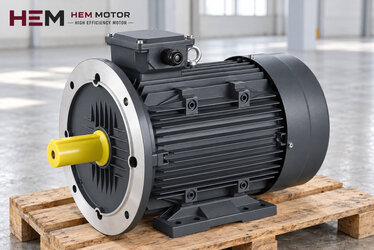
Frames are offered as B3, B5, B14, B34, B35 and vertical V1/V3/V5/V6/V15 depending on frame size; flange and shaft dimensions are confirmed with the order. For flange mounting, see the B5 and B14 flange motors page.
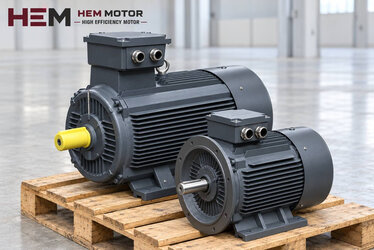
Examples are the cast iron frame models 5.5 kW 132S-4 (1,460 rpm) and 11 kW 160M-4 (1,465 rpm) in the 1500 rpm class, and, for large impellers that need to turn more slowly, 7.5 kW 160M-6 (970 rpm) in the 1000 rpm class. These are examples; the final choice depends on the fan load, required speed, mounting and operating conditions.
What information do we need for a quote?
To identify the right motor quickly, send us the machine type (which oven, which fan), motor power (kW), speed (rpm), supply voltage, mounting type and quantity. Specifically for oven fans, also add the air temperature where the motor will stand, the fan manufacturer's cold start power, any need for PTC/PT100 or an anti-condensation heater, and whether an inverter will be used.
If you are replacing an existing motor, a photo of the nameplate is often enough: send the nameplate, we will find the equivalent. Standard models ship from stock; you can see priced models in the buy electric motors section and reach us through the contact page for special cases.
Frequently Asked Questions
If the oven inside is at 250 °C, must my motor withstand that temperature?
No. The impeller is exposed to the temperature inside the oven; the extended shaft, cooling disc and heat barrier that protect the motor are the fan manufacturer's design. What matters for the motor is the ambient temperature where it stands; if that exceeds +40 °C, state it with the order.
Why does a fan that runs fine when hot trip its thermal relay on cold mornings?
Cold air is denser, so the fan draws more power at the same speed. Throttling the damper during warm-up, starting at low speed with an inverter or selecting the motor for the cold condition solves this; the thermal setting must also suit the long start.
Should I choose PTC or PT100 for a paint oven fan?
A PTC is a simple protection that gives a signal at a set threshold; a PT100 measures temperature continuously and can be monitored on a PLC. Both are order options; decide by the relay or input type in your panel.
Can I replace the vertical motor of a convection oven with a horizontal model?
No; the motor must be ordered with the mounting type that suits its position on the oven. For a vertical arrangement with the shaft pointing down, a vertical mounting such as V1 is chosen, and flange and shaft dimensions are confirmed with the order.
Can a bakery oven fan motor run continuously?
Standard three-phase motors are suitable for continuous duty; steam and moisture must not reach the motor and its cooling air must be cool.