English
 Français
 Türkçe
 Español
 Русский

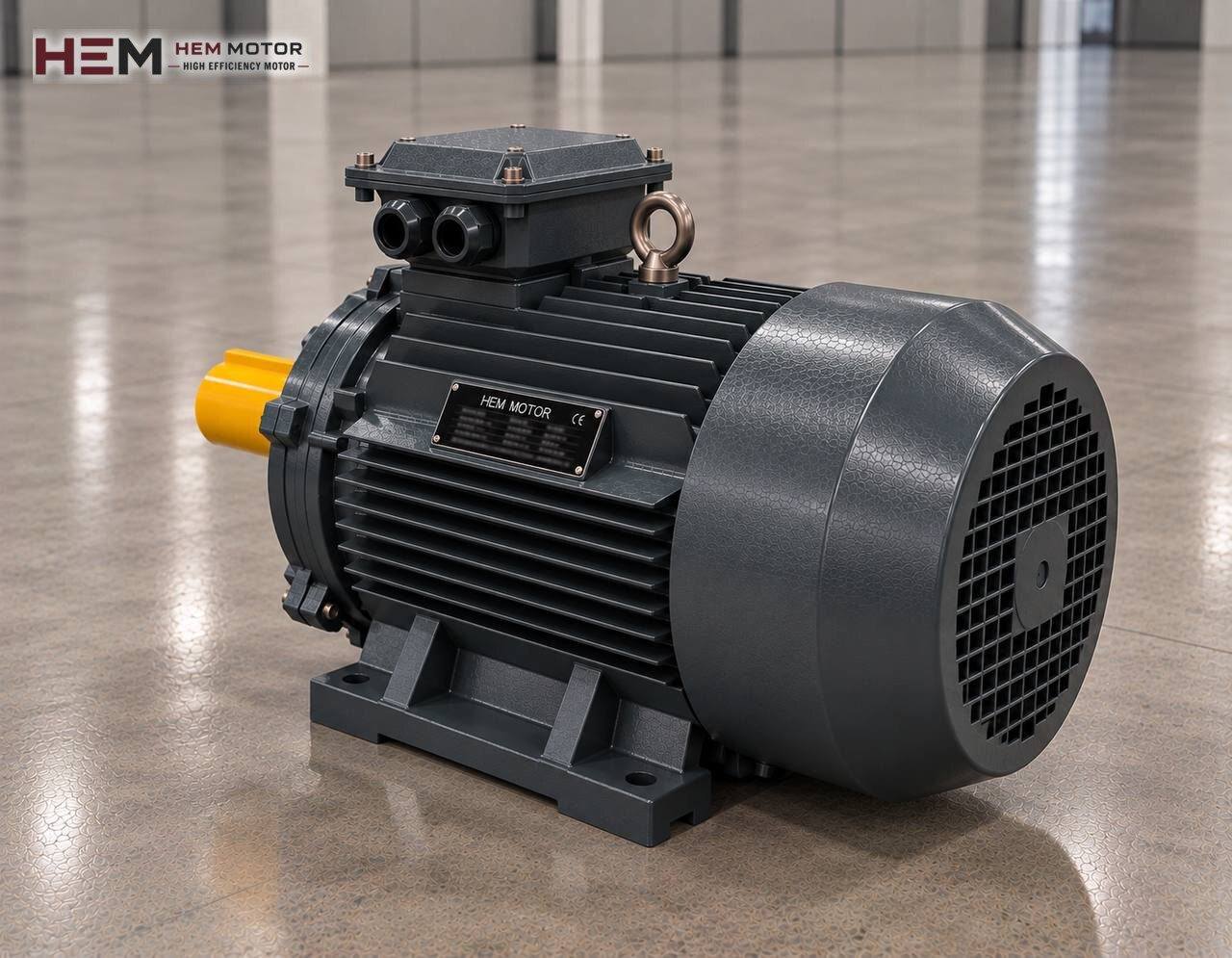
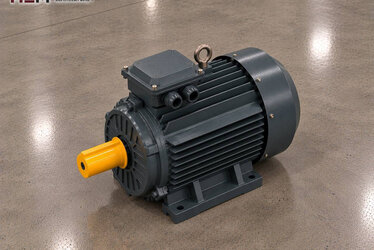
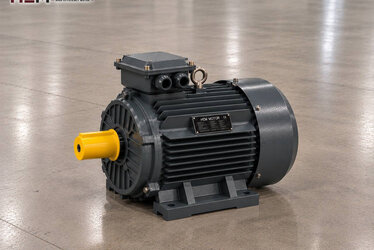
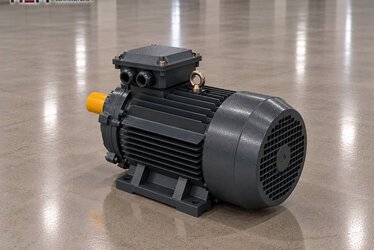
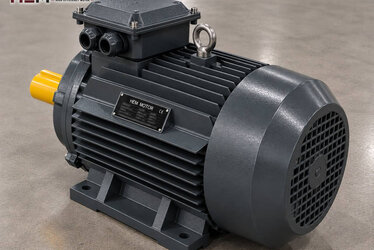
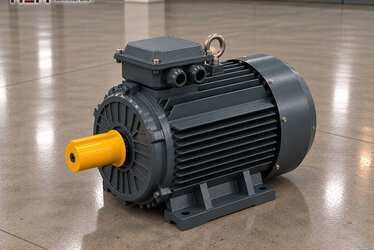
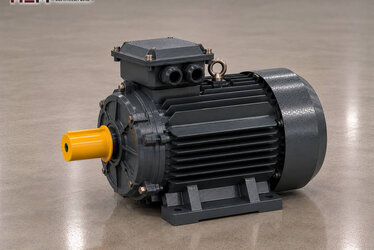
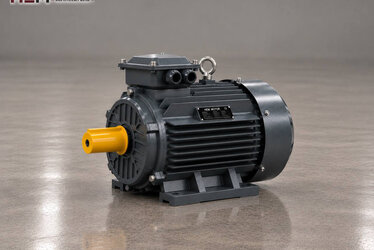
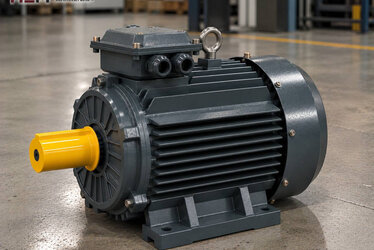
A forward-curved fan is recognised by the many short, shallow blades arranged around the rim of its wheel; the blade tips are bent towards the direction of rotation. This design moves a lot of air with a small wheel at low speed, which is why it is common in fan coils, air handling cabinets and heating-ventilation units with little space. This page focuses only on the motor that drives this wheel type; the other fan types are gathered on the fan and extractor motors page.

How the Multi-Blade Wheel Behaves Towards the Motor
In this wheel the air leaves the blade tip at a high tangential velocity. As a result, the peripheral speed needed for a given airflow is low and the fan usually turns slowly and quietly. From the motor's point of view the critical point is different: the shaft power drawn by a forward-curved wheel rises almost continuously as the amount of air passing through it increases. When duct resistance falls, the fan delivers more air and loads the motor more.
In practice this means meeting scenarios such as a cabinet with a service door left open, a newly fitted clean filter, a short duct whose installation is unfinished, or dampers left fully open. In each of these cases the current can approach or exceed the nameplate value and the overload protection trips. What looks like a fault is very often not the motor changing but the system.
Sizing Motor Power for the Lowest System Resistance
With a backward-curved wheel the motor can be chosen for the peak of the curve and left alone; a forward-curved wheel has no such natural limit. Power selection should therefore consider the system in its lowest-resistance state: filters clean, all grilles open, heat exchanger dry. This operating point is read on the fan manufacturer's curve and the motor margin is set accordingly.
A simple measurement during commissioning goes a long way. The fan is run in its freest condition, the three phase currents are read with a clamp meter and compared with the current on the motor nameplate. The overload relay is set to the nameplate current; if the load turns out high, the pulley ratio or fan speed is reduced or the next power size is considered. More on current and protection settings can be found in the electric motor current table article.
Belt-Driven and Direct-Coupled Arrangements
Large forward-curved fans are mostly built as double-inlet scroll-housed units and are turned by belt from a motor fixed to a separate base inside the cabinet. The advantage of the belt drive is that fan speed can be adjusted by changing pulleys; however, every speed increase raises the motor load disproportionately. Because fan power changes roughly with the cube of speed, even a small increase in pulley diameter can trip the overload. Current must always be measured again after a pulley change.
In small units, on the other hand, the wheel hub sits on the motor shaft and fan speed equals motor speed; 4-pole (1,500 rpm class) or 6-pole (1,000 rpm class) motors suit the low peripheral speed a forward-curved wheel needs. Shaft diameter, wheel hub and flange size are confirmed together at ordering. For mounting arrangements, see the answer to which mounting arrangements are available.
Starting, Dampers and Speed Adjustment
A forward-curved wheel is light because it is made of thin sheet metal; this means the inertia that loads the motor during starting is small. What deserves attention is how open the air path is at the moment of starting. When airflow is close to zero, the power drawn by this wheel is also low; starting with the inlet or outlet damper closed makes it easier for the motor to accelerate.
If speed adjustment is needed, a frequency inverter gives a smoother result than throttling with a damper. HEM's three-phase motors can be fed from an inverter. Because fan load lightens as speed falls, the motor's own cooling fan is usually sufficient; in the rare cases where high torque is expected at very low frequency, a separately powered cooling fan comes into question, and when the line between inverter and motor gets long, an output filter does. With a forward-curved fan the inverter has an extra benefit: by setting an upper frequency limit, overloading of the motor can be prevented from the start. Details are on the inverter-compatible electric motors page.
Example HEM Models for Forward-Curved Fans
| Application | Drive arrangement | Point to watch | Example HEM model |
|---|---|---|---|
| Small heating-ventilation unit | Direct-coupled | Shaft and flange size | 0.25 kW, 1,340 rpm, 71M1-4 aluminium |
| Low-speed direct-coupled fan | Wheel on motor shaft | Wheel speed, quiet running | 1.1 kW, 945 rpm, 90L-6 aluminium |
| Cabinet double-inlet fan | Belt and pulley | Pulley ratio, current with door open | 2.2 kW, 1,450 rpm, 100L1-4 aluminium |
| Large cabinet, variable airflow | Belt + inverter | Upper frequency limit, filter condition | 5.5 kW, 1,460 rpm, 132S-4 aluminium |
| High-airflow ventilation unit | Belt and pulley | Power margin in free running | 7.5 kW, 1,460 rpm, 132M-4 cast iron |
The models in the table are examples; the final choice is made by evaluating the fan curve, the required speed, the connection arrangement and the operating conditions together.
Running Inside the Cabinet, Dirt and Maintenance
The motor of a forward-curved fan very often sits in the air stream, inside the cabinet itself. This helps the motor cool well; however, humid air from the coil and fine dust that passes the filter also reach the motor frame. Shallow, closely spaced blades hold dirt easily; a fouled wheel both delivers less air and loses its balance. An unbalanced wheel places additional force on the motor bearings in a belt-driven arrangement.
Wheel cleaning, belt tension and pulley alignment stand out in the maintenance plan. Frame protection is IP55 and insulation class is F; a heater that keeps the winding dry during standstill and a PTC/PT100 sensor monitoring winding temperature can be added at ordering. If the inside of the cabinet is cleaned with pressurised water, IP55 is not a protection designed for that job; the measure to be taken by the equipment manufacturer or the need for a special motor should be discussed at the ordering stage. For small units on a 220 V supply, the single-phase electric motor series may also be considered.
What We Need for a Forward-Curved Fan Motor Request
For a quick match, send the following: the machine or unit the fan is in, motor power (kW), fan or motor speed (rpm), supply voltage, mounting type (foot, flange, base-mounted), whether it is belt or direct drive, and quantity. If you have the old motor, sending a photo of its nameplate is a good start.
All power and speed options are listed with current prices in the electric motor store. To send your request by WhatsApp or phone, use the numbers on the contact page.
Frequently Asked Questions
Why does the fan motor trip its overload after a filter change?
A clean filter lowers system resistance and the forward-curved fan delivers more air. Since power rises with airflow in this wheel type, the motor current goes up. Motor power or fan speed should be checked again for the clean-filter, open-grille condition.
Does testing the fan with the cabinet door open harm the motor?
With the door open the air path is free and the motor may be loaded above its design point. Current should be monitored even in short tests, and where possible the fan should be run with the door closed or the damper throttled.
Is it right to increase airflow by fitting a bigger pulley?
Airflow increases, but motor load grows roughly with the cube of speed. Before changing the pulley, measure how much margin the motor has and move to a more powerful motor if necessary.
How is the number of poles chosen for a forward-curved fan?
In a direct-coupled arrangement the wheel speed required by the fan manufacturer is decisive; wheels needing low peripheral speed use a 1,000 rpm class motor, higher speeds a 1,500 rpm class motor. In a belt drive both are possible through the pulley ratio.