English
 Français
 Türkçe
 Español
 Русский

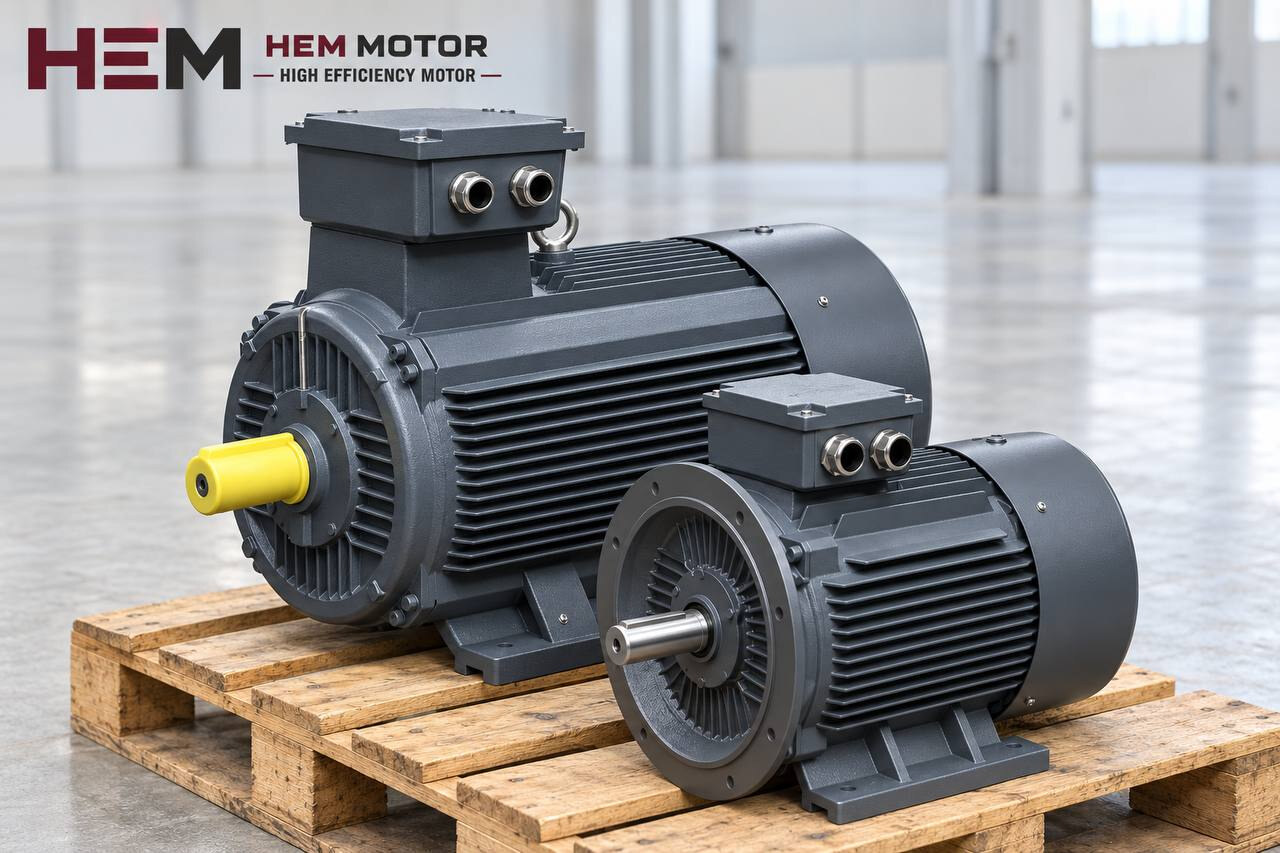
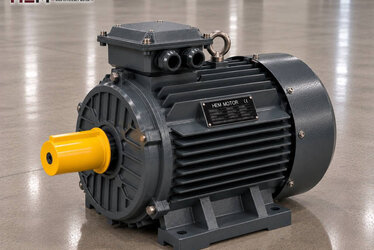
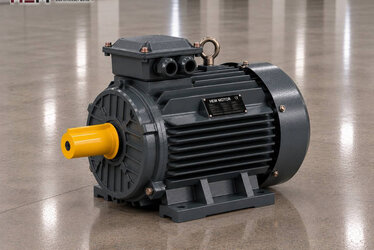
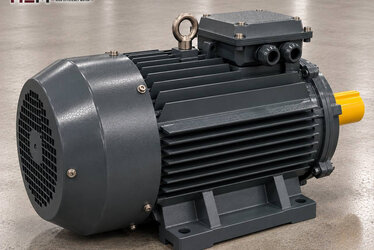
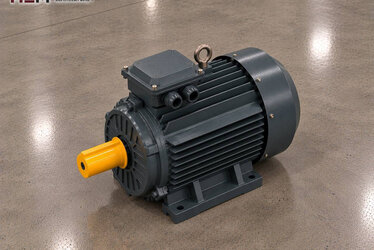
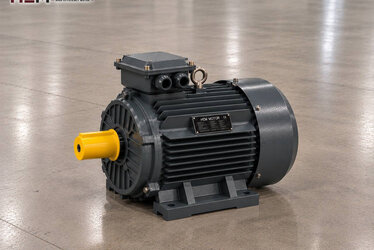
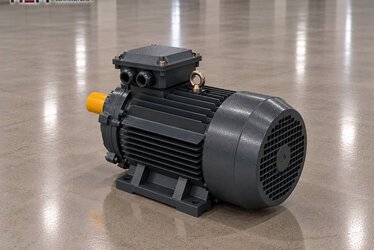
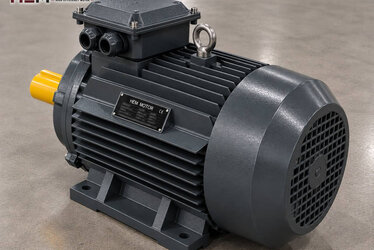
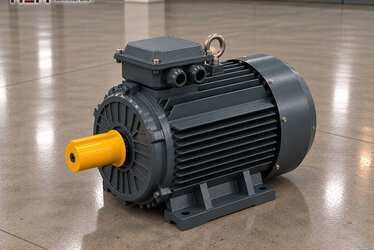
Jet fans hung from the ceiling of an enclosed car park or a road tunnel are short fans that push air in the required direction without any ductwork. Inside each fan, right in the middle of the airstream, an electric motor turns the impeller. This page looks at that motor separately for everyday ventilation and for emergencies; for the general picture of fan types, see our Fan and Extractor Motors main page.

What Does a Jet Fan Do in a Car Park or Tunnel?
A jet fan does not blow air out of the building. Its job is to give the surrounding air speed and push it towards the next fan and finally to the exhaust shaft. Extraction is done by the main exhaust fan in the shaft; fresh air enters through the ramp or a supply shaft. As a result no ducts or grilles are needed under the car park ceiling, and the headroom stays free for vehicles.
In a tunnel the same principle is applied over a much longer line. Fans are hung in groups along the tunnel and carry the exhaust gas, dust and haze left by traffic towards the portal or a ventilation stack.
Everyday Ventilation and the Fire Scenario Are Not the Same
When choosing a jet fan motor, the first question is not power but which duty the fan was designed for. In daily operation the fan dilutes the carbon monoxide produced by vehicles and refreshes the air. The air is at normal temperature, and a standard three-phase asynchronous motor with IP55 protection and class F insulation is suitable for this job.
The fire scenario is a separate requirement. Some projects require the jet fan to drive hot smoke in a set direction during a fire and to keep doing so at a defined temperature for a defined time; the specification then names smoke extraction classes such as F300 or F400. Such a class requires the motor to be tested and certified together with the fan. Certified smoke extraction motors are not included in HEM Motor's 2026 catalogue; a standard IP55/F motor is not designed for this class. If the project includes a smoke extraction duty, state it in your enquiry; the matter is clarified at the order stage according to the project specification.
Motor Power and Speed: Start from the Fan Manufacturer's Data
The thrust of a jet fan depends on impeller diameter, blade angle and speed; that calculation belongs to the fan manufacturer. On the motor side, the task is to find the model that meets the shaft power and speed in the fan's data sheet. Two-pole motors are more common on small-diameter car park fans, four-pole motors on large-diameter tunnel fans.
For example, the aluminium-frame 2.2 kW 90L-2 has a rated speed of 2,895 rpm, the 7.5 kW 132M-4 1,460 rpm and the cast-iron 15 kW 160L-4 1,465 rpm. These are examples only; the final choice depends on the fan data, mounting arrangement and operating conditions. When replacing the motor of an existing fan, the nameplate of the removed motor is the most reliable starting point.
Reversing: Pushing Air in Both Directions
Many jet fans are installed to run in both directions: depending on wind, traffic flow or the scenario, air is driven sometimes to one end, sometimes to the other. What makes the fan reversible is an impeller with a symmetrical profile; the motor's direction of rotation is changed by swapping two of the supply phases.
The point to watch is the inertia of the impeller. Changing direction while the impeller is still turning forces the motor into the opposite direction, which means high current, heating and mechanical stress. The control panel should include a delay that waits for the impeller to stop before reversing. In inverter-driven systems the change is made along a ramp.
Staged Operation: Two Speeds or an Inverter
In car park ventilation the fans do not always need to run at full power. A high stage may be needed in the morning and evening peaks, while a low stage is enough at night. Older projects did this with pole-changing two-speed motors; that winding design is not included in HEM Motor's 2026 catalogue, so ask at the order stage if you need it.
With a standard motor, staged operation is achieved with a frequency inverter. On a fan load, power changes roughly with the cube of speed; this relationship depends on system resistance and should be read as a general trend. Our three-phase series can be driven by an inverter. If the motor is to run slowly for long periods while delivering full torque, a separately powered cooling fan may be needed; if the cable between drive and motor is long, a dv/dt or sine filter is considered. State these conditions in your order; details are on the inverter-compatible electric motors page.
CO Sensor Control and Number of Starts
In car parks the fans are usually switched on by signals from CO sensors. As gas concentration rises, the control system first opens the low stage, then the high stage, and switches the fans off when the value falls. Sensor thresholds and delay times are the job of the building services designer.
What matters for the motor is the number of starts per hour. A fan with a heavy impeller loads the motor with high current for a while at every direct-on-line start and heats the winding. Where the fans switch on and off frequently, keeping the fan at low speed instead of stopping it, or using a soft starter or inverter, protects the winding. PTC/PT100 winding sensors are an order option.
Ceiling Mounting, Vibration and Connection
In a jet fan the motor is fixed to a support inside the casing by its feet or flange, and the whole fan is hung from the ceiling. Mounting options vary with frame size: foot-mounted B3, flange-mounted B5 and B14, foot-and-flange B34 and B35, plus vertical V1, V3, V5, V6 and V15 arrangements. Flange and shaft dimensions are confirmed at the order stage; for options see our flange-mounted motors page.
- The fan is attached to the ceiling with vibration-damping hangers so that vibration does not pass into the slab.
- Impeller balancing is the fan manufacturer's responsibility; after a motor replacement the impeller should be checked again.
- Hanger and fixing bolts are retightened some time after the first run; looseness wears the bearings.
- The cable is brought to the terminal box outside the casing without tension.
During tunnel washing the motor must not be exposed directly to pressurised water; IP55 is not designed for this condition. In damp structures that stay closed for long periods, an anti-condensation heater is an order option.
What Is Expected from the Motor in Each Operating Mode
| Operating mode | Expected from the motor | Watch out for | State in the order |
|---|---|---|---|
| Daily CO ventilation in a car park | Long hours of continuous running | Frequent sensor-driven starts | Fan shaft power, speed, starts per hour |
| High stage at peak hours | Wide speed range with an inverter | Cooling at low speed | Inverter use, cable length |
| Reversible operation | Same power in both directions | No reversing before the impeller stops | Reversing need, panel arrangement |
| Traffic ventilation in a tunnel | Reliable running in dust and humidity | Washing water, condensation | Ambient conditions, anti-condensation heater |
| Smoke extraction duty in a fire | Certified temperature and time class | A standard motor is not built for this class | Class in the specification, certificate request |
The table is a general guide; the final motor choice is made according to the fan manufacturer's data and the project specification.
Information to Send Us for a Quotation
To match the motor correctly, please send: the type of fan or machine (car park or tunnel jet fan), required power (kW), speed, supply voltage, mounting arrangement, quantity and whether the fan has a smoke extraction duty. A photo of the removed motor's nameplate speeds things up; the nameplate photo page explains how.
Current prices for all models are on the buy electric motors page; motors in stock are shipped from our warehouse in Türkiye. For the building's other ventilation motors use the ventilation electric motors page, and for project questions the contact page.
Frequently Asked Questions
Can a standard motor be fitted to a car park jet fan?
Yes, if the fan only runs for everyday ventilation; a standard three-phase motor that meets the fan's power, speed and mounting dimensions can be used. If the fan also has a smoke extraction duty in a fire, a certified motor matching the class in the specification is required.
Can I obtain a smoke-extraction-rated motor from HEM Motor?
Certified smoke extraction motors are not included in HEM Motor's 2026 catalogue. If the project includes such a class, share the specification with your enquiry; how it will be met is clarified at the order stage.
Does reversing a jet fan often harm the motor?
If the direction is changed before the impeller stops, the motor draws high current and heats up. A delay that waits for the impeller to stop, or a ramped change with an inverter, prevents this stress.
Is an inverter necessary on fans controlled by CO sensors?
It is not mandatory; the fan can also run with staged on-off control. But if the number of starts is high or demand varies widely during the day, an inverter both protects the motor and makes it easier to adjust the airflow.