English
 Français
 Türkçe
 Español
 Русский

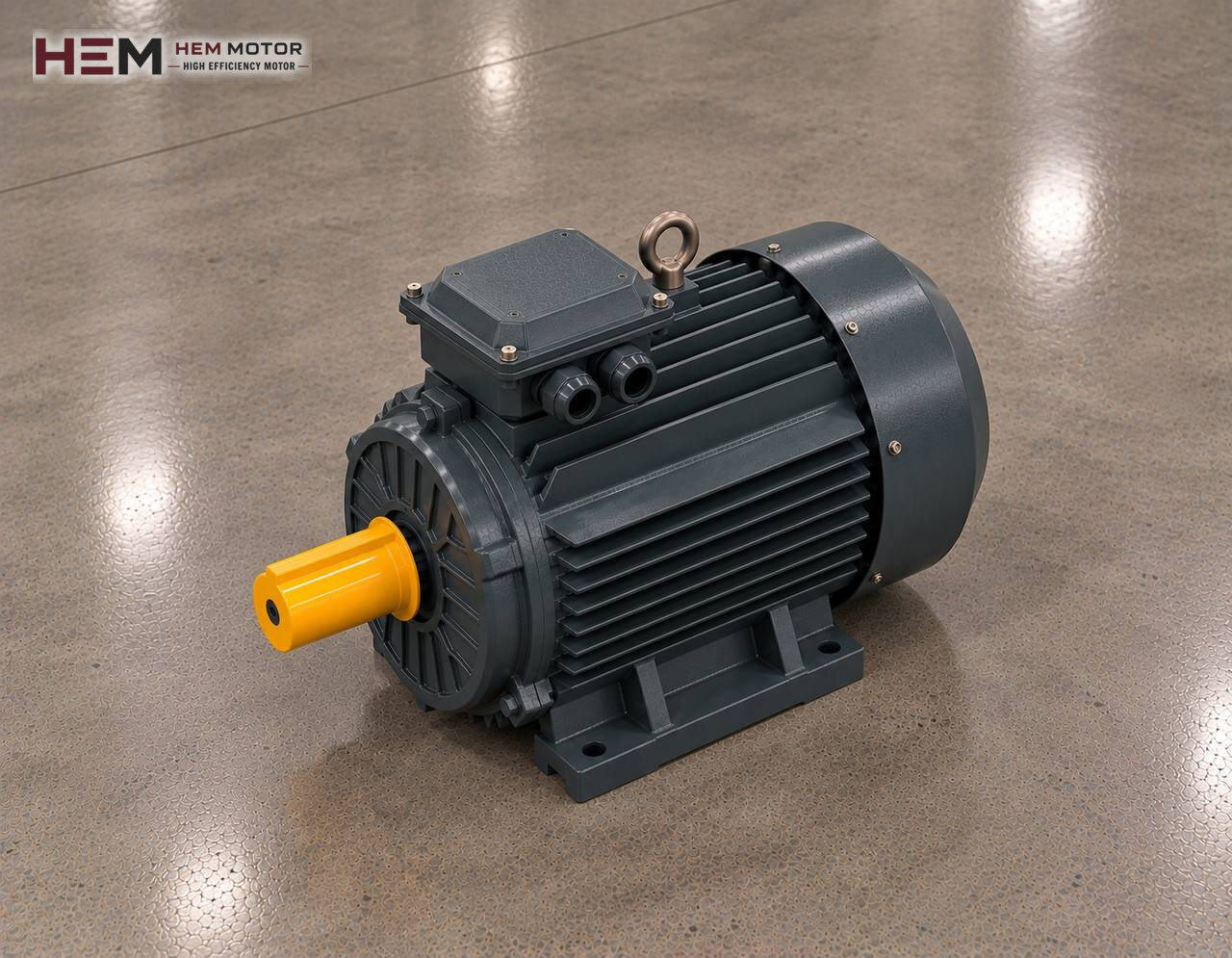
An inline centrifugal duct fan is a centrifugal fan connected directly into a square or round duct run, taking air in from one side and delivering it on the same axis at the other; in the trade it is also called an in-line centrifugal fan. In office and shop exhaust, kitchen hood lines, laboratory extraction and long, high-resistance ducts, these fans provide the pressure an axial fan cannot reach. This page describes what is different about the motor that turns the fan; the full overview of fan types is on the fan and extractor motors page.

Why a Centrifugal Wheel Inside the Duct?
A centrifugal wheel draws air in at its centre and throws it outwards from its blade tips; in doing so it gives the air far more pressure than an axial propeller. In the inline arrangement, the air thrown outwards is turned back towards the axis by guide surfaces inside the box or cylindrical casing and continues into the duct. The installer can thus cut the duct run and insert the fan without setting aside a separate fan room.
For the motor this means higher shaft power and a lower impeller speed than an axial fan at the same airflow. Inline centrifugal fans mostly use backward-curved wheels; with this blade type the power curve peaks and then falls. When the motor is selected for this peak value, it will not be overloaded even if part of the duct is removed or an access door is left open. With small forward-curved wheels, however, power keeps rising as airflow increases; on fans with these wheels the motor can exceed its rated current when duct resistance falls below the design value.
Three Drive Layouts and the Motor's Position
In inline centrifugal fans the motor is arranged in three different ways, and each changes the motor selection:
- Direct drive, motor in the airstream: The impeller is on the motor shaft and the motor sits inside the box, in the conveyed air. Common on small and medium fans; impeller speed equals motor speed.
- Direct drive, motor outside the box: The motor is flange-mounted to the side wall of the box, and the shaft passes through the wall to carry the impeller inside. The motor has no contact with the conveyed air; preferred on greasy or hot air lines such as kitchen exhaust.
- Belt drive: The motor sits outside the box on a tensioning slide; the impeller turns on its own shaft with its own bearings. Impeller speed is adjusted by changing the pulley ratio, and the motor is completely separated from the dirty air.
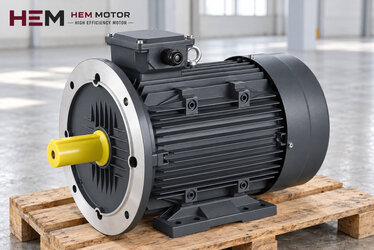
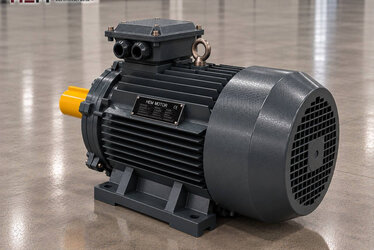
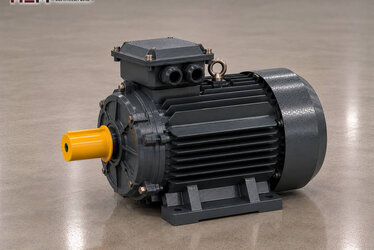
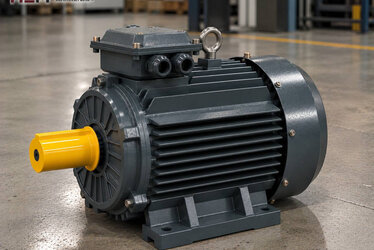
In the direct-drive, outside-the-box layout, the motor flange uses the side wall of the box as its support; here a B5 or B14 flange motor works with a horizontal shaft. Which flange is available for which frame is on the flange-mounted electric motors page; flange and shaft dimensions are confirmed in the order.
What Happens to the Motor When Duct Resistance Changes?
The operating point of an inline centrifugal fan is set on the fan curve according to the total resistance of the duct. If there is a filter in the line, resistance rises over time; with a backward-curved wheel this means a slight reduction in airflow and therefore in power. When the filter is replaced, resistance drops and airflow and power rise again. Measuring the motor current with a clean filter during commissioning is the safest way to see the highest load.
In kitchen exhaust lines, grease builds up on the inside of the duct and the impeller blades get dirty. A dirty impeller loses its balance and the pressure it delivers drops; if the operator raises the speed to maintain airflow, the motor load rises noticeably. Cleaning the impeller and duct in these lines is therefore also important for protecting the motor.
Speed Adjustment: Steps, Pulleys or a Frequency Converter
In commercial buildings the duct fan airflow may be kept different by day and night. In a belt drive the basic adjustment is made with pulleys; in a direct drive a frequency converter is the most flexible way. Our three-phase range is suitable for converter operation. Long running at low speed with full torque is not normal for a duct fan, but if such operation is planned an external fan may be needed; when the cable to the motor is long, fitting a dv/dt or sine filter at the converter output is considered. Simply state these conditions in the order. For more information see our inverter operation page.
If a small building has only a single-phase supply, our 220 V single-phase motor range in the 0.18–5.5 kW range can be considered for low-power duct fans.
Example Motors for Inline Centrifugal Duct Fans
| Fan layout | Typical line | Key selection point | Example HEM model |
|---|---|---|---|
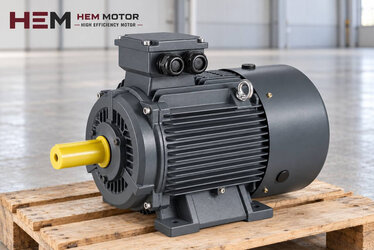
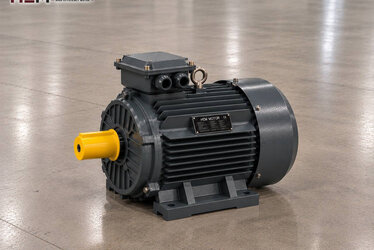
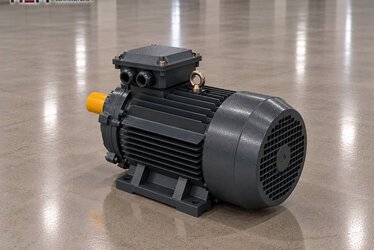
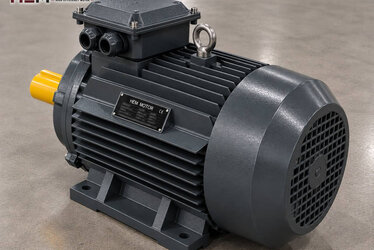
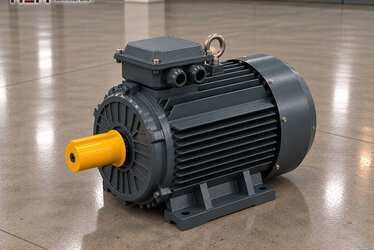
| Direct drive, motor in the air | Office and shop exhaust | Air temperature, frame length | 0.37 kW, 1,340 rpm, 71M2-4 |
| Direct drive, motor outside the box | Kitchen hood line | Flange connection, greasy air | 2.2 kW, 1,450 rpm, 100L1-4 |
| Belt-driven inline fan | Long duct with filters | Pulley ratio, belt load | 4 kW, 1,450 rpm, 112M-4 |
| Large cabinet centrifugal fan | Industrial exhaust line | Acceleration time, bearing load | 11 kW, 1,465 rpm, 160M-4 cast iron |
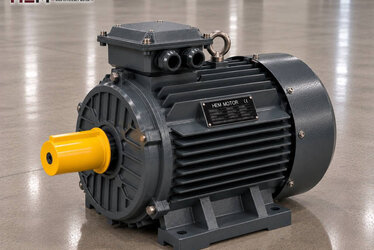
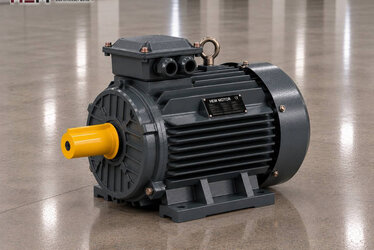
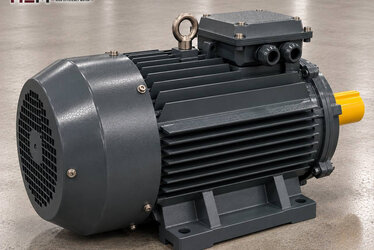
The example models are a starting point for selection; the right motor is determined by the impeller's power demand, impeller speed, drive layout and the conditions where the motor is located.
Send Us Information for a Quotation
For an inline centrifugal duct fan motor, it is enough to send: machine or plant type, required power, impeller or motor speed, supply voltage, mounting type (foot, flange, belt), whether the motor sits in or outside the airstream, and quantity. If you are replacing a motor, add a photo of the old motor's nameplate.
You can find all models with current prices in our electric motor shop; for WhatsApp and phone, use our contact page.
Frequently Asked Questions
Why is an inline centrifugal fan motor more powerful than an axial fan motor?
A centrifugal wheel produces higher pressure at the same airflow, so its shaft power is also higher. Long ducts with filters need this pressure, so the motor is selected larger than that of an axial fan with similar airflow.
Will the motor be overloaded if part of the duct is removed?
With a backward-curved wheel, usually not, if the motor was selected for the peak of the power curve. On forward-curved fans, however, power keeps rising as resistance falls; in that case the motor current should be measured.
Can the motor stay inside the box in a kitchen exhaust?
Greasy, hot air is not a suitable environment for a standard motor. In these lines, fan layouts where the motor is flange-mounted outside the box or separated by a belt are preferred; ambient conditions should be stated in the order.
How should I choose the motor speed for a belt-driven duct fan?
Since impeller speed is set by the pulley ratio, the motor is usually chosen in the 1500 rpm class and the pulleys are calculated accordingly. A very small motor pulley increases belt load, so the pulley diameter should follow the fan maker's recommendation.