English
 Français
 Türkçe
 Español
 Русский

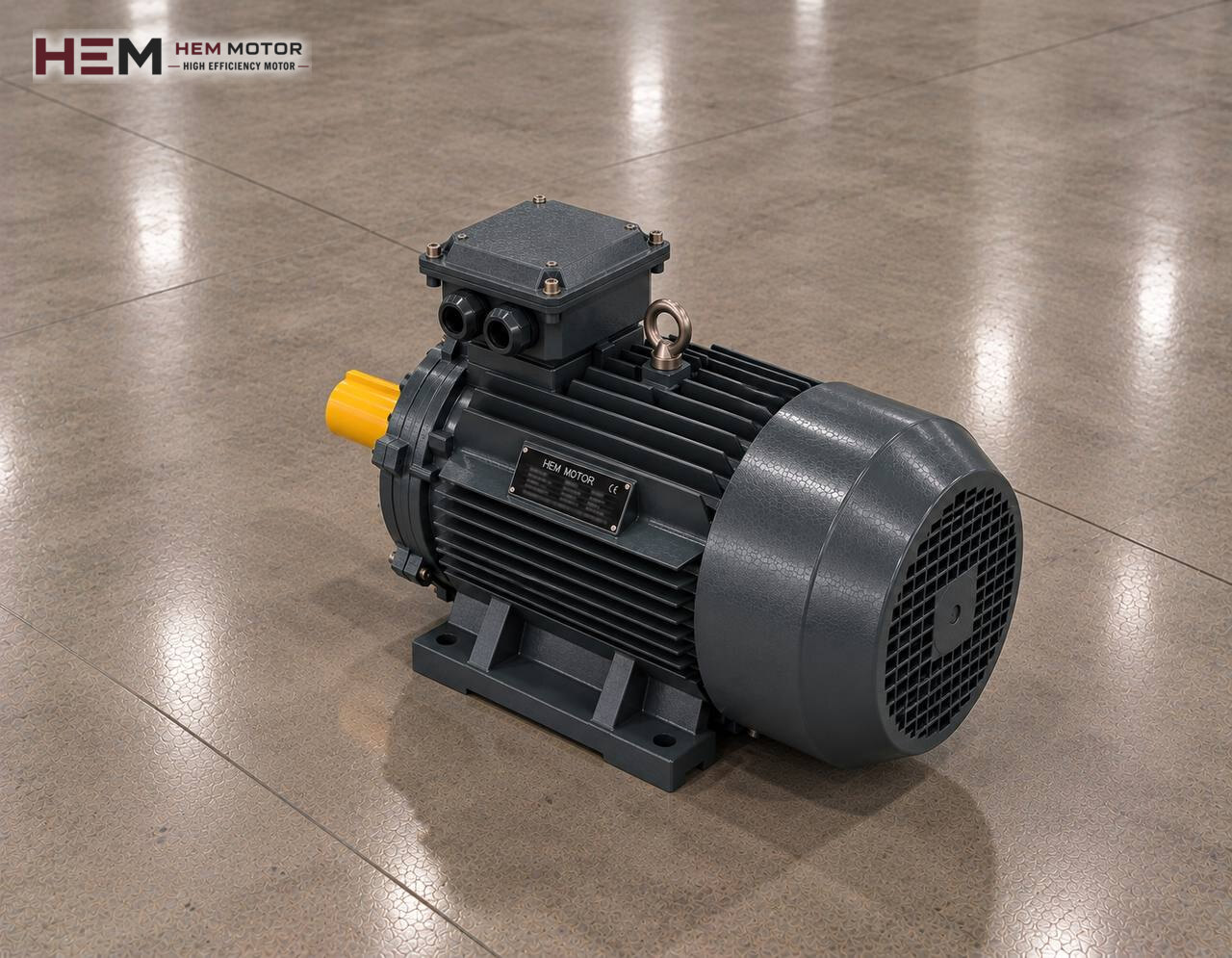
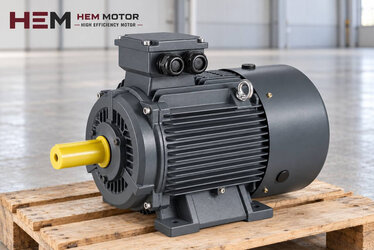
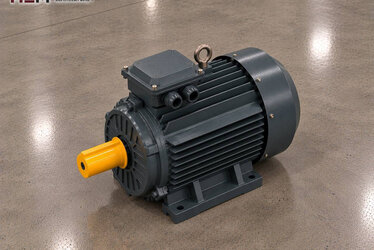
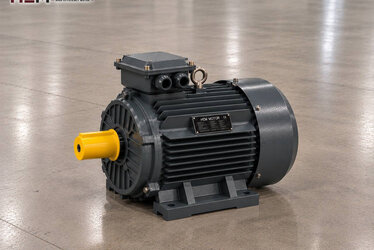
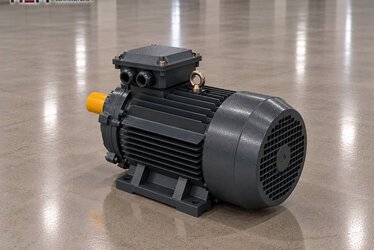
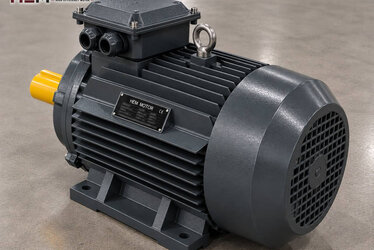
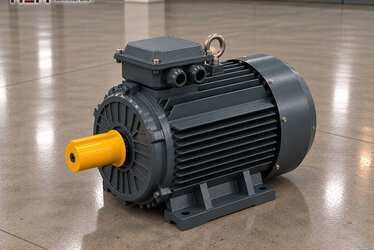
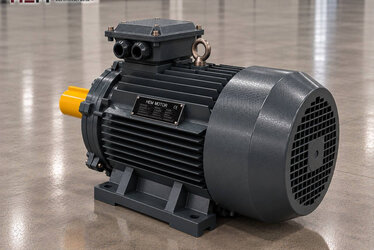
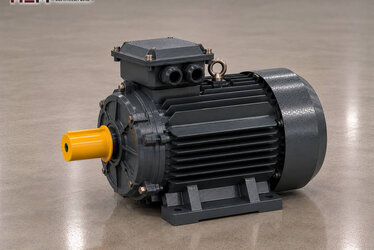
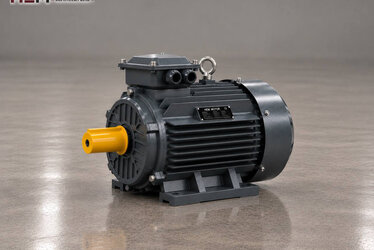
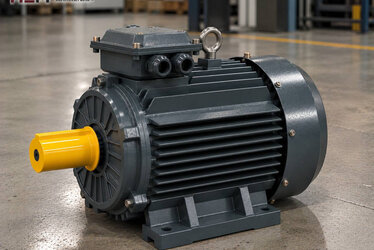
An air handling unit (AHU) filters outdoor and return air inside a casing, heats or cools it, humidifies it when needed and distributes it through the building; the supply and exhaust fans inside the casing are what drive this whole journey. This page focuses on the three-phase asynchronous motor that turns the AHU fan; for an overview of all fan types, see our Fan and Extractor Motors page.

The Resistance the Fan Faces Inside the Unit
Unlike a free-standing fan, an AHU fan also has to fight the components inside its own casing: panel and bag filters, heating and cooling coils, a heat recovery exchanger or wheel, silencers and dampers. Each of these adds a pressure loss to the air, and the total of these losses changes over time.
The biggest variable is the filter. A freshly installed filter lets air through easily; over the months, as it holds dust, its resistance rises. If the fan runs at a fixed speed, airflow drops; in an inverter-driven unit set to constant airflow, the fan speed rises and the power drawn by the motor increases. Motor power is therefore judged not by the operating point with a clean filter but by the dirtiest condition just before the filter is changed. The AHU manufacturer's selection printout usually lists these two conditions separately.
The Motor Sits in the Airstream: Humidity and Temperature After the Coil
In air handling units the motor usually sits inside the casing, right next to the fan and directly in the airflow. The air around the motor therefore depends on where the fan is placed in the unit:
- After the cooling coil: the air is cold and saturated with moisture; condensation is to be expected on the motor surface and in the terminal box.
- After the heating coil: the air is warm and dry; since the motor's cooling air arrives warm, the ambient temperature limit becomes important.
- On the exhaust side: room air carries odours, dust and sometimes oil vapour; the motor's cooling grille and frame fins gradually become coated with dirt.
Every motor in the catalogue has an IP55 enclosure and Class F winding insulation. For motors in a cold, humid airstream, an anti-condensation heater can be added to the order, and a PTC or PT100 sensor to monitor winding temperature. For special air conditions such as hospitals, laboratories or kitchen exhaust, please pass on the AHU manufacturer's requirements at the quotation stage.
From Belt-Driven Scroll Fans to Direct-Coupled Fans
In older units the motor sits on a tensioning rail in a corner of the casing and drives a double-inlet scroll fan via belt and pulleys. The pulley diameters decide the speed at which the fan runs; on the motor side, a 4-pole, 1,500 rpm class model is the most common. Belt tension places a side load on the motor bearing, and dust shed by the belt mixes with the clean air downstream of the filter.
In new units and refurbishment projects, scroll-less fans with the impeller mounted on the motor shaft have become widespread. There is no pulley in this layout; the fan speed is the motor speed and it is adjusted by the inverter. The motor carries the weight of the impeller on its own shaft, so the shaft end dimensions and hub connection must match exactly what the fan manufacturer requires. The details of this arrangement inside the casing are covered on the plenum fan page; what matters here is that, when converting a belt-driven unit to direct drive, the motor power and speed must be recalculated for the fan impeller.
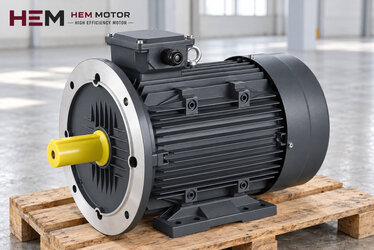
B3 suits a motor on a rail, while B5, B14 or B34/B35 suits a motor hanging on a fan bracket; vertical positions (V1, V3, V5, V6, V15) depend on the frame size. We confirm the flange and shaft dimensions together with you at the order stage. For the meaning of the mounting codes, see the question on mounting arrangements.
Nights, Weekends and Seasons: Airflow Scheduling with an Inverter
An office building's AHU runs close to full airflow during working hours and at much lower airflow at night and at weekends. Since fan power varies roughly with the cube of speed, lowering the speed reduces the motor load noticeably; the exact value depends on the condition of the ducts and filters.
Our three-phase series can be driven by a frequency inverter. As the AHU fan slows down, the shaft torque also drops, so the motor's own cooling is sufficient in most cases; still, if long periods at very low frequency are expected, or if the drive is in a panel far from the unit with a long cable, mention this in your quotation request so that we can discuss an external fan, dv/dt or sine filter. Details are on the inverter-compatible electric motors page.
In regions where outdoor air carries a frost risk in winter, the unit stops the fan when the frost thermostat trips. In such a stop-start arrangement it is worth reviewing the motor's number of starts per hour together with the building automation.
Access Door, Maintenance and Motor Replacement
To reach the AHU motor, the access door of the casing is opened; the motor is often in a narrow section right next to the filter or coil. When choosing a replacement motor, keeping the same frame size as the old one makes it easier to take it out through the door and fit the new one. In maintenance, the cleanliness of the fan cover grille, bearing noise and, in belt drives, pulley alignment are the first points to check.
Running the fan with the door open is dangerous and, because it upsets the pressure balance, also changes the motor current; take measurements with the door closed. For other drives in building services, the HVAC sector electric motors page is a useful complement.
Example Motors by Unit Size
| Unit layout | Fan drive | Point to review | Example motor |
|---|---|---|---|
| Small office or shop AHU | Belt-driven scroll fan | Pulley ratio, belt side load | 2.2 kW 100L1-4 (1,450 rpm) |
| Medium-size comfort AHU | Direct-coupled fan, with inverter | Power with dirty filter, shaft end | 5.5 kW 132S-4 (1,460 rpm) |
| Hospital or laboratory AHU | Direct-coupled, continuous | Condensation, winding sensor | 11 kW 160M-4 (1,465 rpm) |
| High-airflow industrial AHU | Belt-driven or direct-coupled | Ambient temperature, starting method | 15 kW 160L-4 cast iron (1,465 rpm) |
The models in the table are for guidance only; the final choice is made by looking at the fan's operating point, the required speed, the mounting and the conditions inside the unit.
When Requesting a Quote for an AHU Motor
For a quick quotation, tell us the type of AHU or fan machine (belt-driven, direct-coupled), the required motor power (kW) and speed (rpm), the supply voltage, the mounting arrangement, whether the motor sits on the supply or exhaust side, whether an inverter will be used, and the quantity. Sending a photo of the old motor's nameplate shortens the matching process.
You can see the model list and the current price of each motor in our shop, and reach us by WhatsApp or phone about your AHU project.
Frequently Asked Questions
Why does the AHU motor draw more current as the filter gets dirty?
In an inverter-driven unit set to constant airflow, the fan speed rises to overcome the resistance of the dirty filter, and this increases the motor power. Rising current usually signals that it is time to change the filter.
Can I keep the old motor when converting a belt-driven unit to a direct-coupled fan?
Usually not. Once the pulley is gone, the fan runs at motor speed; the motor must be reselected for the speed and power required by the new impeller, and the shaft end must also fit the fan hub.
What should be added to a fan motor placed after the cooling coil?
The risk of condensation is high in cold, humid air. An anti-condensation heater and a PTC winding sensor can be added to the order for a motor in this position; state in your request that the fan sits after the coil.
Does running at low speed at night harm the motor?
With a fan load, torque falls together with speed, so this is usually not a problem. If long periods at very low frequency are planned, the need for an external fan is assessed at the order stage.