English
 Français
 Türkçe
 Español
 Русский
 العربية

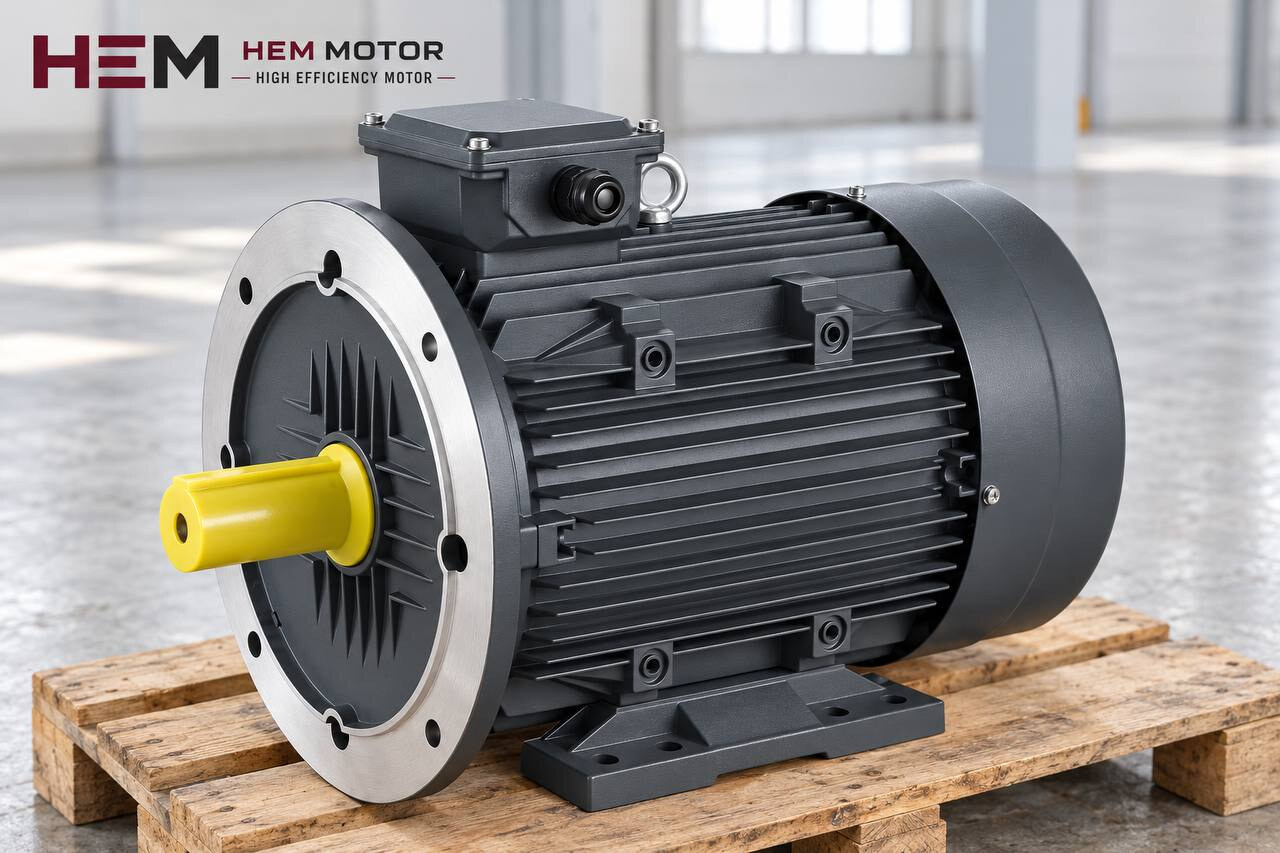
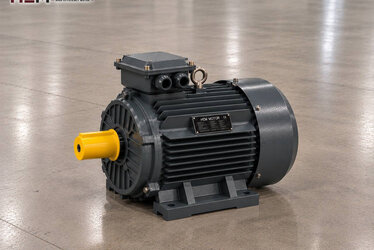
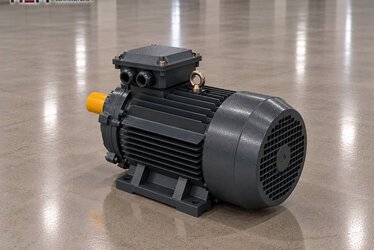
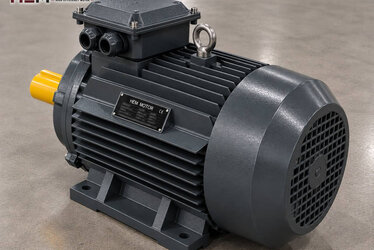
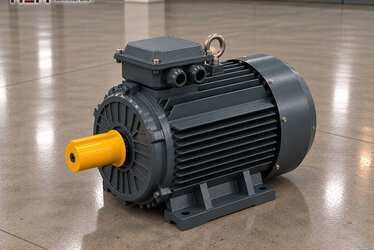
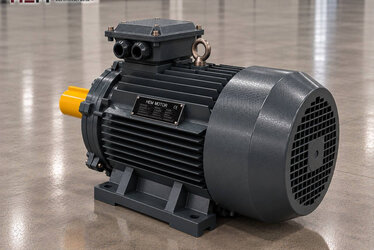
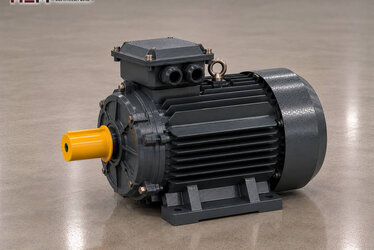
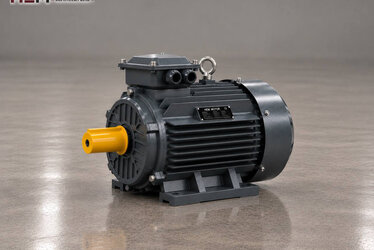
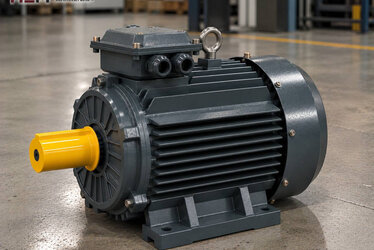
Fuel sets the thermal output of a boiler, but whether that fuel burns cleanly often depends on a small electric motor: the one that turns the burner fan. If this motor stops or runs slower than it should, the burner control box will not allow ignition and the boiler starts to cool down. This page looks at the three-phase induction motor that drives the combustion air fan of industrial burners, from the motor side; an overview of other fan applications is on the Fan and Exhaust Fan Motors page.

The Motor's Only Job in a Burner: Delivering Combustion Air
Inside a burner the fuel line, ignition electrodes, flame sensor, air damper and fan all work together. The electric motor has a single task in this arrangement: to turn the fan wheel at a steady, predictable speed and send air to the combustion head. Fuel quantity, flame supervision and gas train safety are managed by the burner's own control system, not by the motor.
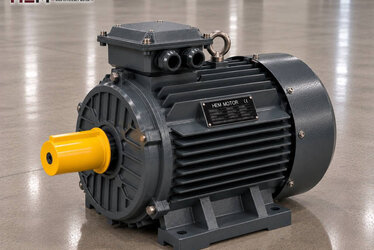
Burner safety is the responsibility of the burner manufacturer and the authorised service. The pressure switch that monitors air pressure, the flame supervision and the valve train are part of the burner; when the motor is replaced, this chain must be checked again. The information on this page is for motor selection, not a burner adjustment instruction. In this arrangement HEM Motor supplies the standard three-phase motor that turns the fan.
Flange Mounting and the 3000 rpm Class
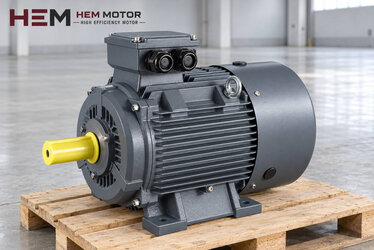
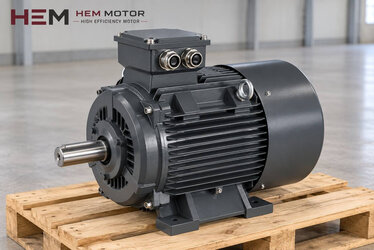
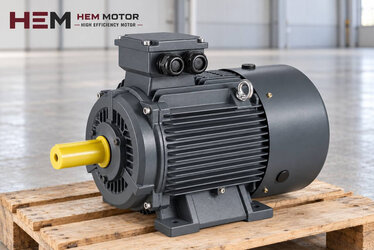
On most monoblock burners the fan wheel is fitted on the end of the motor shaft and the motor is bolted to the burner housing by a flange. Burner motors are therefore usually footless: B5 with a large flange, or B14 with a small flange close to the frame. HEM Motor series offer B3, B5, B14, B34 and B35 mountings, plus vertical V1/V3/V5/V6/V15 variants depending on frame size; flange and shaft dimensions are confirmed with the order. For flange types see the flange-mounted electric motors page.
To get enough air pressure from a compact housing, burner fans mostly run on 2-pole motors, i.e. the 3000 rpm class. A replacement motor should have the same number of poles as the old one. The power absorbed by a fan changes roughly with the cube of speed; this is an approximation that depends on system resistance, but it shows that even a small speed difference can noticeably shift the air quantity and the motor load.
Pre-Purge and Frequent Start-Stop Duty
Before every ignition the burner purges the combustion chamber and the flue with clean air. The fan runs at full speed throughout this pre-purge; ignition only starts afterwards. When the boiler reaches its set temperature the burner stops, and when the temperature drops the cycle begins again. On an on-off or two-stage burner the fan motor may start many times a day.
At every start the motor draws a short burst of high current and the winding heats up. The fan wheel is small but still has inertia; if starts follow each other too closely, heat builds up in the winding. Therefore:
- The thermal relay should be set to the rated current on the motor nameplate, not raised just to keep the burner from tripping.
- Where the boiler switches on and off at short intervals, the number of starts per hour should be stated in the order.
- For users who want to monitor winding temperature, PTC/PT100 winding sensors are an order option.
Low-power burner motors are mostly started direct-on-line; larger fans may use star-delta, a soft starter or an inverter. The method is decided by the burner's control panel.
The Boiler Room Air: Temperature, Dust, Condensation
The burner motor works right in front of the boiler, in the heat radiating from the boiler shell and hot pipes. Our models are IP55 protected with class F insulation; catalogue values are given for a defined ambient temperature. If the boiler room air exceeds +40 °C, or the motor sits close to the boiler door in a hot spot, state this in the order. If temperature is a problem, the room's fresh air inlet should be checked first.
The motor's own cooling fan also draws air from this space. In solid-fuel boilers, fine airborne dust can clog the fan cover grille; cleaning the grille regularly has a direct effect on motor temperature. In heating boilers that run only in winter, moisture can condense inside a motor left idle all summer; an anti-condensation heater is an order option.
A standard IP55 motor is not designed for explosive atmospheres. The protection required by the burner installation is defined by the burner manufacturer's documents; if such a requirement exists, state it in the order. For general ventilation duties the ventilation electric motors page is also useful.
Air Control by Speed on Modulating Burners
Modulating burners vary their output steplessly: as heat demand falls, fuel and air are reduced together. In the traditional arrangement the air quantity is set by the damper angle; the fan runs at full speed and the surplus air is throttled at the damper. In newer arrangements the fan motor is driven by a frequency inverter and part of the air control is done by lowering the speed. The drive then works under the burner's combustion control system.
Our three-phase series are suitable for speed control with a frequency inverter. For long periods at low speed with full torque an external fan may be needed; with long cables a dv/dt or sine filter is considered; these conditions are stated in the order. On a fan load, torque falls with speed, but knowing the drive's minimum operating frequency still makes selection easier. Details: inverter-compatible electric motors.
On a burner where air is controlled by speed, the combustion setting must be checked again by the burner service after a motor change.
Motor by Burner and Boiler Situation
| Burner / boiler situation | Expected from the motor | Watch out for | State in the order |
|---|---|---|---|
| Small monoblock burner, on-off operation | Flange-mounted 2-pole motor suited to frequent starts | Thermal relay setting, number of starts | Flange type (B5/B14) and shaft size; example: 1.1 kW 80M2-2 aluminium |
| Two-stage burner, industrial boiler | Long, stable running at full speed | Damper and pressure switch check after replacement | Power and speed on the nameplate; example: 1.5 kW 90S-2 aluminium |
| Modulating burner, inverter-driven fan | Smooth operation with the drive | Minimum frequency, cable length | Inverter use, filter need; example: 3 kW 100L-2 aluminium |
| Hot, poorly ventilated boiler room | Safe running in a warm space | Whether ambient exceeds +40 °C | Ambient temperature, PTC/PT100 need |
| Seasonal heating boiler | Trouble-free start after a long standstill | Condensation inside the frame | Anti-condensation heater |
| Duoblock burner, separate fan unit | Mounting that suits the fan base | Coupling or belt alignment | Mounting type (B3, B35 etc.) |
The linked models are examples only; the final choice depends on the fan shaft power, the speed and flange of the old motor and the boiler room conditions.
What We Need for a Replacement Order
A burner motor is usually sought after a failure, while the boiler is down. To find the right replacement first time, send us: the machine or boiler the burner serves, the power (kW) and speed (rpm) on the motor nameplate, the site voltage, the mounting type with flange and shaft size, whether an inverter is used, and the quantity. The quickest way is to send a photo of the old motor's nameplate; a photo showing the flange face and shaft also speeds up the dimension check.
All frame and speed options are listed in our buy electric motors section; each model's current price is shown on its own product page. Motors in stock are shipped from our warehouse in Türkiye. If you are unsure about the flange match, write to us.
After fitting, the direction of rotation should be checked with a short run against the arrow on the fan housing; the electrical connection should be made by a qualified electrician and the combustion setting by the burner service.
Frequently Asked Questions
Can a 1500 rpm motor replace a burner motor?
Not recommended. If the fan wheel was designed for the 3000 rpm class, air quantity and pressure will be insufficient at half speed, and the burner may not proceed to ignition because of the air pressure switch. Choose the same number of poles as the old motor.
What is the difference between a B5 and a B14 flange?
A B5 flange has a large diameter and the bolts pass through clearance holes in it; a B14 flange is smaller, close to the frame, with threaded holes. The connection on the burner housing decides which one is needed; choose the same as on the old motor, and we confirm the dimensions with the order.
The motor keeps tripping the thermal relay. Should I buy a larger motor?
First look for the cause: a clogged fan grille, a hot boiler room, phase imbalance, a wrong damper setting or too many starts. A larger power may change the flange and shaft size; send us the situation with a nameplate photo and we will assess it together.
Does the burner need readjusting after a motor change?
It must be checked. Even with a motor of the same speed class, the air quantity can change slightly; it is recommended that the burner service verify the combustion setting with a flue gas measurement.
Does an inverter-driven burner fan need a special motor?
Our three-phase series are suitable for operation with a frequency inverter. State the drive's minimum frequency and the cable length between motor and drive in the order; the need for an external fan or filter is assessed accordingly.