English
 Français
 Türkçe
 Español
 Русский

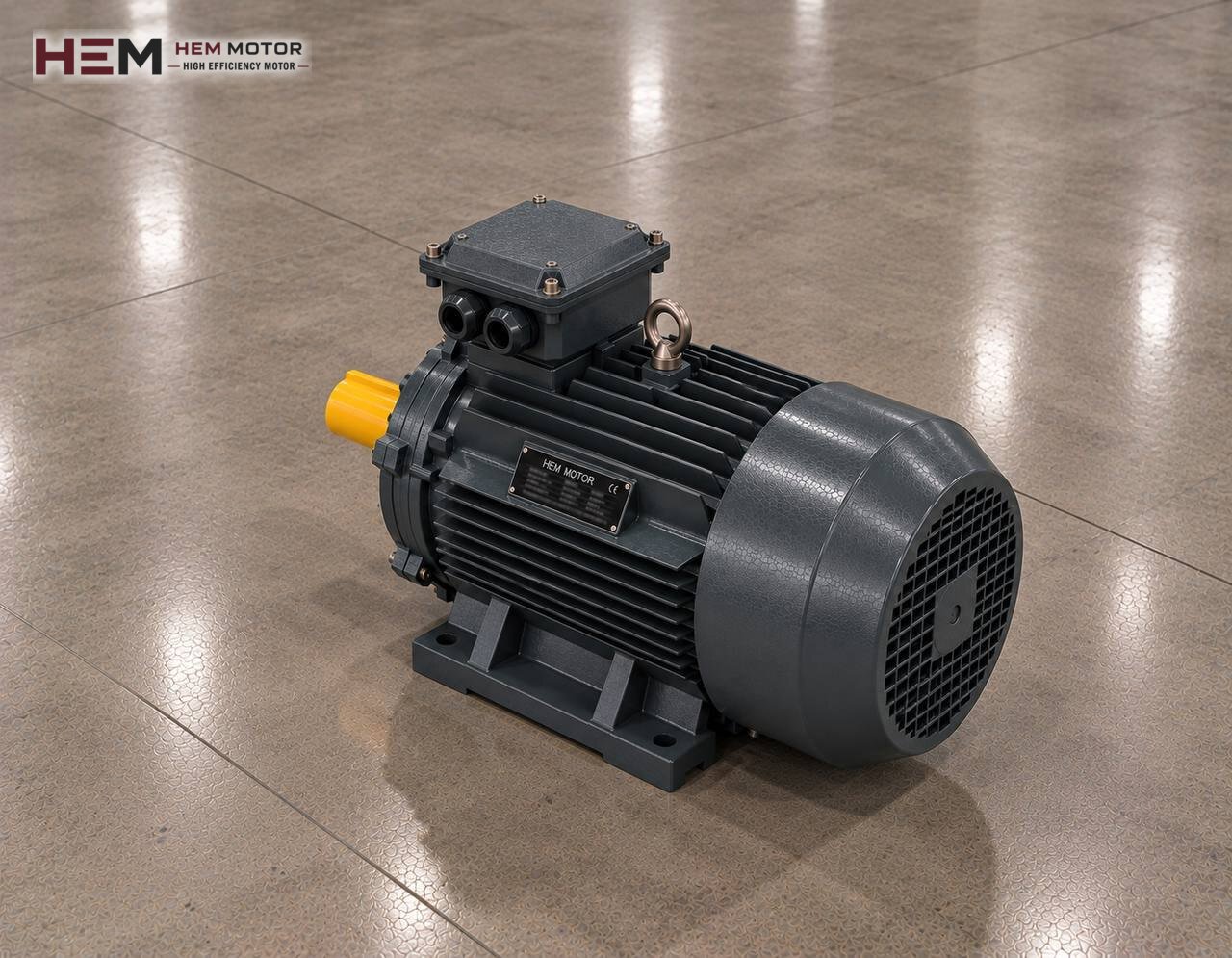
When the butterfly valve at the bottom of the cement silo opens, the only moving part that carries the cement to the weighing hopper is the screw conveyor: a spiral turning inside an inclined tube pushes the powder upward. This page covers only the three-phase motor that turns that spiral; for the mixer, belt and pump drives of the plant, the parent page concrete plant electric motors is the overview.

What does the motor turn inside the screw, and what not?
The motor's only job is to rotate the screw shaft through a gearbox. The spiral takes the cement from the conical silo outlet, advances it along the tube and discharges it into the cement scale above the mixer. When the scale approaches the target weight, the control stops the screw; in the next batch the same cycle starts again.
The other parts of the screw line are outside the motor's task. The butterfly valve at the silo outlet is mostly pneumatic or manual. The aeration pads in the cone work with compressed air and loosen bridged cement. Weighing is done by load cells, and the filter on top of the silo has its own shaking mechanism. If there is a fly ash or microsilica silo, its screws work the same way with their own motors.
Starting with a stopped, full tube
What sets a cement screw apart from an ordinary conveyor is that it almost always starts with a full tube. When weighing ends the screw stops, but the cement inside does not empty; the layer of powder packed between the spiral and the tube waits as resistance in front of the shaft at the next start. After a night or weekend stop this resistance grows, because cement draws moisture from the air, forms lumps and settles in the tube.
For this reason the breakaway torque at start matters more than the continuous running load when choosing the motor. Screw diameter, length, inclination and hourly capacity are the data that set the power, but the screw manufacturer calculates them. Whether the aeration at the silo outlet works also changes the starting load; if the motor runs hot, this air system should be checked first.
Which information gives you the power and speed?
The most reliable starting point is the motor power and gearbox ratio given by the screw manufacturer. If the motor on an existing screw is being replaced, the power, speed and current on the old nameplate show the range in which the new motor should be sought. The screw shaft speed is low; that low speed comes from the gearbox, while the motor itself is usually 4-pole, i.e. in the 1500 rpm class.
Changing the speed class changes the capacity of the screw. With a 6-pole motor and the same gearbox the screw slows down and the scale fills later; moving to 2-pole strains the gearbox input. If more capacity is wanted, that decision should be made with the screw manufacturer, not with the motor. No single kW value can be chosen as "suitable for a cement screw"; in the same plant a short, nearly horizontal screw and a long, steep one need very different power.
| Screw condition | Risk for the motor | Data requested in the quote |
|---|---|---|
| Short tube, low inclination | Brief strain when starting full | Screw length, old motor nameplate |
| Long, steep tube | High starting torque due to inclination | Inclination angle, gearbox ratio |
| Screw running after a long stop | Breaking loose cement settled by moisture | Stop duration, aeration arrangement |
| Screw with coarse/fine feeding | Long running at low speed | Inverter use, need for a separate fan |
| Fly ash or admixture screw | Different flow resistance per material | Material type, capacity |
The conditions in the table are examples; the final choice is confirmed with the screw data, the required speed and the mounting dimensions.
Gearbox flange, shaft and frame size
The most common arrangement on cement screws is a gearbox fitted to the upper end of the screw with the motor seated on its input flange. So the first piece of information is the motor's IEC frame number. The frame number alone is not enough: flange type (B5 large flange or B14 small flange), flange diameter, shaft diameter and length, key size and, if needed, foot hole spacing are compared with the old motor. If a foot-mounted motor is connected with a coupling, the shaft size on the coupling side joins the list.
Because the screw is inclined, the motor also often runs at a non-horizontal angle; in some designs it sits close to vertical. HEM motors are offered in foot, flange, foot-and-flange and vertical mounting arrangements depending on frame size; see the mounting options question for the arrangements and the frame size table for dimensions. The electrical side is compared too: power, speed, voltage and connection must match the old nameplate. For the gearbox side the electric motors for gearboxes page helps, and for screw drives in general the screw conveyor motor page.
Dust, moisture and winter at the silo base
The screw motor stands in one of the dustiest spots of the plant. Small leaks at the silo filter or at tube joints leave a thin layer of cement on the motor housing. This layer hardens with moisture, covers the fins and reduces cooling; regular cleaning of the fan cover and housing comes first in screw motor maintenance. The IP55 protection of HEM motors is against dust and splashing water; a simple cover plate that keeps cement from piling on the motor is still useful.
Catalogue values apply to an ambient temperature of −15 to +40 degrees Celsius and an altitude of 1000 m. If winter mornings at open plants go below that lower limit, or the site is above 1000 m, state it in the order. During long stops condensation can form inside the housing; an anti-condensation heater and a PTC winding sensor are order options.
Coarse-fine feeding, frequent starts and the inverter
In plants needing precise weighing, the screw feeds most of the batch fast and the last part slowly. These two stages are made either with two separate screws or by lowering the speed of one screw with a frequency inverter. With an inverter the motor runs for long periods at low speed with a full tube; its own fan may not give enough air at that speed, and a separately powered fan is then considered. If the cable between inverter and motor is long, a dv/dt or sine filter at the output is considered. Details are on the inverter compatible electric motors page.
On screws without an inverter the motor starts direct-on-line or star-delta and accelerates again for every batch. If the number of batches per hour is high, the winding temperature rises; in that case the PTC sensor and the setting of the motor protection relay should be considered together. Since starting torque drops in star connection, star-delta starting may be insufficient with a full tube; the starting method should follow the screw manufacturer's recommendation.
What to send when replacing an old screw motor
When the motor fails the plant stops, so sending the right information in the first message saves time. You can send a clear photo of the old motor's nameplate and photos of the flange and shaft connecting it to the gearbox via WhatsApp, following the steps on the send your motor nameplate page. The numbers are on the contact page.
- Machine information: cement, fly ash or admixture screw, and tube diameter/length
- Power (kW) and speed (rpm) on the old motor nameplate
- Site voltage and connection (star/delta)
- Mounting type: B5, B14, B3 or foot-and-flange; flange diameter and shaft diameter
- Starting method: direct, star-delta, soft starter or inverter
- Ambient conditions: open area, winter temperature, altitude
- PTC sensor or anti-condensation heater request, and quantity
Motor groups to look at in the shop
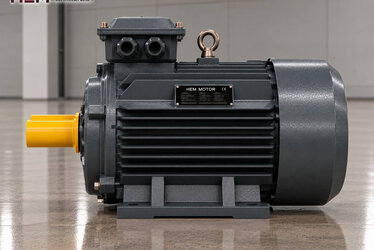
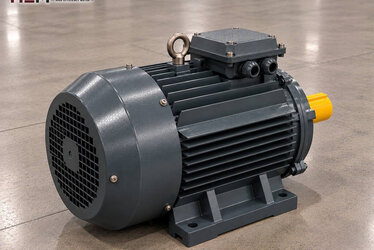
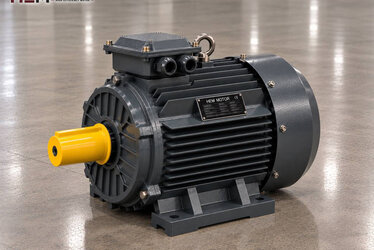
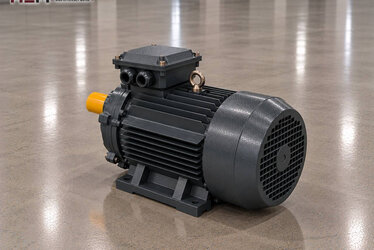
Because screw gearboxes are mostly calculated for a 1500 rpm input, 4-pole motors come to the fore. In a dusty, open plant environment cast iron frame electric motors are often preferred; for smaller screws aluminium frame models can also be considered. As examples you can look at 5.5 kW cast iron 132S-4 (1,460 rpm), 7.5 kW cast iron 132M-4 (1,460 rpm), 15 kW cast iron 160L-4 (1,465 rpm) and 18.5 kW cast iron 180M-4 (1,470 rpm). These models are examples; their suitability for your screw is confirmed separately. All powers are listed on the buy electric motors page.
Frequently Asked Questions
The screw will not start on the first batch in the morning; is the motor too weak?
Usually the problem is cement that settled in the tube overnight. The silo aeration and lumps in the tube are checked first; increasing motor power may not solve it.
Can I replace the screw motor with a 6-pole motor?
With the same gearbox the screw slows down and the scale takes longer to fill. The speed class should stay as on the old nameplate, and any change should be discussed with the screw manufacturer.
Is an inverter required for coarse and fine feeding?
It is not required; some plants work with two separate screws or on/off control. If an inverter is used, the long running time at low speed should be stated in the order.
Can the same motor be used for a fly ash screw?
The mechanical connection may be the same, but the material's flow resistance differs. Power and speed are set from that screw's own data or the old motor nameplate.
Does a screw motor need PTC?
On screws making many full starts per hour, monitoring winding temperature is useful. The PTC sensor is an order option and is connected to the relay in the control panel.