English
 Français
 Türkçe
 Español
 Русский

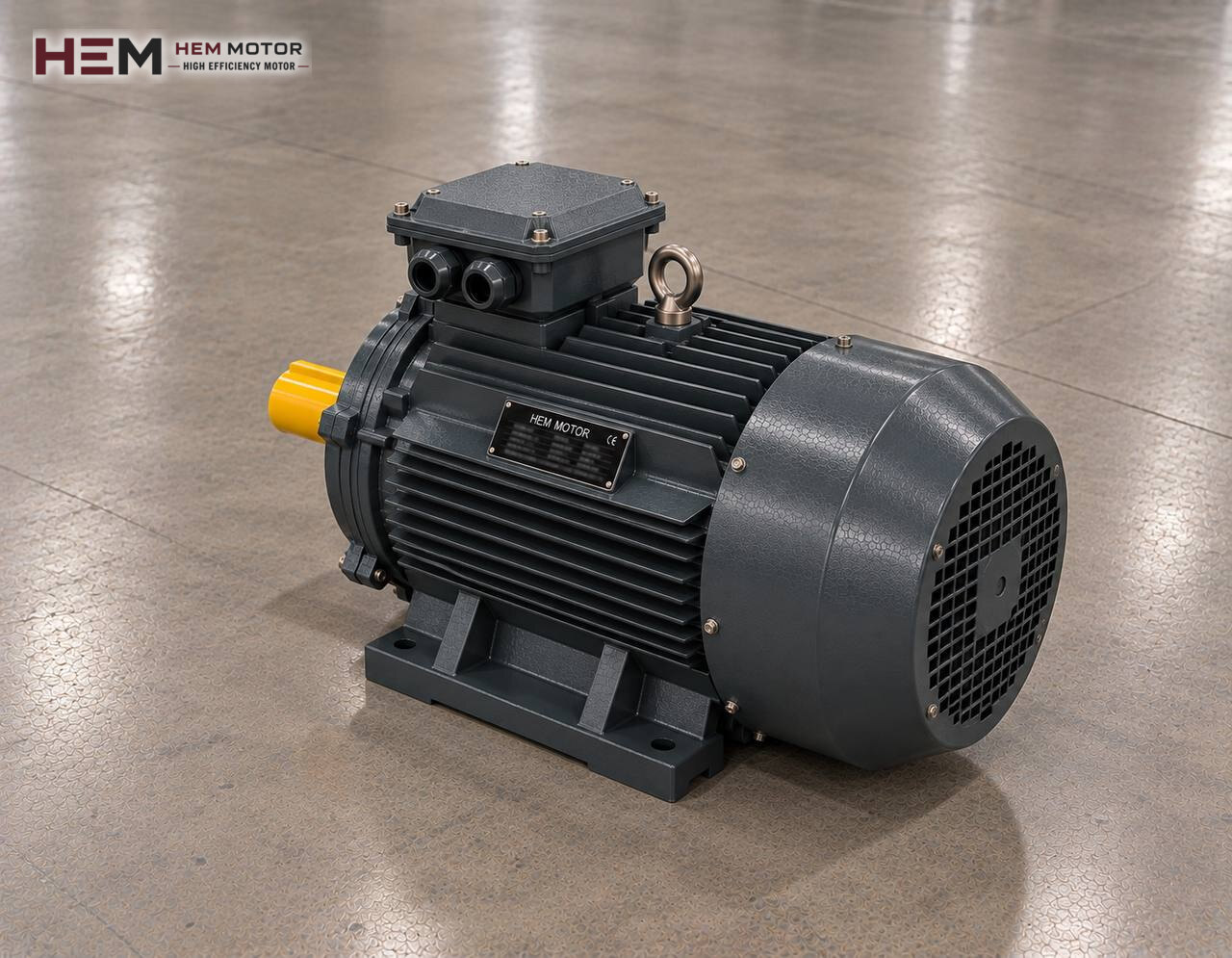
An edge banding machine is a furniture line machine that glues PVC, ABS, melamine or veneer tape onto the open edge of a sized chipboard, MDF or plywood part and trims away the excess. For an overview of the section see the woodworking machine electric motors page. This page explains which of the many small drives inside an edge bander run on a standard three-phase motor and what is checked when choosing one.

The stations a panel passes on the banding line
At the machine infeed the panel sits on a track chain or belt; pressure wheels above press it onto the chain and carry it along the line at constant speed. In turn, the pre-milling unit trues the edge, the glue unit applies hot-melt glue to the edge, the tape is pressed on by a pressure roller, the guillotine cuts the tape, the end trimming saws remove the overhang at front and rear, rough and fine trimming cutters clean the top and bottom excess, and the corner rounding, scraper and buffing units do the finishing.
Each of these stations has its own motor. However, not all of them are of the same class; this distinction is the point most often confused when looking for a replacement motor.
High-speed unit motors versus standard motors
Pre-milling, end trimming, rough-fine trimming and corner rounding units usually use compact special motors fed at high frequency, such as 200 Hz, and turning far above mains speed. These motors provide the speed the small-diameter tool needs for a clean surface and are designed specifically for the machine maker's unit. Such high-speed unit motors are not included in HEM Motor's 2026 catalogue; for them, the machine manufacturer's spare part should be used.
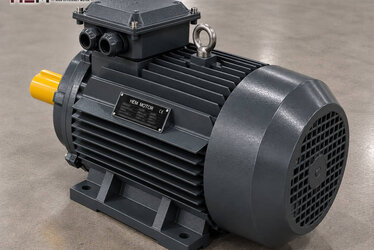
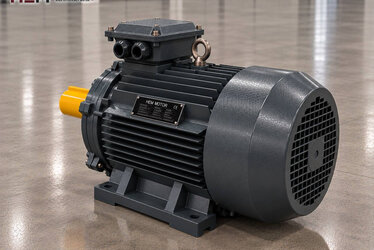
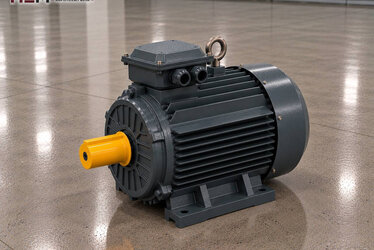
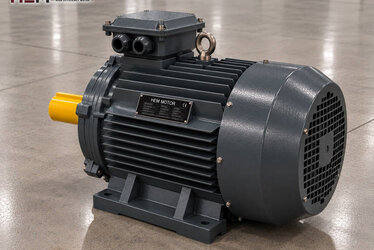
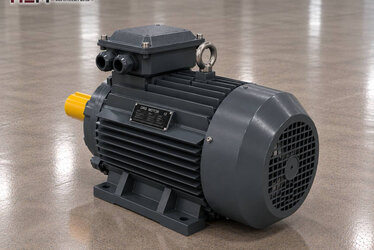
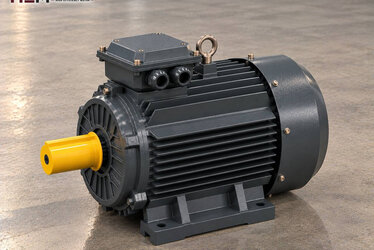
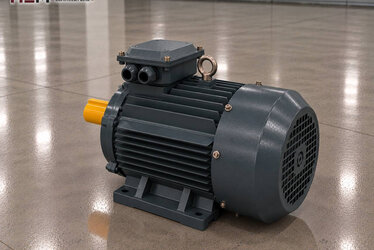
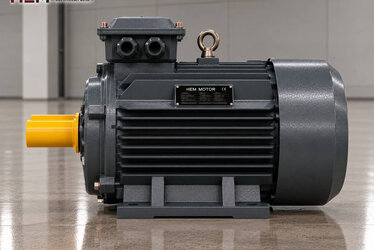
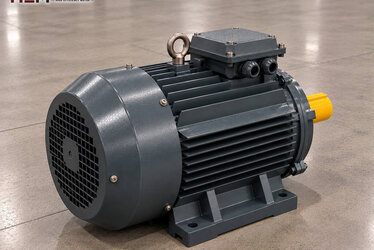
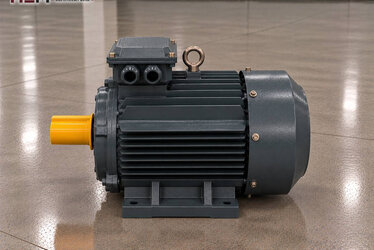
The standard three-phase asynchronous motor, by contrast, belongs mainly to drives running at mains frequency: the geared motor pulling the feed chain, the chip and dust extraction fan attached to the machine, on some models the spreading roller in the glue pot, and the pump of devices that need compressed air or vacuum. These drives can be replaced directly, both in new machine building and in the maintenance of an older machine.
Feed chain: constant speed and frequent starts
Much of banding quality depends on the feed speed staying constant. If speed fluctuates, glue thickness changes, the pressure roller cannot press the tape evenly and the end trim drifts out of size. The feed motor turns the chain sprocket through a gearbox; the load rises with the number of panels on the chain and the tightness of the pressure wheels.
On workshop machines the feed stops and starts often during the day. The motor should therefore suit the starting frequency, and thermal protection should be set accordingly. On more advanced machines the feed speed is changed with a frequency converter according to tape thickness. For selecting a geared motor, the electric motors for reducers page will guide you.
Example standard motors on an edge bander
| Drive | Motor's task | What to check | Example HEM model |
|---|---|---|---|
| Glue spreading roller | Continuous rotation at very low speed through a gearbox | Gear ratio, proximity to the hot glue pot | 71M2-4 aluminium — 0.37 kW, 1,340 rpm |
| Feed chain | Transport at constant speed, frequent stop-start | Line length, feed speed, starting frequency | 90S-4 aluminium — 1.1 kW, 1,445 rpm |
| Heavy-line feed chain | Loaded transport on a long line | Panel weight, chain length | 100L1-4 aluminium — 2.2 kW, 1,450 rpm |
| Machine-mounted chip extraction fan | Continuously running fan load | Number of extraction hoods, duct length | 112M-2 aluminium — 4 kW, 2,905 rpm |
The models in the table are examples. The final motor is determined by the machine's actual load, required speed, mounting and operating conditions.
Heat, glue fumes and maintenance
The glue pot works with hot-melt glue and heats the surrounding air. Motors next to the pot therefore run in a warmer environment than normal workshop temperature; keeping the motor's cooling air unobstructed and stating the ambient temperature in the order are important. Glue drops and fine MDF dust can combine into a sticky layer on the fan cover, which should be cleaned periodically.
On the mounting side, the feed motor is usually flange-connected to the gearbox; fan motors may be foot or flange mounted. HEM's series offer B3, B5, B14, B34, B35 and vertical V1/V3/V5/V6/V15 arrangements depending on frame; flange and shaft size are checked at ordering so that they match the gearbox. A PTC or PT100 sensor for monitoring winding temperature is an order option.
When feeding the feed motor from a drive, an external cooling fan should be considered if long full-load operation at low speed is expected, and a dv/dt or sine filter if the cable between drive and motor is long; these conditions are stated in the order.
On small workshop machines with single-phase supply, the 0.18–5.5 kW single-phase electric motor series can be considered for auxiliary drives.
Information for a replacement motor request
State which station's motor you want to replace (feed, glue, extraction fan, etc.) and the machine make and model. Then write the motor's power (kW) and speed (rpm), the supply voltage, the mounting (foot or flanged to a gearbox), the gearbox information and the number of units required. If you see a high frequency such as 200 Hz or any value other than 50 Hz on the nameplate, be sure to include it.
Sending a nameplate photo is the quickest route; how to do it is in the article on finding an equivalent from the motor nameplate. Use the shop page for priced models and the contact page for WhatsApp and phone.
Frequently Asked Questions
Can I get the trimming unit motor of my edge bander from HEM?
The high-frequency special motors in the trimming, end cutting and corner rounding units are not included in HEM Motor's 2026 catalogue. A spare part from the machine manufacturer is needed for these motors.
Tape ends are not cut cleanly — could the feed motor be the cause?
Fluctuations in feed speed can shift the end trim dimension. Chain tension, gearbox backlash and the motor's operating current should be checked together.
Why does the motor next to the glue pot heat up quickly?
The pot heats the surrounding air and the motor tries to cool itself with warmer air. The cooling air path must be kept clear and the glue-dust build-up on the fan cover must be cleaned.
What is needed to change the feed speed?
The feed motor can be driven by a frequency converter. If long periods at low speed are planned, this should be stated in the order.