English
 Français
 Türkçe
 Español
 Русский

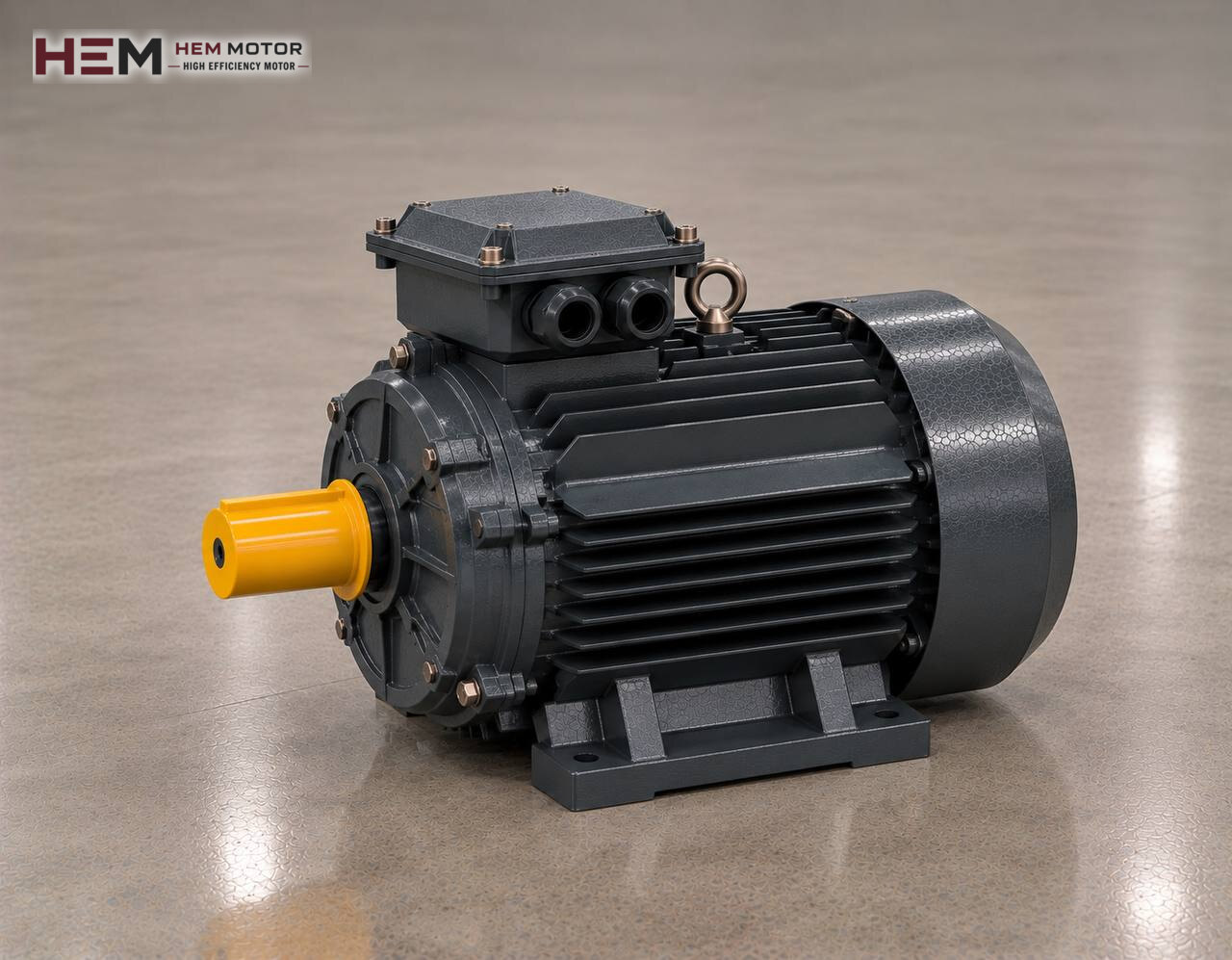
A sanding machine smooths a wood or MDF surface before paint, varnish or lacquer, removing knife marks and differences in thickness. It comes in different sizes, from the small disc and belt sanders of a workshop to the multi-head wide-belt calibrating machines of a furniture factory; in all of them there is a motor that turns or moves an abrasive surface. This page deals with those motors; for the other woodworking machines, see our Woodworking Machine Electric Motors page.

Types of Sander and How the Motor Is Connected
On a disc sander the abrasive paper is glued to a cast disc fitted directly on the motor shaft. Because there is no belt in between, the bore of the disc hub must match the diameter, length and keyed design of the motor shaft exactly; the disc is carried by the motor's bearings.
On a workshop belt sander an endless belt is tensioned between two drums; the drive drum usually sits on the motor shaft. Belt speed comes from drum diameter multiplied by motor speed, so if the motor speed changes, the surface speed changes too.
On a wide-belt calibrating sander the panel is carried by a conveyor belt under one or more sanding heads spanning its full width. Each head has its own main motor, which turns the contact roller by belt and pulley. In addition, the feed belt and table height are driven by separate, small drives.
On drum and brush sanders abrasive drums or flap brushes reach into the recesses of profiled parts; these units are usually turned by lower-power motors than the main belt head.
Load Character: Friction, Pressure and Belt Tension
In sanding, material is not removed as chips as in knife cutting, but as fine dust by friction. The power drawn by the motor depends on how hard the abrasive is pressed onto the part, the grit of the paper and the width of the contact area. The first head, calibrating with coarse grit, is heavily loaded; the head giving the final finish with fine grit runs lighter.
This load contains no sudden shocks as on a planer or saw; it behaves like a continuous load that stays at the same level for long periods. Belt tension and drum bearings add a constant friction. Worn, dull paper needs more pressure to remove the same amount of material and so slowly raises the current; that is the cause of a large share of overload trips.
Speed, Belt Speed and Starting
What a sander needs is a given surface speed. On disc and small belt sanders this is mostly obtained by connecting a 2- or 4-pole motor directly. On wide-belt machines the contact roller is belt-driven, so the pulley ratio sets the belt speed; some models offer a two-speed belt option. Keeping the same number of poles when replacing the old motor means keeping the machine's design speed.
The heavy contact roller and pulleys lengthen starting. On multi-head machines, starting the heads one after another with a short wait in between eases the load on the supply; star-delta starting is common on large head motors. This requires the motor to be wound to run in delta on a 400 V supply; in our range, that means the models whose nameplate reads 400/690 V, i.e. 4 kW and above.
A sanding roller keeps turning on its inertia for a long time after being stopped. If a quick stop is needed, the machine's own mechanical brake or an electronic brake added to the panel is used. Brake motors are not part of HEM Motor's 2026 catalogue.
Fine Dust and Motor Cooling
In a woodworking shop, the dust that hangs longest in the air comes from sanding. This flour-like dust sticks to the motor's fan cowl and cooling fins and, as a thin layer, makes it harder to carry heat away. The IP55 enclosure of our motors keeps dust away from the windings, but a dust layer building up on the outer surface does not clean itself. A healthy extraction line, regular blowing of the motor compartment and an open fan cowl grille are therefore even more important on sanders than on planers or saws.
The filter and silo areas where sanding dust is collected are classified as explosive dust zones in some plants. A standard motor is not designed for such zones; if such an environment applies, state it clearly in the order.
Feed Belt, Table and Single-Phase Option
On wide-belt machines the feed belt carries the panel under the heads at a constant speed. This drive usually consists of a four-pole motor and a gearbox, and its speed can be set by a frequency converter. Our three-phase range is suitable for inverter drive; on a feed motor that will run loaded for long periods at low speed an external cooling fan, and with remote drives a cable filter, may come into question. Writing this information to us when you request a quotation is enough.
The table lifting motor positions the table with screws according to panel thickness; it runs little and is low in power. Hobby and small workshop disc-and-belt combination sanders, on the other hand, usually run on 230 V; for these, HEM Motor's separate single-phase electric motor range covering 0.18–5.5 kW can be considered.
Example Motors for a Sanding Machine
| Machine or head | Connection | Value to check | Example HEM model |
|---|---|---|---|
| Disc sander | Disc on motor shaft | Shaft diameter and key, disc weight | 2.2 kW 100L1-4 (1,450 rpm) |
| Workshop belt sander | Drum on motor shaft | Belt speed, drum diameter | 3 kW 100L-2 (2,895 rpm) |
| Wide-belt calibrating head | Belt and pulley | Grit number, head position, starting | 11 kW 160M-4 (1,465 rpm) |
| Feed belt | Gearbox | Feed speed, inverter | 1.5 kW 90L-4 (1,445 rpm) |
The models are a pointer; the suitable motor is determined by weighing together the machine's sanding load, the required belt speed, the connection type and the dust conditions in the workshop. Your machine's nameplate is always the first reference.
Quotation for a Sanding Machine Motor
For a quotation, send us the machine type (disc, belt, wide-belt or brush), the job of the motor to be replaced, its power and speed, the supply voltage, the mounting type and the quantity. Because shaft size is critical on directly mounted discs and drums, add a photo of the shaft together with the old motor's nameplate; our send your motor nameplate article shows the way.
Our models with prices are in the shop section; for WhatsApp and phone details, see the contact page.
Frequently Asked Questions
My sander trips the overload often; is the motor too small?
First check whether the sanding paper is worn, the pressure setting, and whether the fan cowl is covered in dust. If these are fine, compare the current you measure with the nameplate value.
What should I watch for when replacing the motor on a disc sander?
Because the disc fits directly on the shaft, the new motor's shaft dimensions and keyway must match the old one. State the mounting type and flange size in the order as well.
Can I use an inverter to change the belt speed?
Yes, our three-phase motors can run on a frequency converter. But do not go outside the speed range the machine maker allows for the belt and drum; report long running at low speed in the order.
Is it a problem to start all motors at once on a multi-head machine?
Since starting currents add up, it can strain the supply. Bringing the heads in a few seconds apart and using star-delta on large motors spreads this load.