English
 Français
 Türkçe
 Español
 Русский

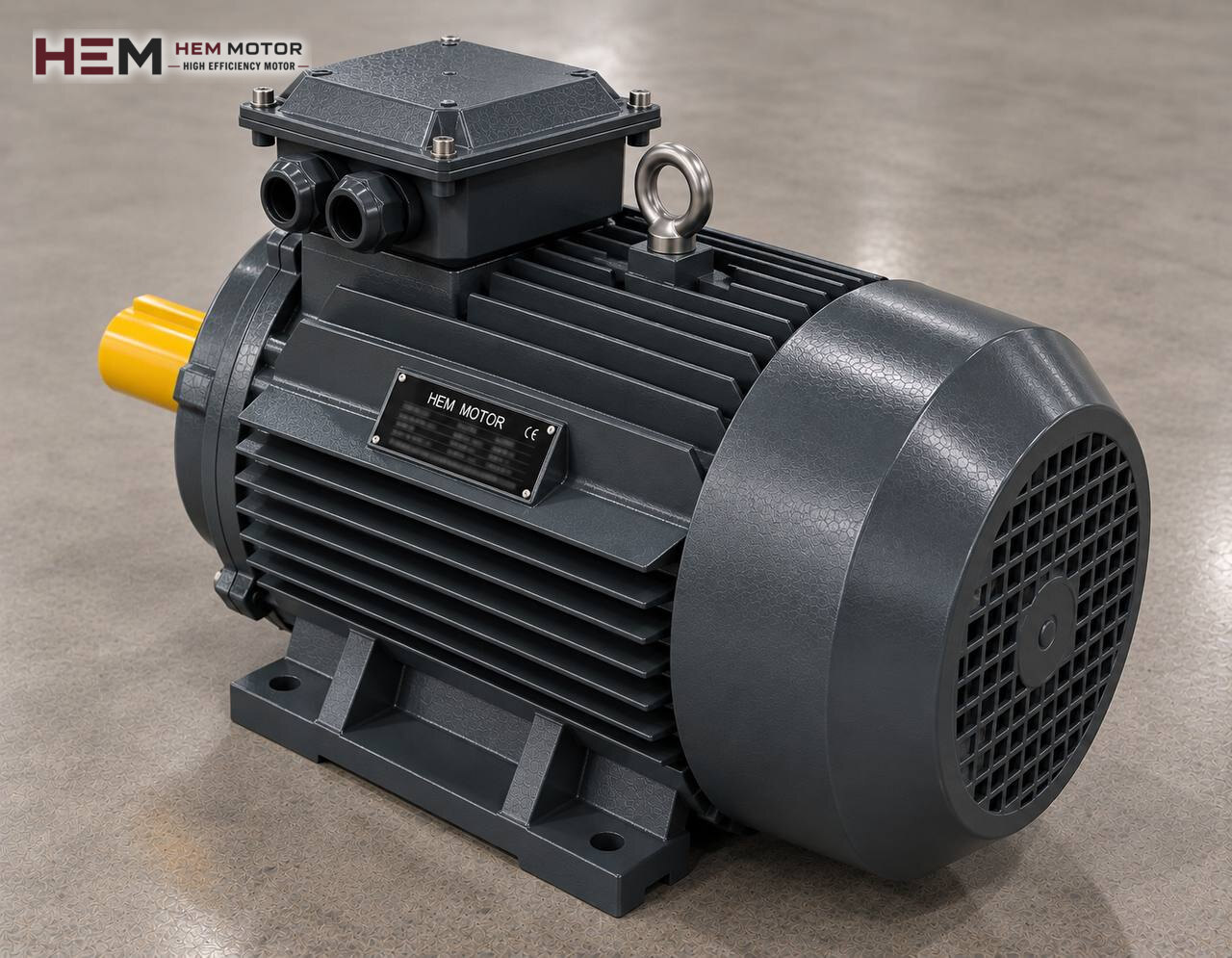
Wood spindle moulders and CNC routers cut grooves, profiles, carvings and shapes in solid wood, MDF, chipboard or plywood with a rotating tool. For the motor needs of the other machines in the workshop, see woodworking machine electric motors. Here we separate the places where a standard three-phase asynchronous motor really does the work around a moulder or router from the places where it does not.

The difference between a conventional moulder and a CNC router
On a conventional wood moulder (table or shaper moulder) a vertical spindle rises from the centre of the table and the operator feeds the workpiece against a fence into the cutter. The motor turning the spindle usually sits under the table and is connected to the spindle by belt and pulleys. Changing pulley steps gives several spindle speeds.
A CNC router, by contrast, holds the workpiece still; the head carrying the tool moves on a gantry in three or more axes. The electro-spindle that turns the tool is a high-speed unit combining motor and tool holder and runs on its own drive. This difference decides on which machine the standard motor is the main drive and on which it is an auxiliary drive.
Where the standard motor fits on a router, and its limit
A router spindle reaches tens of thousands of revolutions per minute for a clean surface on wood; this speed comes from the high frequency supplied by its drive. The axes that position the gantry and head are driven by servo or stepper motors. High-speed spindle motors, servo and stepper motors are not included in HEM Motor's 2026 catalogue; for faults or replacement, contact the machine manufacturer or a spindle service.
The rest of the router, however, runs on ordinary industrial motors. The vacuum pump that holds the board on the table, the extraction fan that takes chips from the head, a hydraulic or pneumatic unit for part pushers or lifting on some machines, and cooling circuits belong to this group. This is where the standard motor really contributes.
Motor load on a conventional moulder spindle
On a table moulder, every time the profile cutter bites the wood the motor sees a short, impact-like load. The cutter block and pulley form a heavy rotating mass; at start-up this mass must be accelerated, and when stopping it keeps turning for a while. Many machines therefore have a braking arrangement. The brake is the machine's safety equipment, not the motor's, and depends on the machine builder's design.
Spindle speed is usually obtained with a 2-pole motor of around 3,000 rpm plus the pulley ratio. When replacing an old motor, keeping the same number of poles gives the same cutting speed without touching the pulleys. Where a small workshop moulder only has a 220 V supply, the single-phase electric motor option can also be considered; the single-phase series covers 0.18–5.5 kW.
Vacuum table and chip extraction
A router's vacuum table holds the sheet by suction through hundreds of small holes. On large panels or porous MDF, air leakage increases and the pump runs close to full capacity all the time. The vacuum pump motor is therefore a drive that runs for long uninterrupted hours and is chosen by the power and speed given by the pump manufacturer. There is also a separate vacuum pump sub-page for pump details.
The chip extraction fan draws fine dust and coarse chips from the hood at the head. The fan impeller is usually mounted directly on the motor shaft. The workshop's central extraction system is the subject of the separate chip collection page in the woodworking section.
Example motors by drive
| Drive | Motor's job | Value to check | Example HEM model |
|---|---|---|---|
| Table moulder spindle | Turning the profile cutter by belt | Spindle speed, pulley ratio, brake arrangement | 112M-2 aluminium — 4 kW, 2,905 rpm |
| Router vacuum pump | Holding the sheet on the table by continuous suction | Pump manufacturer's power and speed | 132M-4 cast iron — 7.5 kW, 1,460 rpm |
| Head chip extraction fan | Drawing dust and chips from the hood | Fan diameter, airflow, direct coupling | 100L-2 aluminium — 3 kW, 2,895 rpm |
| Hydraulic pusher / lifter | Feeding the cylinder pump | Flow, pressure, cycle time | 90L-4 aluminium — 1.5 kW, 1,445 rpm |
These models are examples only. Which motor to fit is settled by the machine's actual load, required speed, connection method and workshop conditions.
Connection, drive and workshop dust
On a moulder spindle the motor is usually foot or foot-flange mounted; the vacuum pump and fan often sit on a flange. HEM series offer B3, B5, B14, B34, B35 and vertical V1/V3/V5/V6/V15 arrangements depending on frame size; shaft end and flange size are checked at ordering. Details are in the mounting arrangements question.
Workshops that want to vary vacuum or extraction flow with the job can run these motors on a frequency converter. If the motor will stay loaded at low speed for long periods, an additional cooling fan is needed, and if the distance between panel and motor is large, a dv/dt or sine filter comes into question; it is enough to state this plan with the order. Fine MDF dust sticks to the fan cover and fins and weakens cooling. An IP55 frame protects against dust but does not stop it from building up outside; regular cleaning is decisive for motor life. A PTC or PT100 winding sensor is an order option.
Information to share in a motor request
For a fast and accurate quote, tell us the machine type (table moulder, CNC router), which drive the motor serves, the required power (kW) and speed (rpm), supply voltage, mounting type and quantity. For belt drives the shaft diameter, and for pump-mounted motors the flange type, are also useful.
Sending a photo of the existing motor's nameplate is often the shortest route: send a motor nameplate, we find the equivalent. Models and prices are on the buy electric motors page; for WhatsApp and phone see the contact page.
Frequently Asked Questions
Can I replace my CNC router's electro-spindle with a standard motor?
No. The electro-spindle forms a unit with its tool clamping and high-frequency drive; a standard asynchronous motor is not suited to these speeds or this connection. Such spindle motors are not included in HEM Motor's 2026 catalogue.
Why does the cutter keep turning for a long time after the table moulder motor stops?
The cutter block and pulleys have a large rotational inertia. For quick stopping the machine needs a braking arrangement; that arrangement is the machine builder's responsibility.
Can the vacuum pump motor run on a drive?
Yes, if the pump manufacturer allows it, speed can be lowered for small parts. If long running at low speed is planned, motor cooling should be discussed at ordering.
Is a single-phase motor suitable for a small workshop moulder?
If the workshop only has 220 V, a single-phase motor is an option. HEM's single-phase series covers 0.18–5.5 kW; spindle speed and pulley arrangement should be checked against the old motor.