Electric Motor Cooling Methods: IC411, IC416, IC410 and Why Installation Matters

Electric Motor Cooling Methods: IC411, IC416, IC410 and Why Installation Matters

A 22 kW motor running at full load draws more than 22 kW from the grid. At IE3, the efficiency limit for a 4-pole motor of this rating is 93.0 %, so the motor takes in roughly 23.7 kW and turns about 1.66 kW into heat. Picture a small electric heater running inside the frame around the clock. If that heat cannot travel from the winding, rotor and laminations to the frame and then into the air, temperatures climb and insulation life drops.

A cooling method is simply the recipe for getting that heat out, and the IC code in the catalogue is its shorthand. The code alone is not the whole story, though. Where the motor is installed decides whether cooling works as well in practice as it does on paper.

Where the heat comes from and where it goes

Most losses in an induction motor are copper losses in the stator winding, losses in the rotor cage and iron losses in the laminations. Bearing friction and the fan itself add a little more. In a totally enclosed motor the heat path runs like this: winding and core conduct heat to the frame, the external fins release it into the air, and the rear fan keeps pushing fresh air along the fins.

Higher efficiency classes produce less heat to remove. For the same 22 kW 4-pole motor, the IE4 limit is 94.5 %, which brings losses down to about 1.28 kW; IE5 at 95.5 % gets to about 1.04 kW. That eases the cooling task but does not remove it. The energy side of this comparison is covered in IE3 vs IE4 as an investment.

Reading the IC code

The digits after "IC" describe how air circulates over the machine and what drives that circulation. Three codes cover most industrial motors:

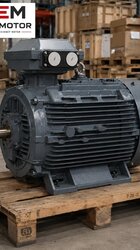
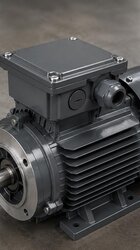
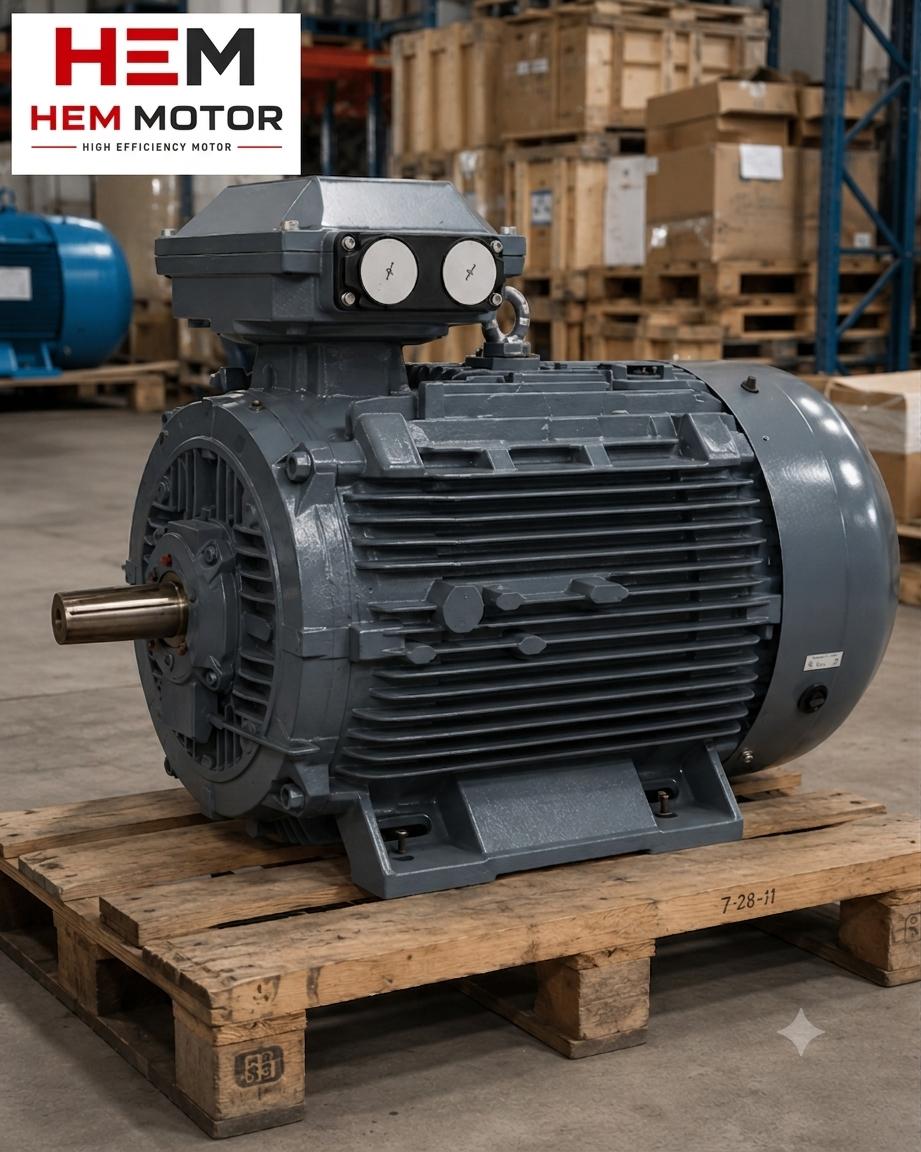
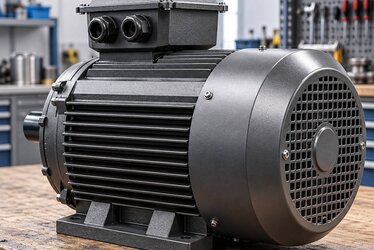
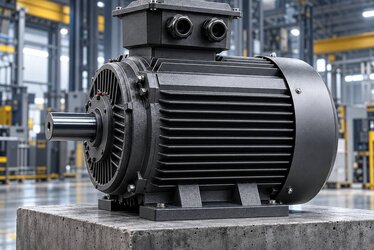
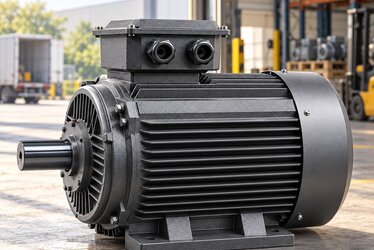
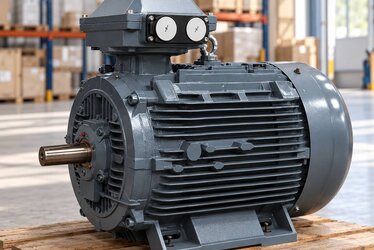
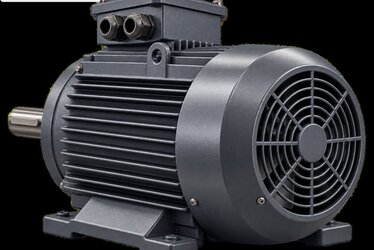
  • IC411: enclosed frame, external fins, fan on the rear shaft end. The fan cowl guides air along the fins. Because the fan turns with the motor, cooling depends on speed. This is the standard arrangement on HEM Motor three-phase series.
  • IC416: the same frame, but the fan is driven by its own small motor, so airflow is independent of main motor speed.
  • IC410: no fan at all. The frame cools by natural convection or by airflow created by the driven equipment, as in some axial fan motors mounted directly in the air stream.

The code matters on an order because rated power is stated for a specific cooling assumption. For IC411, catalogue power assumes an ambient of up to 40 °C, altitude up to 1000 m and a fan that can draw air freely.

How the installation spoils cooling

In most overheating cases we see, the cooling code was right but the motor had been placed where it could not breathe:

  • Fan cowl against a wall: to fit the machine frame, the fan end ends up almost touching a sheet-metal panel. The fan recirculates its own warm air. Leave the clearance behind the cowl that the installation manual specifies.
  • Sealed enclosure: a motor boxed in to cut noise, with no ventilation. Within a few hours the air inside reaches 50–55 °C, and the motor is no longer running in a 40 °C ambient but in its own heat.
  • Dust and fibre on the fins: in flour mills, textile plants, sawmills or feed plants the fin gaps fill up and form an insulating layer. Current stays the same; winding temperature does not.
  • Direct sun: a frame on a roof or open yard, especially a dark one, runs well above air temperature at midday in summer.
  • Nearby heat sources: if the fan inlet faces a furnace mouth, a compressor discharge or another motor's exhaust air, the real ambient is higher than the room reading.

None of this appears on the nameplate, and the overload relay usually sees nothing because current is normal. If you want to measure winding temperature directly, specify an optional PTC or PT100 sensor with the order.

Beyond 40 °C and 1000 m

Catalogue ratings apply between −15 °C and +40 °C and up to 1000 m altitude. Higher up, thinner air carries less heat for the same fan. Above 40 °C, the temperature gap between air and winding shrinks. Either way, the choice is to load the motor below its rating or to select the next size up, depending on the load profile. Ambients above 40 °C should be declared before ordering. How insulation class and frame material help in hot, dusty plants is discussed in motors for hot and dusty environments.


Prices and technical data are on the product pages; choose a model and order online.

When a separately driven fan makes sense

On an IC411 motor the fan runs at motor speed. Direct on the grid, that is no problem. Slow the motor down with a frequency converter for long periods while load torque stays constant, and current barely falls while airflow drops sharply. Conveyors, extruders and positive displacement pumps are typical cases. Such applications may need a separately powered fan (IC416), which should be raised at the ordering stage. Centrifugal pumps and fans rarely have the problem because their torque falls quickly with speed. The load-type distinction is explained in constant vs variable torque, and the low-speed cooling decision in IC411 and IC416 cooling codes.

A quick check before installation

  1. Is any panel or wall blocking airflow behind the fan cowl or around the fins?
  2. If the motor sits in an enclosure, has anyone designed an air inlet and outlet?
  3. Is the intake air coming from another heat source?
  4. Does summer ambient exceed 40 °C, or altitude exceed 1000 m?
  5. Will dust or fibre build up on the fins, and is cleaning on the maintenance schedule?
  6. Will the motor run on a drive at constant torque and low speed for long periods?

With vertical mounting, particularly shaft down with the fan on top, falling debris and water can also block the air inlet, so treat cooling and mounting position together.

The bottom line

The useful question is less "which IC code?" than "where will this motor's heat go in this spot?". A standard IC411 design covers a very wide range of duties as long as it has air in front and behind. Enclosures, sunshine, dust and low-speed operation are the points to discuss before the order. For harsh sites, cast iron frame electric motors are worth a look. Share your installation and operating conditions and we can work out the right arrangement with you.

Frequently Asked Questions

Is a motor faulty if the frame is too hot to touch?

Not necessarily. A fully loaded motor's frame can easily reach 60–70 °C, which is still lower than winding temperature. Compare with earlier readings taken at the same load; if you see a clear rise, check the fins, the fan cowl and the load.

Will removing the fan cowl improve cooling?

No, it makes cooling worse. The cowl channels air between the fins; without it the air scatters and never reaches most of the frame. An exposed rotating fan is also a serious safety hazard.

What should I do for a motor inside a closed enclosure?

Design an inlet and outlet that remove hot air, and make sure the motor draws its cooling air from outside the enclosure. If that is not possible, measure the real temperature inside and derate the motor or choose the next size up accordingly.

Can a fanless IC410 motor be used anywhere?

No. A fanless motor is designed to rely on an external airflow for cooling. Without that airflow it cannot continuously deliver the output of a fan-cooled motor in the same frame.

HEM Motor Models Related to This Article

The cards show example models related to the topic. A suitable motor is not chosen by power alone: compare speed, voltage, mounting, shaft and connection dimensions on the product page; if unsure, send a photo of the existing motor’s nameplate on WhatsApp.

1.5 kW 1500 rpm Cast Iron Frame Electric Motor 90L-4

90L-4

1.5 kW · 1500 rpm

  • Cast iron frame · IEC 90L
  • 1445 rpm · IP55
  • Mounting: B3 foot; flange (B5/B14/B35) depending on frame — confirmed with the order

US$143.22 (€127.82)

View product
5.5 kW 1500 rpm Cast Iron Frame Electric Motor 132S-4

132S-4

5.5 kW · 1500 rpm

  • Cast iron frame · IEC 132S
  • 1460 rpm · IP55
  • Mounting: B3 foot; flange (B5/B14/B35) depending on frame — confirmed with the order

US$339.83 (€303.28)

View product
11 kW 1500 rpm Cast Iron Frame Electric Motor 160M-4

160M-4

11 kW · 1500 rpm

  • Cast iron frame · IEC 160M
  • 1465 rpm · IP55
  • Mounting: B3 foot; flange (B5/B14/B35) depending on frame — confirmed with the order

US$565.14 (€504.35)

View product

Similar Articles